How Much Would It Cost to Build This One-Acre DIY Homestead?
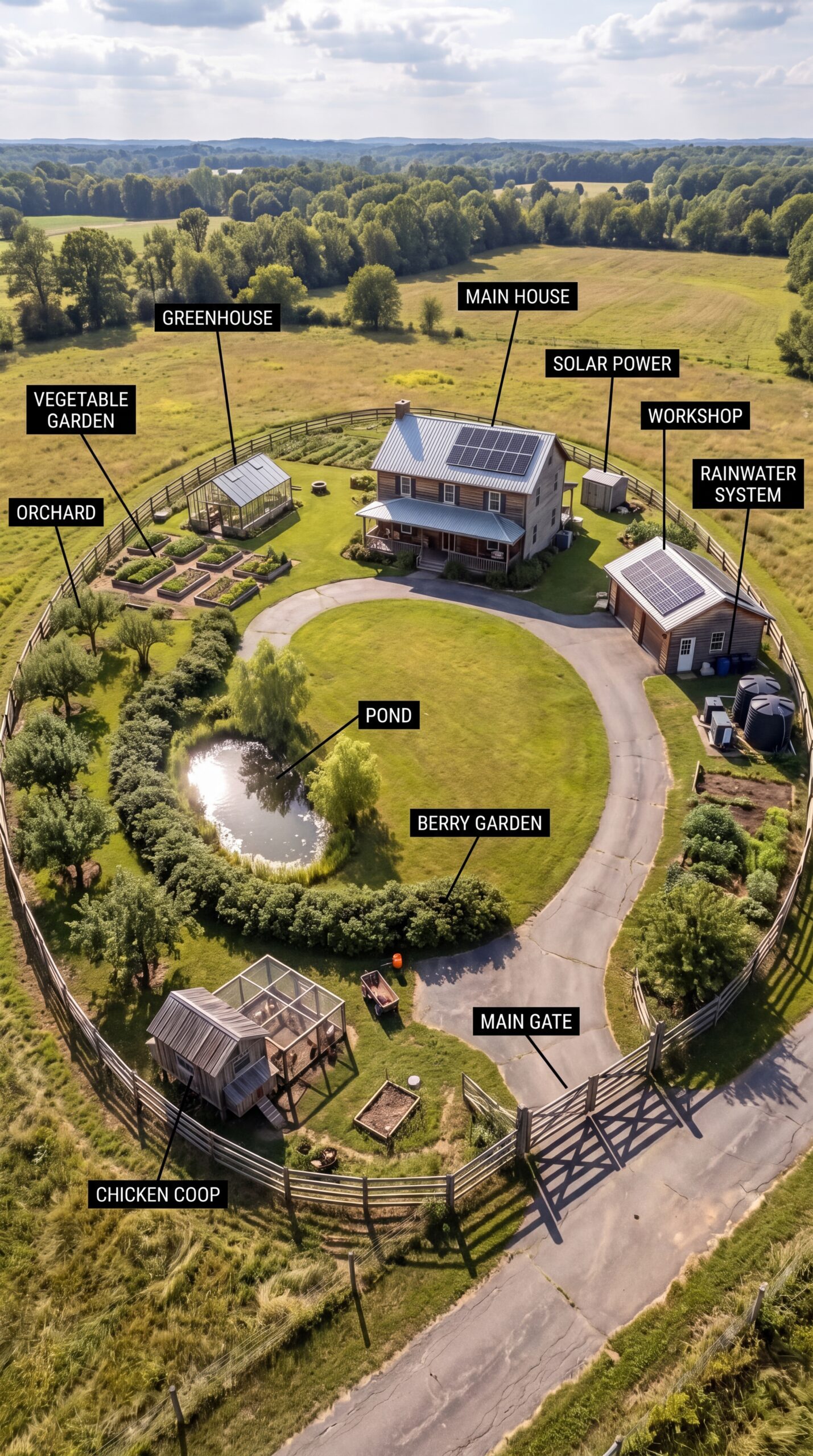
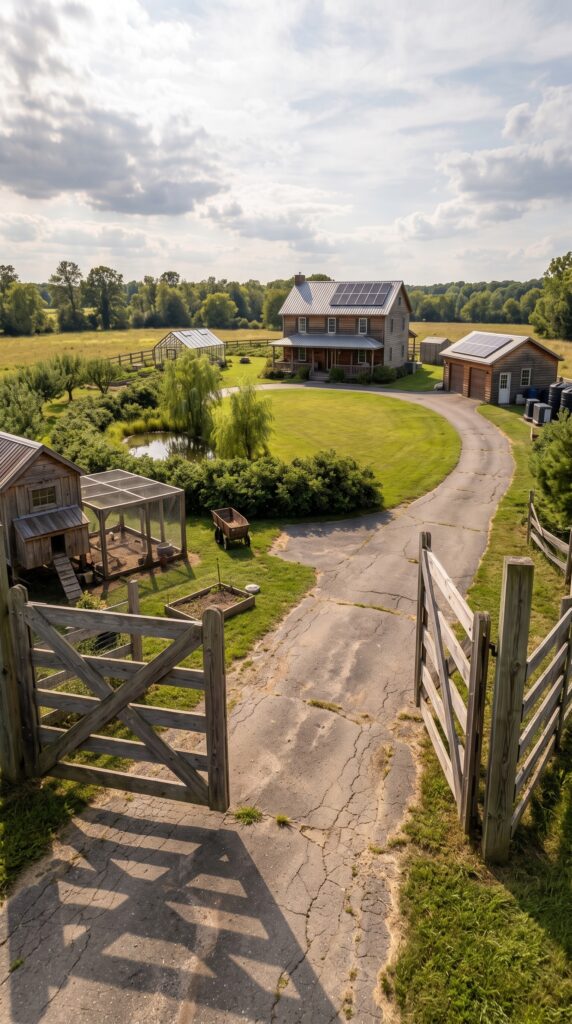
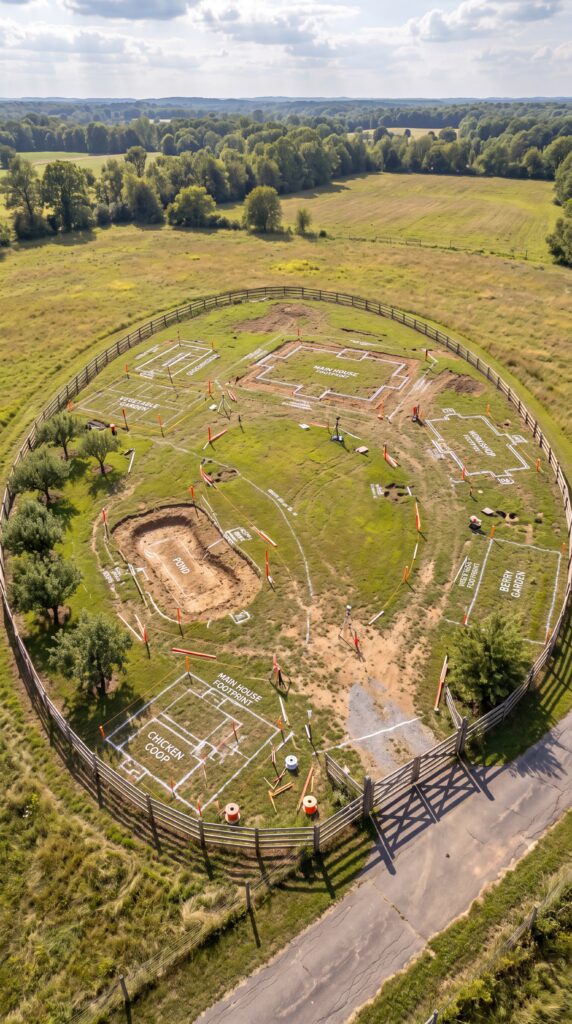
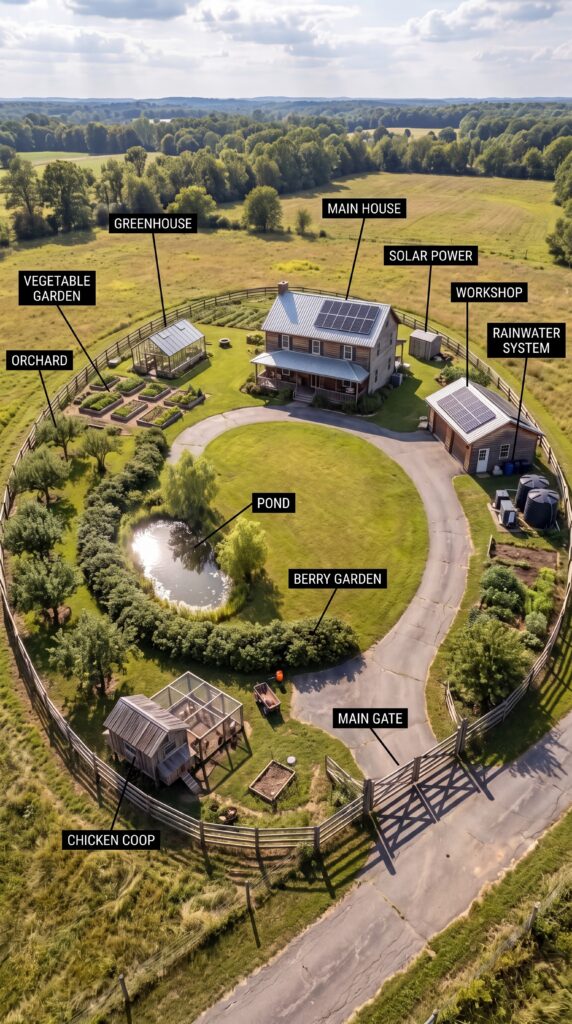
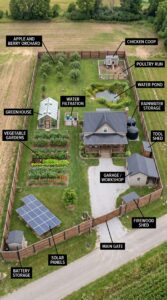
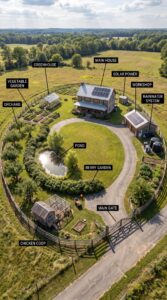
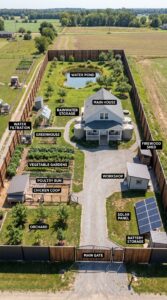
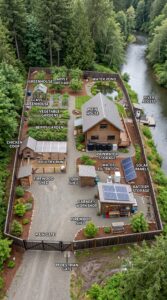
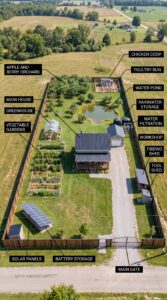
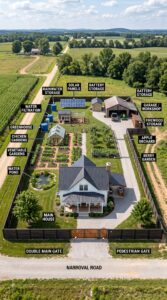
This compact homestead shows how a relatively small rural property can be developed into a comfortable place for year-round living without building a luxury estate. The concept includes a simple two-story wooden house, a workshop and garage, solar power, a greenhouse, vegetable beds, an orchard, berry bushes, a chicken coop, rainwater storage and a small private pond.
The key assumption behind this budget is that almost all construction and landscaping work is done by the owner. Materials are purchased second-hand or in economical rural stores whenever possible, while the owner handles framing, landscaping, garden installation, fencing and most interior work.
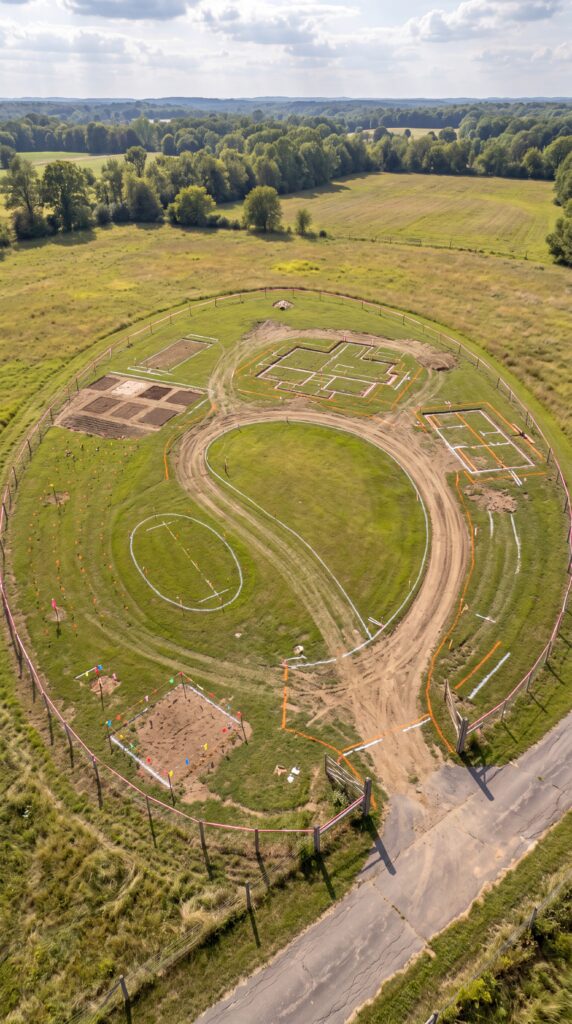
The property is assumed to be approximately one acre, or about 43,560 square feet (4,047 m²). A one-acre parcel is enough for this compact layout, although local setbacks, septic requirements and zoning could require a larger parcel.
Land — $20,000
The first major expense is the land itself. To keep the entire project near $80,000, the property would need to be in a very low-cost rural location, far from major cities, with basic road access. Current 2026 data shows that extremely cheap rural land exists in states such as New Mexico and Wyoming, but a buildable parcel with legal access and water potential can cost considerably more than statewide agricultural averages.
Budget: $20,000
Main House — $45,000
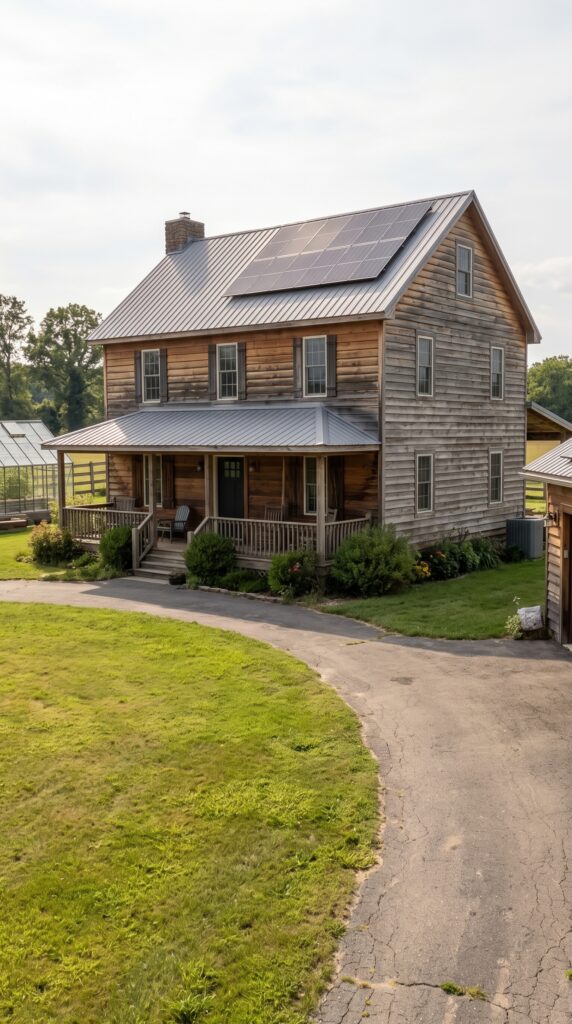
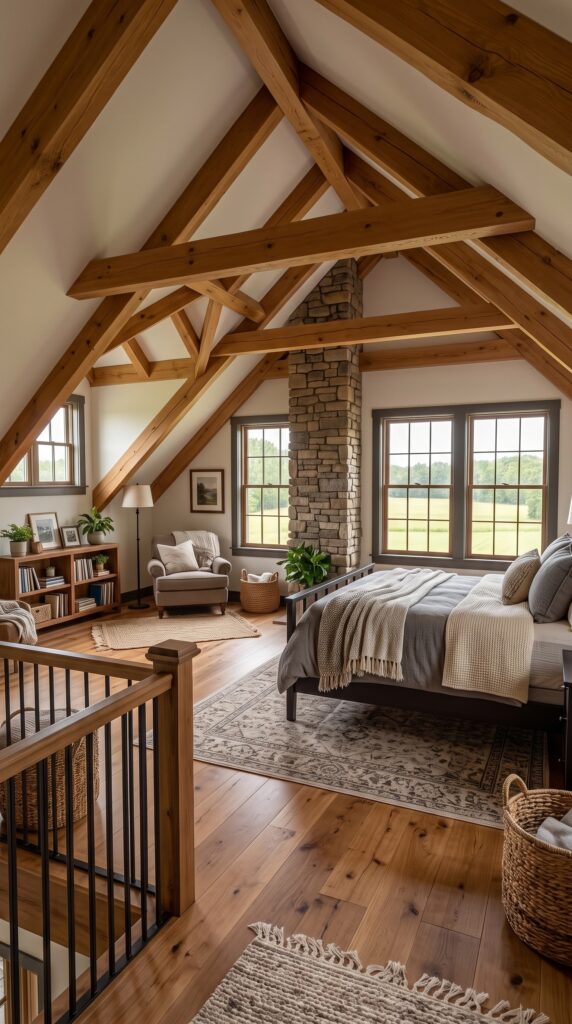
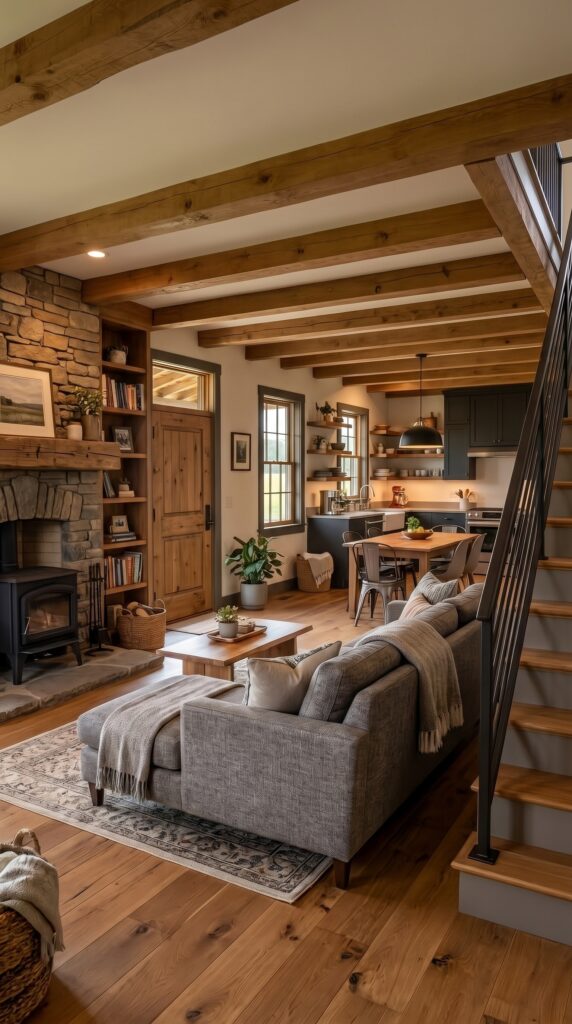
The house is intentionally much simpler than it appears in a luxury architectural concept. A roughly 900–1,100-square-foot timber-frame or simple wood-sided house could be built progressively, using owner labor, reclaimed materials, economical windows and a basic metal roof.
The owner would handle framing, insulation, flooring, painting, cabinetry and much of the interior finishing.
Budget: $35,000
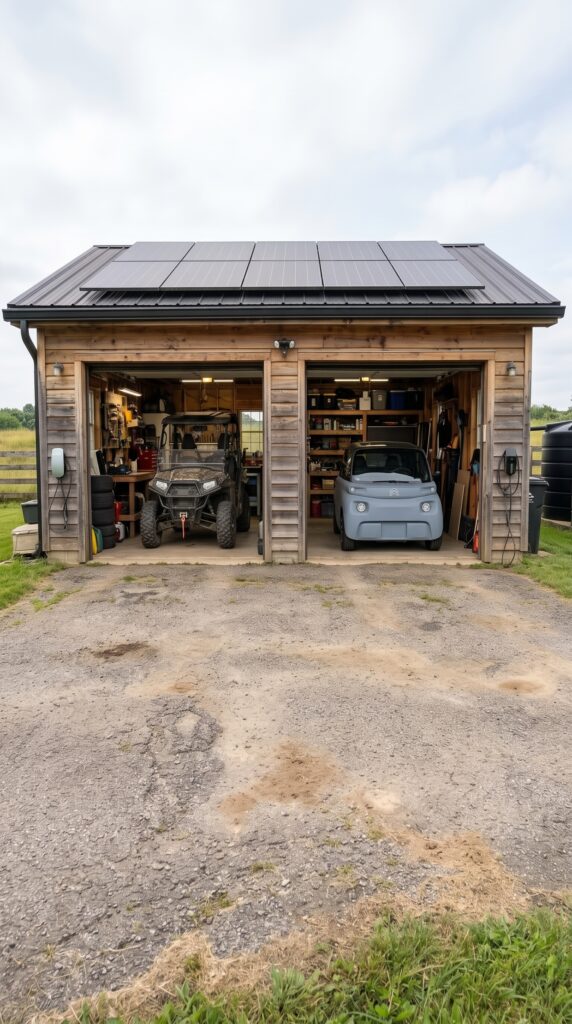
Garage and Workshop — $5,000
The detached building combines a small garage with a basic workshop. Instead of a professionally finished building, the structure could use a simple timber frame, inexpensive siding and a gravel or basic concrete floor.
Inside, second-hand workbenches, shelving and tools would keep the setup functional without adding thousands of dollars in commercial equipment.
Budget: $5,000
Vehicles — $8,000
The property uses two inexpensive utility vehicles rather than expensive new cars. A used compact 4×4 utility buggy is ideal for moving firewood, tools, garden supplies and equipment around the property, while a small used electric city car provides an economical way to travel to the nearest town for groceries and everyday errands.
Both vehicles would be purchased second-hand and kept in the property’s garage and workshop, where routine servicing and repairs could be handled by the owner. A realistic combined budget of around $8,000 would cover two older but functional vehicles, making them practical transportation rather than luxury additions to the homestead.
Budget: $8,000
Solar Power — $3,000
A small DIY solar installation would provide basic electricity for lighting, refrigeration, pumps and essential household equipment. Instead of installing a large professional system, the owner could begin with a modest used or budget panel array and battery bank, then expand it later.
A professional 10 kW system costs far more than this, so the $3,000 figure assumes a small owner-installed system and is deliberately not comparable with turnkey solar pricing. Current U.S. market data puts a typical 10 kW system around $25,800 before incentives.
Budget: $3,000
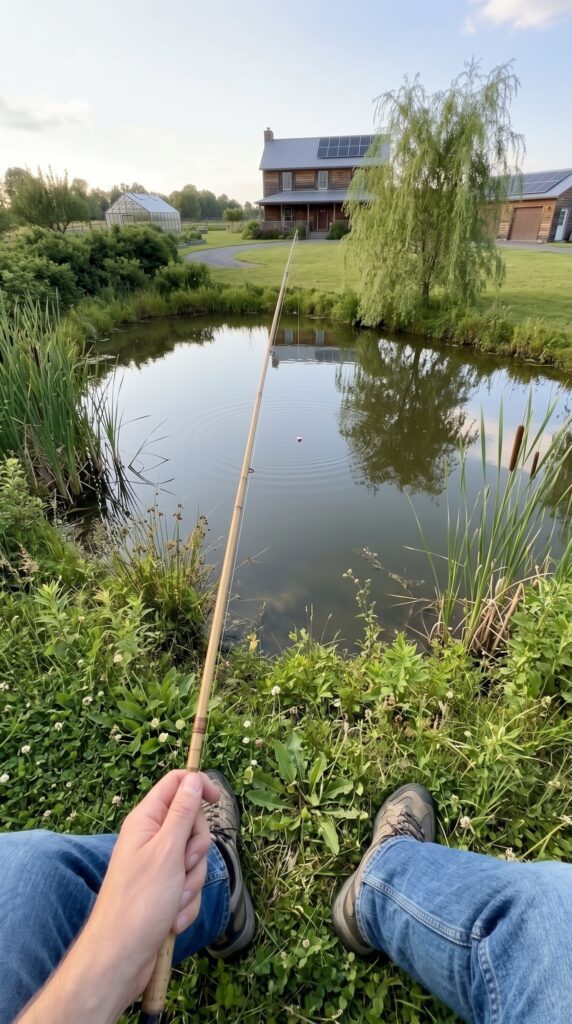
Small Pond — $1,500
The pond would be created using an inexpensive natural depression or low point on the property rather than undertaking a major excavation project.
The owner could handle much of the earthwork with rented equipment, then landscape the shoreline with plants, rocks and simple paths. Fish could be introduced gradually.
Budget: $1,500
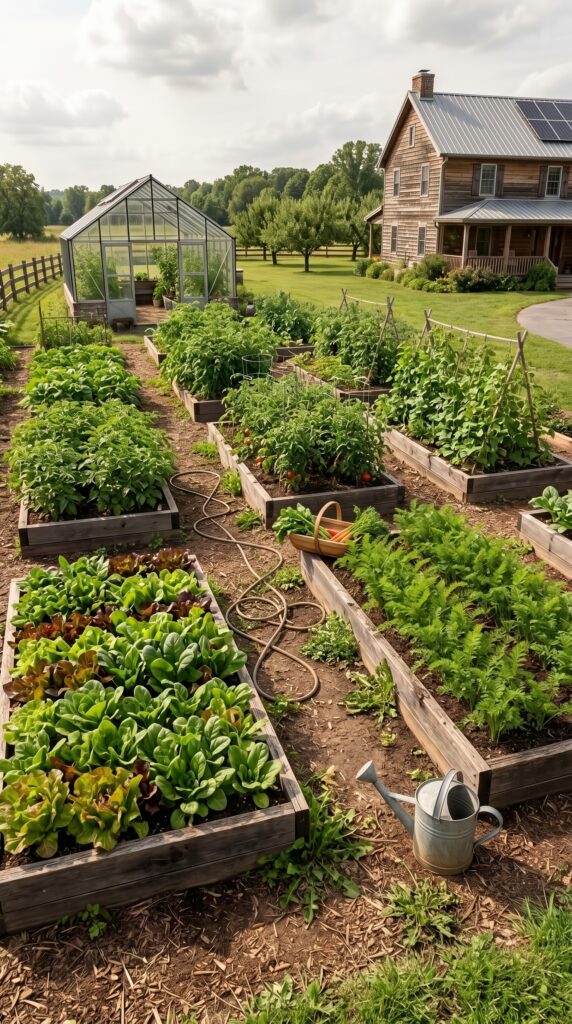
Greenhouse — $500
A basic DIY greenhouse can be made from inexpensive framing and polycarbonate or greenhouse film. The structure does not need commercial heating or automated systems.
Its main purpose would be starting seedlings and extending the growing season for tomatoes, peppers, herbs and other vegetables.
Budget: $500
Vegetable Garden — $500
The vegetable area would consist of simple raised beds and open soil rows. Compost, inexpensive timber, seeds and basic irrigation would provide the initial setup.
Much of the work would be done manually, keeping the cost extremely low.
Budget: $500
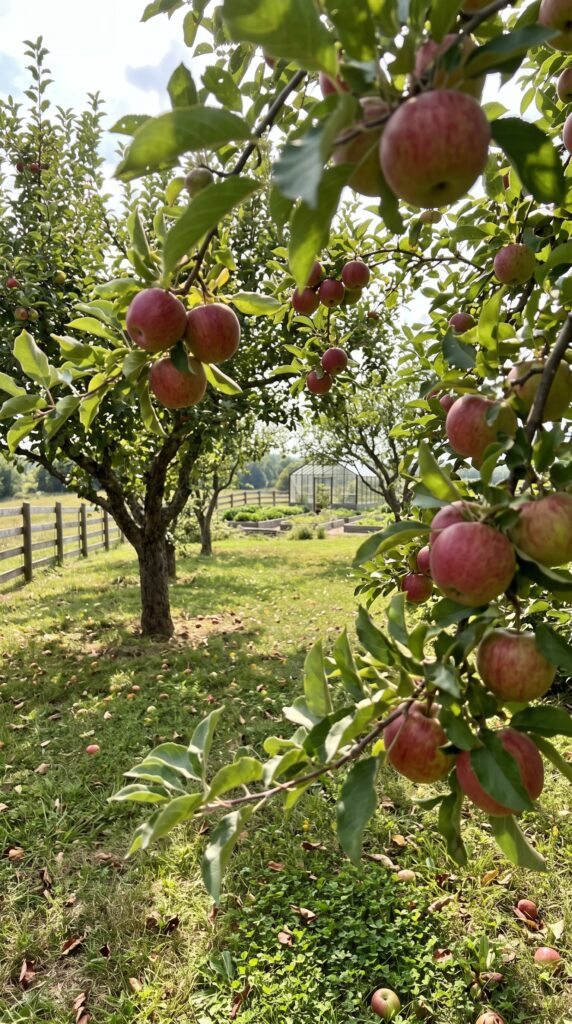
Apple Orchard — $500
The orchard could begin with a small number of young bare-root trees rather than mature landscaping trees.
The owner would plant the trees, prepare the soil and install inexpensive protection around them. Over several years, the orchard would become one of the most productive parts of the property.
Budget: $500
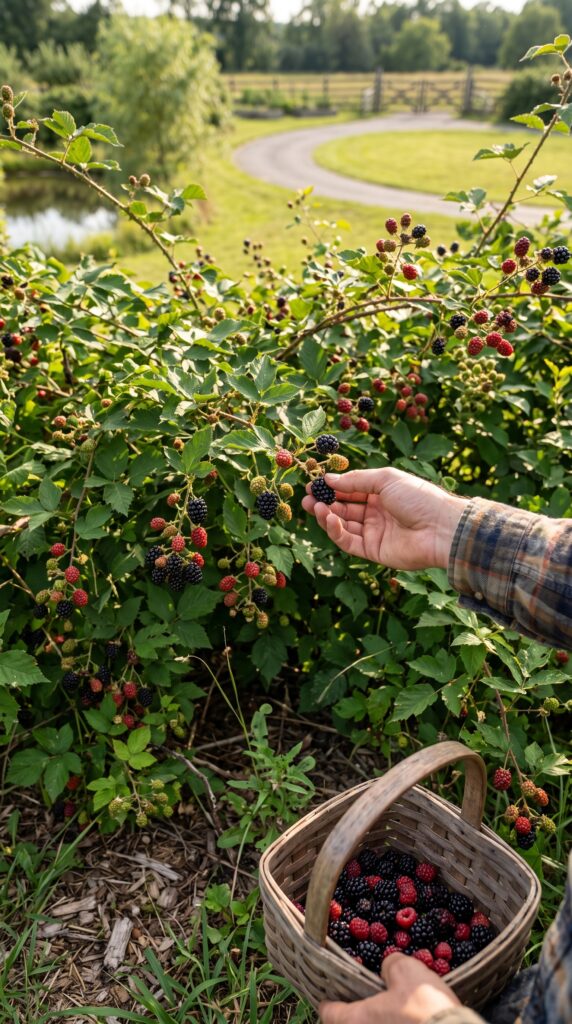
Berry Garden — $300
Berry bushes require relatively little infrastructure. A small dedicated section could include raspberries, blackberries, currants and other locally suitable varieties.
Simple irrigation and mulch would be enough to establish the first planting.
Budget: $300
Chicken Coop and Yard — $300
A small chicken coop could be constructed almost entirely from reclaimed lumber, leftover roofing and used fencing.
The initial budget covers basic materials, nesting boxes and an enclosed outdoor run. The family could expand the flock later.
Budget: $300
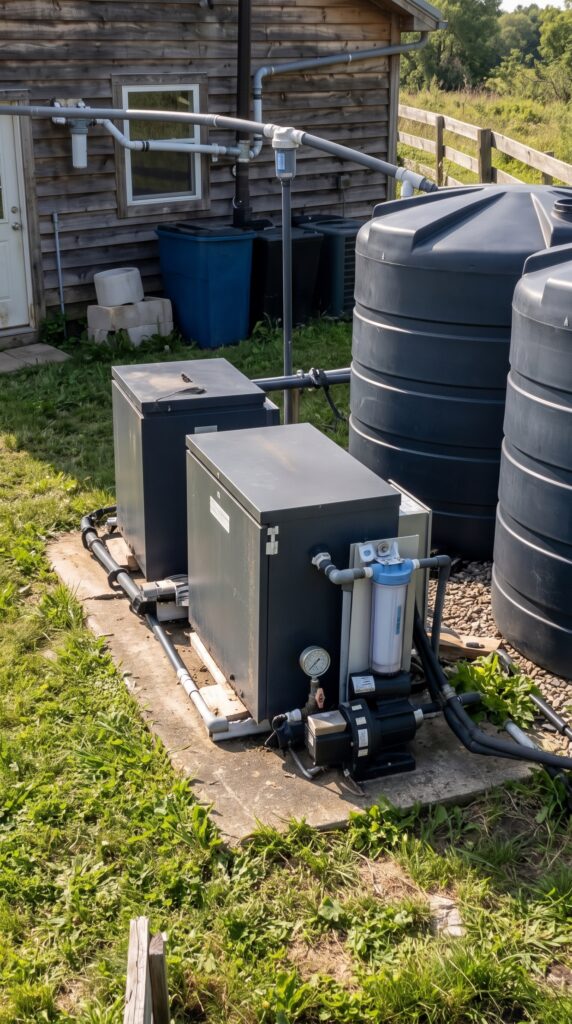
Rainwater Collection — $300
Rainwater from the house and workshop roofs could be directed into inexpensive storage tanks or barrels.
The system would mainly support garden irrigation and other suitable non-potable uses, subject to local rules.
Budget: $300
Fence and Main Gate — $2,000
Instead of an expensive decorative fence, the property could use basic agricultural fencing combined with timber posts and a simple vehicle gate.
The owner would install the majority of it personally, dramatically reducing labor costs.
Budget: $2,000
Driveway and Site Preparation — $2,000
The property would use a compact gravel driveway rather than expensive asphalt.
Basic grading, drainage improvements and selected landscaping could be completed gradually, with equipment rented only when necessary.
Budget: $2,000
Paths and Landscaping — $500
Most of the landscaping would remain natural. Grass, trees and existing vegetation would be preserved instead of installing expensive professional landscaping.
The $500 allowance covers inexpensive plants, gravel, stepping stones and basic garden borders.
Budget: $500
Complete DIY Budget
Item
Estimated Cost
1-acre rural property
$20,000
Main house
$45,000
Garage + workshop
$5,000
Used utility vehicle
$8,000
Small solar system
$3,000
Water/septic allowance
$2,500
Small pond
$1,500
Greenhouse
$500
Vegetable garden
$500
Apple orchard
$500
Berry garden
$300
Chicken coop
$300
Rainwater collection
$300
Fence + gate
$2,000
Driveway + site work
$2,000
Landscaping + paths
$500
Tools, permits and contingency
$5,100
TOTAL
$100,000
The $80,000 Homestead
With approximately $80,000, this concept is only realistic under a very specific set of conditions: inexpensive rural land, a small and simple house, substantial owner labor, second-hand materials, DIY construction and a willingness to develop the property gradually.
The biggest saving comes from doing the work personally. A professional contractor would make the house and infrastructure much more expensive. The same principle applies to the greenhouse, gardens, fencing, workshop, pond and landscaping.
The result would not be a luxury estate. It would be a modest one-acre working homestead with a comfortable handmade house, basic energy independence, food production, a small pond, storage, workshop space and a utility vehicle.
Approximate total: $100,000 including the land
That makes the project much more realistic as a long-term DIY homestead rather than a turnkey development.
This project is a conceptual design created for inspiration and architectural visualization. It is not a real construction project or a technical blueprint.

Leave a Reply