What Would It Take to Build a Self-Sufficient American Homestead?
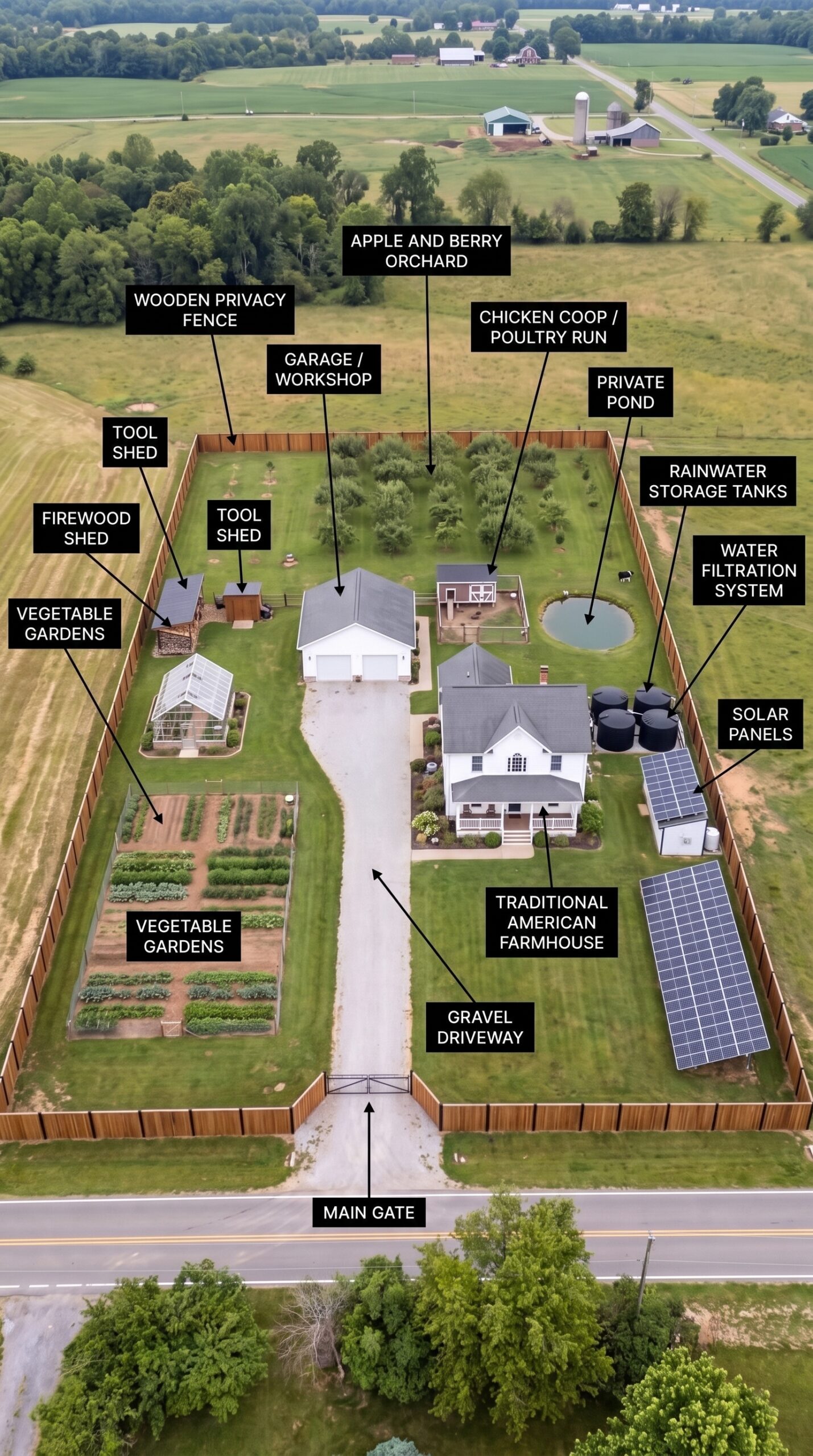
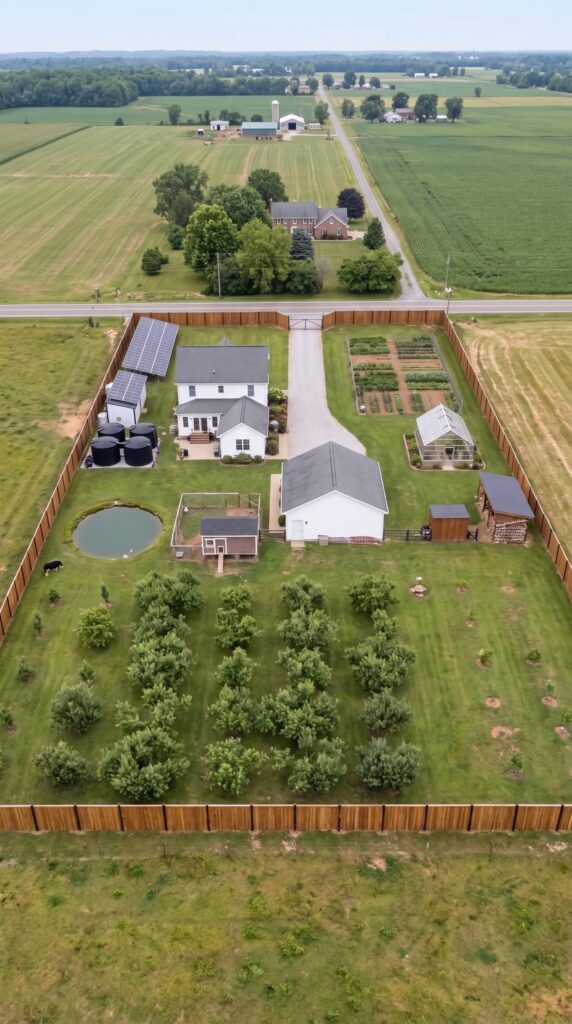
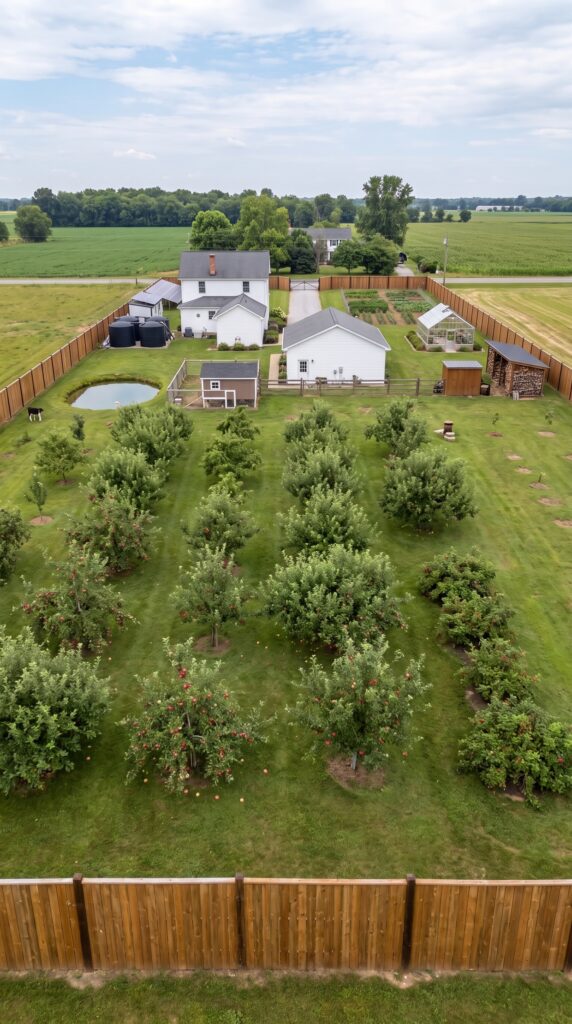
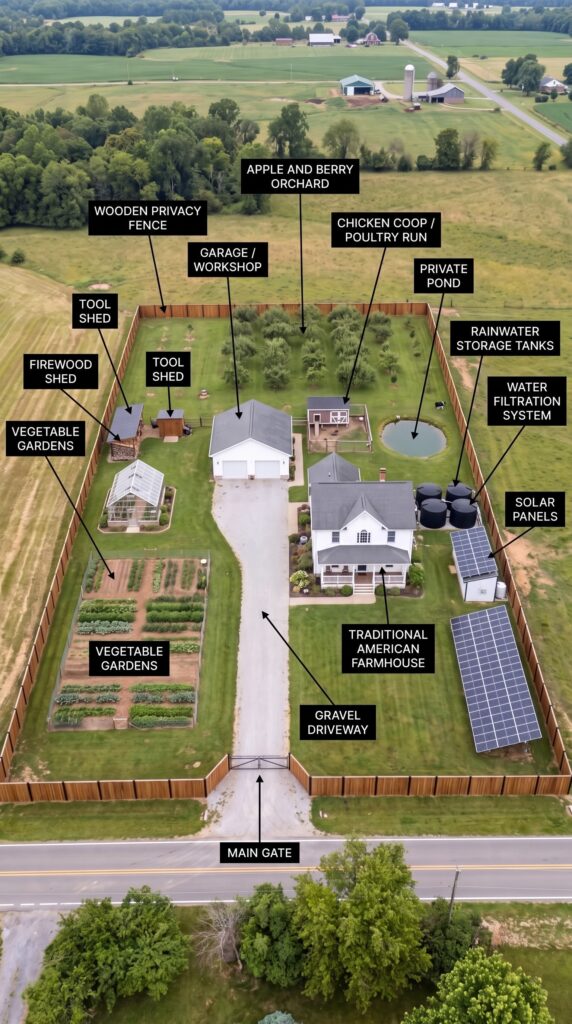
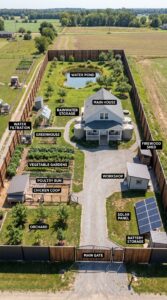
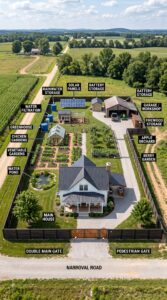
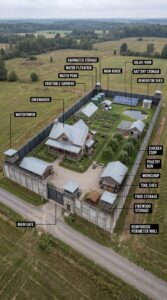
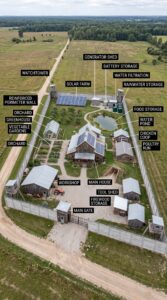
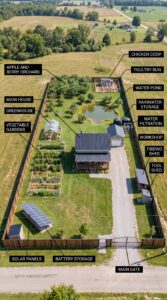
At first glance, this property looks like a small private farm rather than an ordinary rural home. It has its own vegetable gardens, greenhouse, orchard, chicken coop, pond, solar panels, water storage, workshop, firewood storage, and a traditional American farmhouse surrounded by a wooden privacy fence. But unlike many large homesteads that require hundreds of thousands or even millions of dollars, this concept is designed around one simple idea: build the essentials first, keep the structures practical, and spend the money where it matters most.
For this concept, the goal is to create a compact rural homestead for approximately $125,000, excluding the cost of the land. It would not be a luxury estate, and it would not rely on expensive custom construction. Instead, the property would use a modest house, inexpensive agricultural structures, a simple gravel driveway, basic storage buildings, a small greenhouse, and a carefully sized solar system.
A Traditional Farmhouse at the Center
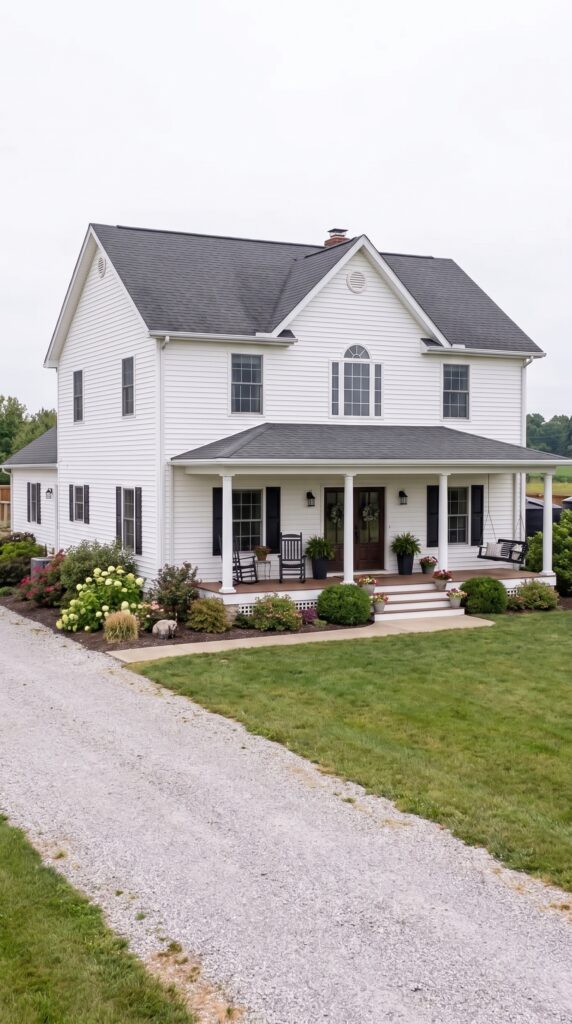
The heart of the property is a traditional American farmhouse with a simple, comfortable design. Instead of building a huge 2,500- or 3,000-square-foot house, the budget version would use a compact footprint of approximately 600–750 square feet.
Inside, the house could contain a comfortable living room, kitchen, one or two bedrooms, a bathroom, utility space, and additional storage. The goal isn’t to create a mansion but to make every square foot useful. A simple rectangular floor plan, standard windows, economical siding, and a conventional roof would keep construction costs under control.
A small front porch would give the home the classic farmhouse appearance while providing a practical outdoor space for sitting, drinking coffee, or looking across the property.
For the calculation, approximately $65,000 is allocated to the house. Achieving this number would require a compact design, economical materials, and significant owner involvement. A fully contractor-built custom farmhouse could cost considerably more.
A 10 kW Solar System Instead of a Giant Utility Bill
One of the most important investments on the property would be the solar array.
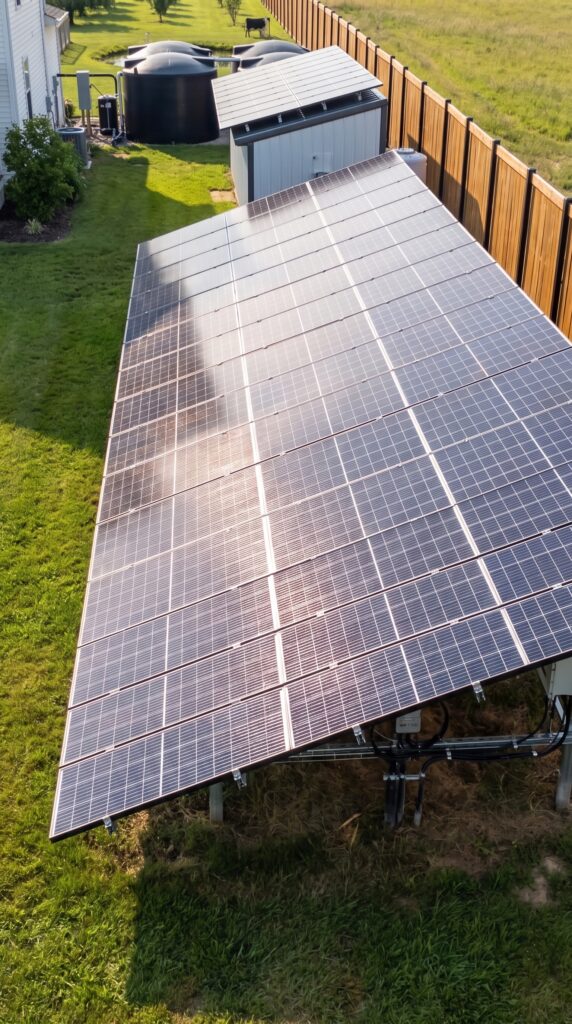
Two large groups of solar panels are positioned beside the house, providing approximately 10 kW of generating capacity. For a small home, this can provide a substantial amount of electricity over the course of a year, although actual production depends heavily on the location and seasonal sunlight.
A battery system would store some of the electricity produced during the day so that it can be used later. This could help power lighting, refrigeration, water pumps, household appliances, garden equipment, and other essential systems.
The planned budget is approximately $25,000 for the 10 kW solar installation and a small battery backup system.
This is intentionally one of the two most expensive components of the entire property. The idea is to invest heavily in the home’s basic comfort and energy infrastructure while keeping the agricultural structures inexpensive.
Vegetable Gardens That Actually Produce Food
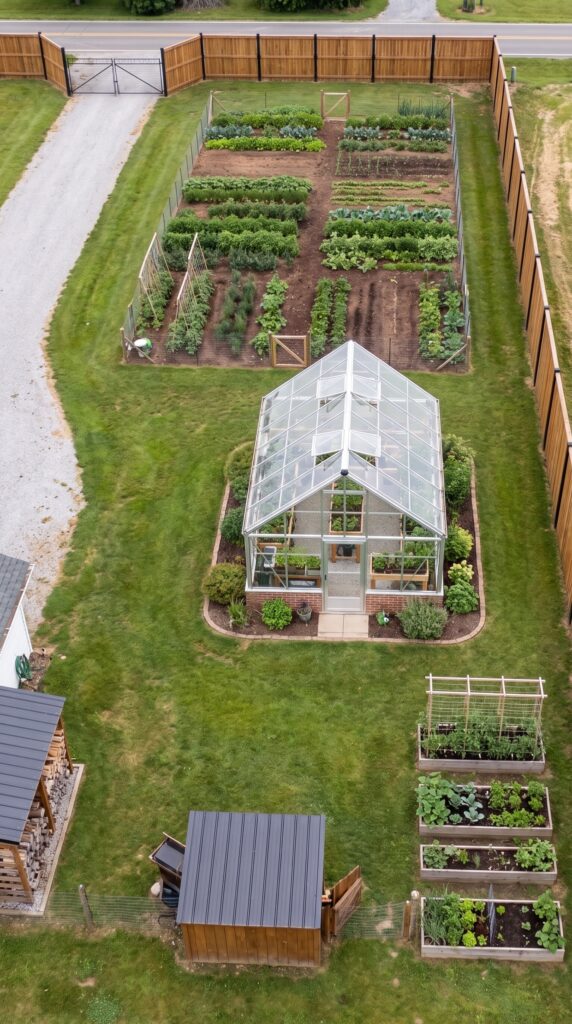
The left side of the property is dedicated to vegetable production. Instead of one enormous field, the garden is divided into organized growing beds.
Rows of vegetables could include tomatoes, peppers, cucumbers, beans, lettuce, carrots, onions, potatoes, herbs, and seasonal crops. The beds can be connected to a simple irrigation system, making watering easier during dry periods.
The advantage of this layout is that the family doesn’t need a huge amount of land to grow a meaningful portion of its seasonal vegetables. A well-maintained garden can produce a surprising amount of food from a relatively small area.
The initial garden infrastructure is estimated at only $2,500, including soil, compost, basic irrigation, seeds, raised beds, and fencing.
The Greenhouse Extends the Growing Season
Next to the garden is a compact greenhouse. It provides a protected environment for seedlings and crops that are more sensitive to temperature changes.
The greenhouse could be used to start plants before outdoor conditions are suitable and continue growing certain vegetables later into the season. It also gives the family much greater control over moisture, temperature, and growing conditions.
Rather than building an expensive commercial greenhouse, this concept uses a relatively small structure costing approximately $3,500.
Combined with the outdoor garden, it creates a simple food-production system without requiring a massive agricultural operation.
An Apple and Berry Orchard
Behind the house is a small orchard containing young apple trees and berry-producing plants.
The orchard is deliberately compact. Instead of purchasing large mature trees, the owners could plant younger trees and allow them to develop over several years. Apples, raspberries, blueberries, blackberries, and other suitable fruit could eventually provide a recurring harvest.
The initial investment is estimated at approximately $1,500, including young trees, berry plants, soil improvements, supports, and basic irrigation.
It is one of the cheapest parts of the entire property, but over time it could become one of the most productive.
Chickens and a Private Poultry Area
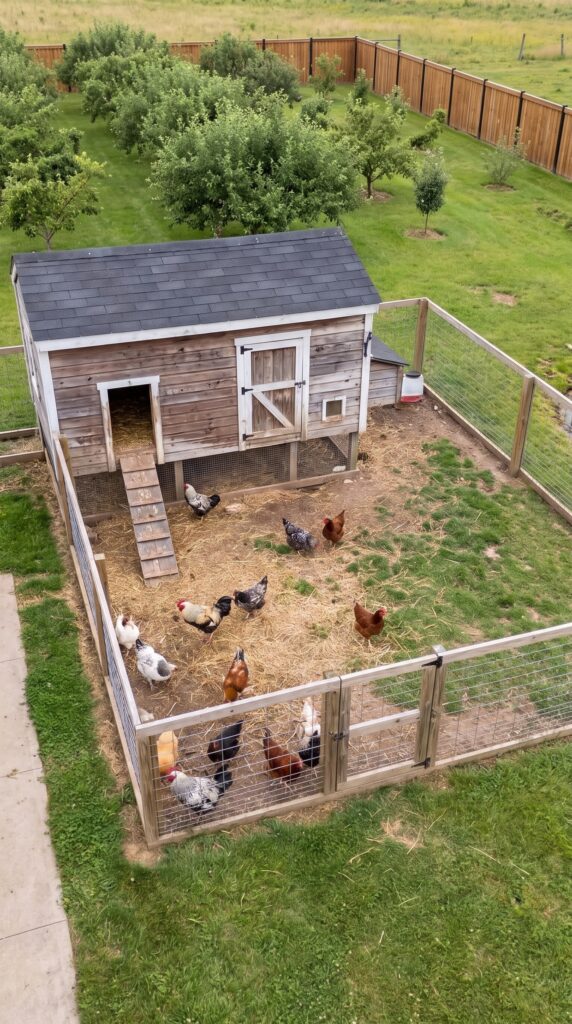
The chicken coop sits toward the rear of the property, separated from the house and garden.
A simple wooden coop with nesting boxes, roosting areas, feeders, waterers, and an enclosed poultry run would be enough for a small flock. The chickens could provide eggs while also producing manure that can be composted and eventually returned to the garden.
The entire chicken operation is budgeted at approximately $2,000.
There is no need for an elaborate barn or expensive agricultural building. This is a small family homestead, so the infrastructure is designed around practical household production rather than commercial farming.
A Small Private Pond
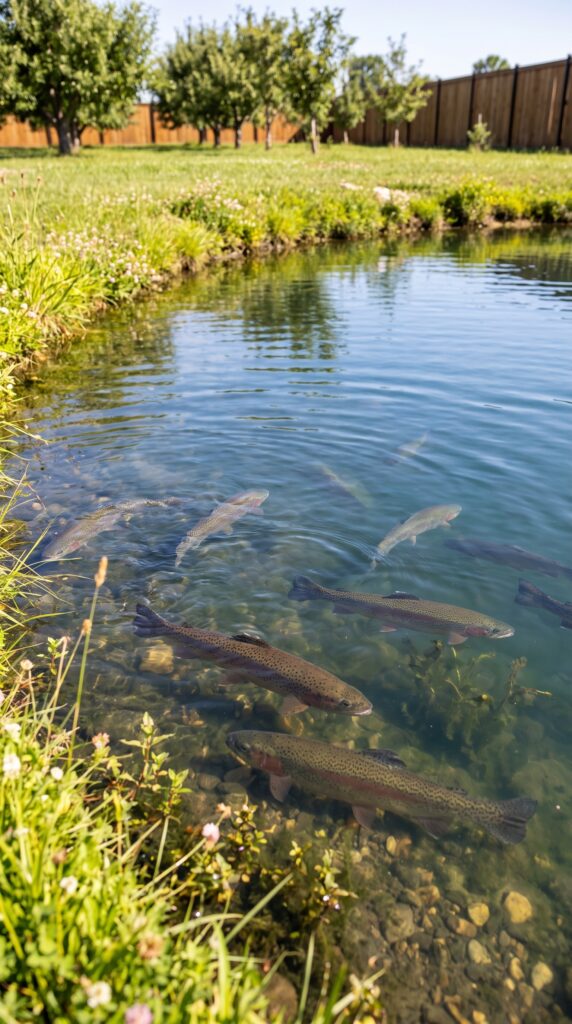
Near the chicken area is a small private pond. It doesn’t need to be a giant recreational lake. A modest pond can add beauty to the property while also serving practical purposes depending on local regulations, water conditions, and design.
The pond could potentially support fish, wildlife, irrigation reserves, or simply become a quiet outdoor feature of the homestead.
For the budget version, approximately $2,000 is allocated to a small pond and basic landscaping. A professionally engineered pond on difficult terrain could cost substantially more, so this estimate assumes favorable site conditions and relatively simple earthwork.
Rainwater Storage and Water Filtration
Several large tanks sit beside the house and water-treatment area. They collect and store rainwater that can later be used for irrigation and other non-potable purposes.
A basic filtration system can remove sediment and other impurities, while additional treatment would be required if the water were intended for drinking. The exact setup would depend on local regulations and the property’s primary water source.
For this concept, approximately $3,000 is allocated for tanks, gutters, filters, pumps, and basic plumbing.
If the property does not already have a well or septic system, those would need to be budgeted separately.
Garage and Workshop
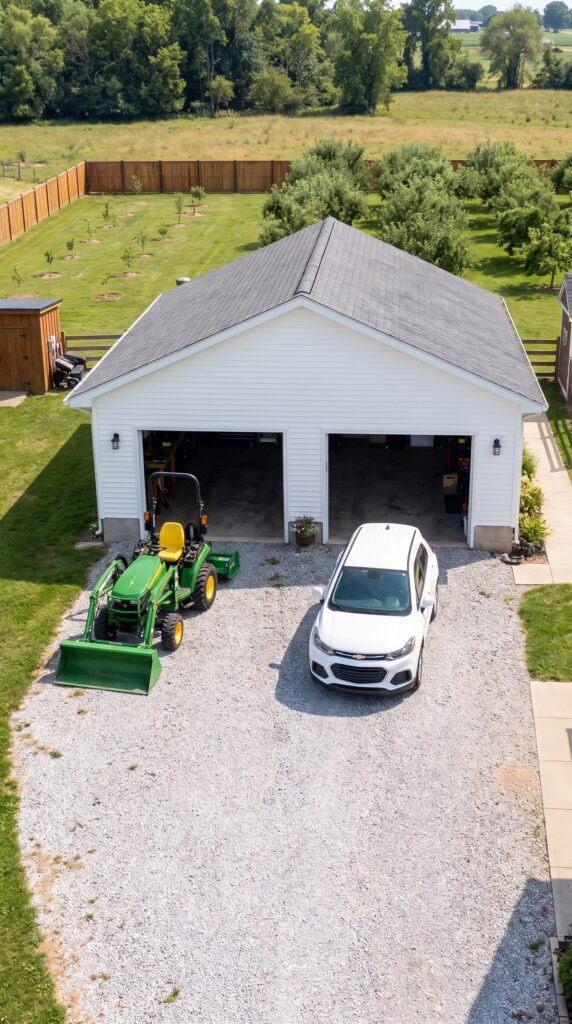
Across from the house is a simple garage and workshop.
This doesn’t need to be a massive building. A relatively small structure could provide enough space for a lawn mower, tractor, snow blower, gardening equipment, tools, spare parts, and basic mechanical work.
A workbench and wall-mounted storage would keep tools organized, while part of the building could be used for seasonal equipment.
The target budget is approximately $7,000 using a simple prefabricated or owner-built structure.
Tool Shed and Firewood Storage
Several smaller structures are distributed around the property. These are inexpensive but extremely useful.
One shed stores gardening tools, hoses, hand equipment, and smaller machinery. Another is dedicated to firewood, keeping the fuel dry and protected from rain and snow.
Together, the tool and firewood sheds are estimated at approximately $2,000.
This is an example of where the property saves money: instead of constructing one expensive multifunctional building, several basic structures can perform specific jobs for a fraction of the price.
Wooden Privacy Fence
The entire property is surrounded by a wooden privacy fence.
It provides a clear boundary between the homestead and the surrounding farmland while giving the family additional privacy. The fence doesn’t need to function like a fortress. Its primary purpose is to define the property, keep animals contained, protect the garden, and create a more private atmosphere.
A simple treated-lumber design is budgeted at approximately $6,000.
Gravel Driveway and Main Gate
The central gravel driveway connects the road to the farmhouse and garage.
Gravel is considerably more practical for this budget than asphalt or concrete. It is inexpensive to install, relatively easy to repair, and fits naturally with the rural character of the property.
At the entrance, a simple metal or wooden gate provides controlled access to the property.
The combined budget for the driveway and gate is approximately $4,000.
The Complete $125,000 Budget
Here is the full conceptual budget for building the property shown in the image:
Property Feature
Estimated Cost
Compact traditional farmhouse
$65,000
10 kW solar system + small battery
$25,000
Wooden privacy fence
$6,000
Garage / workshop
$7,000
Greenhouse
$3,500
Vegetable gardens & irrigation
$2,500
Apple & berry orchard
$1,500
Chicken coop & poultry run
$2,000
Small private pond
$2,000
Rainwater tanks & filtration
$3,000
Tool & firewood sheds
$2,000
Gravel driveway & main gate
$4,000
Basic landscaping & site preparation
$3,000
TOTAL
$126,500
So for a website-friendly headline figure, about $125,000 is a reasonable target for this simplified version, not including the land.
The biggest variable is the house. If the property owner can build a small home themselves, use a modular structure, or find an existing rural house that needs renovation, the total could potentially be reduced. On the other hand, hiring a contractor to build everything from scratch, installing a new well and septic system, or dealing with difficult terrain could push the budget considerably higher.
The interesting thing about this design is that it doesn’t try to make every part of the property expensive. The money is concentrated in the house and solar power system, while the garden, orchard, chicken coop, greenhouse, sheds, pond, driveway, and water-storage systems remain simple and functional.
The result is a small rural homestead that can provide a comfortable place to live, produce vegetables and fruit, raise chickens, collect rainwater, generate electricity, store firewood, and maintain equipment — all within one organized property.
It isn’t a giant farm and it isn’t a luxury estate. It’s a practical American homestead designed to get as much functionality as possible from approximately $125,000.
Would you rather spend $125,000 building a compact self-sufficient homestead like this, or put the same money into a much larger conventional house?
This is an architectural concept visualization and not a real construction project.

Leave a Reply