What Would It Take to Build a Private Family Homestead Like This?
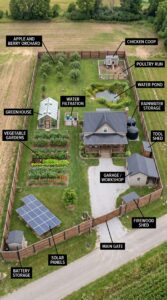
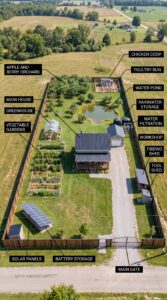
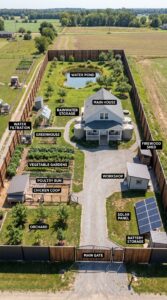
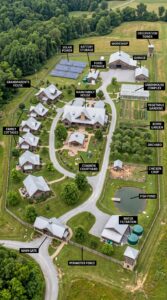
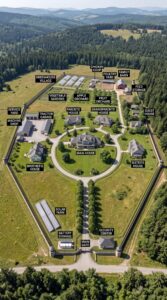
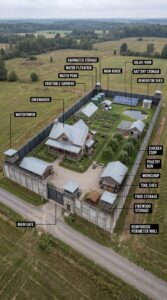
What if you could turn a relatively small piece of rural American land into a private family compound with its own house, reinforced perimeter, solar power, greenhouses, gardens, water storage, food reserves, workshop, chicken coop, private pond and underground emergency shelter — without spending millions?
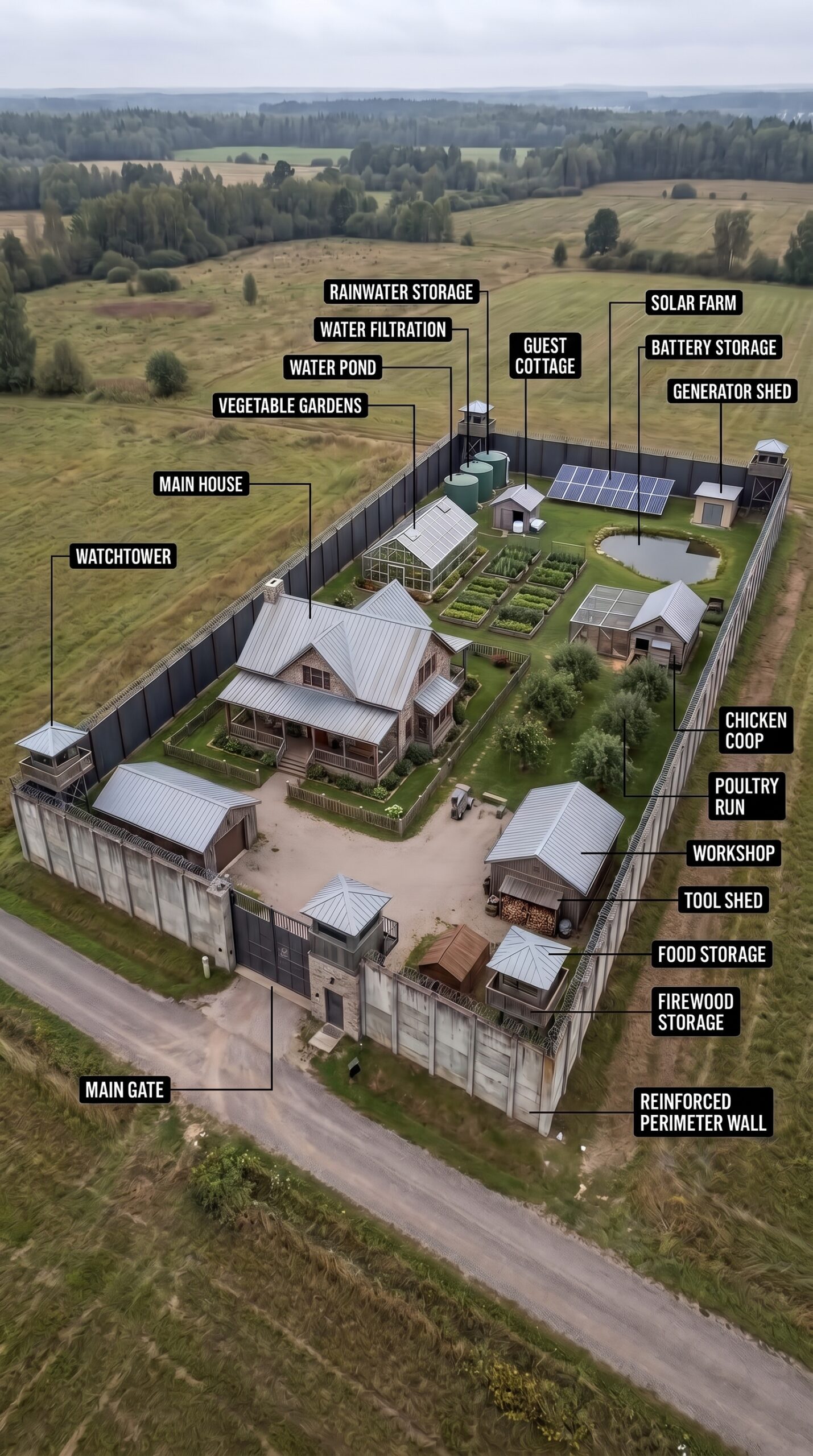
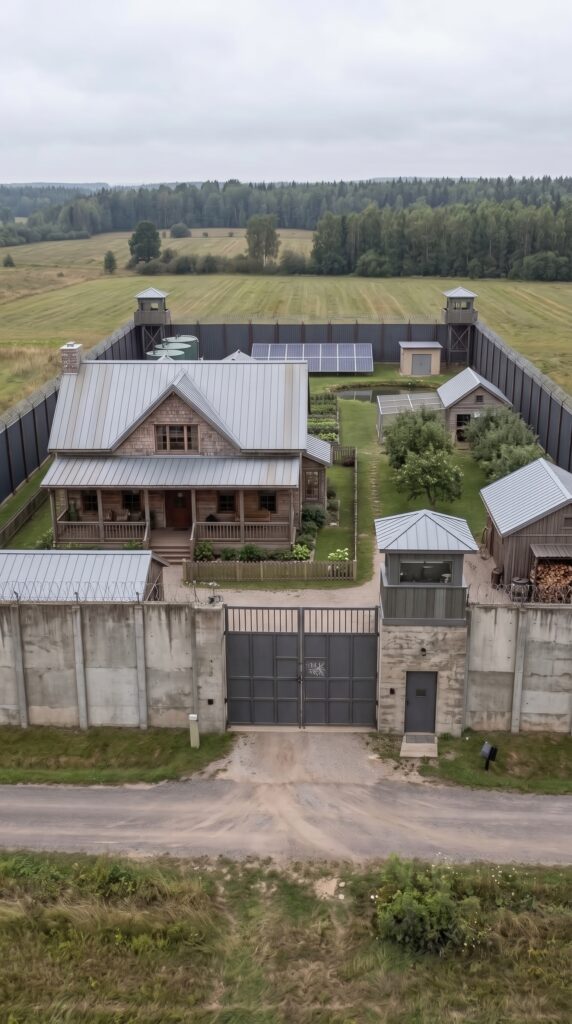
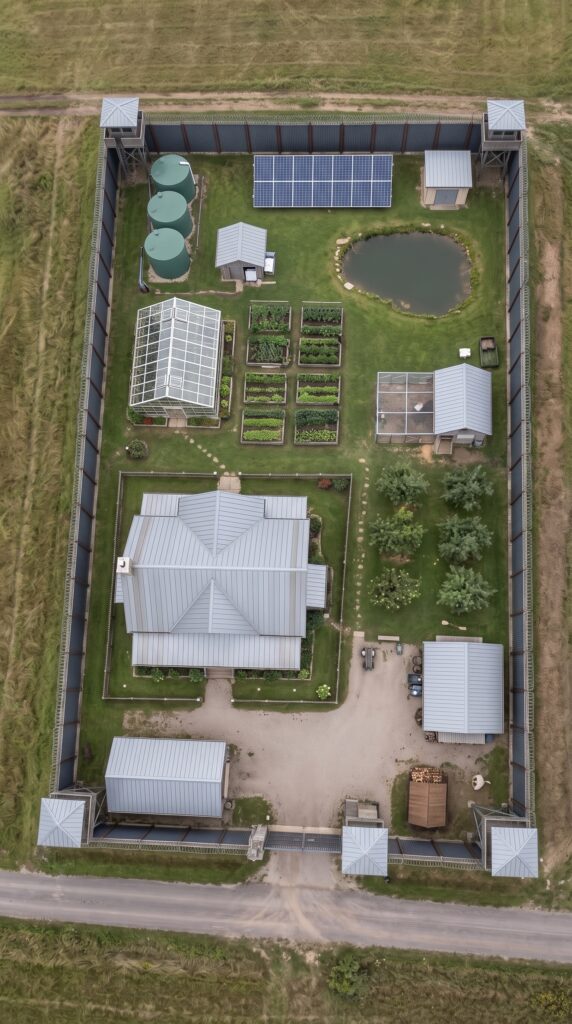
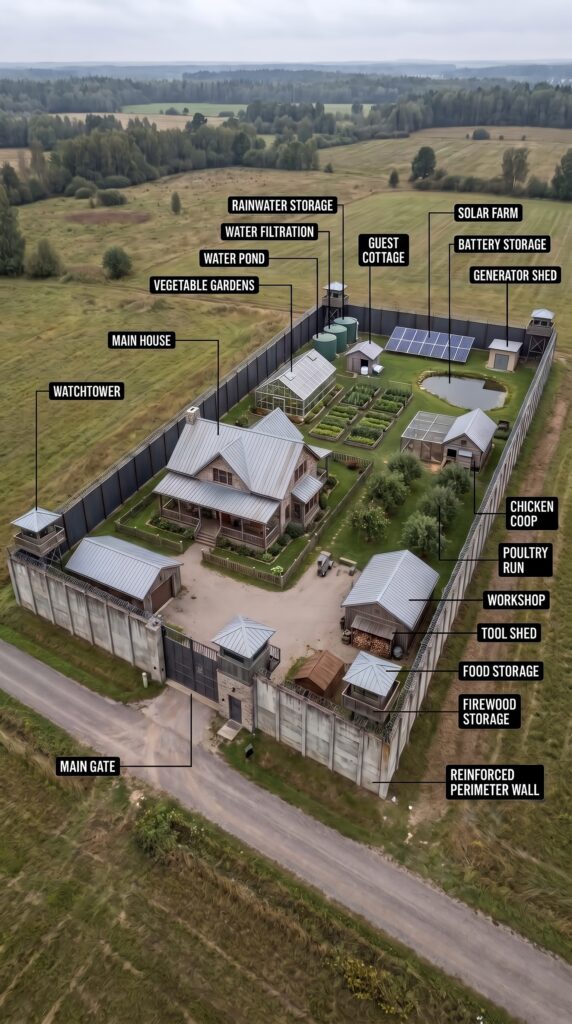
The property shown here is designed around exactly that idea. It looks like a private fortress from the outside, but inside the walls is a complete rural homestead built around everyday comfort and long-term resilience. The goal is not to make every structure luxurious. Instead, the largest portion of the budget goes toward the main house, perimeter, energy system and essential infrastructure, while the agricultural and storage buildings remain simple and inexpensive.
For this version, I’m targeting a total construction budget of approximately $780,000, excluding the cost of the land and the vehicle. That makes the concept much more affordable than a multimillion-dollar private compound while still keeping the major features shown in the images.
The exact price would depend heavily on location, local labor rates, permits, soil conditions and how much work the owners complete themselves. For example, 2026 U.S. home-building costs vary dramatically by location, while rural site preparation and utilities can add significant amounts to a project.
The Main House — $200,000
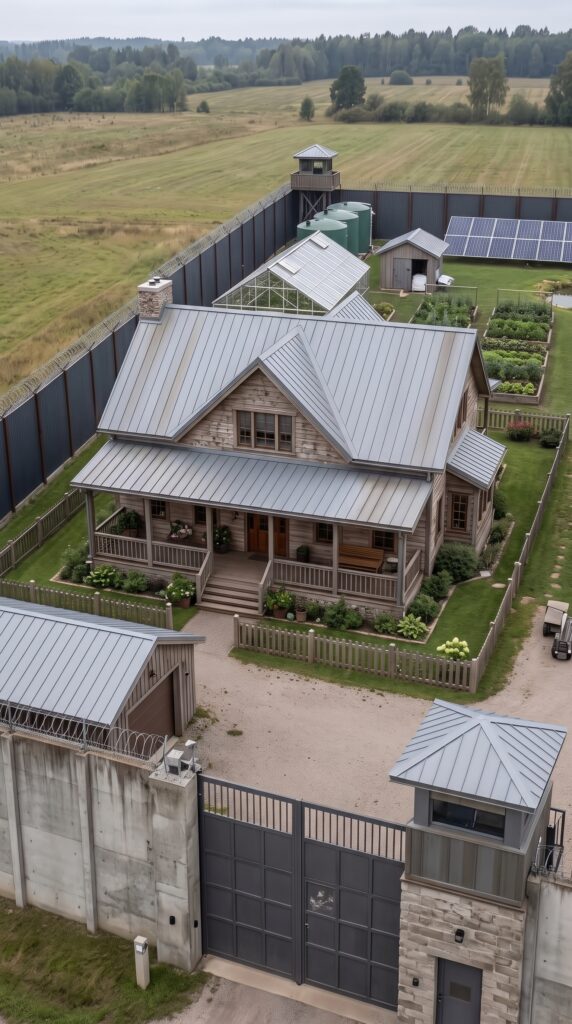
The centerpiece of the compound is the traditional American farmhouse.
Instead of making it an enormous luxury residence, this budget assumes a relatively efficient 1,000–1,200-square-foot home with a traditional exterior, covered front porch, kitchen, living room, two or three bedrooms, bathrooms, utility space and storage.
The design would use a relatively simple floor plan, standard windows, economical but attractive siding, a metal roof and practical interior finishes.
The goal is to make the house feel like a genuine American country home rather than a cheap temporary structure.
Estimated cost: $200,000
That figure is deliberately kept as the largest single building expense. For comparison, current 2026 data puts the average new-home construction cost at about $323,000 nationally, with significant variation by location and size, so reaching $200,000 would require a smaller home, economical materials and a relatively affordable rural market.
The Reinforced Perimeter — $140,000
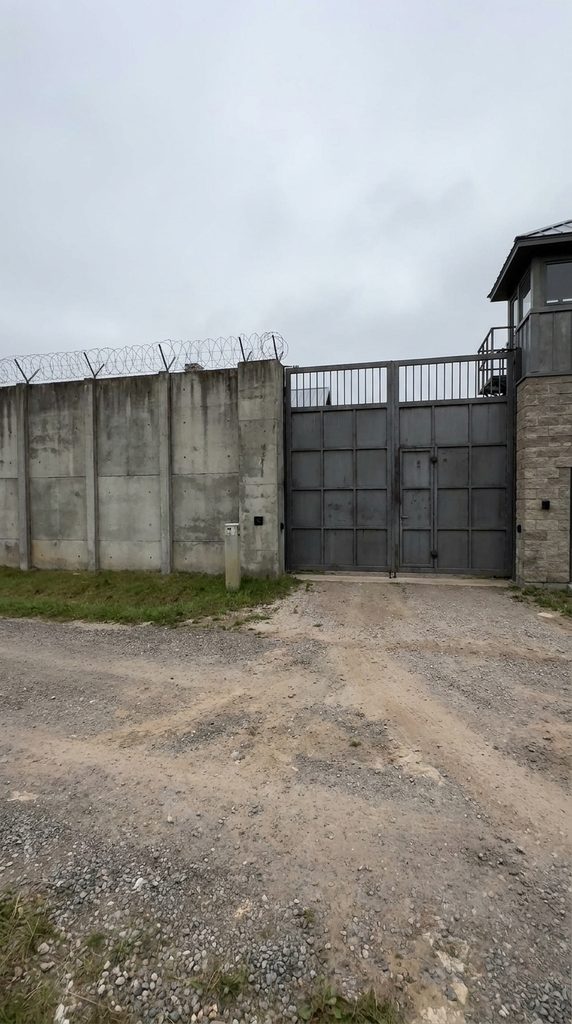
The most dramatic feature of the property is the enormous perimeter surrounding the family compound.
For the budget version, the goal is to create the appearance and function of a very substantial privacy and security boundary without constructing an expensive military-grade concrete fortress.
The property would use reinforced concrete or precast wall sections combined with steel structural supports, with a security topping and controlled entry. Keeping the compound relatively compact helps reduce the total amount of wall required.
The budget would include foundations, wall sections, structural posts, basic lighting and installation.
Estimated cost: $140,000
This is still a major investment, but it allows the rest of the property to remain relatively inexpensive.
Main Gate and Entry — $25,000
The entrance would feature a large steel vehicle gate with a smaller pedestrian entrance and a compact guard/security booth.
The system could include cameras, lighting, an intercom and electronic access control.
There is no need for an elaborate stone gatehouse. The objective is simply to create a strong, attractive entrance that matches the rest of the compound.
Estimated cost: $25,000
Four Watchtowers — $24,000
Four simple observation towers sit near the corners of the property.
They don’t need to be enormous concrete structures. A timber-and-steel construction with elevated platforms, weather protection, stairs and basic lighting would be sufficient for visual monitoring of the property.
At roughly $6,000 each:
Four towers: $24,000
Their primary purpose is visibility over the perimeter and surrounding land.
Solar Farm and Battery Storage — $55,000
The solar installation is one of the most important systems on the property.
The concept uses approximately 10 kW of solar panels positioned inside the compound. Electricity generated during the day can be used by the house, pumps, refrigeration, lighting, workshop and other systems, while batteries store energy for later use.
The budget includes:
10 kW solar array
Inverters
Mounting system
Electrical equipment
Battery storage
Installation
Estimated total: $55,000
This is intentionally one of the larger investments because reliable electricity is critical to almost every other system on the property.
A solar system can also be paired with a conventional generator rather than attempting to make solar the only source of electricity.
Generator Shed — $7,000
A small dedicated utility building would house the backup generator and related electrical equipment.
The structure could also provide space for fuel-related equipment and maintenance supplies where permitted by local regulations.
Estimated cost: $7,000
The generator itself would be sized according to the house and essential electrical loads.
Water Storage and Filtration — $20,000
Three large tanks are positioned near the rear of the compound.
The system would collect rainwater and store it for later use. A filtration system would provide treated water for appropriate household or agricultural applications, while a private well could serve as the primary water source if the property has suitable groundwater.
The budget would cover:
Storage tanks
Pumps
Gutters and collection
Basic filtration
Plumbing
Water distribution
Estimated cost: $20,000
A well and septic system can add several thousand dollars more depending on the location. Current 2026 estimates put wells around $5,000–$10,000 and septic systems around $3,400–$11,500 on average.
Underground Emergency Shelter — $45,000
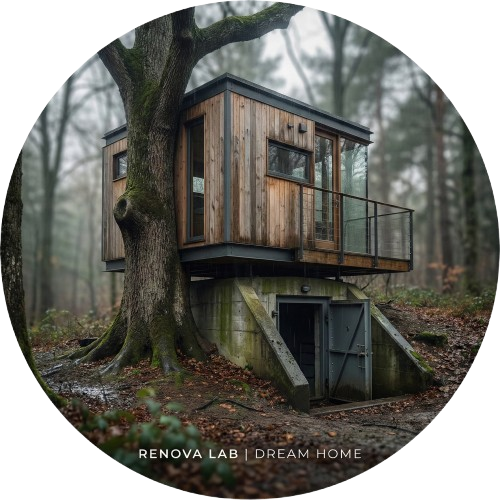
Hidden beneath the main house is a compact underground emergency shelter.
This would not be a luxury survival bunker with multiple bedrooms and a swimming pool. The budget version would be a smaller reinforced space designed for temporary shelter during severe weather, extended power outages or other emergencies.
It could contain:
Basic sleeping space
Emergency food storage
Water reserves
Ventilation
Lighting
Backup communications
Basic sanitation
Estimated cost: $45,000
Keeping the bunker small is what makes it possible to include it without destroying the overall budget.
Greenhouses — $12,000
The agricultural area contains several greenhouses.
These structures would be used for vegetables, herbs, seedlings and crops that benefit from additional protection.
The budget assumes a combination of inexpensive greenhouse kits and simple DIY installation rather than expensive commercial structures.
Estimated cost: $12,000
That is consistent with current U.S. greenhouse pricing: Angi’s 2026 data puts typical greenhouse projects around $3,071–$16,209, with basic 100-square-foot structures often falling in the $3,000–$8,000 range.
Vegetable Gardens — $6,000
The large garden section would contain organized raised beds with irrigation.
The owners could grow tomatoes, potatoes, carrots, onions, beans, lettuce, peppers, cucumbers, herbs and other seasonal crops.
The budget covers:
Soil
Compost
Raised beds
Irrigation
Seeds
Basic fencing
Gardening tools
Estimated cost: $6,000
Over time, the garden could be expanded without requiring a major additional construction investment.
Apple and Berry Orchard — $3,000
The orchard would start with young fruit trees and berry bushes rather than expensive mature landscaping.
Apple trees, blueberries, raspberries, blackberries and other suitable plants could eventually provide a recurring harvest.
Estimated initial cost: $3,000
This is another example of an element that becomes much more valuable over time without requiring a huge initial investment.
Chicken Coop and Poultry Run — $2,500
And yes — the chicken coop does not need to cost $7,000.
A simple family-scale coop could be built for a few hundred to a couple thousand dollars depending on materials and labor. Current 2026 estimates put basic coop materials around $650 for a DIY build, while larger commercial coops can range from roughly $300 to $2,000.
For this property, I’d budget:
Coop: $1,500
Poultry run and fencing: $700
Feeders, nesting boxes and waterers: $300
Total: $2,500
That is more appropriate for the scale of the project.
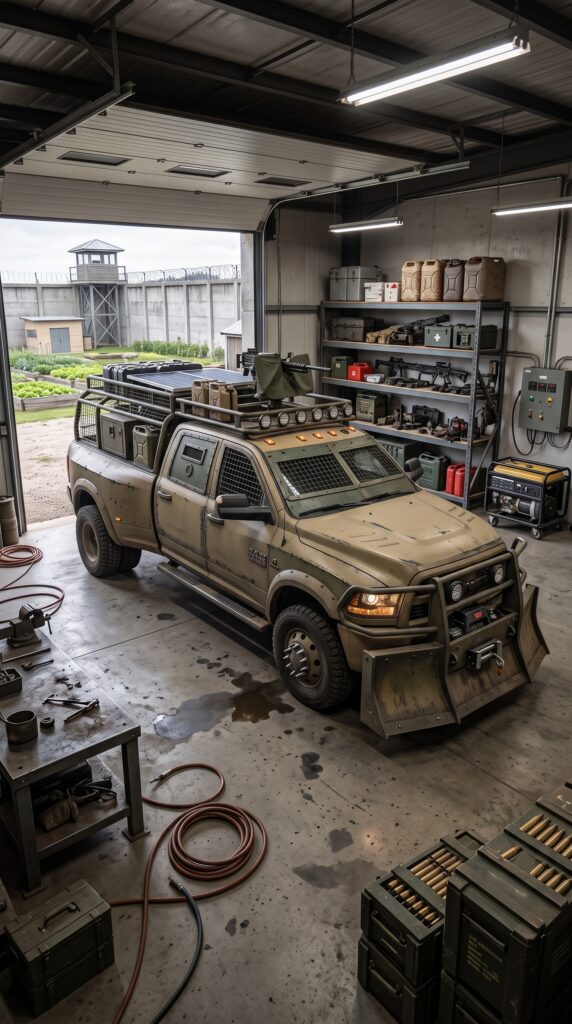
Workshop and Garage — $25,000
The workshop provides a practical working area for maintaining vehicles, tractors, garden equipment, generators and household machinery.
Rather than building an expensive finished garage, this could be a simple metal-frame structure with a concrete floor, electrical outlets, lighting, workbenches and storage.
Estimated cost: $25,000
Food Storage Building — $10,000
One of the most useful structures on the property is the dedicated food and supply building.
Inside would be shelving for canned goods, dry food, grains, seeds, bottled water, tools, household supplies and emergency equipment.
The structure itself can remain extremely simple.
Estimated cost: $10,000
The actual food reserve is not included in this number because the quantity depends on the size of the family and how many months of supplies they want to maintain.
Tool Shed and Firewood Storage — $3,000
Two small structures provide dedicated storage for gardening tools, equipment and firewood.
These could be built from inexpensive timber or purchased as basic shed kits.
Total: $3,000
Private Pond — $6,000
The pond shown in the concept would be relatively small.
It could serve as a landscape feature and, where local conditions and regulations permit, potentially support fish.
Keeping the design simple and taking advantage of favorable natural terrain helps keep excavation costs down.
Estimated cost: $6,000
A much larger engineered pond would obviously cost considerably more.
Gravel Driveway and Site Work — $35,000
The compound would use gravel for most internal roads, parking areas and access paths.
This budget covers:
Gravel driveway
Parking area
Basic grading
Drainage
Utility trenches
Paths between buildings
Initial landscaping
Estimated cost: $35,000
This is much more economical than paving the entire property.
Engineering, Permits and Contingency — $60,000
The final category is extremely important.
A project containing a house, reinforced perimeter, underground shelter, solar system, water infrastructure and multiple agricultural structures needs proper planning and permitting.
This allowance covers architectural and engineering work, surveys, permits, inspections and unexpected construction expenses.
Estimated cost: $60,000
It is not money that necessarily gets spent all at once. It provides room for the inevitable surprises that come with a complicated rural construction project.
The Complete Budget
Component
Estimated Cost
Main farmhouse
$200,000
Reinforced perimeter wall
$140,000
Main gate & entry structure
$25,000
Four watchtowers
$24,000
10 kW solar + battery storage
$55,000
Generator shed
$7,000
Water storage & filtration
$20,000
Underground emergency shelter
$45,000
Greenhouses
$12,000
Vegetable gardens
$6,000
Apple & berry orchard
$3,000
Chicken coop & poultry run
$2,500
Garage & workshop
$25,000
Food & supply storage
$10,000
Tool & firewood storage
$3,000
Private pond
$6,000
Gravel driveway & site work
$35,000
Engineering, permits & contingency
$60,000
TOTAL
$678,500
That leaves a substantial margin of about $120,000 before reaching the $800,000 ceiling.
And that’s intentional.
Rather than artificially inflating every small structure, the remaining budget can absorb well/septic costs, additional solar batteries, better insulation, higher-quality interior finishes, additional fencing, larger food storage, drainage problems, transportation of materials, or construction overruns.
With those additions, I would present the realistic project budget on the website as:
Estimated construction budget: $700,000–$800,000
Target budget: approximately $750,000
This figure does not include the land or the armored pickup.
The reason this version works financially is that the money is concentrated where it actually matters. The $200,000 house provides comfortable living space. The $55,000 solar system provides a major independent power source. The perimeter and gate establish privacy and controlled access. The inexpensive greenhouse, garden, orchard and chicken coop provide food-production capacity without turning every agricultural structure into a $10,000 project.
The property also doesn’t need to produce 100% of everything the family consumes. Its purpose is to reduce dependence on outside infrastructure and provide additional options during emergencies.
And while the zombie-apocalypse scenario makes the concept entertaining, the same systems could have real-world value during major storms, extended blackouts, supply disruptions, severe weather or temporary isolation.
For around $750,000, plus the cost of the land, you would have something much more unusual than an ordinary country house: a private family homestead with its own power generation, water storage, food production, workshops, emergency shelter and heavily controlled perimeter.
Would you build the full $750,000 version, or would you remove some of the security features and put that money into a larger house and more land?
This is an architectural concept visualization and not a real construction project.

Leave a Reply