How Much Would You Need to Build a Self-Sustaining Rural Homestead?
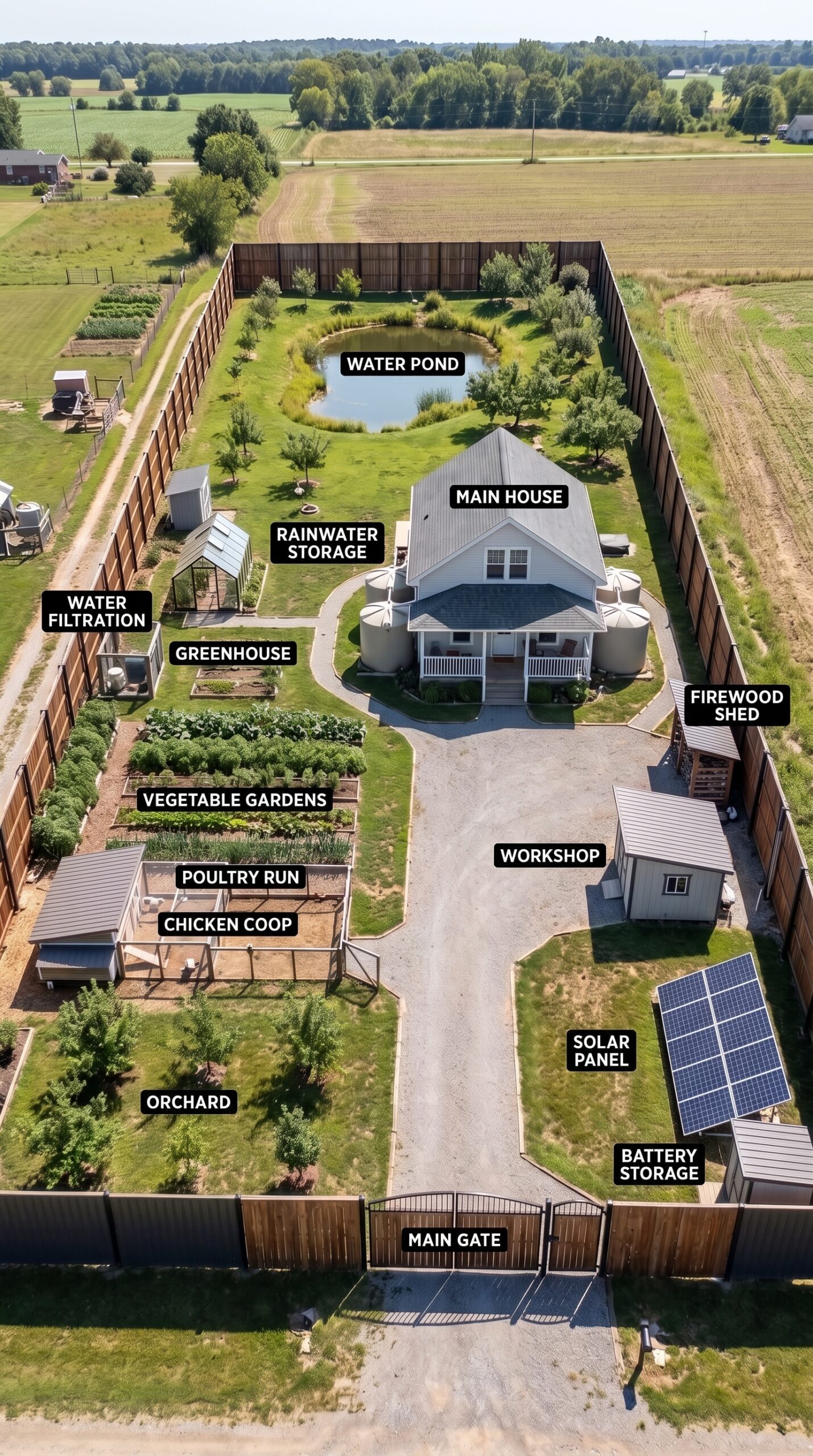
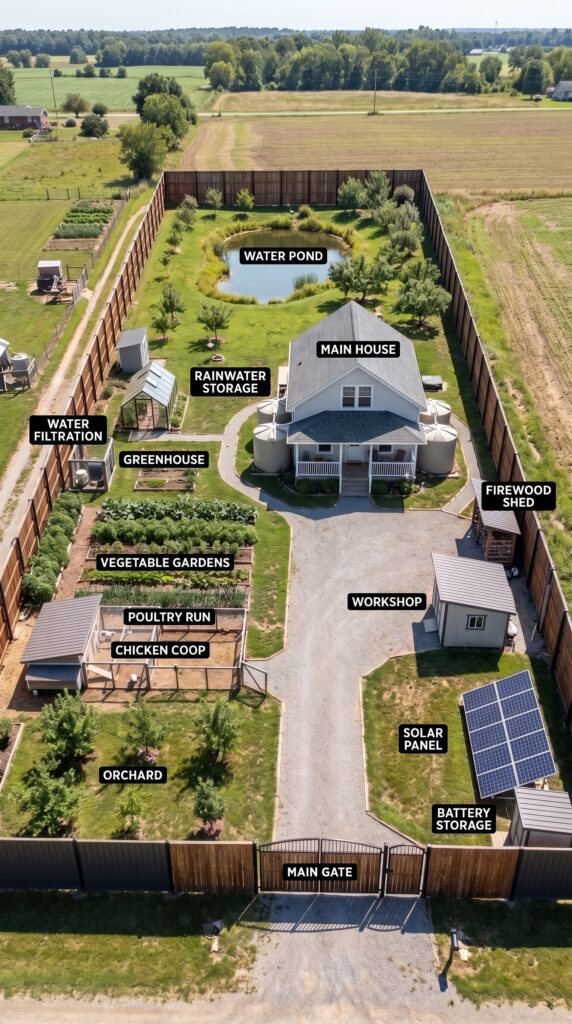
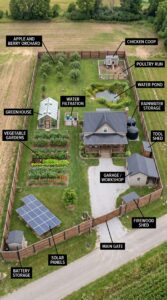
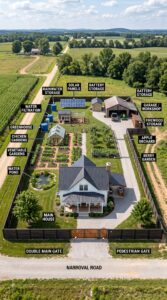
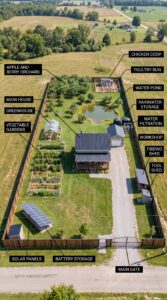
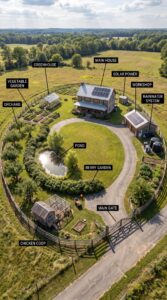
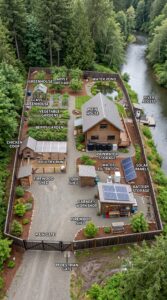
This small rural homestead is designed around a simple principle: use every part of the property for a practical purpose while keeping construction as affordable as possible. The concept includes a modest two-story house, a detached workshop, solar power, battery storage, rainwater collection, a small pond, greenhouse, vegetable gardens, orchard, chickens and a simple perimeter fence. Rather than paying a contractor to complete every stage, the owner would do most of the construction, landscaping and installation personally.
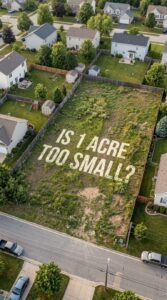
The property shown would work best on roughly one acre, or about 43,560 square feet. That is enough room for the house, workshop, growing areas, pond and small agricultural section when the layout is carefully planned. To make the $80,000 target possible, the land would need to be purchased in an inexpensive rural market, while the house would use a compact floor plan and economical materials.
The biggest saving comes from labor. The owner can handle framing, painting, garden construction, fencing, landscaping, greenhouse assembly and much of the workshop construction personally. Reclaimed lumber, second-hand equipment and materials purchased locally would also help keep the budget under control.
The finished property would not be a luxury estate. Instead, it would be a practical homestead where the house provides comfortable shelter, solar panels produce electricity, batteries provide backup storage, rainwater supports the gardens, the pond adds another useful resource, and the greenhouse and outdoor beds provide fresh food.
The $80,000 calculation is therefore best viewed as a DIY owner-builder scenario, not a typical U.S. contractor quote. For comparison, current 2026 U.S. construction estimates for even a basic new home are substantially higher once professional labor and site preparation are included, while a professionally installed 5 kW solar system alone averages around $13,900 before incentives.
The land figure is also deliberately low. USDA-based 2026 averages show that some of the cheapest rural land is found in states such as New Mexico, Wyoming, Nevada and Montana, but those figures are statewide benchmarks rather than guaranteed prices for buildable residential parcels. Access, water and zoning can completely change the real cost of a specific property.
With that in mind, here is a conceptual breakdown of how an owner-built version of this homestead could reach an $80,000 total including the land.
Land — $5,000
The budget assumes an exceptionally inexpensive rural parcel, potentially in a remote area where land values are far below national averages. The buyer would need to carefully verify legal road access, zoning, water availability, flood risk and whether a residence can actually be built on the property. The $5,000 figure should therefore be treated as a low-end target rather than a typical market price.
Main House — $38,000
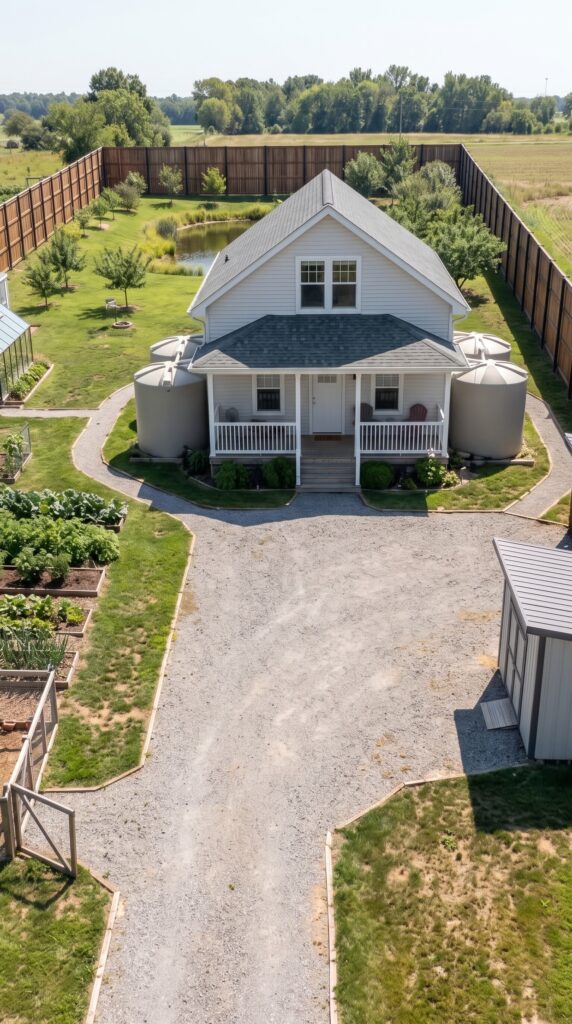
The house is the largest part of the budget, so it would be much simpler than a typical custom American home. A compact 800–1,000-square-foot wood-frame house with a basic second level, economical windows, simple kitchen and bathroom, and a metal roof could be completed gradually. The owner would perform most framing, insulation, siding, flooring, painting and interior finishing. This number is only realistic with substantial DIY labor and inexpensive materials.
Workshop — $6,000
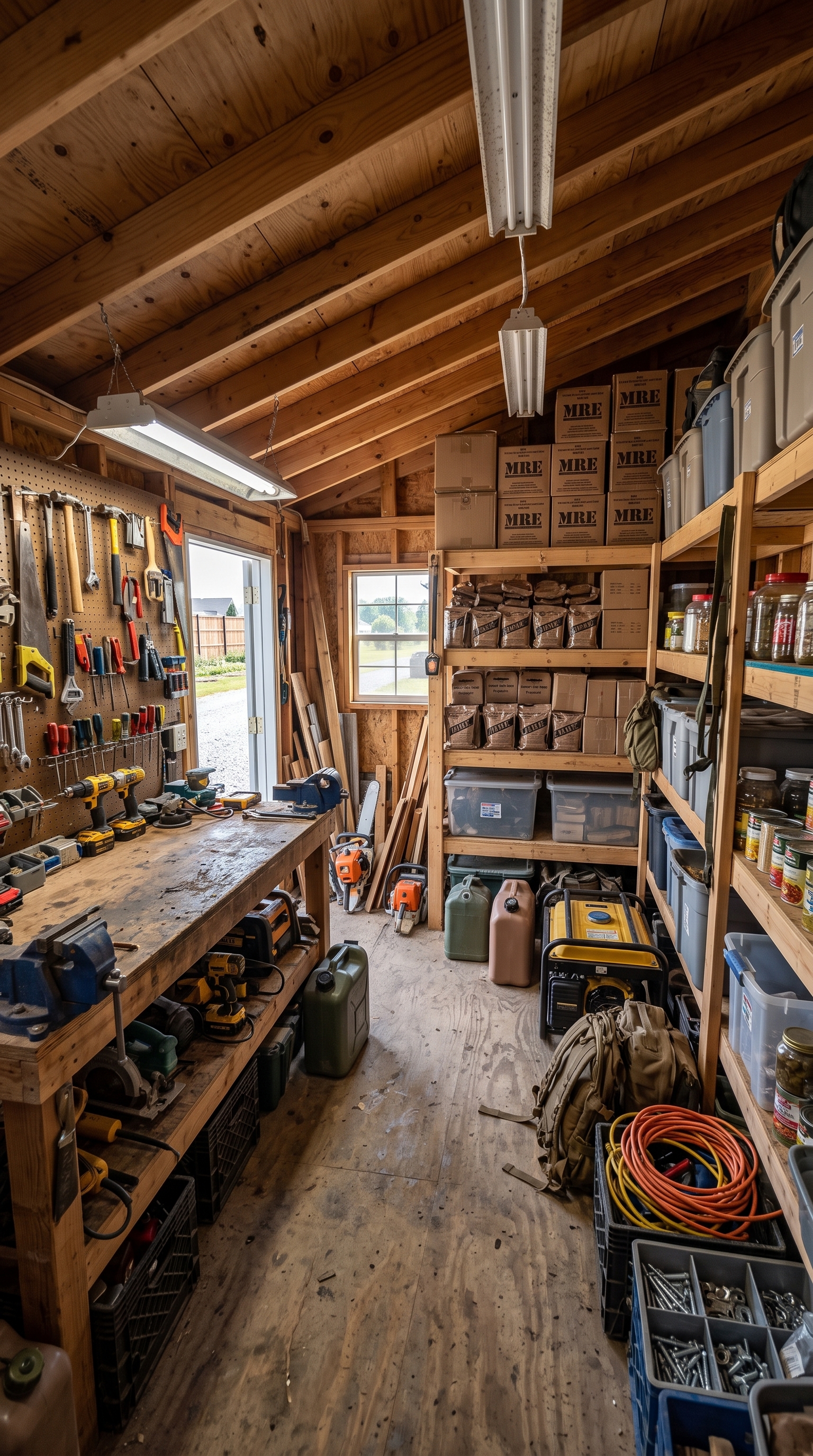
A simple detached workshop would provide space for tools, gardening equipment, repairs and storage. A timber frame, inexpensive siding and metal roof could keep the shell affordable. Inside, second-hand workbenches, shelving and cabinets would provide most of the functionality. The building would be intentionally practical rather than finished like a professional commercial shop.
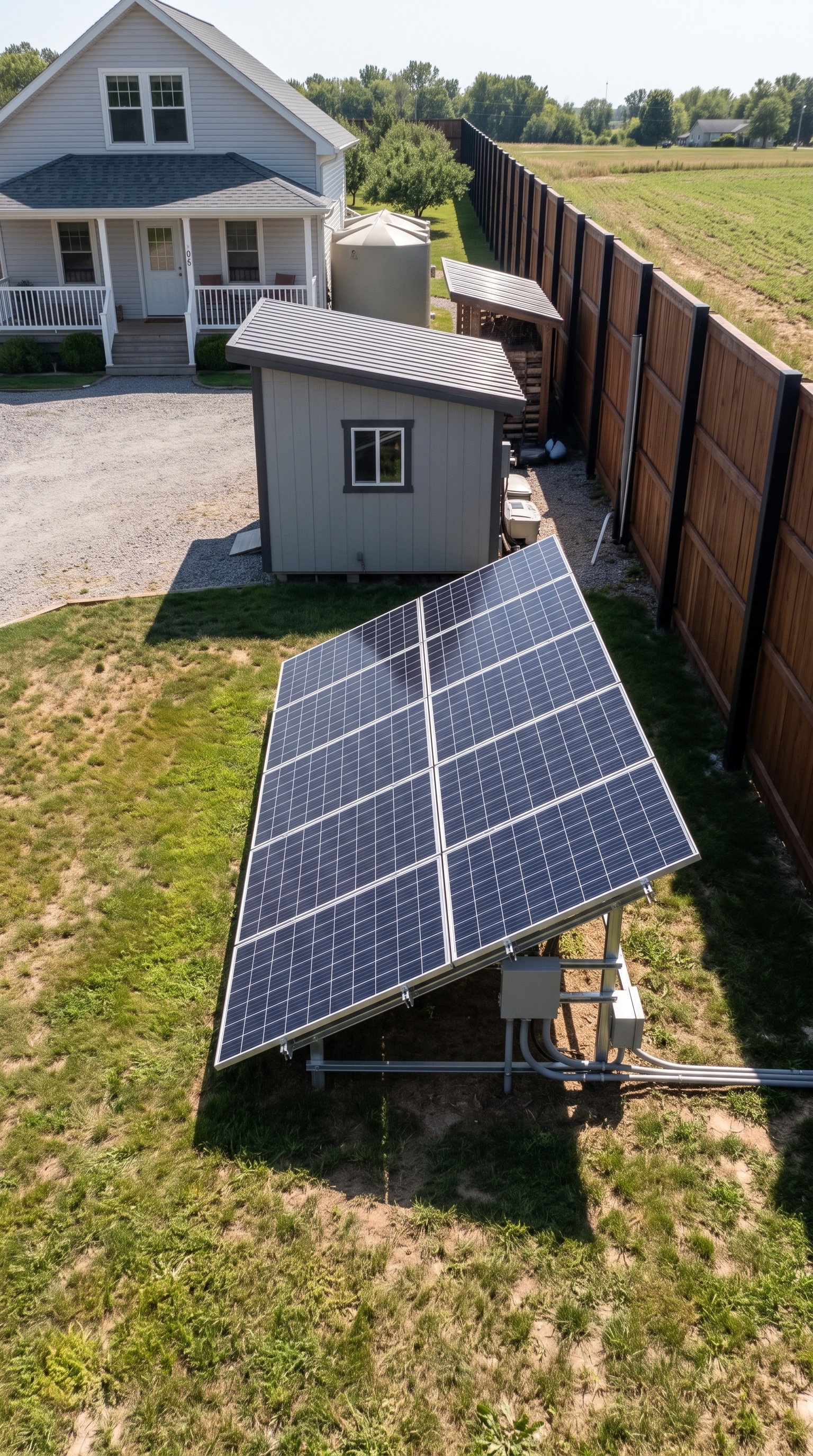
Solar Panels — $9,000
The property would use a modest solar installation rather than a large professional system. Panels, inverter, mounting hardware and electrical components could be sourced separately, with the owner handling the permitted portions of the installation. This remains an aggressive budget: a professionally installed 5 kW system averages about $13,900 nationally in 2026 before incentives.
Battery Storage — $5,000
A small battery bank would store part of the solar production for nighttime use and short power interruptions. The system would prioritize essentials such as lights, refrigeration, communications and water pumps rather than attempting to operate every appliance in the house. Starting with a smaller battery system also leaves room for expansion later as the budget allows.
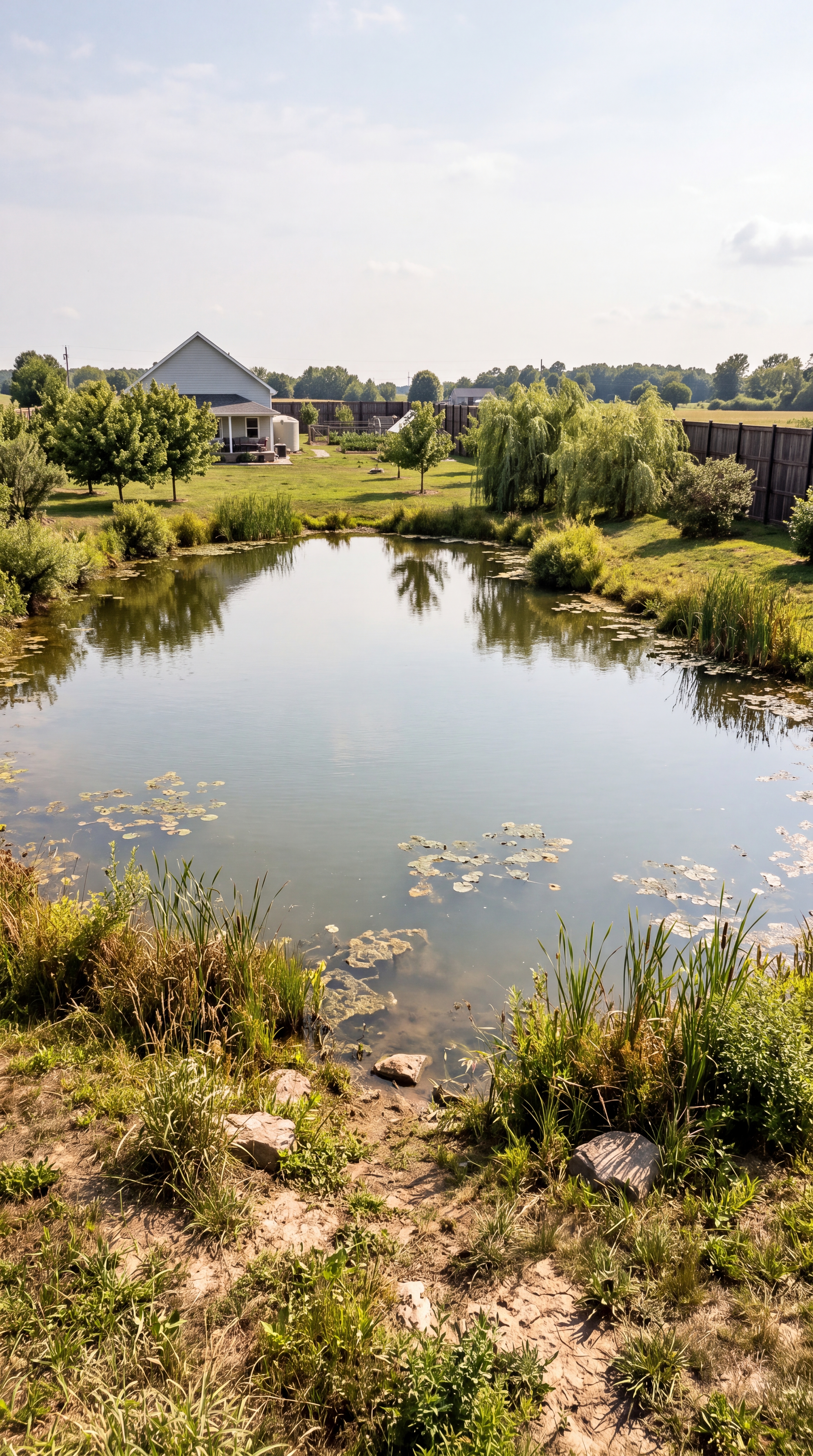
Water Pond — $2,500
The property would include a small pond positioned in a natural low area of the land. To stay within this budget, the owner would avoid a major engineered lake and instead use favorable terrain and rented excavation equipment for the initial digging. Simple shoreline planting, rocks and natural vegetation would make the finished pond blend into the landscape.
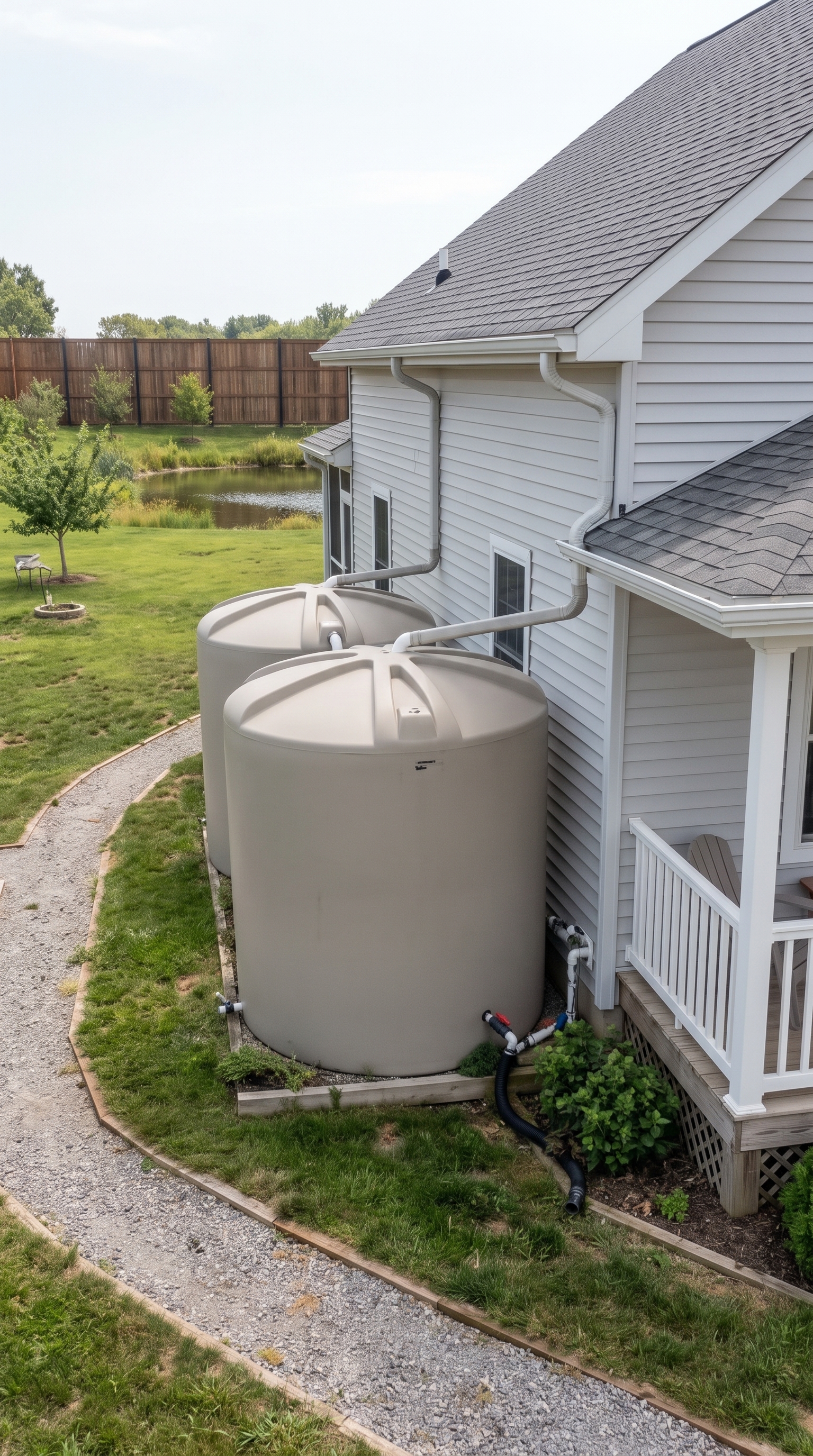
Rainwater Storage — $2,000
Gutters on the house and workshop would collect rainwater and direct it into several storage tanks. The stored water could be used primarily for garden irrigation and other suitable non-potable purposes, subject to local regulations. Building the system gradually with inexpensive tanks and DIY plumbing would keep the cost low.
Water Filtration — $1,500
A basic filtration and pumping setup would improve the quality of the available water for household and garden use. The budget assumes that the property already has a relatively favorable water source and does not require a very deep or technically difficult well. More complicated water conditions could increase this expense considerably.
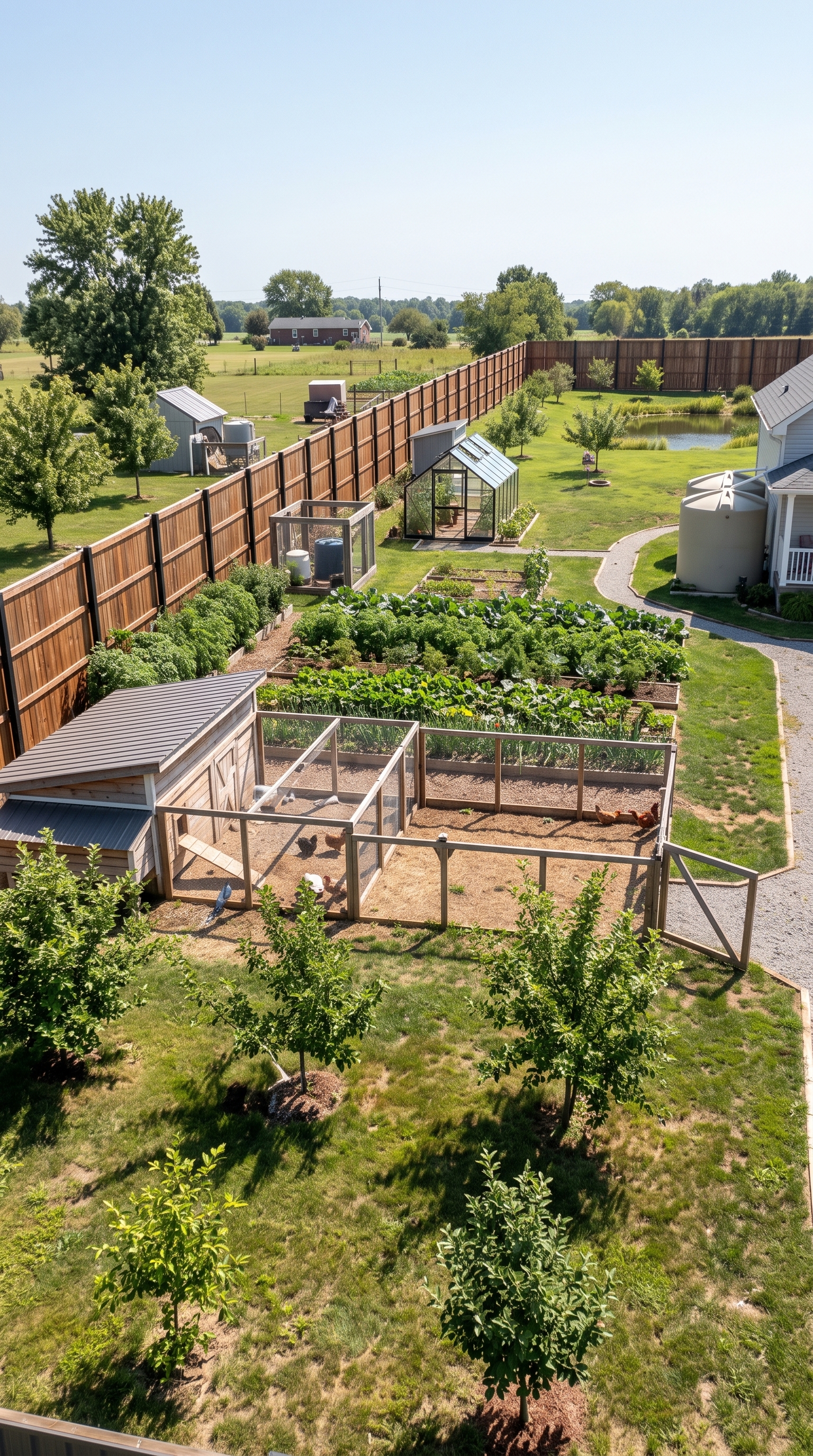
Greenhouse — $1,000
The greenhouse would be a small DIY structure assembled from inexpensive framing and greenhouse film or basic panels. Its purpose would be to start seedlings, grow warm-season vegetables and extend the growing season. Professional 500-square-foot greenhouse installations can cost thousands of dollars, so this version relies heavily on owner labor and economical materials.
Vegetable Gardens — $500
The vegetable garden would use simple raised beds, open soil rows and inexpensive irrigation. Seeds, compost and basic lumber make up most of the budget. The owner would prepare the soil and build the beds personally, while future compost production could reduce the cost of maintaining the garden.
Apple Orchard — $2,000
Instead of buying mature decorative trees, the property would begin with young apple trees and allow them to grow naturally over time. A small orchard could provide fruit while also becoming an attractive part of the landscape. The budget includes the trees, soil preparation, basic irrigation and inexpensive protection from animals.
Chicken Coop — $500
The chicken coop could be constructed from reclaimed lumber, leftover roofing and inexpensive hardware. The structure only needs to provide dry nesting areas, ventilation and protection from predators. By keeping the design simple and doing all construction personally, a functional family-scale coop can stay within a few hundred dollars.
Poultry Run — $600
A fenced outdoor run would give the chickens additional space while protecting them from predators. Timber posts and wire mesh are the primary materials. The enclosure could be expanded later if the flock grows, meaning the initial investment only needs to cover a practical starting area.
Orchard and Berry Area — Included in Orchard Budget
Additional berry bushes could be planted around the orchard and property boundaries without requiring a separate major structure. Raspberries, currants, blackberries and other locally suitable varieties would add another source of fresh food while also helping turn unused sections of the property into productive landscape.
Firewood Shed — $700
A small open-sided timber shed would protect firewood from rain and snow while keeping it close to the house. The structure would use a simple roof and inexpensive lumber, with most of the labor performed by the owner. The design would focus on ventilation and easy access rather than decorative finishes.
Main Gate — $1,000
A simple wooden or metal vehicle gate would mark the entrance to the homestead. Instead of using an expensive automated estate gate, the owner could install a manually operated design with sturdy posts, hinges and a lock. The gate would provide a clear entrance without consuming a large part of the construction budget.
Perimeter Fence — $2,000
The property would use economical agricultural-style fencing rather than a masonry wall. Timber or steel posts combined with wire or simple panels could define the boundary while keeping costs manageable. The owner would install the fencing personally, which removes much of the labor cost that makes professional fencing expensive.
Driveway and Site Preparation — $1,700
A basic gravel driveway would connect the property to the existing rural road. Only the essential access and parking areas would be graded, while the rest of the property would retain its natural terrain. This keeps excavation, drainage and heavy-equipment costs under control.
Tools and Contingency — $1,000
The final allowance covers small tools, replacement materials, hardware and unexpected expenses. The owner would likely already own some basic equipment, while more expensive machinery could be rented only when required. Keeping a small contingency prevents minor problems from immediately breaking the $80,000 budget.
Final Cost
Component
Budget
Rural land
$5,000
Main house
$38,000
Workshop
$6,000
Solar panels
$9,000
Battery storage
$5,000
Water pond
$2,500
Rainwater storage
$2,000
Water filtration
$1,500
Greenhouse
$1,000
Vegetable gardens
$500
Apple orchard
$2,000
Chicken coop
$500
Poultry run
$600
Firewood shed
$700
Main gate
$1,000
Perimeter fence
$2,000
Driveway and site work
$1,700
Tools and contingency
$1,000
TOTAL
$80,000
The $80,000 DIY Homestead
At this budget, the goal is not to reproduce an expensive luxury property. It is to recreate the idea of the property: a modest home surrounded by productive land, renewable energy, water storage, a workshop and small-scale food production.
The $80,000 figure works only because the owner is effectively supplying a large part of the construction labor. The house would be small, the buildings simple, the land inexpensive and improvements would be completed gradually.
That is what makes the concept interesting for an American rural audience: the property does not need to be enormous to become useful. With about one acre, careful planning and a willingness to build things yourself, a small piece of inexpensive rural land could potentially become a private homestead with its own food production, workshop, backup power and water systems.
This project is a conceptual design created for inspiration and architectural visualization. It is not a real construction project or a technical blueprint.

Leave a Reply