From Private Estate to Working Farm: What Would It Cost—and Earn—to Build a Property Like This?
This protected family compound could keep you safe in a zombie apocalypse — but until that day ever comes, it could generate a steady income from the land itself.
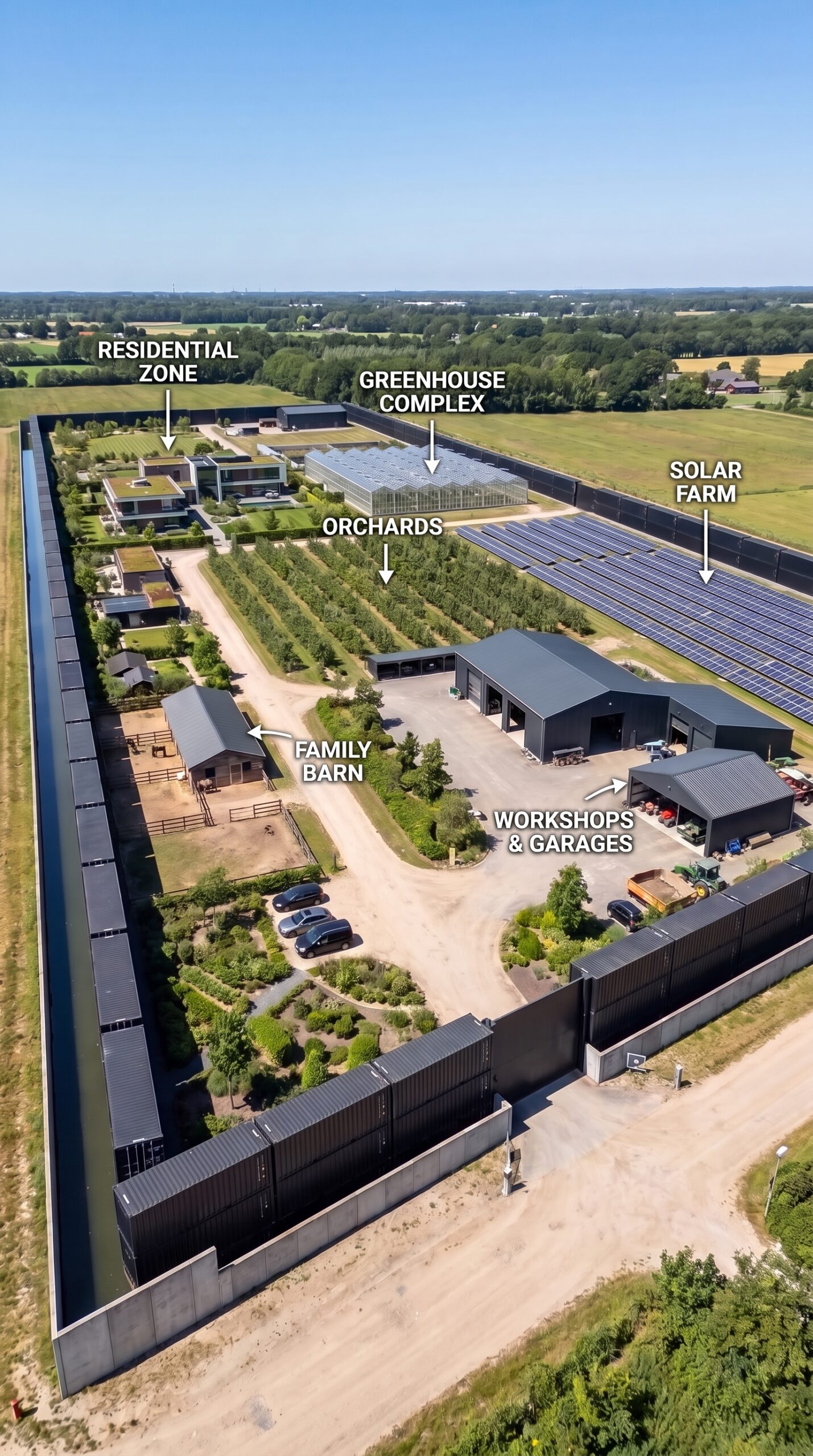
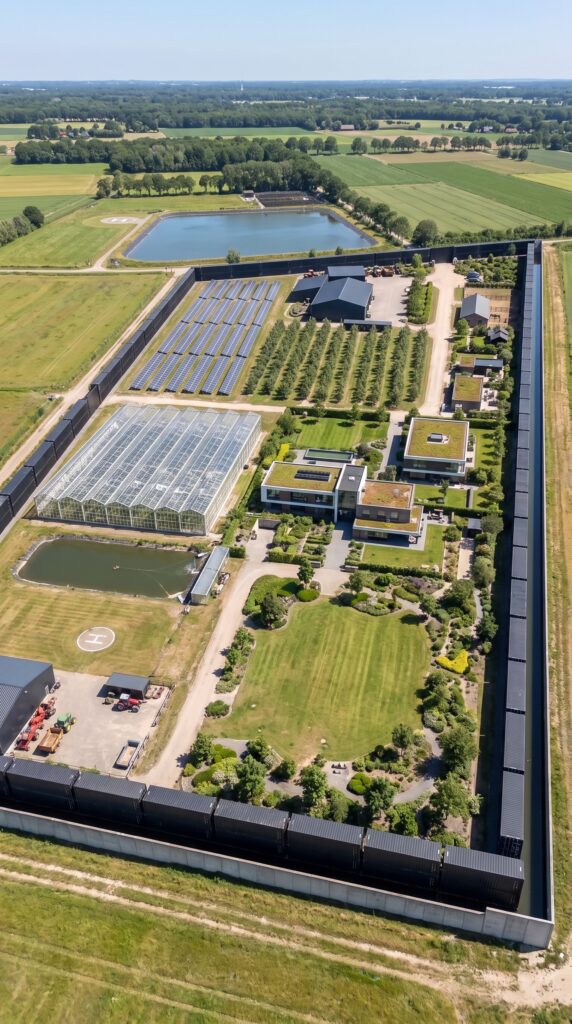
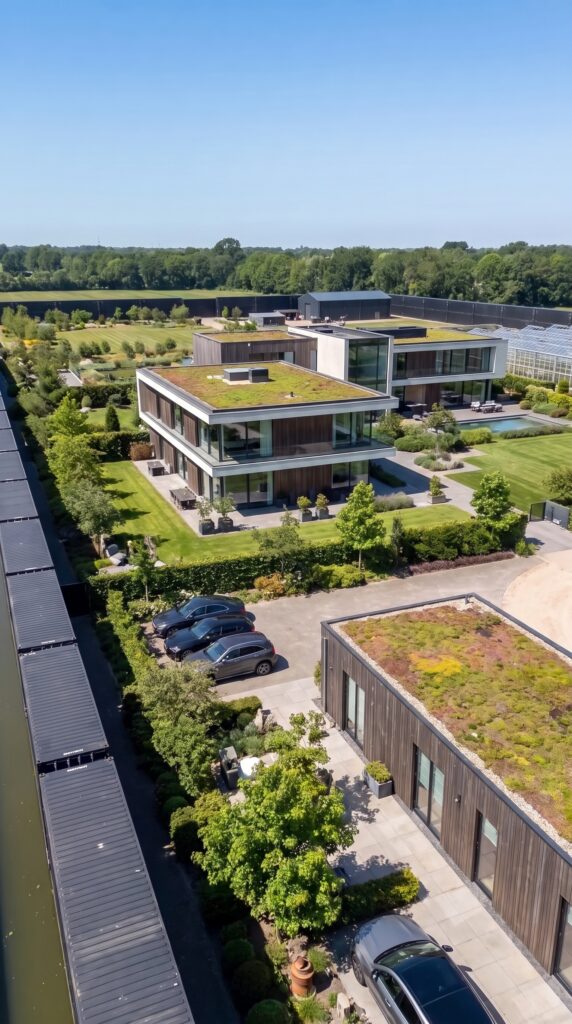
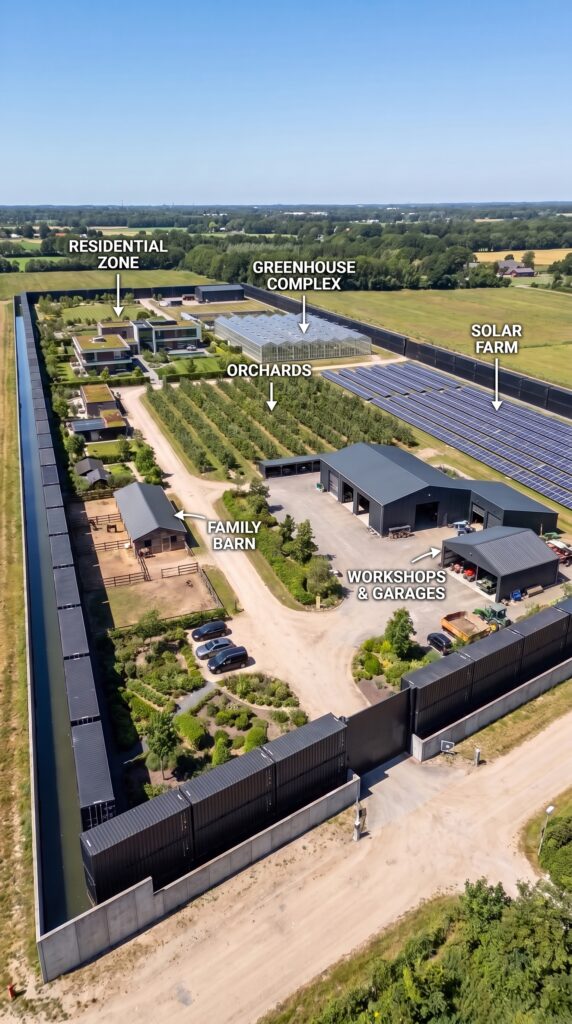
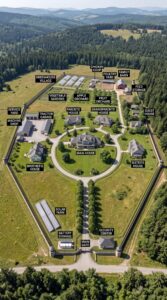
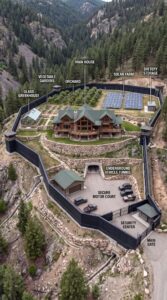
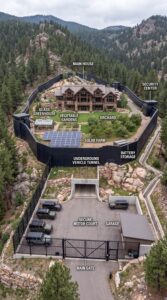
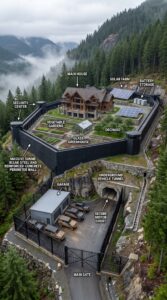
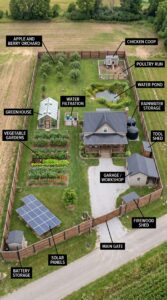
At first glance, it looks like an enormous private residence hidden behind a secure perimeter. But this property is designed to be much more than a house. Every part of the land has a purpose, turning the entire compound into a self-sufficient family estate that could also operate as a small agricultural business.
The owners could live here almost independently from the outside world while producing their own electricity, growing vegetables and fruit, raising fish and potentially selling the surplus production.
And the most interesting part is that all of these systems can work together.
Solar Power Plant
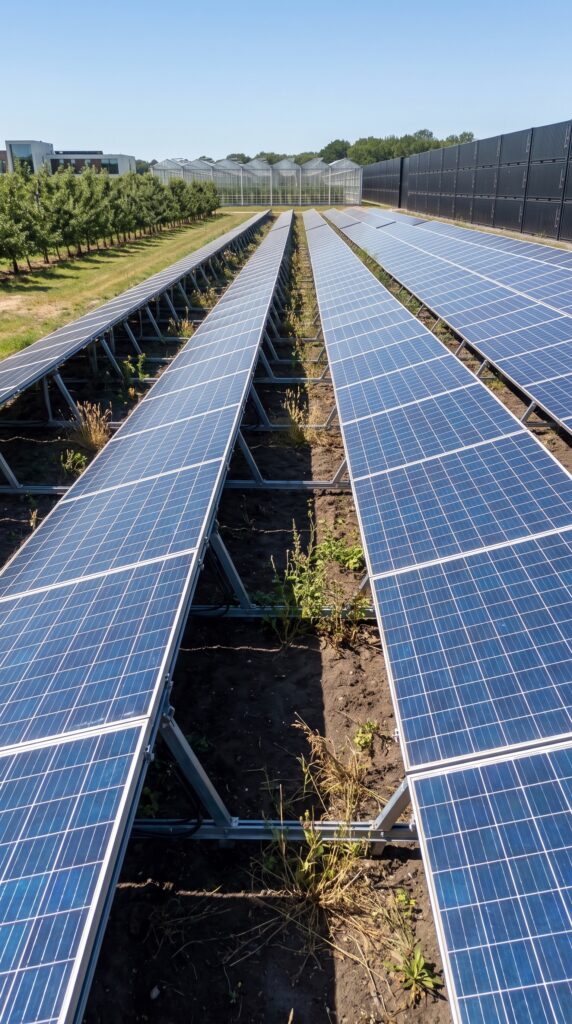
A large section of the property is covered with solar panels designed to provide electricity for the entire compound.
The panels would supply power to the main houses, workers’ accommodation, greenhouse ventilation, irrigation pumps, refrigeration systems, water pumps and the equipment required for the trout farm.
During sunny periods, the solar installation could produce more electricity than the property needs. Instead of allowing that electricity to go unused, the surplus could potentially be exported to the grid and sold, creating an additional source of revenue.
For this concept, we could install approximately 500 kW of solar capacity.
Depending on the location and local solar conditions, such a system could potentially produce around 500,000–600,000 kWh of electricity per year.
The estimated investment for the complete solar installation, including panels, inverters, mounting structures, electrical equipment and installation, would be approximately:
$400,000
The solar system would therefore serve two purposes: reducing the property’s own electricity costs and potentially generating additional income from surplus power.
The Greenhouse Complex
The greenhouses would be one of the most important productive areas of the property.
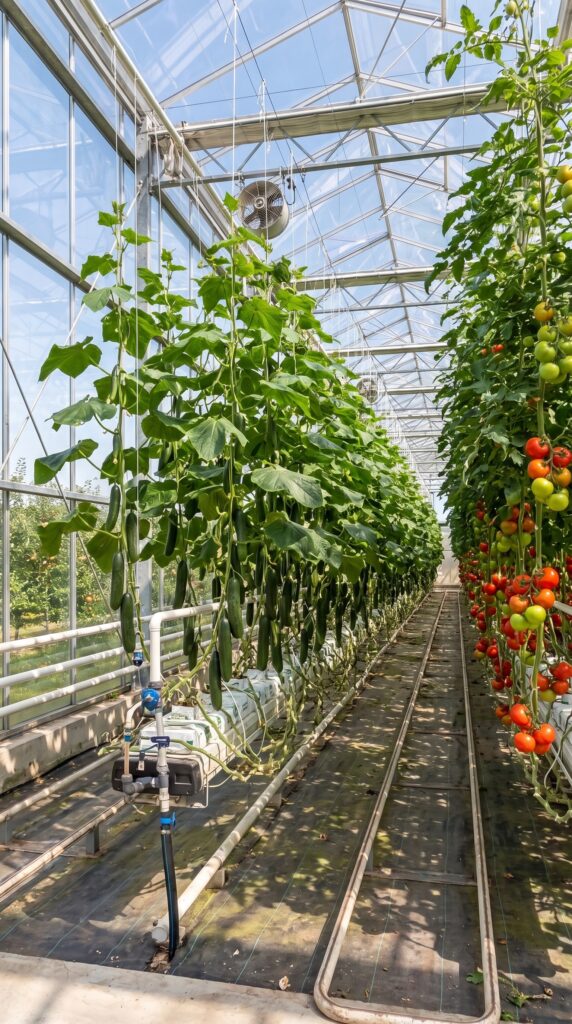
Instead of using the land simply as a large garden, approximately 2,500 m² of modern greenhouse space could be built behind the main residence.
Inside, the growing area could be divided between tomatoes and cucumbers.
The greenhouse would use controlled irrigation, drip systems, ventilation, water filtration and climate management to create stable growing conditions. This would allow the owners to produce significantly more vegetables from the same amount of land than would be possible with a traditional outdoor garden.
Approximately half of the greenhouse could be dedicated to tomatoes.
Tomatoes could be grown vertically, maximizing the amount of production from every square meter. Depending on the varieties, growing technology and local climate, the greenhouse could potentially produce tens of tonnes of tomatoes every year.
The remaining space could be dedicated to cucumbers.
Cucumbers are particularly suitable for intensive greenhouse production because they can be trained vertically and harvested repeatedly throughout the growing cycle.
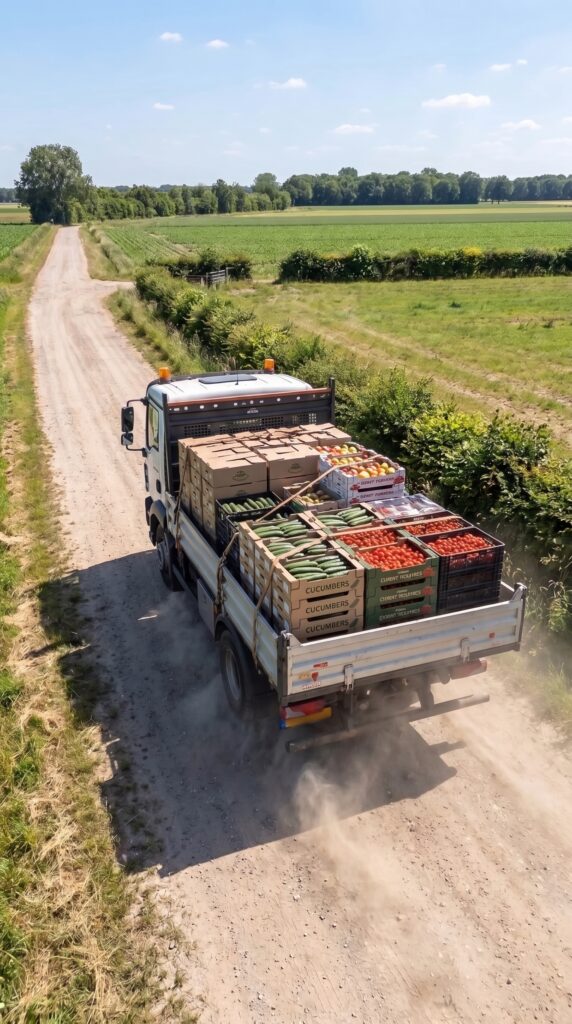
The vegetables could be sold to local markets, restaurants, supermarkets or directly to customers.
The estimated construction cost for the greenhouse complex, including the structure, irrigation, ventilation and basic growing equipment, would be approximately:
$450,000
Once fully operational, the greenhouse could potentially become the largest agricultural source of revenue on the property.
The Apple Orchard
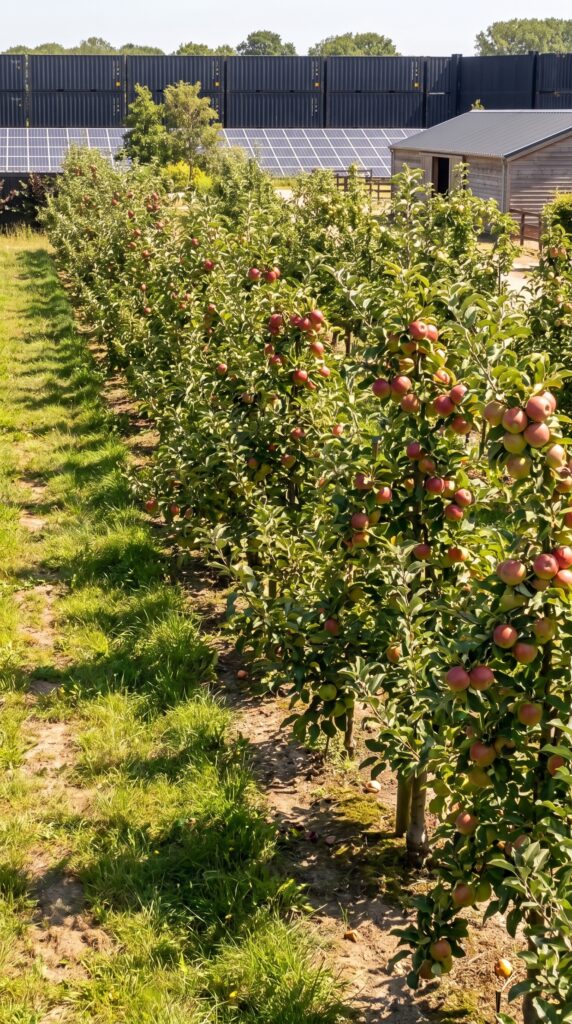
Beyond the greenhouse would be a private apple orchard.
Approximately one acre could be planted with carefully selected varieties suited to the local climate.
Unlike the greenhouse, the orchard would not produce significant income immediately. Apple trees require several years to mature before reaching full production.
But once established, the orchard could produce fruit every year with relatively low infrastructure requirements compared with the greenhouse.
The apples could be sold fresh to local customers, markets and restaurants.
The property could also use part of the harvest for value-added products such as fresh apple juice, dried apples, jams or other farm products.
This would allow the owners to make money not only from the fruit itself, but potentially from processing the harvest into higher-value products.
The initial cost of trees, soil preparation, irrigation and orchard infrastructure could be approximately:
$35,000
The orchard would also provide privacy and landscaping, making the agricultural part of the property blend naturally into the surrounding environment.
The Private Trout Farm
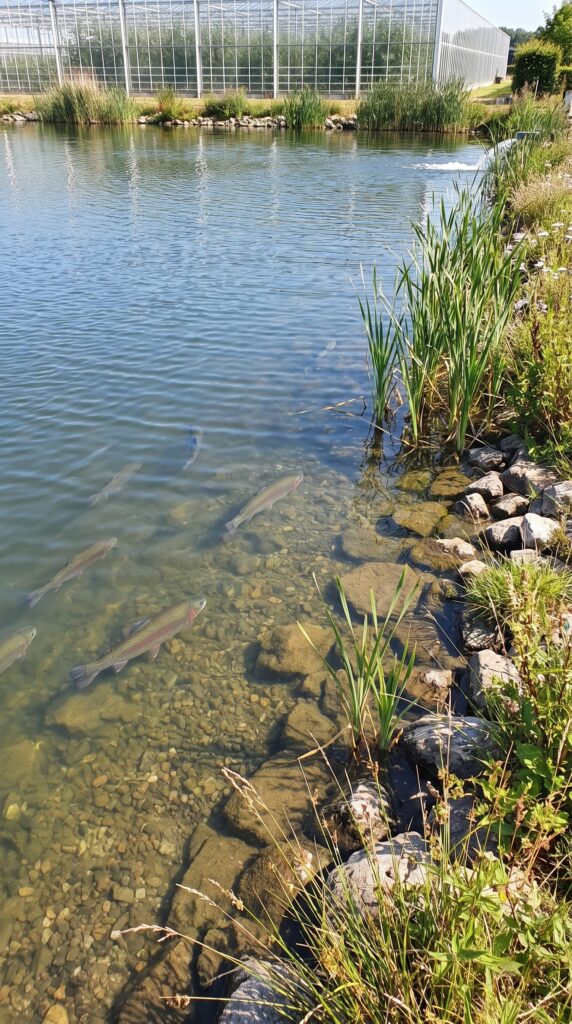
At the rear of the property, the water feature could become another productive part of the compound.
Instead of being simply a decorative pond, it could be designed as a small trout-farming operation.
Trout require clean, oxygen-rich water and careful control of water quality. The system would therefore include pumps, filtration, aeration and water circulation equipment.
A properly designed operation could potentially raise several tonnes of trout per year.
The fish could be sold directly to local restaurants, markets and private customers, while a portion could remain for the family’s own consumption.
Selling cleaned and prepared fish rather than simply live trout could potentially increase the value of the final product.
The estimated investment for the pond, water circulation system, aeration, filtration and fish-farming equipment could be approximately:
$100,000
This creates yet another independent source of income while also making the property more self-sufficient.
The Owners’ Main Residence
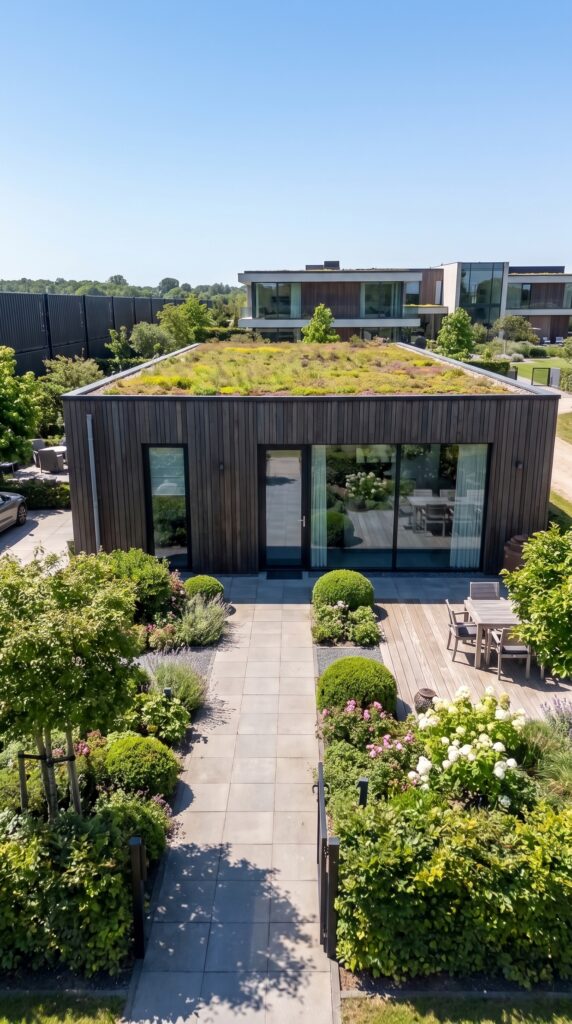
At the center of the compound would be the main family residence.
Rather than building a huge luxury mansion that consumes most of the budget, the idea would be to construct a practical modern home designed around security, privacy and long-term living.
The building could use reinforced concrete construction, secure entrances and bullet-resistant windows.
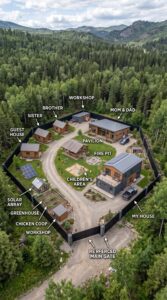
The living space would be divided into two connected homes, allowing two parts of the family to live together while maintaining separate kitchens, bedrooms, bathrooms and private living areas.
Large windows could face the protected interior of the property, while the more exposed sides of the building could use smaller, reinforced openings.
The house could also contain a secure storage area, mechanical room, pantry and emergency supplies.
For the main residence and basic agricultural buildings, the model would allocate approximately:
$580,000
This would keep the residential component comfortable without allowing the house itself to consume the majority of the $1.5 million budget.
A Separate House for the Workers
A property of this size would require people to operate it.
The greenhouses need to be monitored. Vegetables have to be planted and harvested. The orchard requires maintenance. The trout system needs regular attention, and the solar installation and irrigation infrastructure also require inspections.
For that reason, a separate smaller house would be built for the workers.
Keeping the workers’ accommodation separate from the main family residence would give everyone more privacy while allowing employees to remain close to the agricultural operation.
The workers could therefore live directly on the property and respond quickly if something goes wrong with the greenhouse, irrigation system, fish farm or other infrastructure.
Water and Irrigation Infrastructure
Water would be one of the most important systems on the entire property.
The greenhouses, orchard and trout farm would all have different water requirements.
A network of storage tanks, pumps, filtration systems and irrigation lines could distribute water throughout the compound.
Rainwater collection could also be incorporated into the design, allowing rainfall from the roofs and greenhouse structures to be captured and stored for later use.
This would reduce dependence on external water supplies and provide an additional reserve during dry periods.
Approximately:
$50,000
could be allocated for reservoirs, pumps, irrigation, filtration and related infrastructure.
Security, Roads and Perimeter
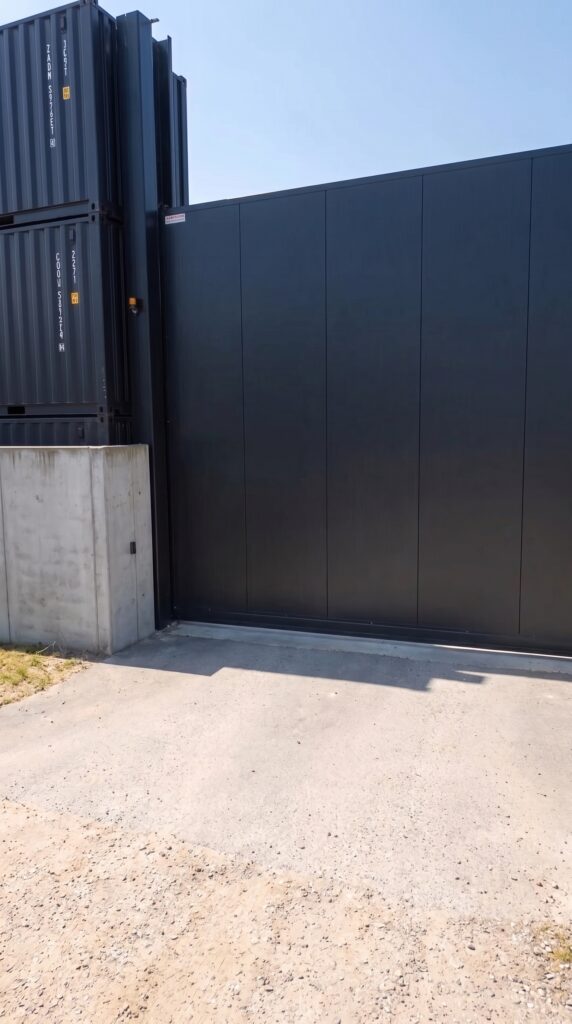
The entire property would be surrounded by a secure perimeter fence.
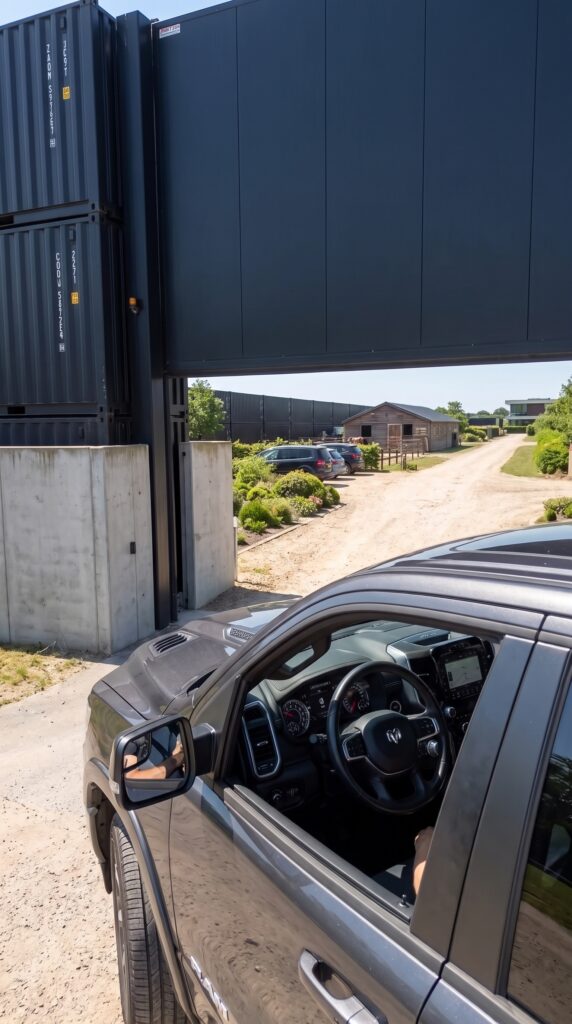
The entrance could feature a controlled gate, while internal roads would connect the main residence with the greenhouse, solar field, orchard, fish farm and storage buildings.
The fence would not only provide security for the family.
It would also protect the agricultural operation from animals, unauthorized access and potential theft of equipment or produce.
The property could have separate entrances for the family and agricultural deliveries, making it easier to operate as a business without constantly bringing commercial traffic through the residential area.
For roads, gates, fencing and basic landscaping, approximately:
$80,000
could be allocated.
Storage, Refrigeration and Packing
Producing hundreds of tonnes of food isn’t useful if the harvest cannot be stored properly.
The property would therefore include a small agricultural storage and refrigeration facility.
Fresh tomatoes, cucumbers, apples and trout could be sorted, packed and temporarily stored before being transported to customers.
This is especially important because agricultural prices can change significantly from day to day.
Having refrigeration and storage gives the owner more flexibility instead of forcing every product to be sold immediately after harvesting.
Approximately:
$70,000
could be allocated for cold storage, packing equipment and agricultural storage.
So How Much Would Everything Cost?
After combining the major components, the estimated investment looks like this:
Component
Estimated Cost
Land
$60,000
Solar power system
$400,000
2,500 m² greenhouse
$450,000
Apple orchard
$35,000
Trout farm
$100,000
Main residence & farm buildings
$180,000
Water & irrigation
$50,000
Roads & security fencing
$80,000
Storage & refrigeration
$70,000
Engineering & contingency
$75,000
TOTAL
$1,500,000
So the complete concept could be modeled at approximately:
$1.5 MILLION
And now comes the part that makes the concept really interesting.
How Much Could It Earn?
The solar system could potentially generate approximately:
$35,000–$60,000 per year
from surplus electricity sales, depending on the location, electricity prices and the proportion of electricity consumed on-site.
The tomato greenhouse could potentially generate:
$90,000–$120,000 per year
while cucumbers could add another:
$55,000–$80,000 per year.
Once mature, the apple orchard could contribute approximately:
$10,000–$20,000 per year.
And the trout operation could potentially generate another:
$20,000–$40,000 per year.
That gives a potential gross revenue range of approximately:
$210,000–$320,000 PER YEAR
or roughly:
$17,500–$26,700 PER MONTH
before labor, feed, fertilizers, maintenance, packaging, transportation, taxes and other operating expenses.
After operating expenses, a more conservative model could leave approximately $70,000–$130,000 per year in operating profit, depending heavily on the location and how efficiently the property is managed.
So this isn’t simply a $1.5 million survival compound.
If everything works as planned, it could also become a small self-sufficient agricultural business generating multiple streams of income from the same piece of land.
Would you actually want to live in a place like this?
And if the world never ends, at least the tomatoes, apples, trout and solar panels could still be making money.
This is an architectural concept visualization and not a real construction project.

Leave a Reply