What Would It Really Cost to Build a Self-Sufficient Family Compound?
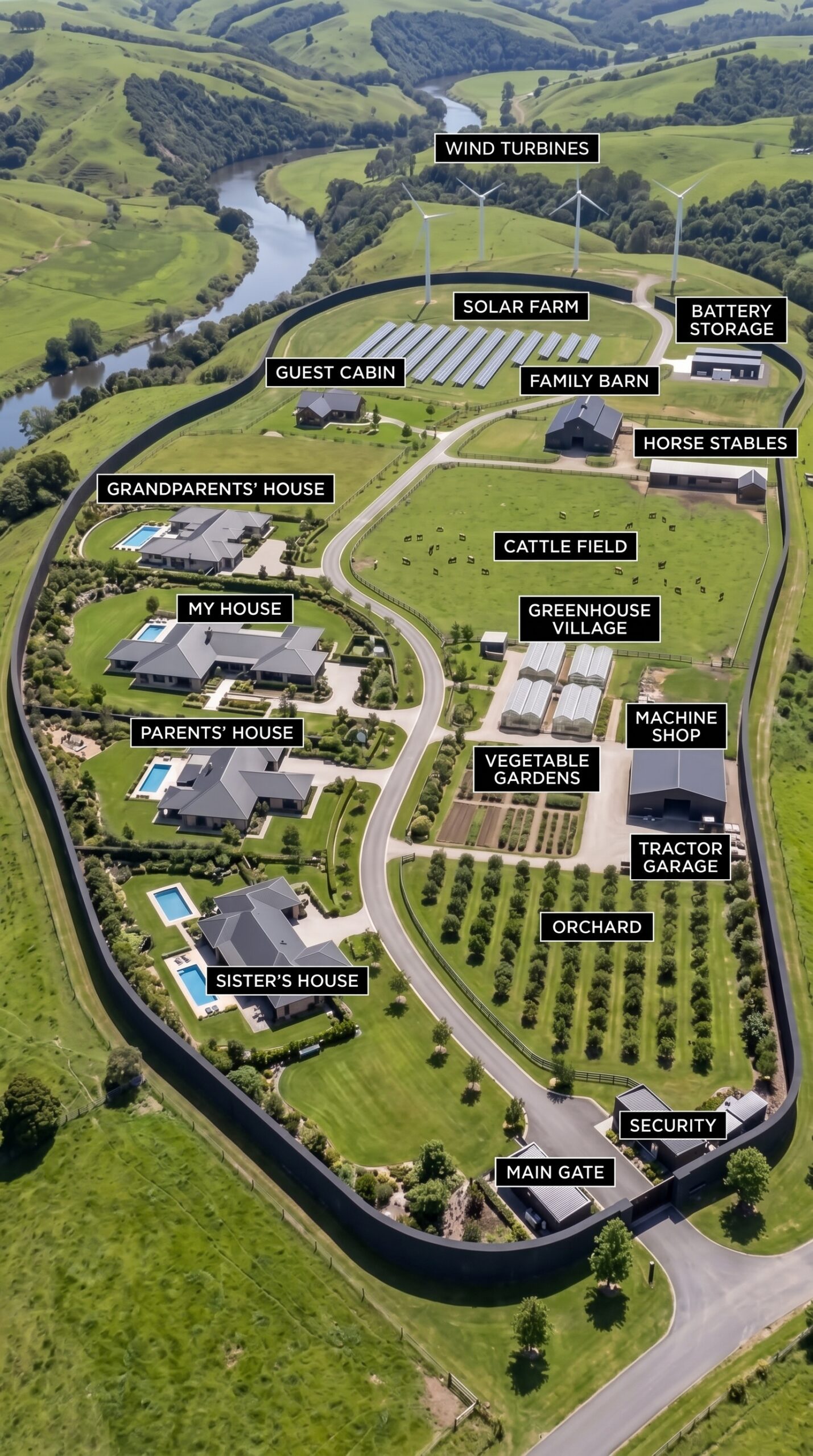
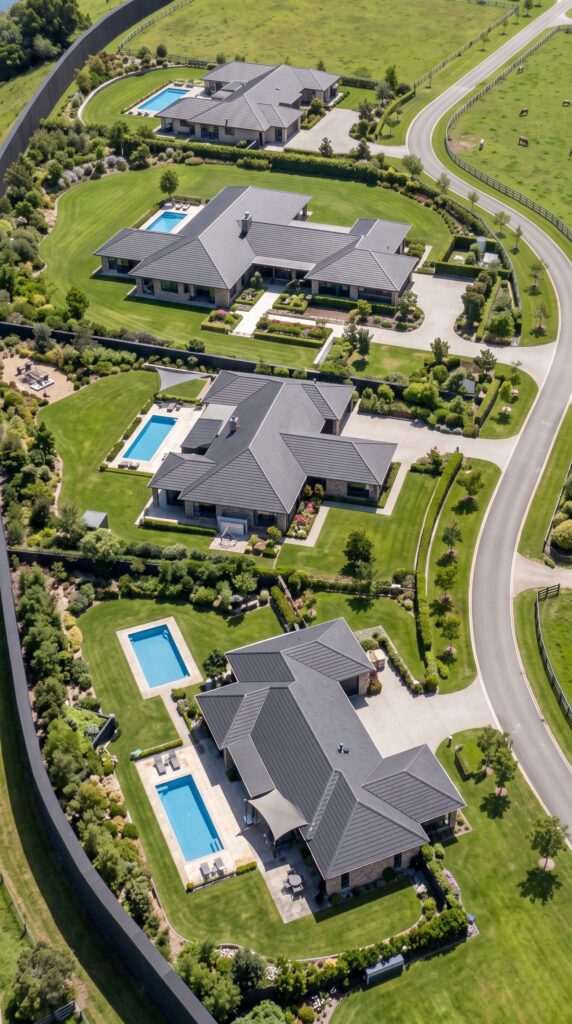
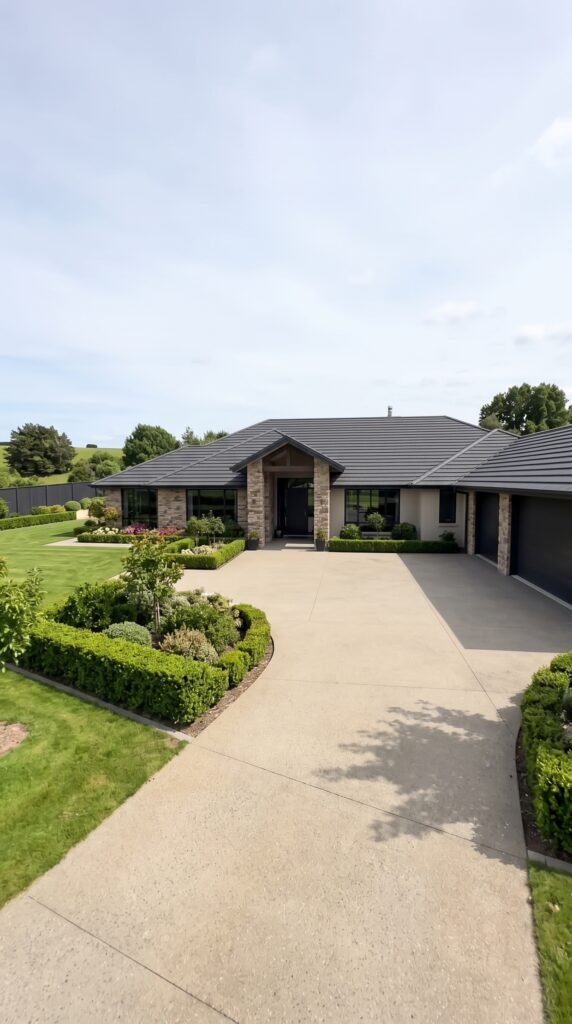
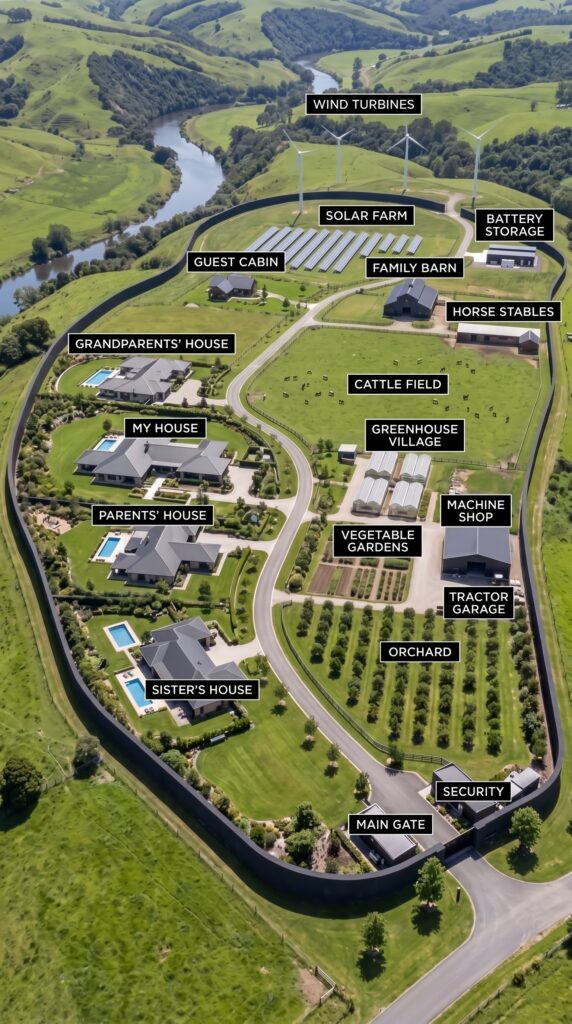
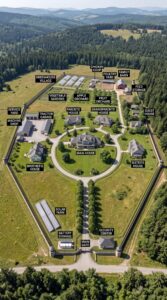
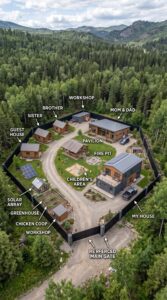
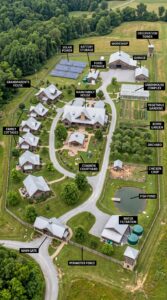
This is more than just a farm — it’s a fully self-sufficient family compound designed to provide comfortable living for several generations of the same family. Each family member has their own private luxury home, complete with a swimming pool, garage, landscaped yard, and everything needed for everyday life.
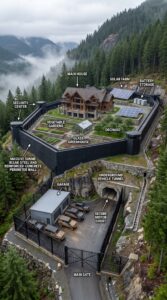
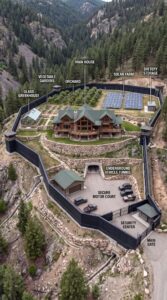
The entire property is organized as one connected private settlement, with a central road providing access to every part of the compound. At the main entrance, a dedicated security center controls access to the property, while a tall continuous perimeter fence surrounds the entire complex and separates it from the surrounding countryside.
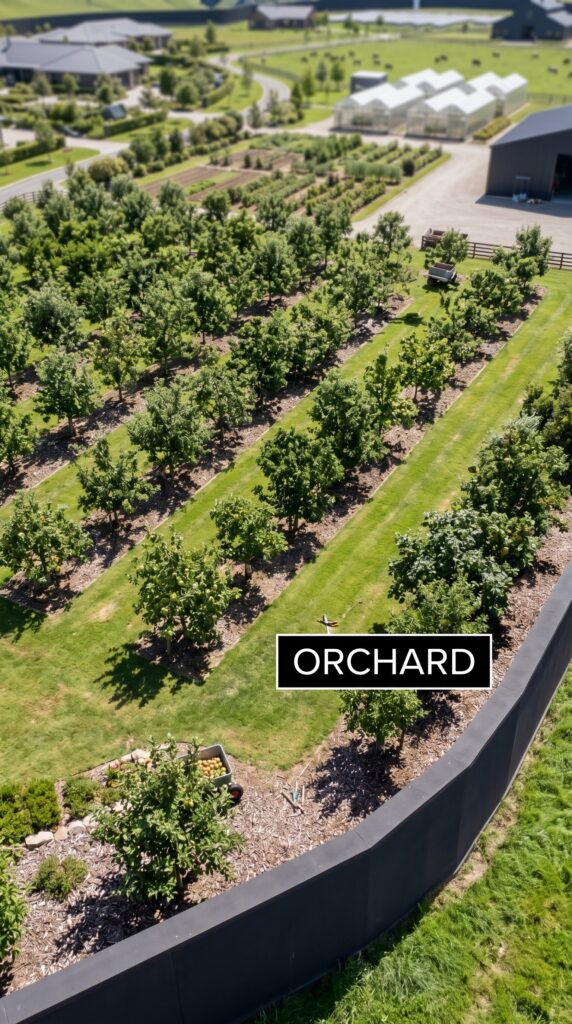
The productive side of the property is just as impressive. Large vegetable gardens provide space for growing fresh produce, while a greenhouse village allows the family to extend the growing season and produce food throughout much of the year. A large fruit orchard occupies another section of the land, creating a long-term source of fresh fruit for the family.
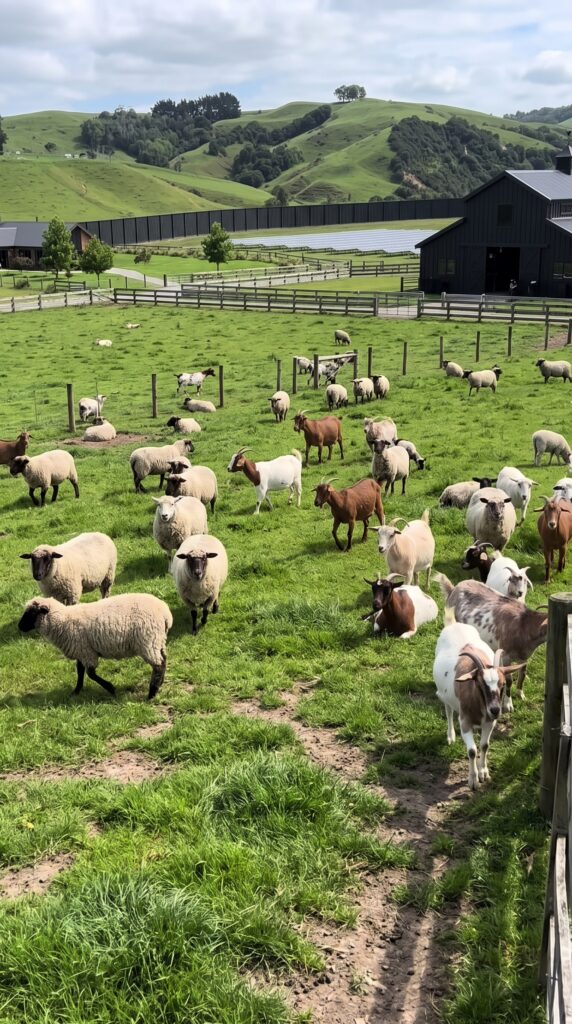
The settlement also includes extensive farmland for livestock. Sheep, goats, chickens, and cattle can provide fresh eggs, dairy products, and meat, while the surrounding fields provide space for grazing and growing animal feed. The agricultural areas are separated from the residential homes, keeping the family living spaces clean, quiet, and comfortable.
A dedicated machine shop and tractor garage provide enough space for agricultural machinery, vehicles, tools, and maintenance equipment. Instead of depending entirely on outside contractors, the family can maintain much of the property and its agricultural infrastructure themselves.
There is also a separate guest or workers’ house for the people responsible for caring for the animals, gardens, greenhouses, and surrounding land. This allows the agricultural operation to continue year-round while keeping the main family homes private.
The energy system is designed around renewable power. A large solar farm works together with multiple wind turbines to generate electricity for the entire settlement. A dedicated battery-storage facility stores excess energy so it can be used when solar production is low or the wind is not strong enough. The energy system can also help supply heating throughout the year, reducing the property’s dependence on conventional external energy sources.
What makes this concept especially interesting is that it combines luxury living with large-scale self-sufficiency. The family doesn’t simply own several houses on the same piece of land — they share an entire private infrastructure designed around housing, agriculture, energy production, livestock, food production, security, and equipment.
It is essentially a private family village built around one goal: giving several generations the ability to live together while maintaining a high level of comfort, privacy, and independence.
Fruit Orchard
A large fruit orchard occupies a dedicated section of the property, with carefully organized rows of mature fruit trees. Apples, pears, peaches, plums, cherries, and other varieties can provide the family with fresh fruit throughout the growing season. The orchard is positioned away from the main houses, creating a productive landscape while leaving the residential areas open and comfortable. Irrigation can be connected to the property’s water system, while fallen leaves, branches, and other organic material can be composted and returned to the soil. Over time, the orchard becomes a long-term source of food for the entire family settlement.
Greenhouse Village
Next to the vegetable gardens is a dedicated greenhouse village consisting of multiple large growing structures. Instead of relying only on outdoor crops, the family can use these greenhouses to grow vegetables, herbs, seedlings, and other crops in a more controlled environment. Multiple greenhouses also allow different crops to be grown simultaneously and can extend the growing season into colder months. With irrigation, ventilation, climate control, and proper storage, this area can become one of the most productive parts of the entire settlement, providing fresh food for the family while reducing dependence on outside supplies.
Family Farm
The agricultural area is the heart of the entire family compound and turns the property from a collection of luxury homes into a truly functioning private settlement. Large open fields provide enough space for livestock to graze, while dedicated areas are reserved for animal shelters, feeding, storage, and daily farm operations. Cattle can be kept on the larger pasture areas, providing milk and meat for the family, while separate enclosures can accommodate sheep and goats. Chickens are kept in their own protected area, supplying fresh eggs and additional food for the household.
The livestock areas are deliberately separated from the residential section by internal roads, fencing, and open pasture. This keeps the homes clean and peaceful while still allowing the family to reach the farm facilities quickly. The fields can also be used to grow hay, grass, and other crops needed to feed the animals, reducing the amount of feed that has to be purchased from outside suppliers.
A dedicated family barn provides covered space for livestock, hay, feed, veterinary supplies, and agricultural equipment. During colder or stormy weather, animals can be moved into protected areas, while the surrounding pastures give them plenty of space during normal conditions. Water troughs and irrigation infrastructure can be distributed throughout the agricultural zones so the animals have reliable access to water.
The farm also requires machinery capable of maintaining such a large property. Tractors, trailers, mowers, loaders, fencing equipment, and other agricultural machines can be stored inside the dedicated tractor garage and machine shop. The workshop provides space for repairs and routine maintenance, meaning the family does not have to transport every piece of equipment to an outside service center.
The entire agricultural operation is designed to work together with the gardens and greenhouses. Manure from cattle, sheep, goats, and chickens can be collected and properly composted before being used to improve the soil in the vegetable gardens and orchard. Crop residues can also be composted or otherwise reused, creating a more circular system where fewer resources leave the property as waste.
With large vegetable gardens, multiple greenhouses, a mature orchard, livestock pastures, and animal facilities, the farm could produce a significant portion of the food required by the family settlement. It would still require considerable labor, planning, veterinary care, equipment maintenance, animal feed, seeds, and other supplies, but the property would have much greater food-producing capacity than a conventional residential estate.
This is what makes the farm such an important part of the concept. The luxury houses provide comfort, while the agricultural infrastructure provides the productive foundation that allows the entire family compound to become more self-reliant over time.
Solar Farm and Wind Turbines
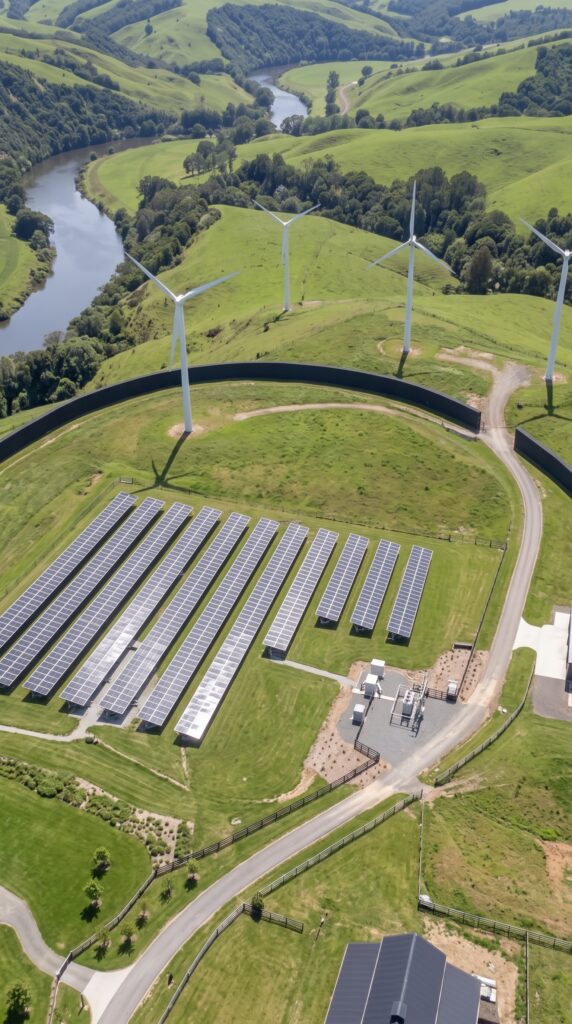
The energy system is one of the most important parts of the entire family settlement. Instead of relying entirely on the traditional electrical grid, the property is designed around its own large-scale renewable energy infrastructure. A dedicated solar farm occupies a substantial section of the land, with multiple rows of photovoltaic panels positioned at the optimal angle to capture sunlight throughout the day. The panels generate electricity for the family homes, greenhouses, workshops, farm equipment, water pumps, lighting, and other systems operating across the property.
The solar installation is supported by several large wind turbines positioned on the higher and more open parts of the property. This combination allows the settlement to generate electricity from two different renewable sources. Solar production is strongest during daylight hours and typically increases during sunny periods, while wind turbines can continue generating electricity during nighttime and during periods when sunlight is limited. Combining the two systems can therefore create a more balanced renewable-energy supply throughout the year.
A dedicated battery-storage building is located next to the solar farm. Excess electricity produced during periods of high solar or wind generation can be stored in large battery systems and then used later when production drops. This is particularly important at night, during cloudy weather, or when the family is using large amounts of electricity for heating, water systems, workshops, and agricultural equipment.
The renewable-energy system can also support electric heating and other essential infrastructure throughout the property. Electricity can be used for heat pumps, electric floor heating, water pumps, greenhouse equipment, refrigeration, lighting, and other household and agricultural needs. The exact amount of energy available would depend on the size of the solar array, turbine capacity, weather conditions, battery storage, and the property’s total consumption.
Together, the solar farm, wind turbines, and battery storage transform the energy system into a dedicated utility infrastructure for the entire settlement. Instead of every house operating as an isolated property, all of the homes and agricultural facilities can be connected to one coordinated energy network.
For a project of this scale, the renewable-energy system would represent a major investment, especially because large solar arrays, multiple wind turbines, grid equipment, inverters, transformers, underground cabling, controls, and high-capacity batteries would all need to be installed. However, it would also be one of the features that gives the family compound its distinctive level of energy independence and allows the homes, farm, greenhouses, workshops, and other facilities to function as one integrated system.
How Much Does It Cost to Build a Self-Sufficient Family Compound?
A Private Family Settlement
This property is much more than a traditional farm. It is a private family settlement designed to combine comfortable living, food production, livestock, renewable energy, and its own infrastructure in one location. Each family member has a separate luxury home with a private pool, garage, and landscaped outdoor space, while shared agricultural and utility areas support the entire compound.
Security and Entrance
The main entrance includes a dedicated security center, controlled access, surveillance equipment, and a tall perimeter fence surrounding the property. Internal roads connect the residential area with the farm, workshops, greenhouses, and livestock facilities.
Gardens and Greenhouses
Large vegetable gardens provide space for growing fresh produce, while several greenhouses extend the growing season and allow the family to maintain production during colder months. A separate fruit orchard adds another long-term source of food.
Family Farm
The agricultural section includes cattle, sheep, goats, and chickens. Pastures, animal shelters, feeding areas, and water systems are organized separately from the residential zone. Chickens provide fresh eggs, while livestock can provide milk and meat. Animal manure can also be composted and returned to the gardens as fertilizer.
Machinery and Workers
A large machine shop and tractor garage provide space for agricultural machinery, vehicles, tools, and repairs. A separate workers’ house accommodates the people responsible for caring for the animals, gardens, greenhouses, and land.
Solar and Wind Power
The settlement uses a combination of large solar-panel arrays and wind turbines to generate electricity. Battery storage can keep excess energy available when solar or wind production falls. The system can supply the homes, greenhouses, workshops, pumps, lighting, and other farm infrastructure.
Water and Infrastructure
The property can include wells, rainwater collection, storage tanks, filtration, irrigation systems, internal roads, drainage, and other infrastructure needed to operate such a large private compound.
Estimated Cost
Component
Estimated Cost
Family homes
$3.2M–$4.8M
Pools and garages
$400K–$700K
Security and fencing
$250K–$500K
Gardens, orchard and greenhouses
$230K–$575K
Farm and livestock facilities
$400K–$900K
Machine shop and workers’ house
$500K–$1M
Solar + wind power
$1M–$2M
Battery storage
$300K–$700K
Water systems and irrigation
$150K–$300K
Roads, site preparation and landscaping
$450K–$900K
Total before land
$6.9M–$12.4M
Final Estimate
A realistic budget for a property of this scale would be around $8–10 million before purchasing the land. A simpler version could potentially cost less, while a larger luxury compound with more houses, agricultural infrastructure, and renewable-energy capacity could exceed $12 million.
The land itself would be added separately and could change the final price dramatically depending on the state and location.
This project is a conceptual design created for inspiration and architectural visualization. It is not a real construction project or a technical blueprint.

Leave a Reply