
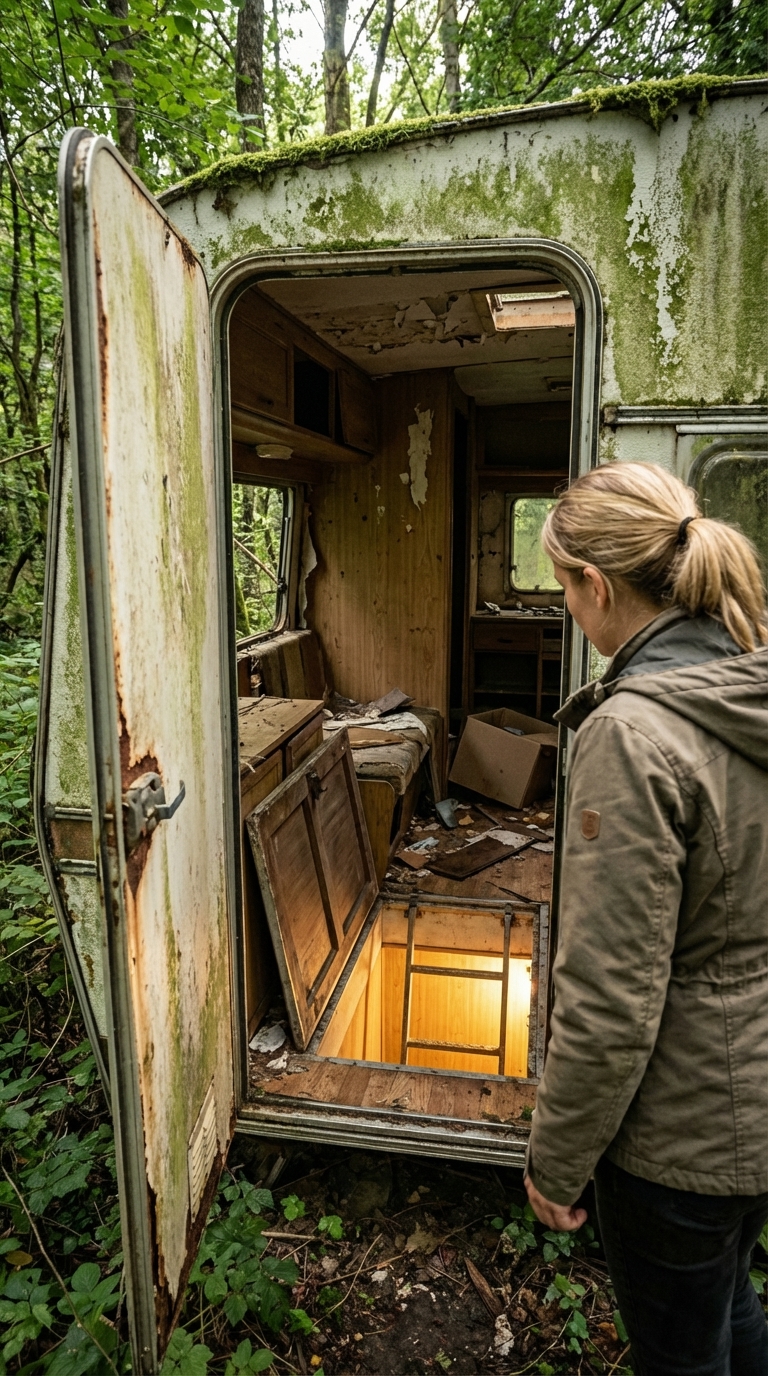
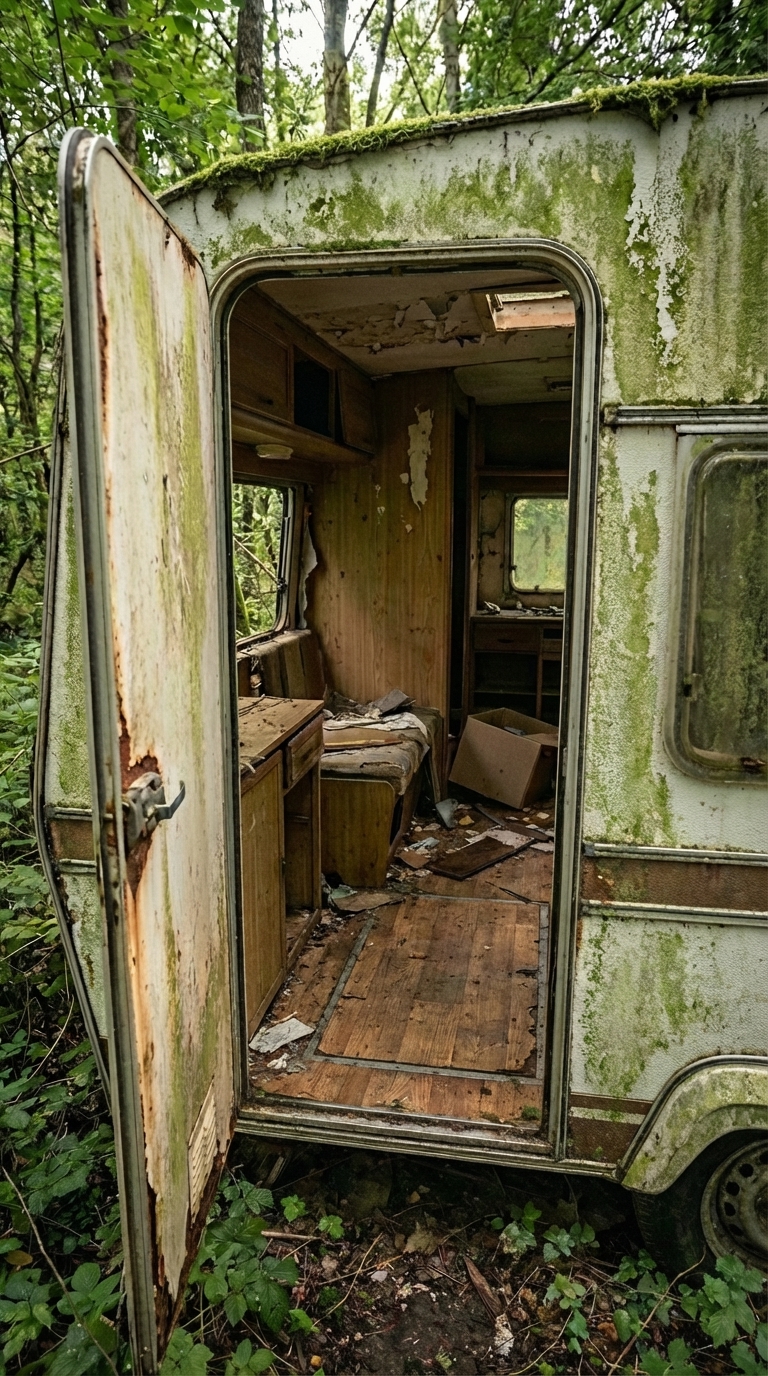
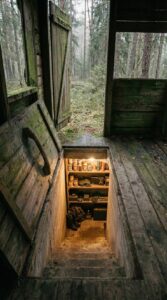
At first glance, this old, moss-covered trailer deep in the forest looks completely forgotten. Rusted metal, broken wood panels, and years of decay make it blend naturally into the surroundings. It’s the kind of place most people would walk past without a second thought. But behind this abandoned shell lies a carefully concealed underground bunker entrance.
The concept is simple but extremely effective — disguise the bunker entrance as something no one would ever consider valuable. The trailer acts as a perfect camouflage structure, eliminating the need for visible hatches or suspicious ground installations. From the outside, nothing suggests that this location hides anything more than an old piece of junk.
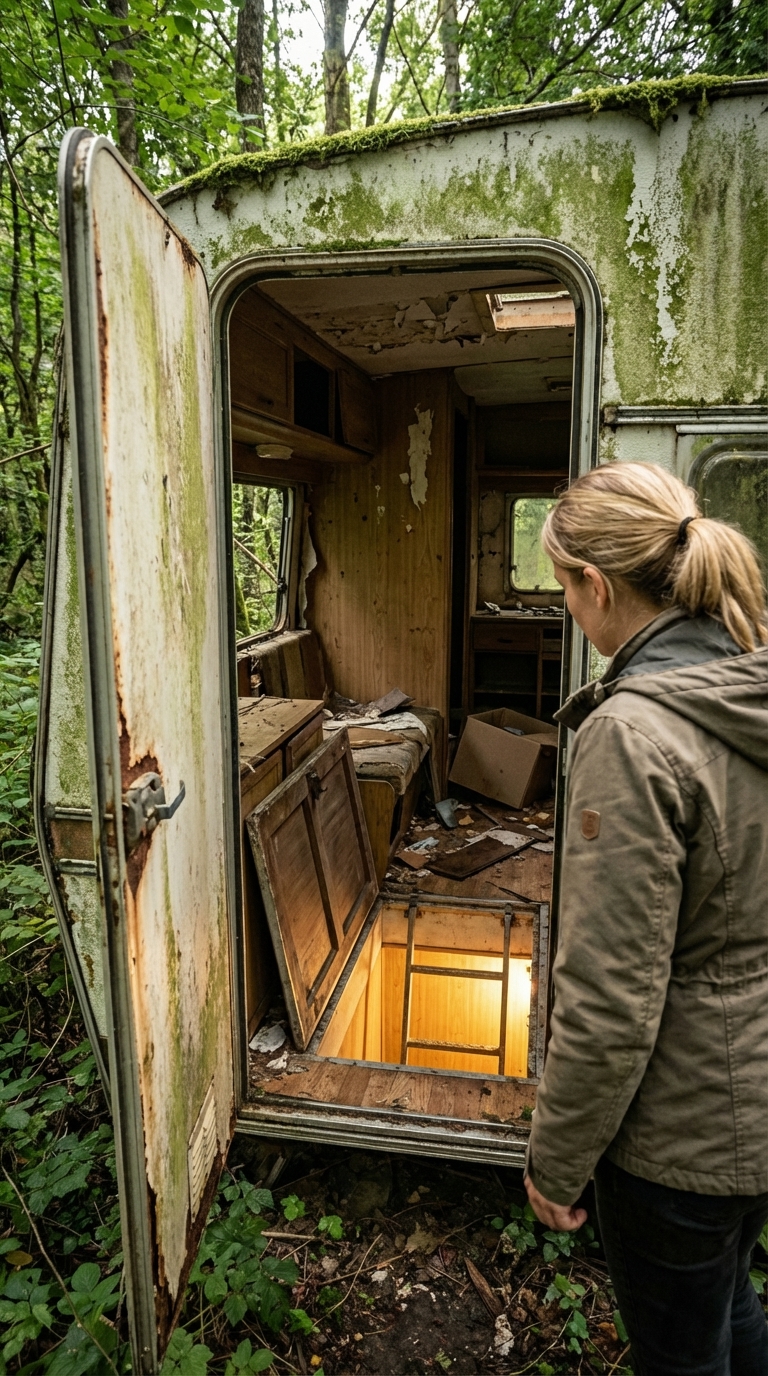
Inside the trailer, the interior is intentionally left in a semi-destroyed state to maintain the illusion. Cracked wood, worn furniture, and debris create a believable abandoned look. However, beneath this layer of decay is a reinforced hidden hatch built directly into the floor. The hatch is designed with a strong steel frame, insulated and sealed to prevent moisture, dust intrusion, and temperature leaks.
Once opened, the hatch reveals a vertical ladder leading down into a fully equipped and reinforced underground bunker. Soft internal lighting from below contrasts sharply with the dark, neglected trailer above, creating a dramatic transition between two completely different environments.
This type of hidden entrance offers several advantages. First, it provides maximum concealment — no modern structures, no visible landscaping changes, and no obvious signs of construction. Second, it adds an additional layer of security, as access is limited and disguised within an already ignored object. Third, it protects the entrance from weather exposure, as the trailer acts as a natural cover.
The result is a highly effective concealed underground access system, where the surface tells one story, but reality lies just beneath. It’s a perfect example of combining simplicity, psychology, and engineering to create a bunker that remains invisible to the outside world while providing full functionality underground.
Interior and Storage System of a Survival Underground Bunker
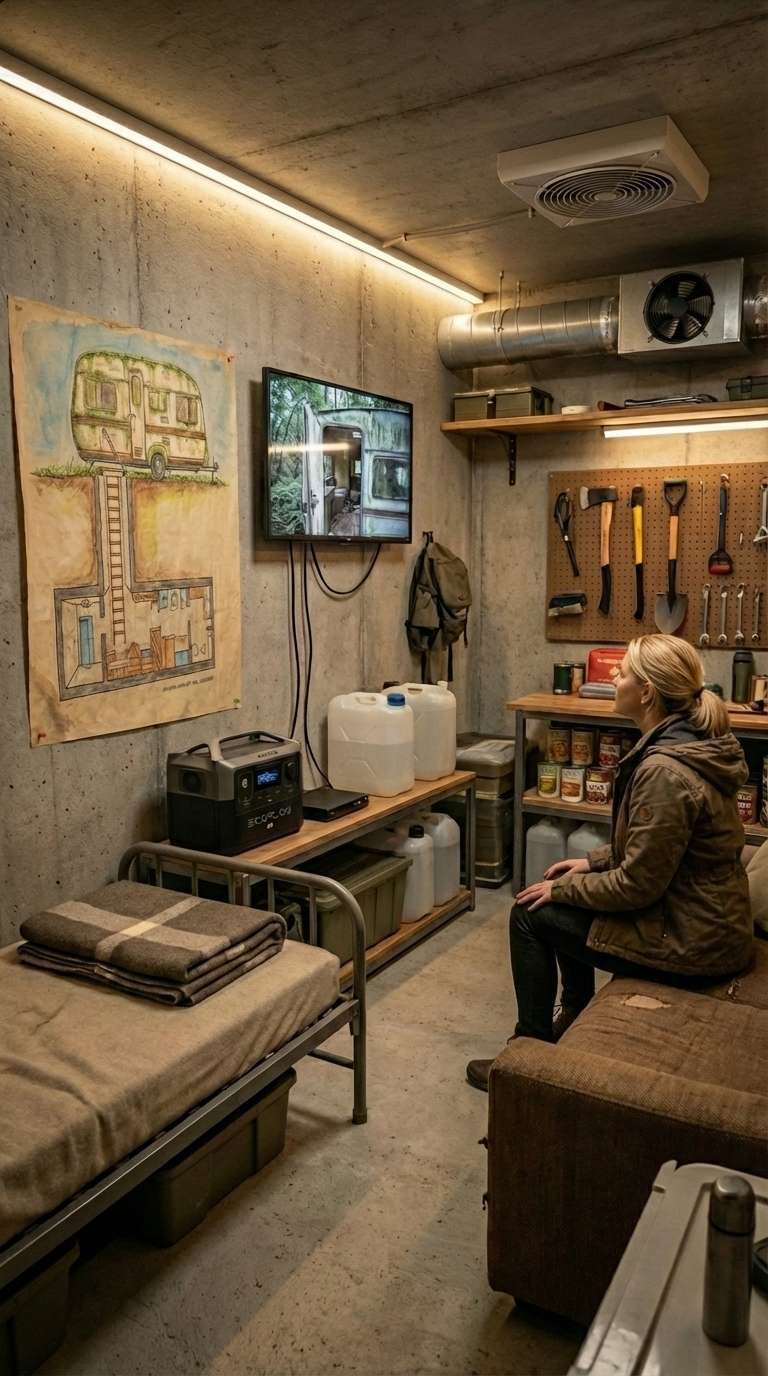
The interior of this underground bunker is designed with a clear priority — long-term survival, reliability, and efficient use of space. Every area is carefully planned to combine storage capacity, functionality, and comfort while maintaining a strong, secure environment built from reinforced concrete.
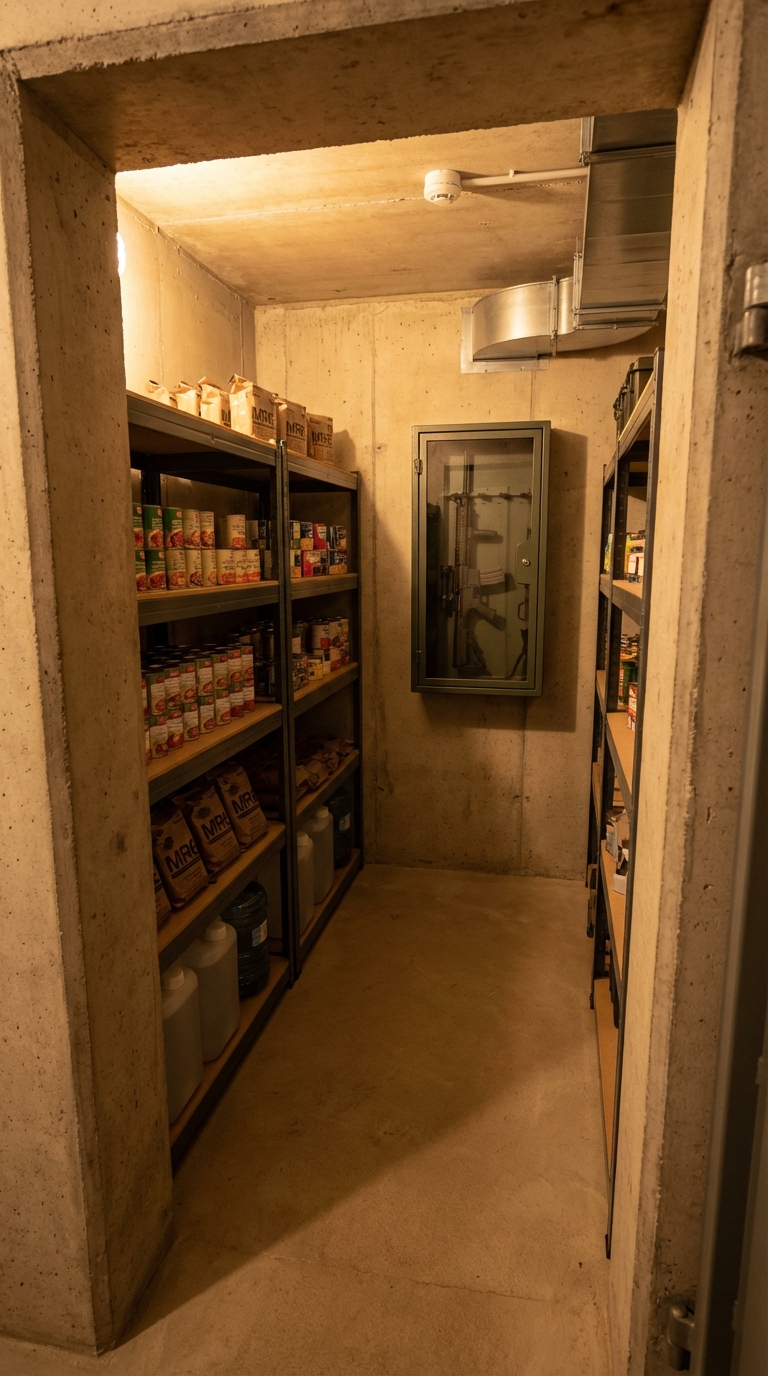
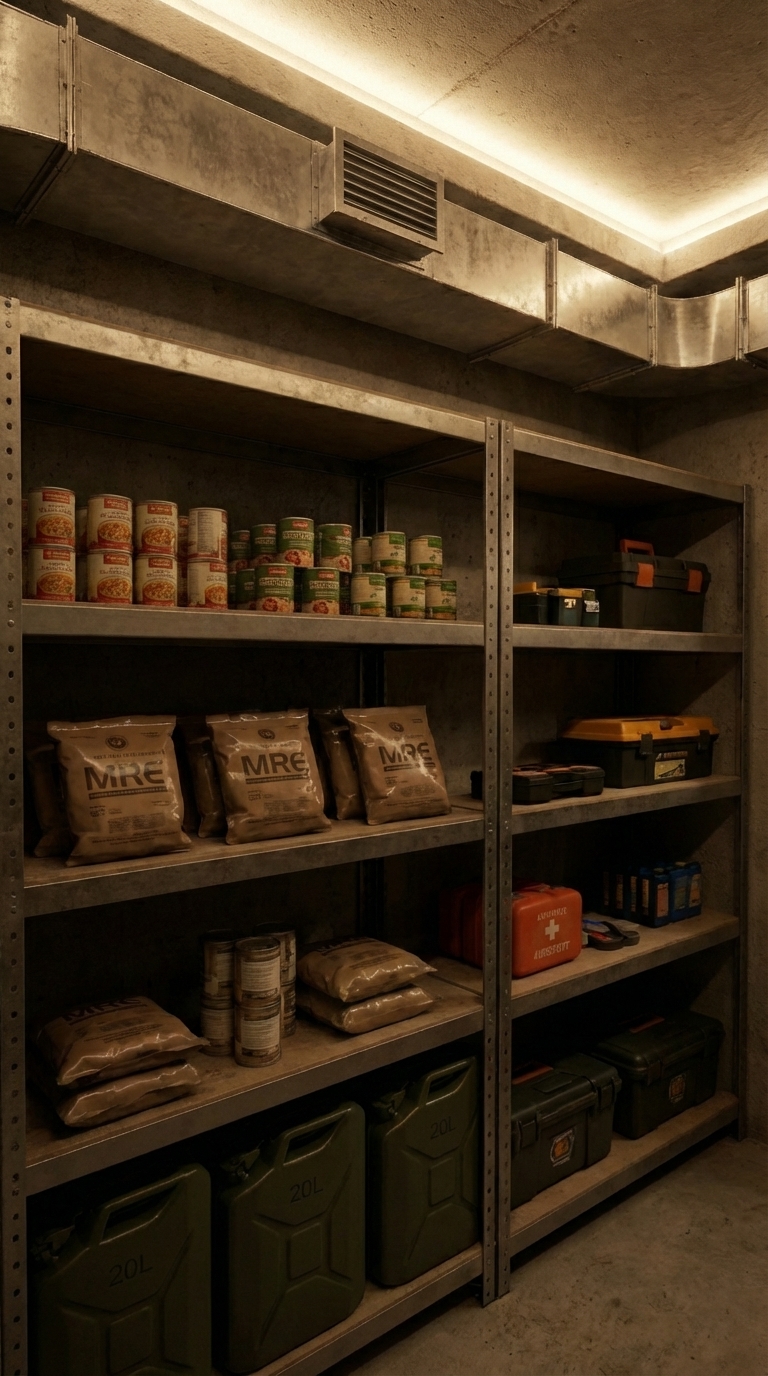
The storage zone is one of the most important parts of the bunker. Heavy-duty metal shelving lines the walls, filled with long-term food supplies such as canned goods, dry rations, grains, and MRE packages. Everything is organized by category and shelf life, allowing quick access and proper rotation of supplies. Large water containers are placed on lower levels for stability, ensuring a reliable supply of drinking water for extended periods.
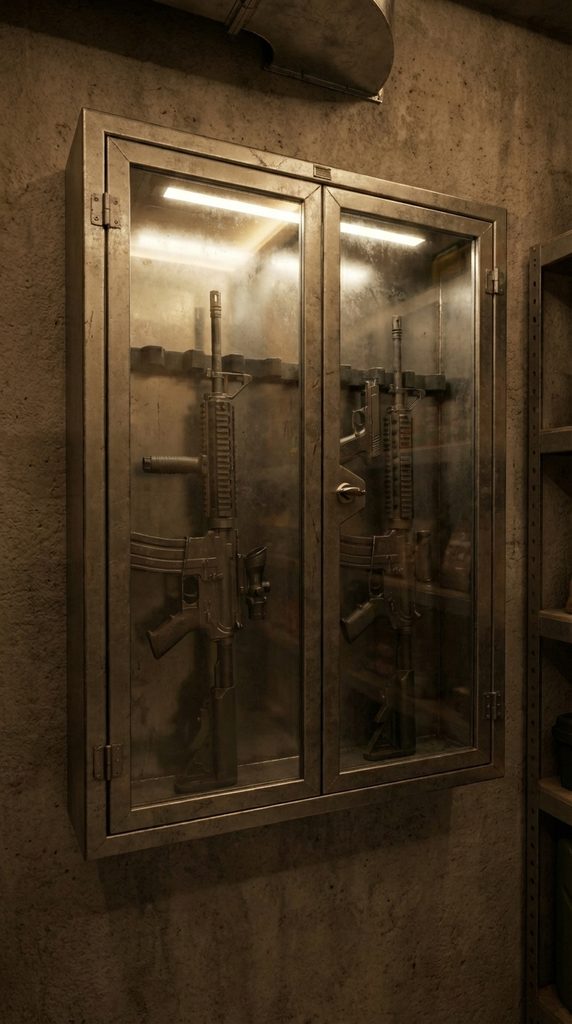
Next to the food storage, a secured equipment section includes a reinforced cabinet for critical tools and defensive gear. This area is built with thick metal framing and lockable doors, ensuring both safety and controlled access. The placement inside the bunker keeps everything protected from moisture and environmental damage.
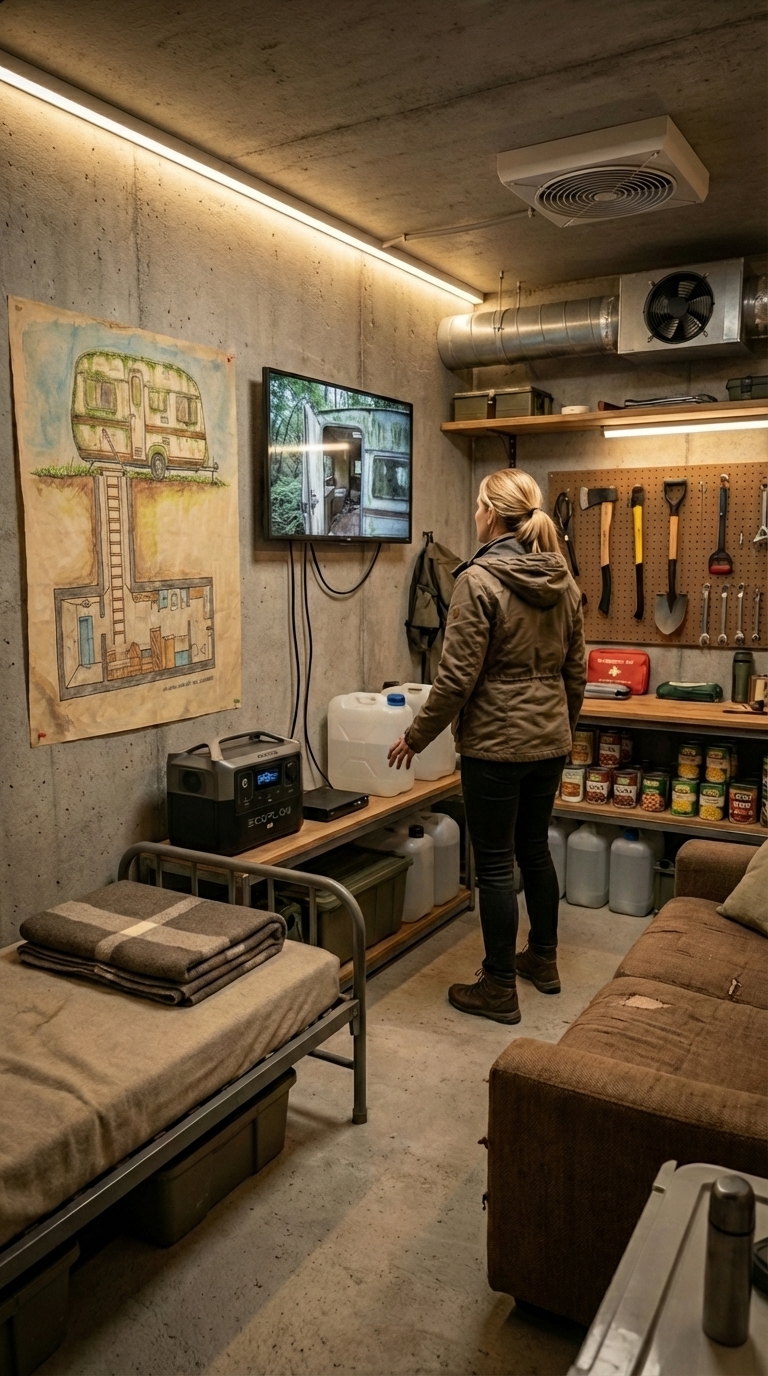
The living and utility area combines practicality with minimal comfort. A compact sleeping setup with a durable bed and storage underneath allows efficient use of space. Nearby, essential supplies such as blankets, first aid kits, and emergency tools are stored within reach. The design avoids clutter while keeping everything necessary close at hand.
A dedicated technical corner houses the power and control systems. Portable energy units, such as EcoFlow battery stations, provide stable electricity for lighting, ventilation, and devices. The system is supported by organized wiring and backup capacity, ensuring continuous operation even during long isolation periods.
Ventilation plays a critical role in the bunker’s functionality. Air ducts run along the ceiling, connected to fans and filtration units that maintain airflow and air quality. This system helps regulate temperature, remove humidity, and provide fresh air circulation throughout the entire space.
The control and monitoring area includes a screen system that allows observation of the outside environment. Cameras placed at hidden entry points transmit live footage, giving full awareness of surroundings without leaving the bunker. This adds a strong layer of security and situational control.
The entire interior is built with durable materials — concrete walls, sealed floors, and moisture-resistant finishes. Lighting is soft but sufficient, creating a balance between practicality and psychological comfort.
Overall, this bunker interior is not just a shelter, but a fully functional survival system. It combines storage, security, energy independence, and livability into one compact underground structure designed to support people safely for extended periods.
A Complete Underground Living Solution for Security and Comfort
This underground bunker represents the final stage of a fully realized survival and living system — where engineering, design, and practicality come together to create a secure and comfortable environment beneath the surface. Built with reinforced concrete and equipped with modern systems, it is not just a shelter, but a complete underground home designed for long-term use.
The interior balances functionality with livability. A compact sleeping area provides a comfortable place to rest, while integrated storage ensures that essential supplies are always within reach. Food reserves, water containers, and emergency kits are carefully organized to support extended self-sufficiency without sacrificing space or accessibility.
The living zone offers a place to relax and maintain a sense of normal life. A seating area, soft lighting, and a media setup allow occupants to unwind while staying informed through external monitoring systems. Cameras installed at the hidden entrance provide real-time visibility of the outside environment, ensuring both awareness and security at all times.
A dedicated technical system powers the entire bunker. Battery stations supply electricity for lighting, ventilation, and devices, while an advanced airflow system maintains fresh air circulation and stable temperature conditions. These systems work together to create a safe and sustainable underground atmosphere.
The design also includes a practical workspace and tool area, allowing maintenance, repairs, and daily tasks to be carried out efficiently. Every detail is planned to maximize reliability — from durable materials to smart layout decisions that reduce clutter and improve usability.
What makes this bunker truly effective is its combination of invisibility and capability. Hidden from the outside world, yet fully equipped inside, it provides peace of mind and independence in any situation.
In the end, this is more than just a bunker — it is a self-contained living system built for safety, resilience, and long-term survival without compromising comfort.
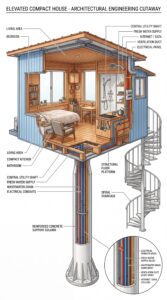
This is an architectural concept visualization and not a real construction project.

Leave a Reply