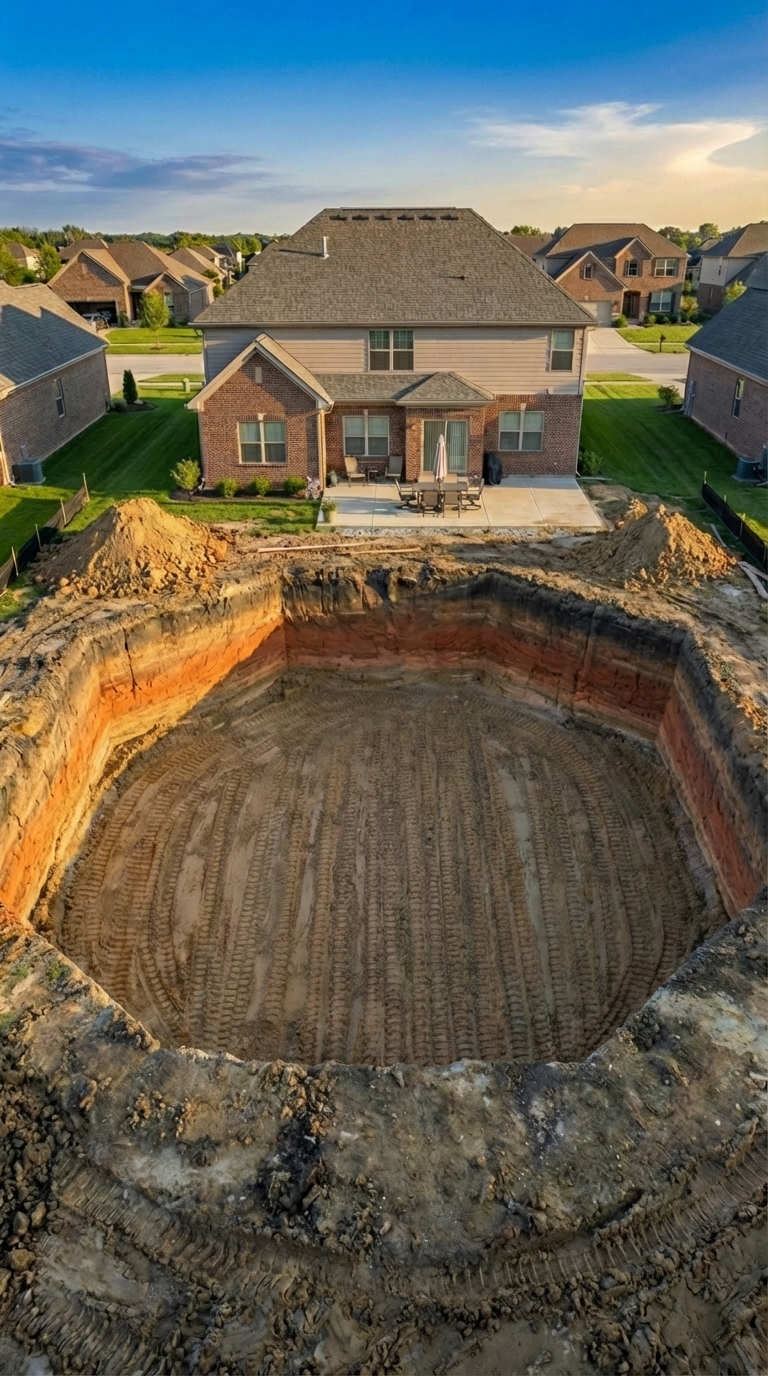
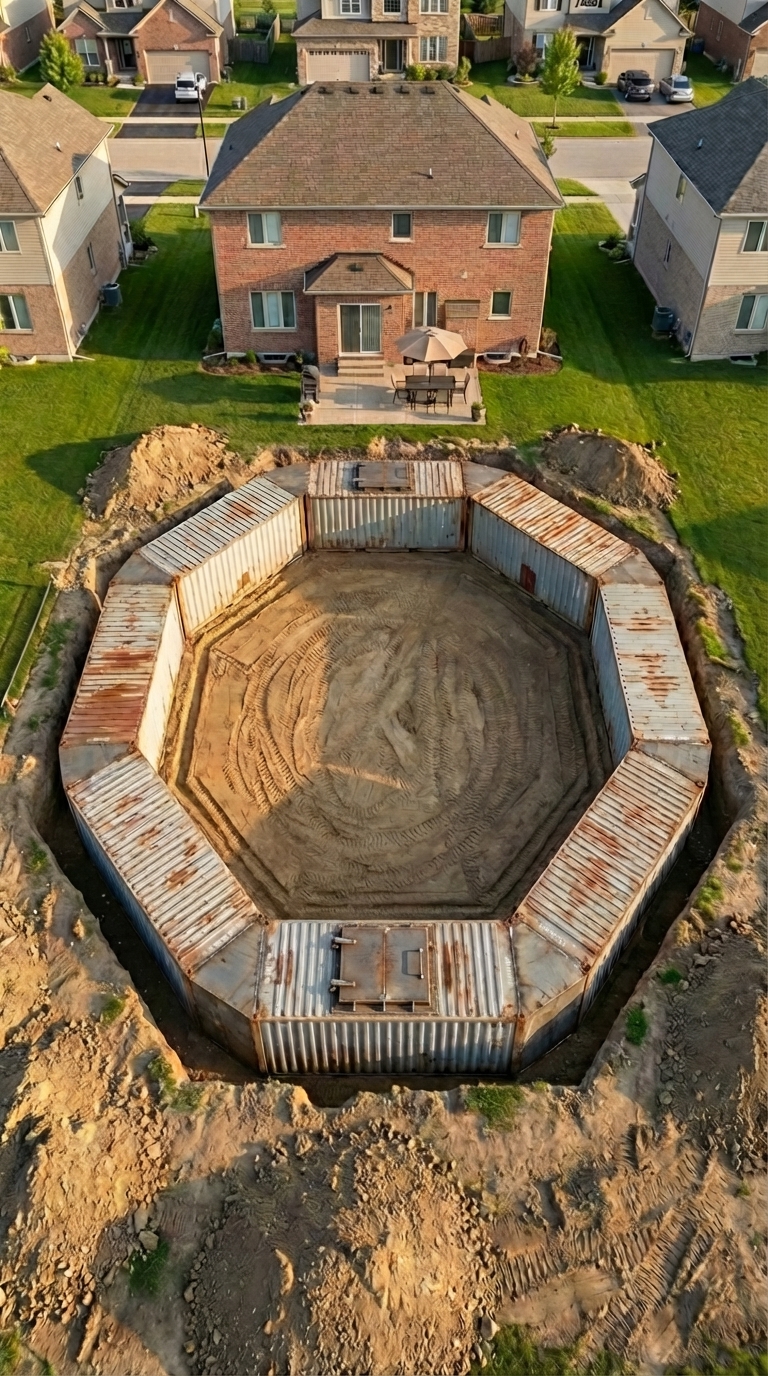
Building a fully hidden underground bunker in a suburban backyard is no longer just a concept — it has become a realistic and achievable project using modular construction methods. This design begins with a deep, carefully excavated circular pit positioned behind a residential home, allowing the structure to remain discreet while maximizing underground space.
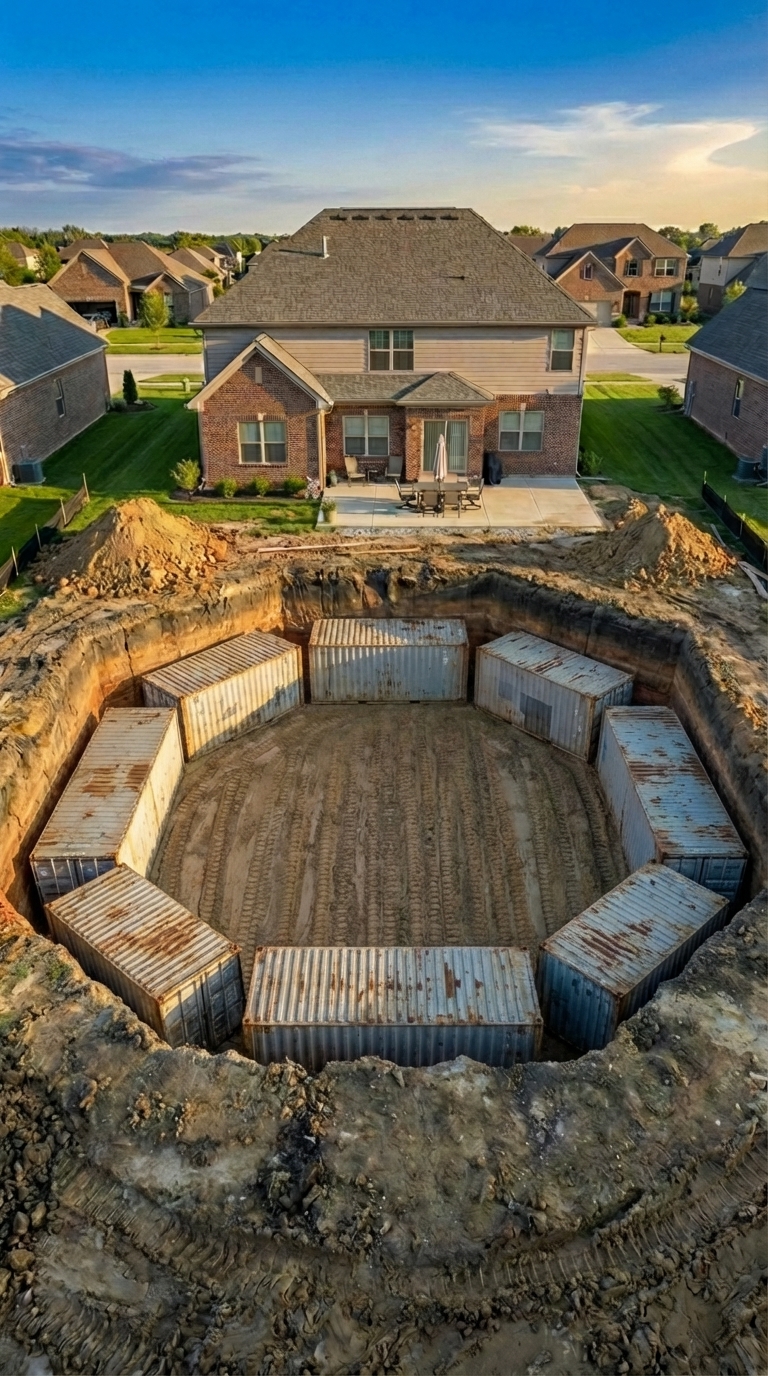
The core of the bunker is formed using multiple repurposed shipping containers arranged in a ring. This circular layout is not only visually unique but also structurally effective, as it distributes soil pressure evenly across the entire system. Each container is reinforced, welded together, and sealed to create a unified underground shell capable of long-term durability.
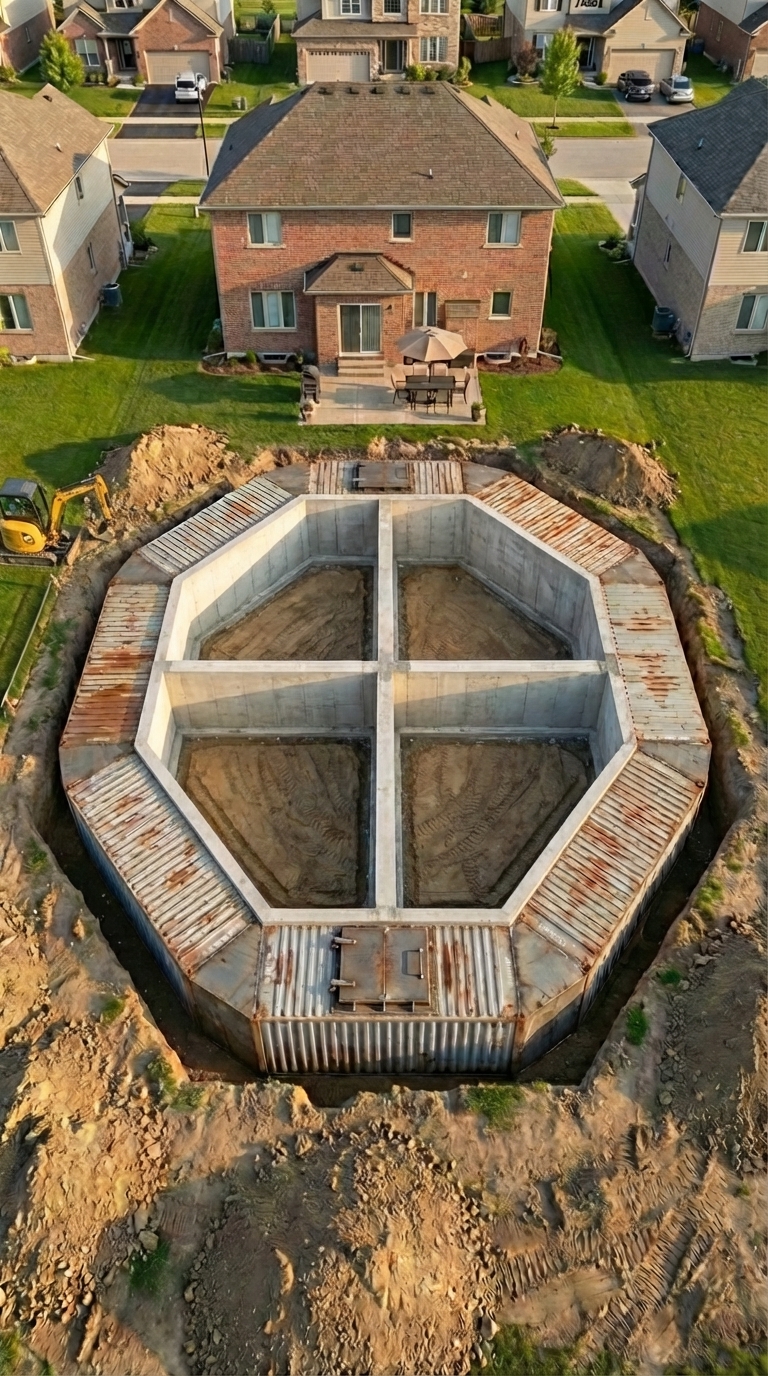
A reinforced concrete base is typically added to stabilize the structure and prevent shifting over time. Waterproofing layers and drainage systems are installed to protect the bunker from moisture, ensuring a dry and controlled interior environment regardless of weather conditions.
Inside, the bunker is designed for practical living. The layout can include sleeping quarters, storage rooms, a kitchen area, and a technical zone for power and ventilation systems. Modern battery solutions and air filtration allow the space to function independently, making it suitable for extended stays if needed.
The entrance is one of the most important elements. It is usually concealed within the landscape — hidden under a patio, garden feature, or decorative structure — blending seamlessly into the backyard while remaining easily accessible to the owner.
This type of bunker represents a balance between cost efficiency and functionality. By combining reused industrial materials with smart design, it offers a durable, hidden, and highly practical underground solution for modern homeowners.
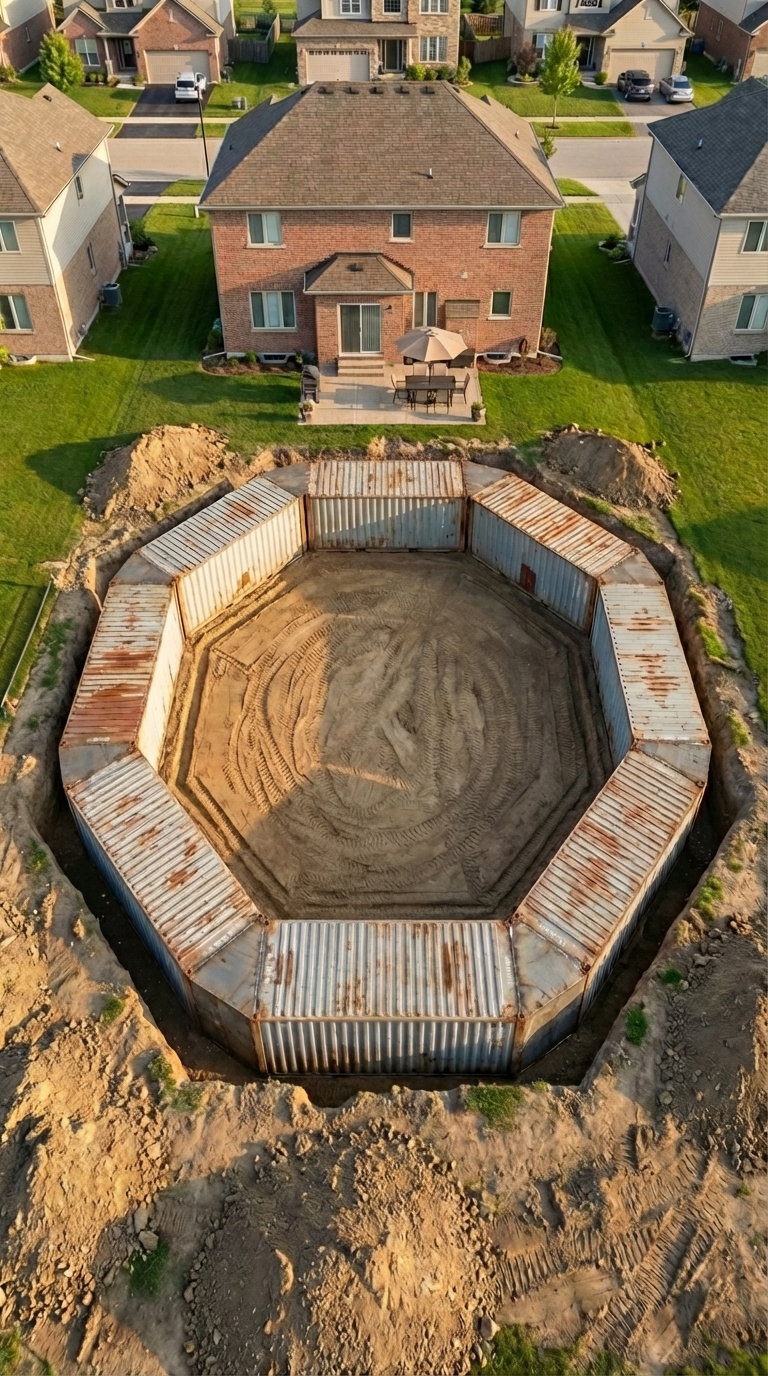
Once all containers were positioned in a precise circular layout, the most critical structural phase began — permanently joining them into a single, rigid underground system. Each container was carefully aligned edge-to-edge, and heavy-duty steel welding was applied along every seam. This process transformed separate units into one continuous load-bearing ring capable of resisting massive soil pressure from all sides.
To increase durability, additional steel plates were installed at connection points, reinforcing weak zones and ensuring long-term stability. Every joint was then sealed to prevent moisture penetration, which is essential for underground construction.
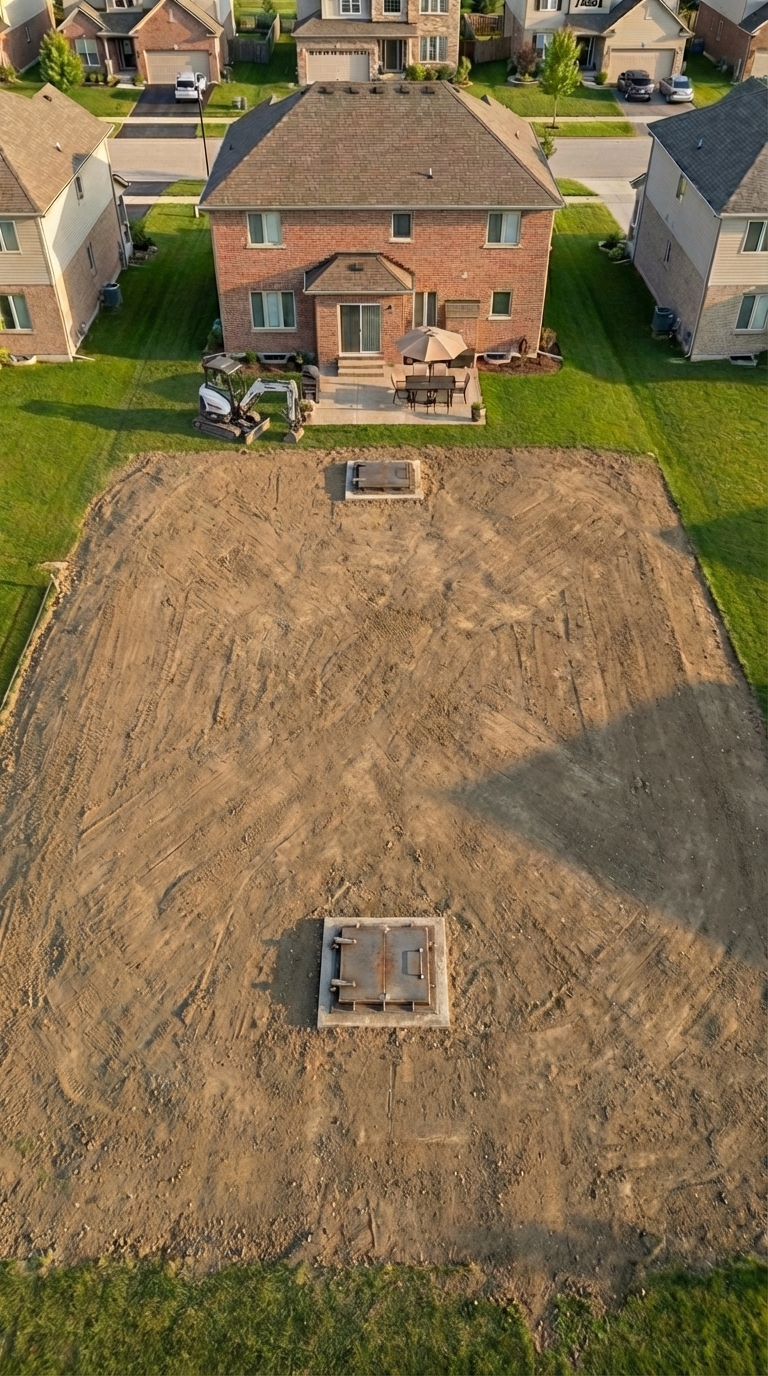
A key upgrade in this build is the addition of two independent access hatches. Instead of relying on a single entry point, the design includes a main entrance and a secondary emergency exit positioned on opposite sides of the structure. Both hatches are reinforced with thick steel frames, gas struts, and locking mechanisms, allowing for secure yet smooth operation.
After the metal structure was completed, the entire bunker was strengthened with poured concrete reinforcement. Concrete was applied around the outer perimeter and partially along the interior walls, creating a hybrid steel-concrete shell. This significantly increases resistance to ground pressure, prevents deformation, and extends the lifespan of the bunker.
The top sections around the hatches were also framed with concrete collars, ensuring that repeated use does not weaken the entry points. These reinforced openings are designed to support landscaping elements above, allowing the hatches to be fully concealed without compromising accessibility.
The result is a highly durable underground system where steel provides flexibility and structure, while concrete adds mass, strength, and long-term protection — a combination that makes this bunker both practical and reliable for extended use.
After the underground structure was completed, the focus shifted to transforming the backyard into a clean, functional, and visually appealing outdoor space that completely hides the bunker below.
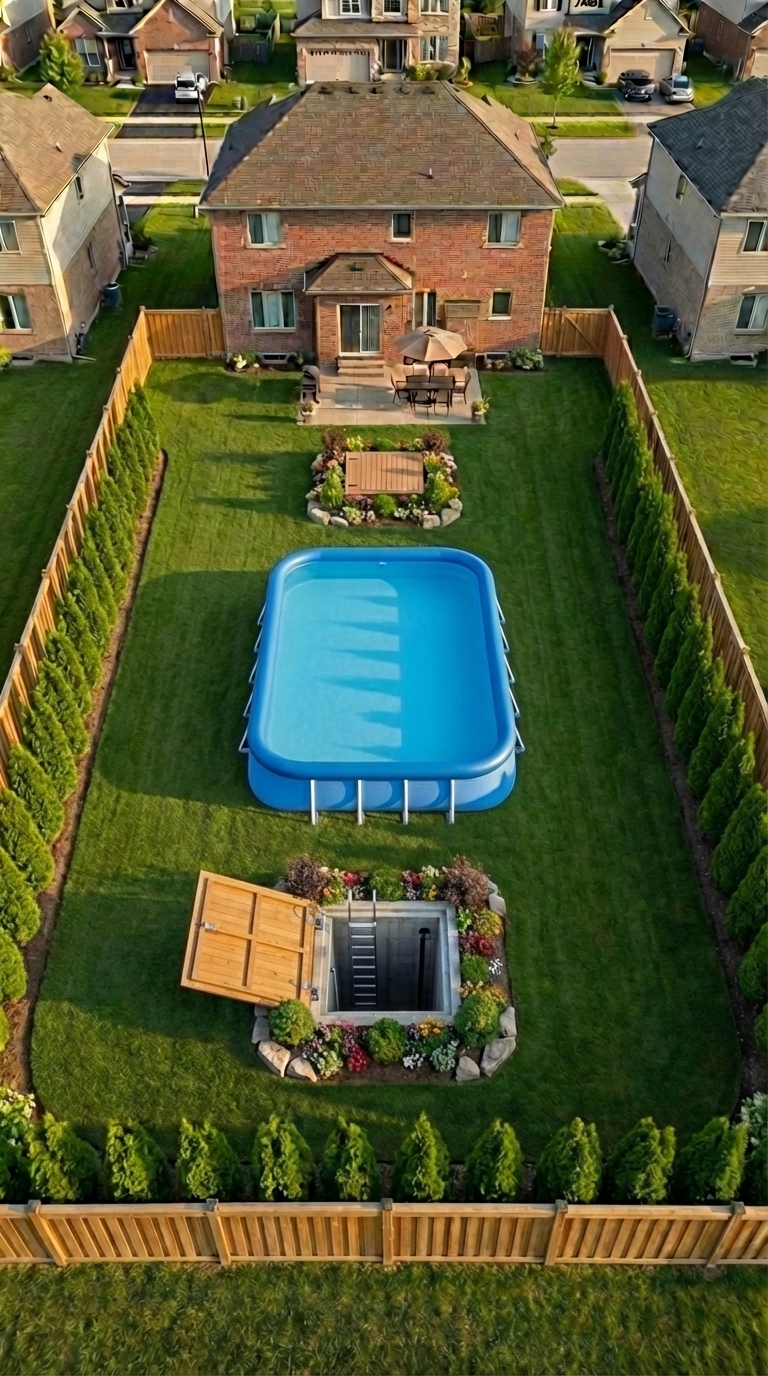
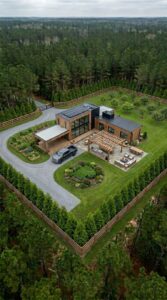
The entire area was leveled and covered with fresh, dense green lawn, creating a natural and uniform surface. Around the perimeter, a wooden privacy fence was installed, providing both security and a clean architectural boundary. Along the fence line, rows of tall thuja trees were planted. These evergreens serve a dual purpose — they enhance the aesthetics of the yard while also acting as a natural visual barrier, making the space feel more private and secluded.
At the center of the yard, a compact above-ground pool was installed. This element not only adds a recreational feature but also helps disguise the fact that major construction took place below. The pool draws attention away from the hidden bunker and makes the backyard look like a typical family space.
The entrance to the bunker was carefully integrated into the landscape design. A reinforced hatch was installed flush with the ground and surrounded by decorative stone, flowers, and small shrubs. This creates the appearance of a simple garden feature rather than an access point to an underground structure. The hatch itself is finished with wood panels to match the natural tones of the yard, allowing it to blend seamlessly into the environment.
Additional landscaping elements such as flower beds, stone edging, and a small central decorative garden were added to break up the space and make the layout feel intentional and balanced.
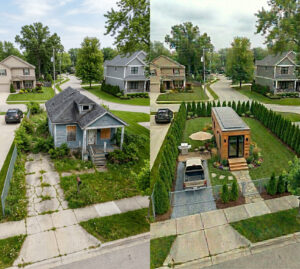
The result is a backyard that looks completely ordinary at first glance — a clean lawn, a pool, and well-maintained greenery — while beneath it lies a fully functional, hidden underground bunker.
The interior of this underground bunker is designed to provide full long-term livability while maintaining efficiency, durability, and comfort within a compact modular space. Every container is transformed into a dedicated functional zone, connected through a central layout that allows easy movement and optimal use of space.
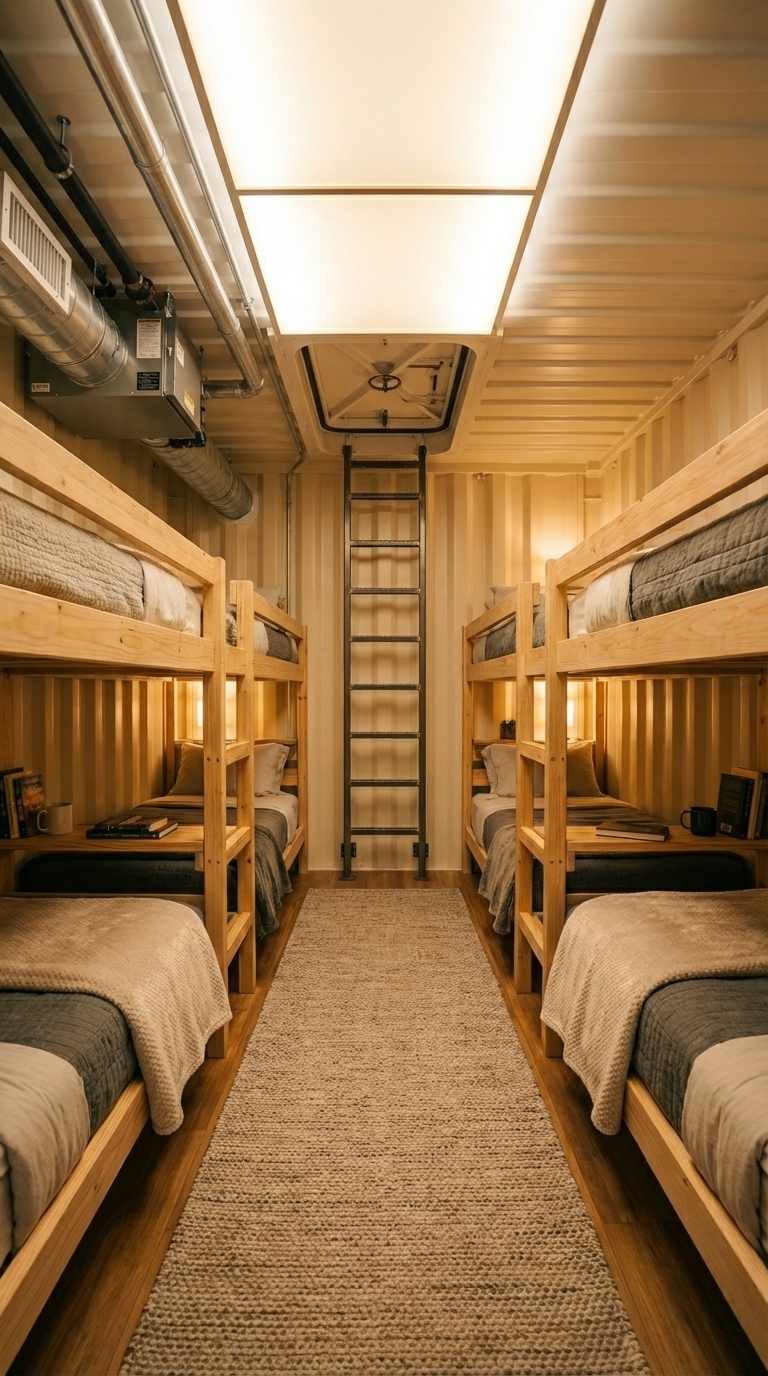
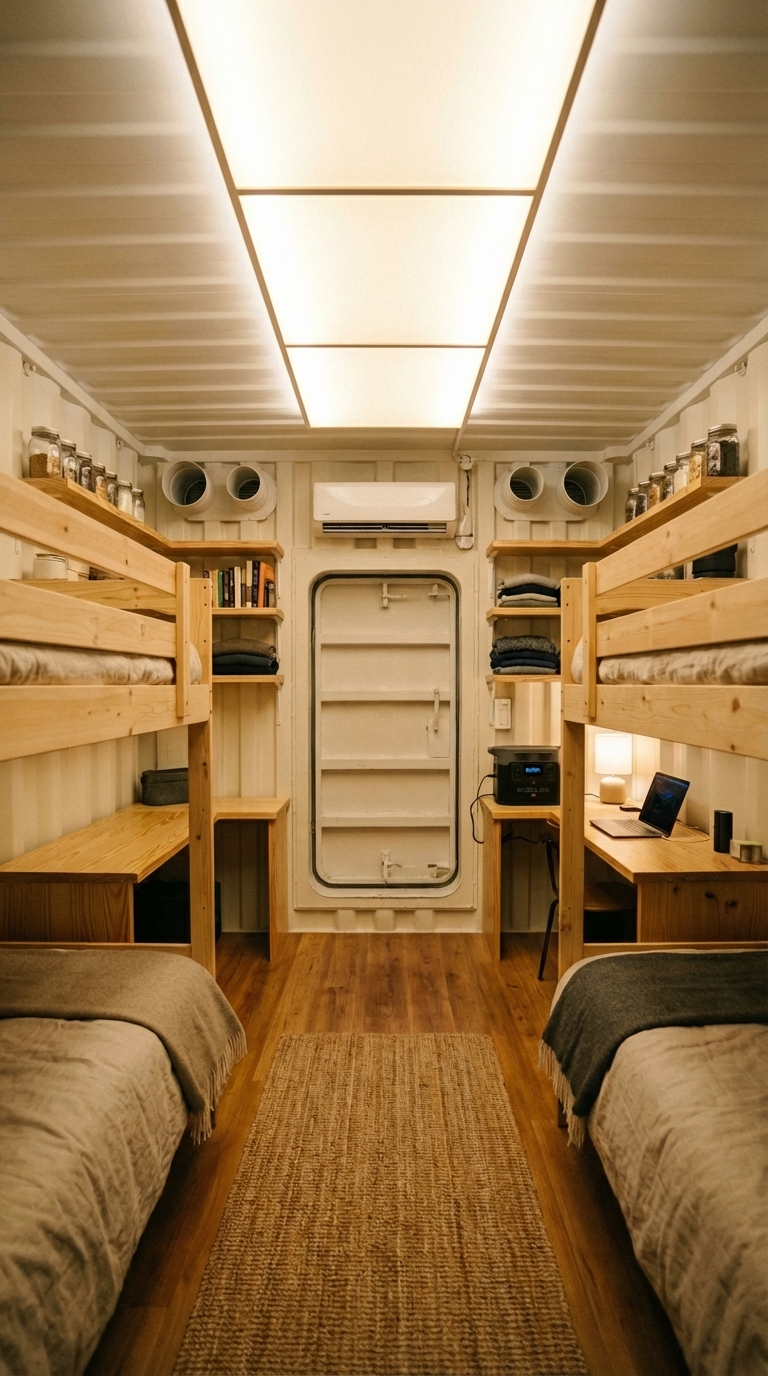
The sleeping area is built with solid wooden bunk beds, allowing multiple occupants to rest comfortably without wasting valuable floor space. Each bed includes built-in shelves, lighting, and personal storage, creating a private and practical environment. Warm wood finishes combined with soft lighting reduce the feeling of being underground and create a calm, livable atmosphere.
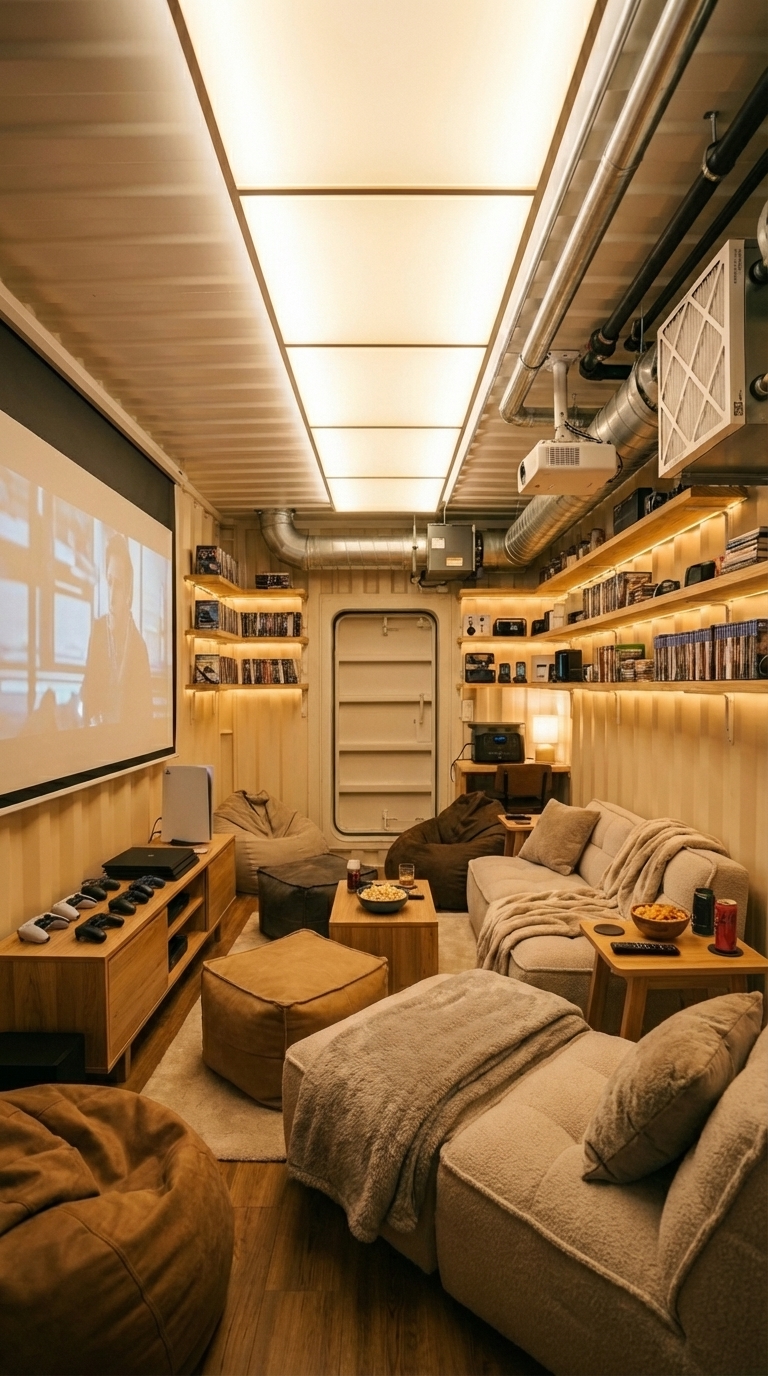
The living zone serves as a relaxation and entertainment hub. It includes a comfortable sofa, bean bags, and a media setup with a projector or screen. Shelving along the walls provides space for books, games, and essential items, helping maintain a sense of normal daily life even in a confined environment.
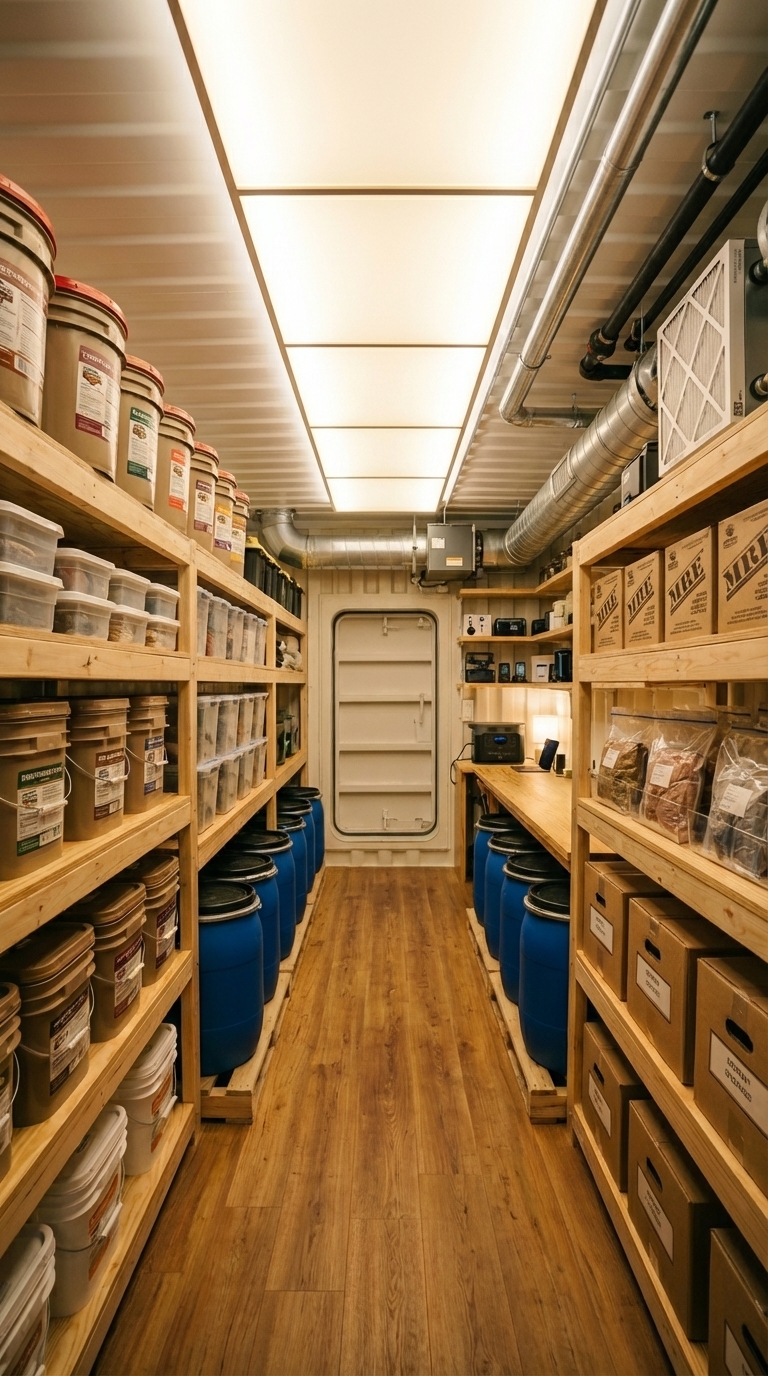
A fully equipped kitchen is integrated into one of the containers, featuring a compact stove, sink, food preparation area, and organized shelving. Adjacent to it is a large storage section filled with long-term food supplies, water containers, and sealed goods. The storage system is carefully arranged to maximize capacity while keeping everything accessible and categorized.
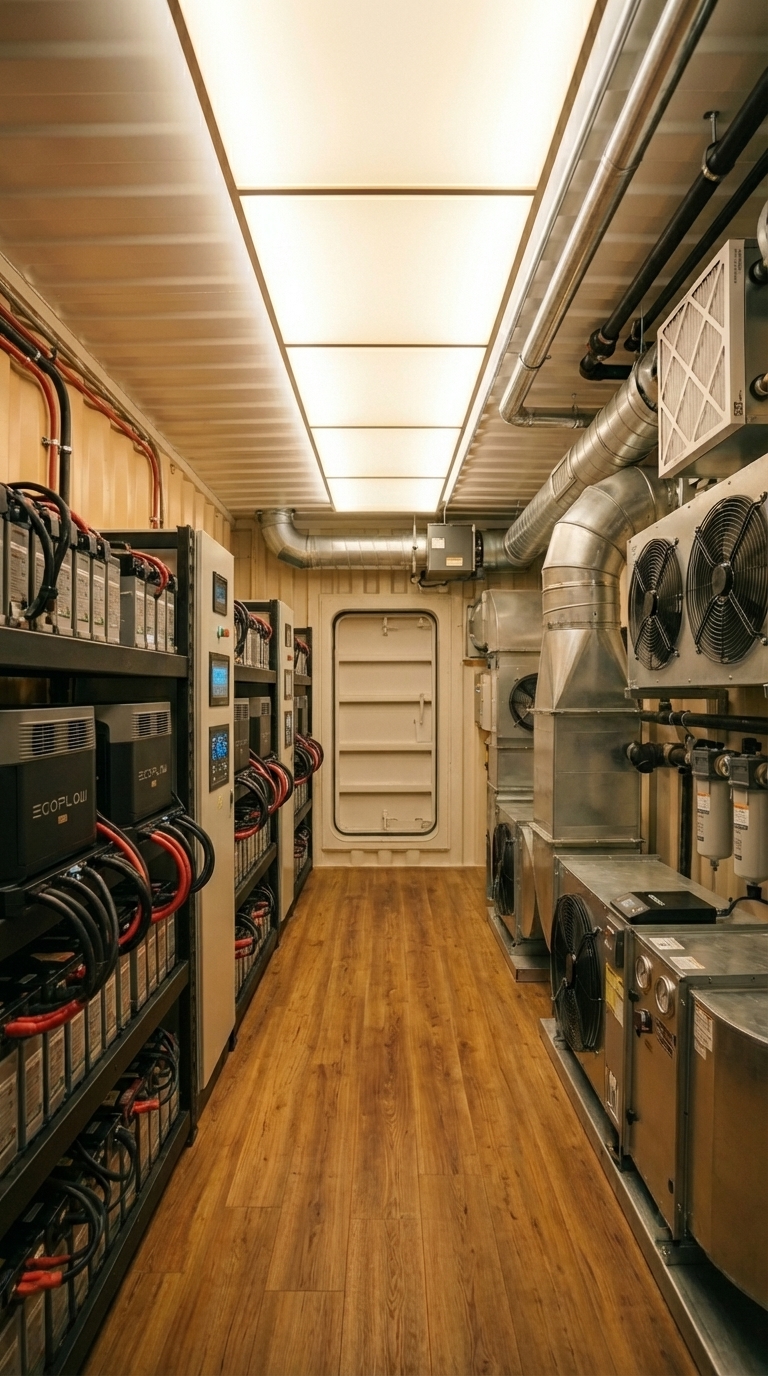
The bunker also includes a dedicated technical room that houses the power system and life-support infrastructure. High-capacity battery units, such as EcoFlow systems, are installed alongside ventilation, filtration, and climate control equipment. Air ducts run along the ceiling, ensuring proper airflow and maintaining safe oxygen levels at all times.
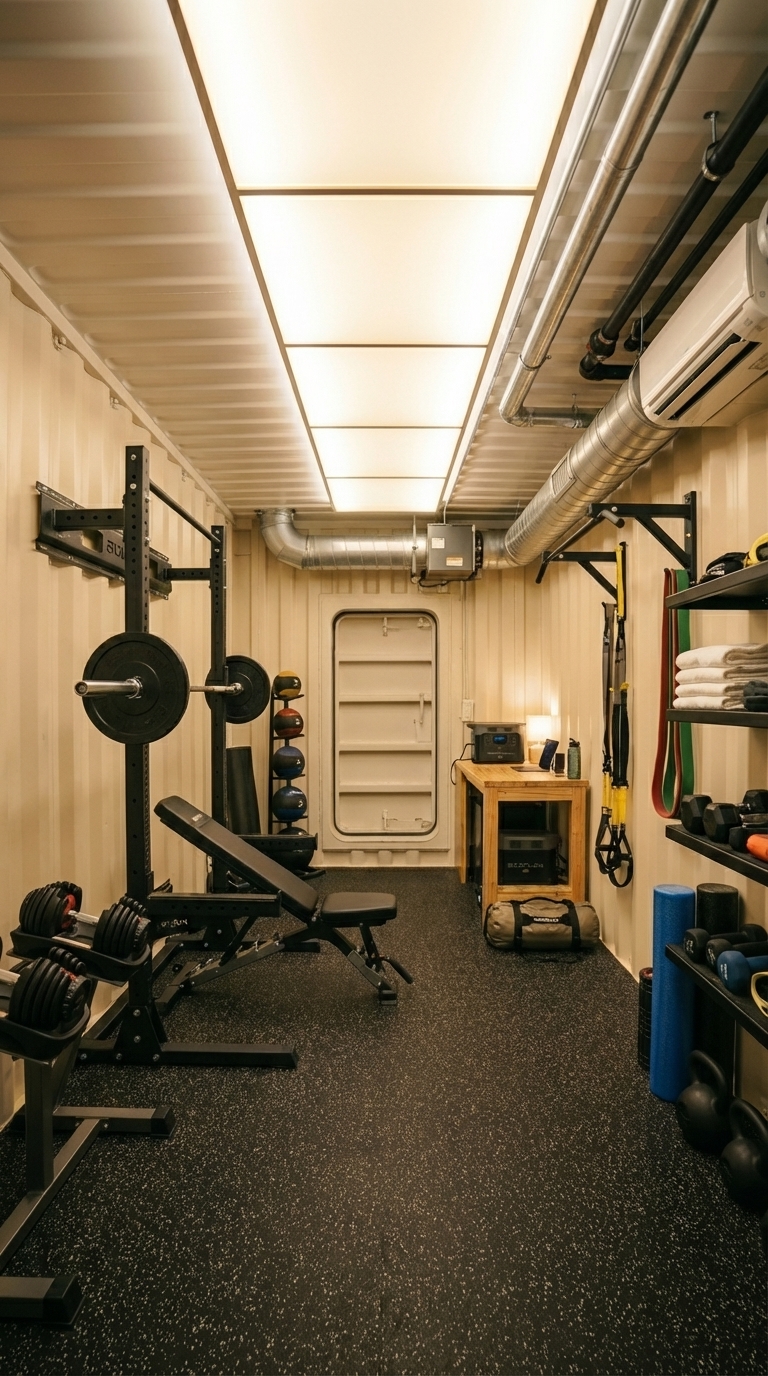
A separate area is designed for physical activity and health, equipped with gym essentials like weights, a bench, resistance bands, and functional training gear. This helps maintain physical condition during extended stays underground.
The layout also incorporates a workspace and monitoring station with multiple screens and communication equipment. This allows occupants to stay informed, monitor external conditions, and manage systems inside the bunker.
Durable flooring, reinforced walls, and sealed doors ensure structural integrity and protection. Lighting is evenly distributed across all zones, using energy-efficient systems connected to the central power supply.
Overall, the interior is a balance between survival functionality and modern comfort, creating a self-sufficient underground living space capable of supporting people for extended periods without compromising quality of life.
How Much Does It Cost to Build a 5-Container Underground Bunker?
Building a serious underground bunker in the United States using five shipping containers is a complex project that combines excavation, structural engineering, ?????????? systems, and full interior construction. Below is a realistic and detailed cost breakdown that shows where the money actually goes.

Leave a Reply