


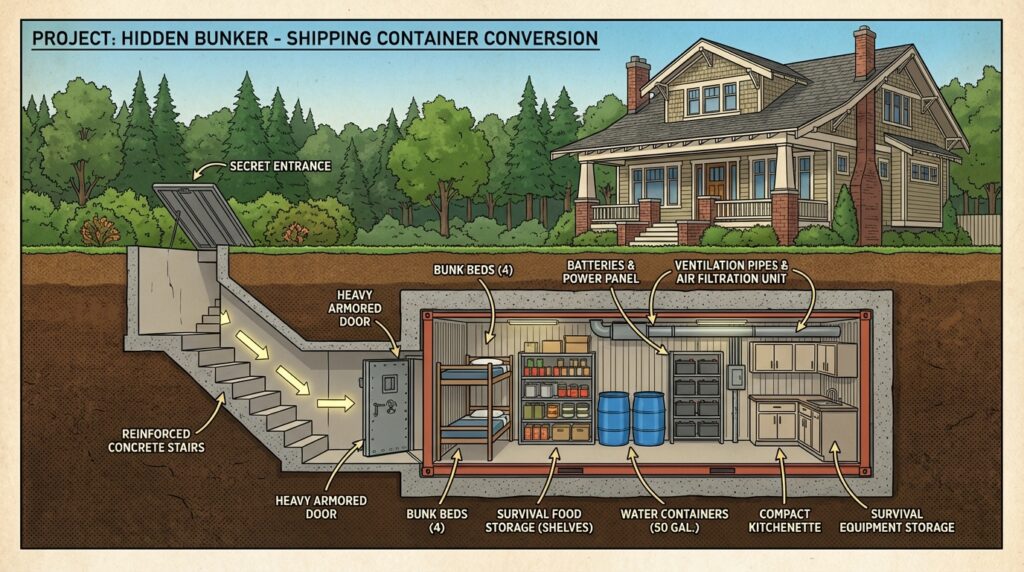
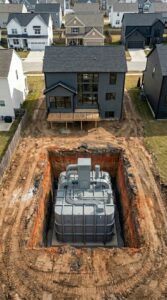
This concept shows the construction of a hidden underground bunker built from a reinforced shipping container installed beneath the backyard of a private home. The process begins with excavating a large trench behind the house where heavy equipment prepares the ground for the bunker structure.
A standard steel shipping container is carefully placed into the excavation and reinforced to withstand the pressure of surrounding soil. Once installed, the container becomes the core structure of the underground shelter. The walls can be strengthened with additional steel framing, insulation, and waterproofing layers to ensure long-term durability underground.
After the container is secured in place, builders install ventilation systems, electrical wiring, and access points before covering the structure with layers of soil. Over time, the backyard can be fully restored with grass and landscaping so the bunker remains hidden beneath the property.
Inside the container bunker, the space can be converted into a functional survival shelter that includes sleeping areas, food storage, power systems, and basic living facilities. The underground location provides natural insulation and protection while remaining discreet within the private yard.
Container bunkers like this are often used as emergency shelters, storm shelters, or private underground safe rooms integrated directly into residential properties. The design allows homeowners to create a hidden protective space without altering the appearance of the house or surrounding landscape.
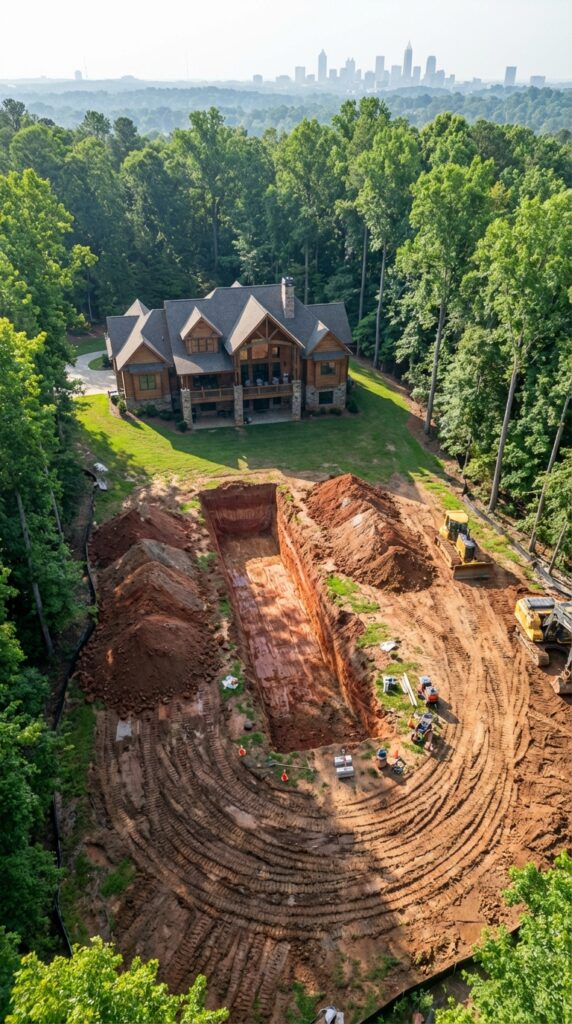
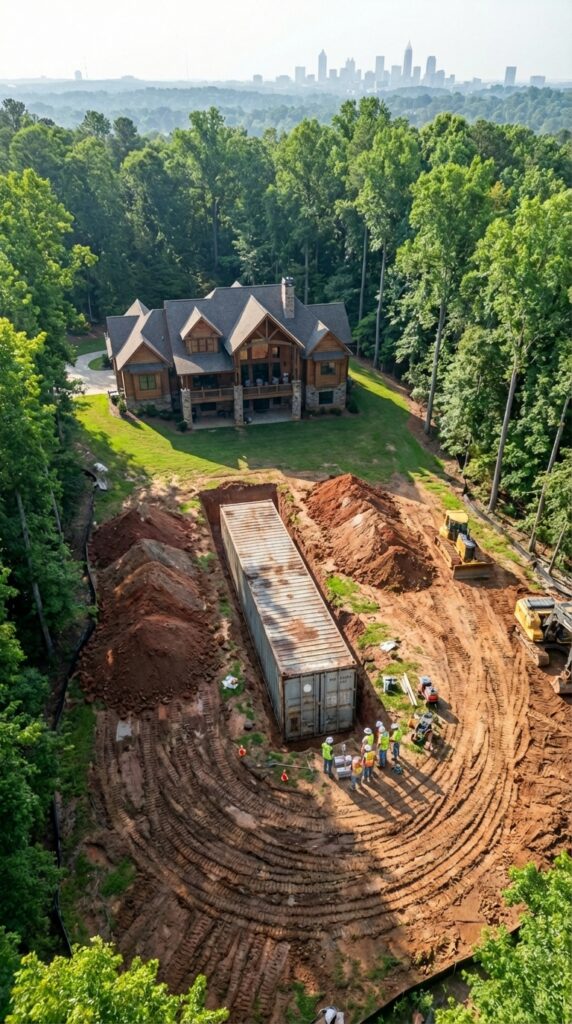
Hidden Backyard Bunker Beneath a Restored Lawn
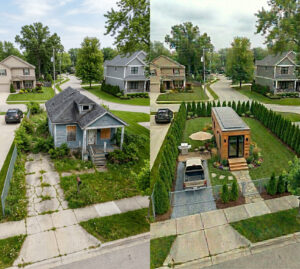
After the underground bunker structure is installed and fully reinforced, the construction site is carefully restored to match the original landscape. Layers of soil are placed back over the bunker, compacted, and leveled to recreate the natural ground surface behind the house.
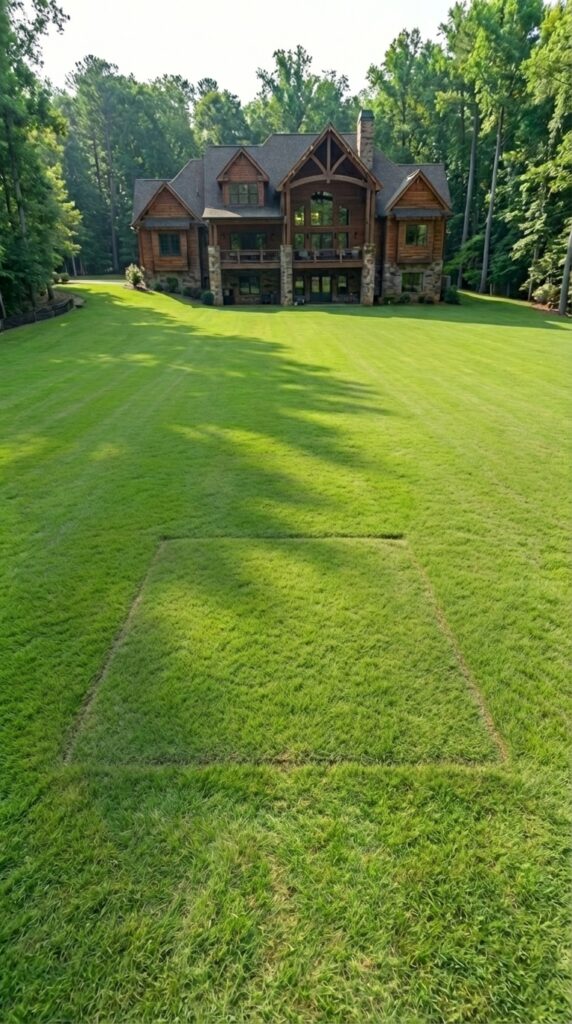
Once the terrain is stabilized, workers install fresh grass turf and landscaping, transforming the construction area back into a clean, green backyard. From above, the property once again looks like a normal residential lawn surrounded by trees.
The only visible element is a small reinforced bunker hatch built flush with the ground. The hatch is designed to blend into the lawn and remain discreet, allowing access to the underground shelter without attracting attention. In many cases it can be integrated into a small platform or disguised within the landscaping.
Below the surface, the buried container bunker remains protected by layers of soil, providing a secure underground space that can be used as an emergency shelter, safe room, or private survival bunker.
From the outside, the backyard appears completely normal — a peaceful green lawn behind a private home — while the hidden bunker remains safely concealed beneath the ground.

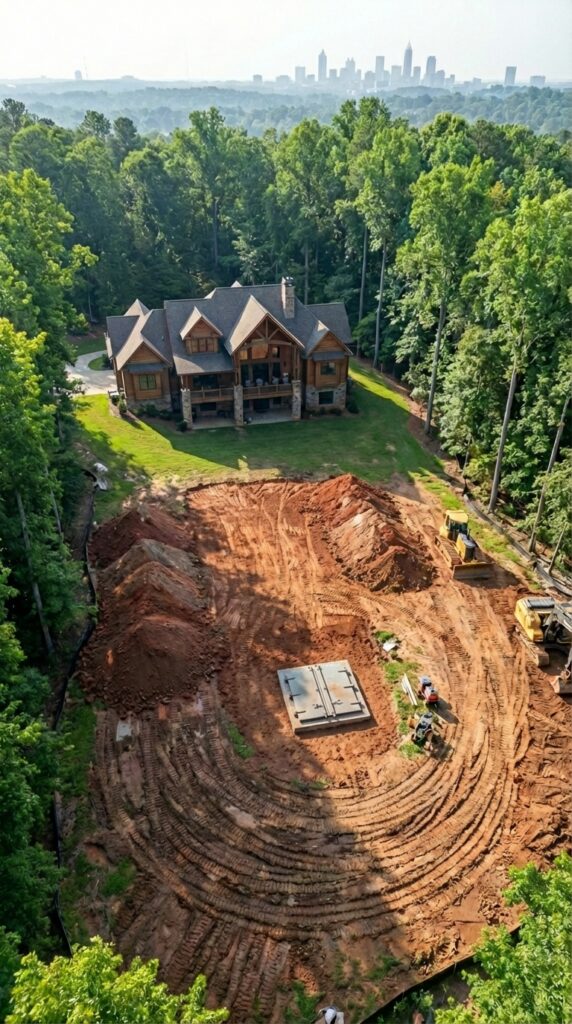
Hidden Lawn Entrance to an Underground Bunker
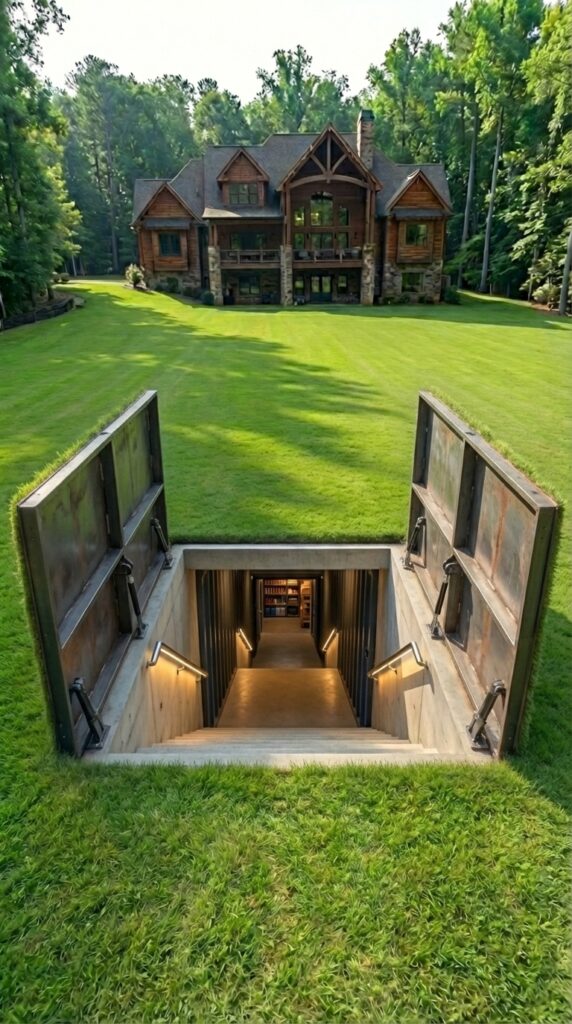
This design features a discreet underground bunker entrance hidden directly beneath the backyard lawn of a private home. From a distance, the property appears to be a normal landscaped yard with a large green lawn stretching behind the house. The entrance is carefully integrated into the ground so that it blends naturally with the surrounding landscape.
The bunker access is concealed beneath reinforced steel hatch doors installed flush with the grass surface. When closed, the hatch remains almost invisible, appearing as part of the lawn without drawing attention.
When opened, the doors reveal a stairway descending underground into a reinforced access corridor. The entryway is constructed with concrete walls, integrated lighting along the stairs, and durable steel structures designed to withstand heavy soil pressure and outdoor conditions.
At the bottom of the stairs, the passage leads into the underground bunker where living areas, storage spaces, and survival systems can be installed. The design allows homeowners to quickly access the shelter directly from their backyard while keeping the entrance hidden when not in use.
This type of hidden lawn entrance combines security, practicality, and discreet design, allowing the bunker to remain concealed beneath a peaceful residential landscape while providing a protected underground refuge when needed.
Interior of a Compact Underground Container Bunker
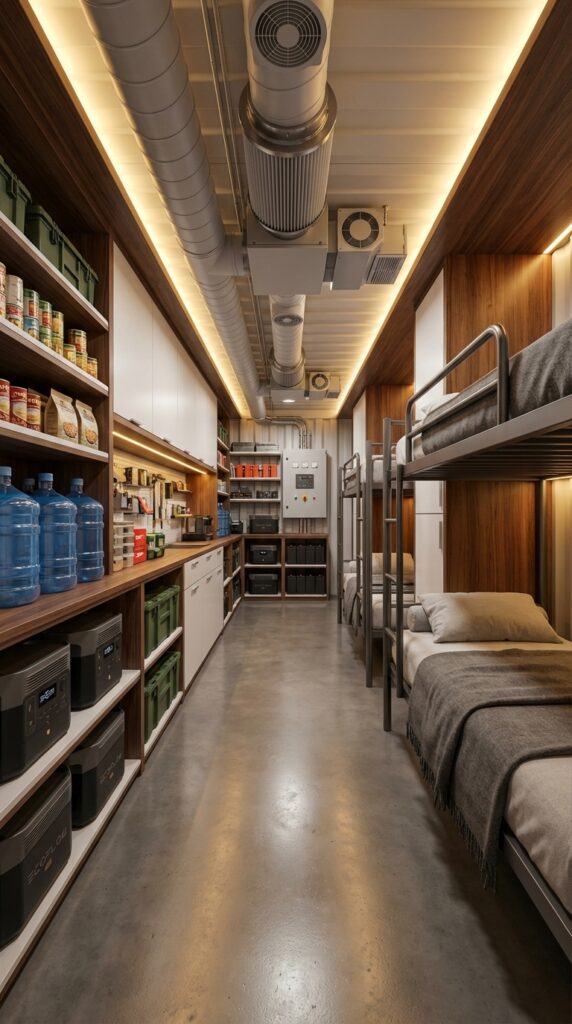
Inside the underground bunker, the space is designed to function as a compact yet fully equipped survival shelter built from a reinforced shipping container. The interior layout maximizes efficiency, combining sleeping, storage, power systems, and food supplies within a secure underground environment.
Along one side of the bunker are organized storage shelves filled with emergency supplies, including canned food, dry goods, water containers, and essential survival equipment. Built-in cabinets and storage crates help keep the bunker tidy while allowing residents to store long-term provisions.
Opposite the storage area are stacked bunk beds, providing sleeping space for several people while conserving valuable floor space. The beds are constructed with sturdy metal frames and simple bedding designed for durability and comfort during extended stays.
At the rear of the bunker sits the technical control area, where electrical panels, batteries, and power systems manage the bunker’s energy supply. Portable power stations and backup batteries allow the shelter to operate independently in case of power outages.
The ceiling houses ventilation ducts and air filtration systems, ensuring a constant supply of fresh air even when the bunker remains sealed for safety. Soft LED lighting integrated into the ceiling creates a warm and practical atmosphere inside the underground structure.
The overall design focuses on efficiency, resilience, and long-term survival, turning a simple buried container into a functional underground refuge capable of supporting occupants during emergencies while remaining hidden beneath the surface.
This underground bunker is built from a reinforced shipping container installed beneath the backyard of a private home, creating a hidden and secure survival shelter. The structure is buried under layers of soil and protected with reinforced concrete walls and drainage systems to ensure long-term durability underground.
Inside, the bunker is designed as a compact but fully functional living space. Along one wall are large storage shelves stocked with canned food, water containers, dry goods, and emergency supplies. Built-in cabinets and organized crates allow the shelter to store provisions for long-term survival.
The sleeping area includes stacked bunk beds, allowing several people to rest comfortably while saving space. Durable metal frames and simple bedding create a practical sleeping environment suited for extended stays.
At the end of the bunker is the technical systems area, which includes backup batteries, power stations, and electrical controls that manage the shelter’s energy supply. Overhead ventilation ducts and filtration systems provide fresh air circulation, making the bunker safe to occupy even when sealed.
LED lighting installed along the ceiling gives the underground space a warm and modern atmosphere, while polished concrete floors and wood panels create a clean and practical interior.
The design transforms a simple buried container into a secure underground refuge capable of supporting occupants during emergencies, while remaining completely hidden beneath the lawn of the property.
Estimated cost of building a bunker like this:
approximately $300,000 – $400,000, depending on excavation, reinforcement, filtration systems, electrical infrastructure, and interior equipment.
Architectural visualization. It is not a real construction project.
Leave a Reply