
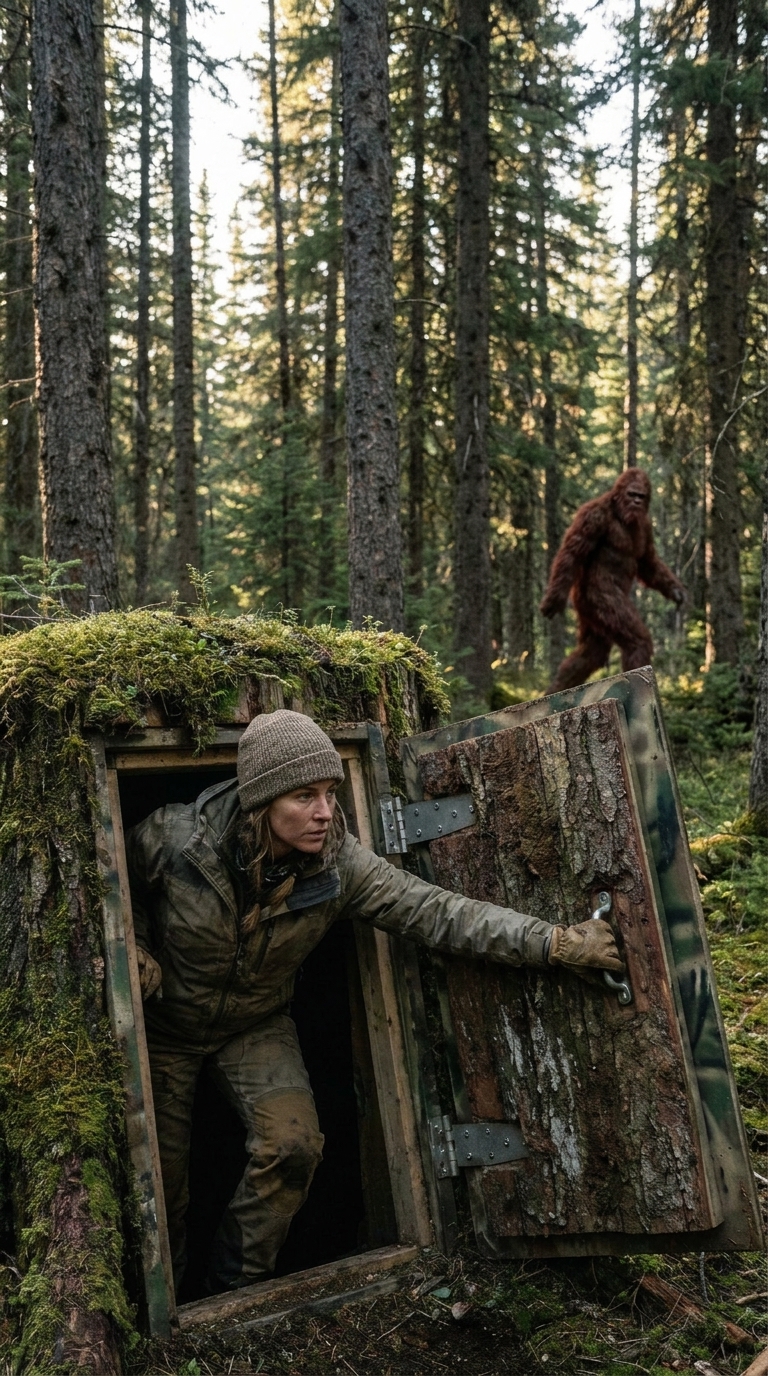
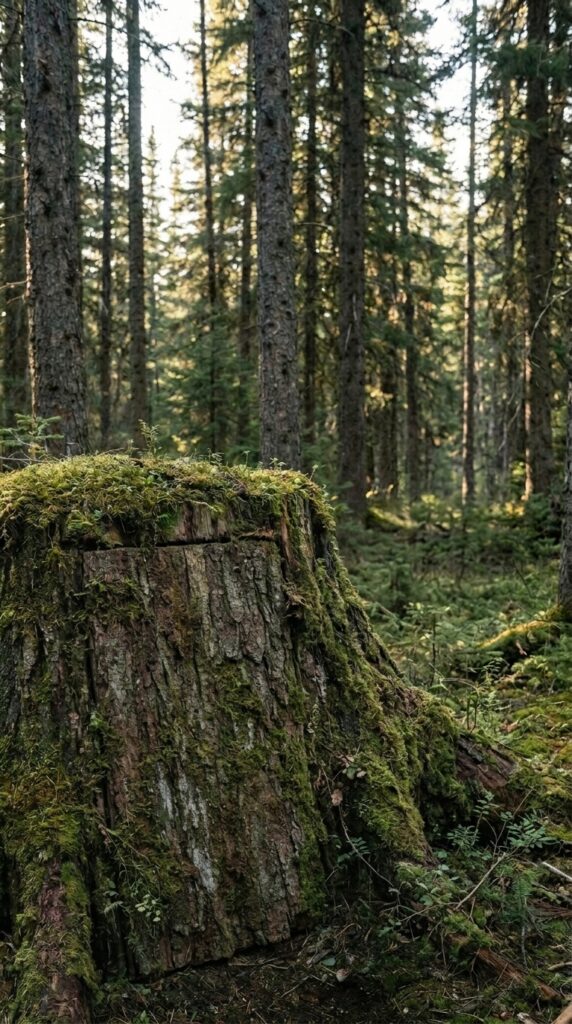
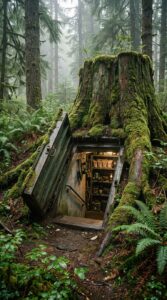
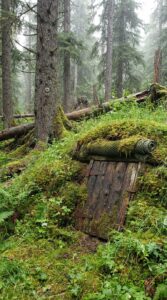
Deep within a dense forest, surrounded by tall pine trees and thick moss, an ordinary looking tree stump hides a secret entrance to an underground survival bunker. From the outside, the stump blends naturally with the surrounding forest floor, covered in moss, bark, and forest debris, making it nearly impossible to notice.
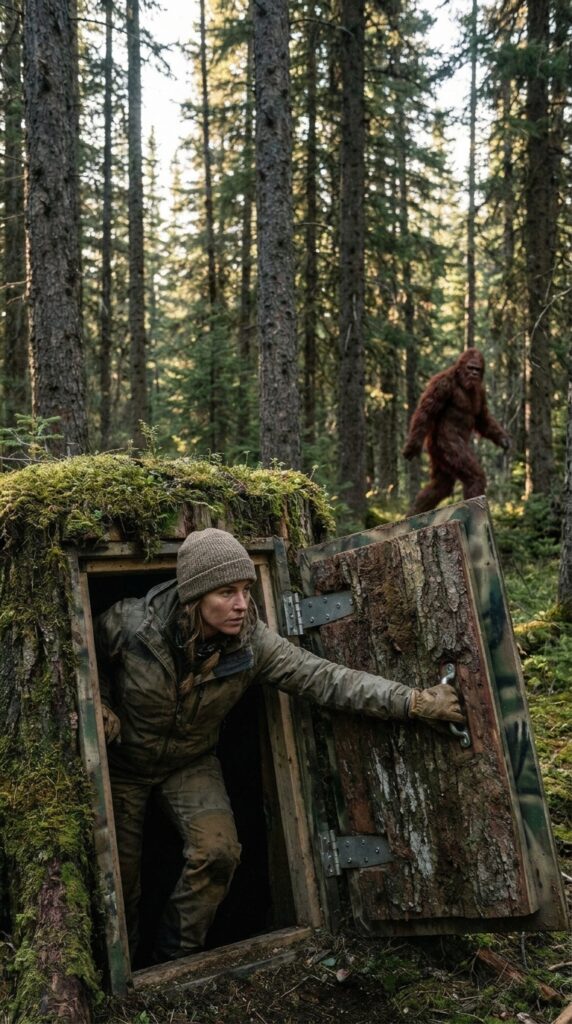
This tree stump is actually a camouflaged emergency exit connected to a hidden underground bunker system. A carefully designed door is built into the side of the stump and disguised with natural bark and wood texture so it looks like part of the tree itself.
When opened, the door reveals a narrow passage that leads down into the underground shelter. The design allows occupants to quietly exit the bunker while remaining completely hidden from anyone passing through the forest.
Such an escape route provides an important safety feature. If the main bunker entrance becomes blocked or unsafe, the stump exit allows a discreet and fast way to leave the shelter without exposing its location.
This concept demonstrates how underground survival shelters can be integrated into natural environments while remaining almost invisible, combining practical engineering with natural camouflage.
Interior of the Hidden Forest Survival Bunker
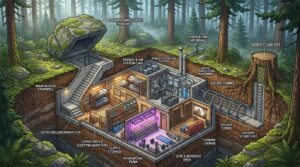
Inside the underground bunker the space is designed to be compact, practical, and comfortable for long stays below ground. The interior is reinforced but finished with natural wood walls and ceilings, creating a warm cabin-like atmosphere rather than a cold industrial shelter.
One side of the bunker contains a small kitchen and supply storage area. Metal shelves are filled with canned food, dry supplies, water containers, and emergency provisions. A compact cooking setup with a sink and portable stove allows basic meal preparation while using minimal space.
Near the entrance stands a reinforced bunker door built from heavy steel, designed to secure the shelter from outside threats. The door connects to the underground tunnel system that leads to the hidden forest exits.
The bunker also includes a small living and rest area with a sofa and a wall-mounted screen used for communication or entertainment. This space allows occupants to relax and maintain a sense of normal life while staying underground.
For heating and independence from external power, the shelter uses a compact wood stove, providing warmth during cold seasons. Next to it sits a portable power station and battery system that supplies electricity for lighting and essential equipment.
Despite its small size, the bunker combines essential survival systems with simple comforts, creating a hidden underground refuge capable of supporting life safely beneath the forest.
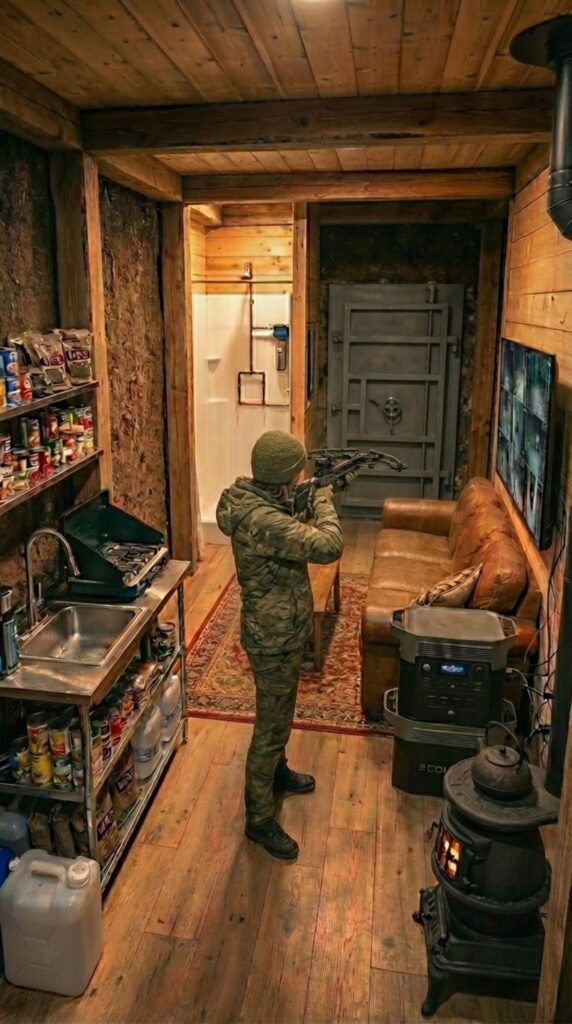
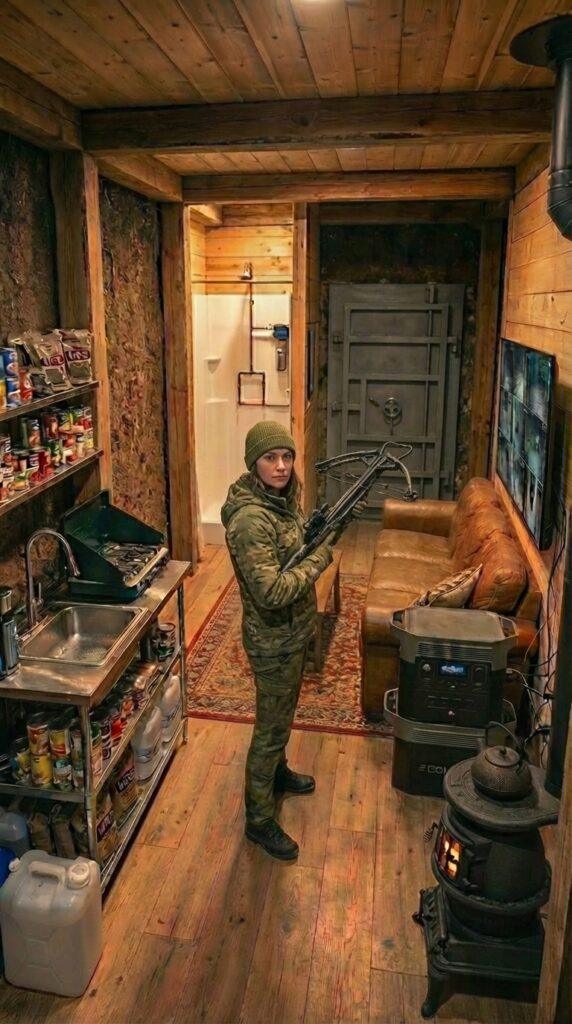
Compact Tactical Crossbow for Survival and Hunting
Inside the bunker, one of the essential tools for protection and hunting is a modern tactical crossbow. Unlike firearms, a crossbow provides a quiet and reliable way to defend the shelter or hunt for food without producing loud noise that could reveal a hidden location.
This crossbow features a durable composite frame and reinforced limbs, designed for strength and stability while maintaining a relatively compact size. The ergonomic grip allows steady handling, and the mounted optic scope helps improve accuracy when aiming at distant targets.
The weapon is suitable for both defensive situations and small-game hunting, making it a practical addition to a survival bunker. Because crossbows do not rely on gunpowder or complex ammunition, they can be used repeatedly with reusable bolts, which is especially important in long-term off-grid environments.
Combined with proper training and maintenance, a tactical crossbow offers a dependable and silent tool for wilderness survival, security, and self-sufficiency in remote shelter locations.

Hidden Tree Stump Bunker with Underground Living Shelter
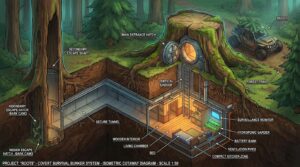
This concept illustrates a compact underground survival bunker hidden deep within a forest and accessed through a carefully camouflaged tree stump. From the outside, the stump appears completely natural, covered with moss and surrounded by roots and forest vegetation. In reality, a concealed door built into the bark opens to reveal a vertical ladder that descends several meters underground into the bunker.
At the bottom of the ladder, occupants enter a reinforced underground corridor constructed with steel and concrete walls. For additional protection, the corridor is secured by a heavy armored bunker door with a reinforced frame and locking wheel. This door separates the entrance tunnel from the main living space, creating an extra layer of security.
Beyond the door lies a cozy underground survival room designed to provide both safety and comfort. The interior is finished with wooden walls and beams, giving the shelter a warm cabin-like atmosphere. The living space includes a compact kitchen area, shelves stocked with canned food and long-term supplies, and a comfortable lounge area with seating and a wall-mounted screen for monitoring or entertainment.
The bunker also features a wood-burning stove for heating, allowing the shelter to remain warm even during cold seasons. A power station with battery storage provides electricity for lighting and essential equipment, helping the bunker operate independently.
At the back of the living area there is a separate bathroom and shower room, accessed through an interior door. This section includes a shower cabin, toilet, and sink, providing basic hygiene facilities inside the underground shelter.
Hidden beneath the forest floor and protected by natural camouflage, this bunker design combines practical survival engineering with discreet integration into the surrounding environment. The tree stump entrance, reinforced corridor, armored security door, and fully functional living space create a secure and self-sufficient underground refuge in the wilderness.
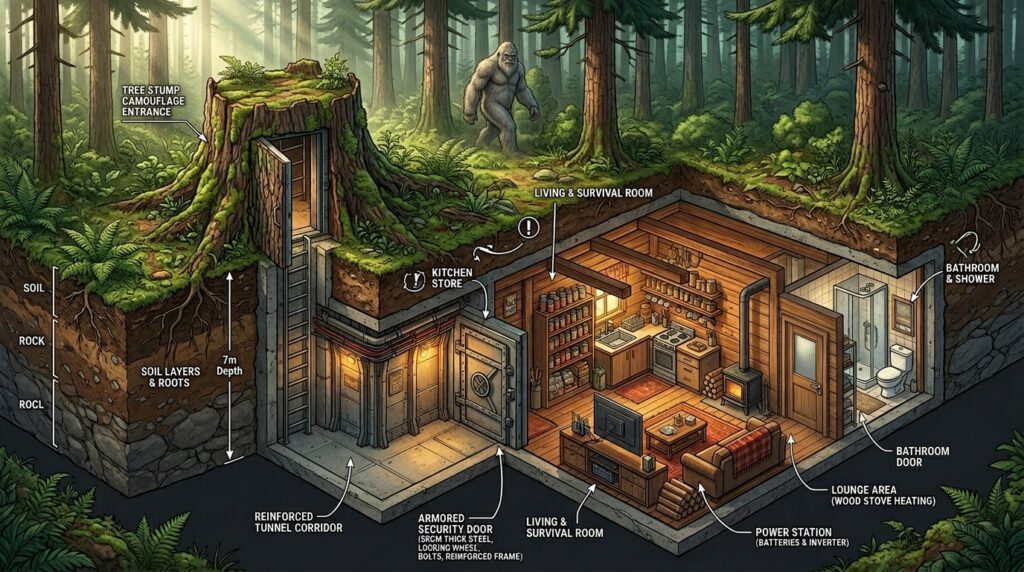
Architectural visualization. It is not a real construction project.

Leave a Reply