
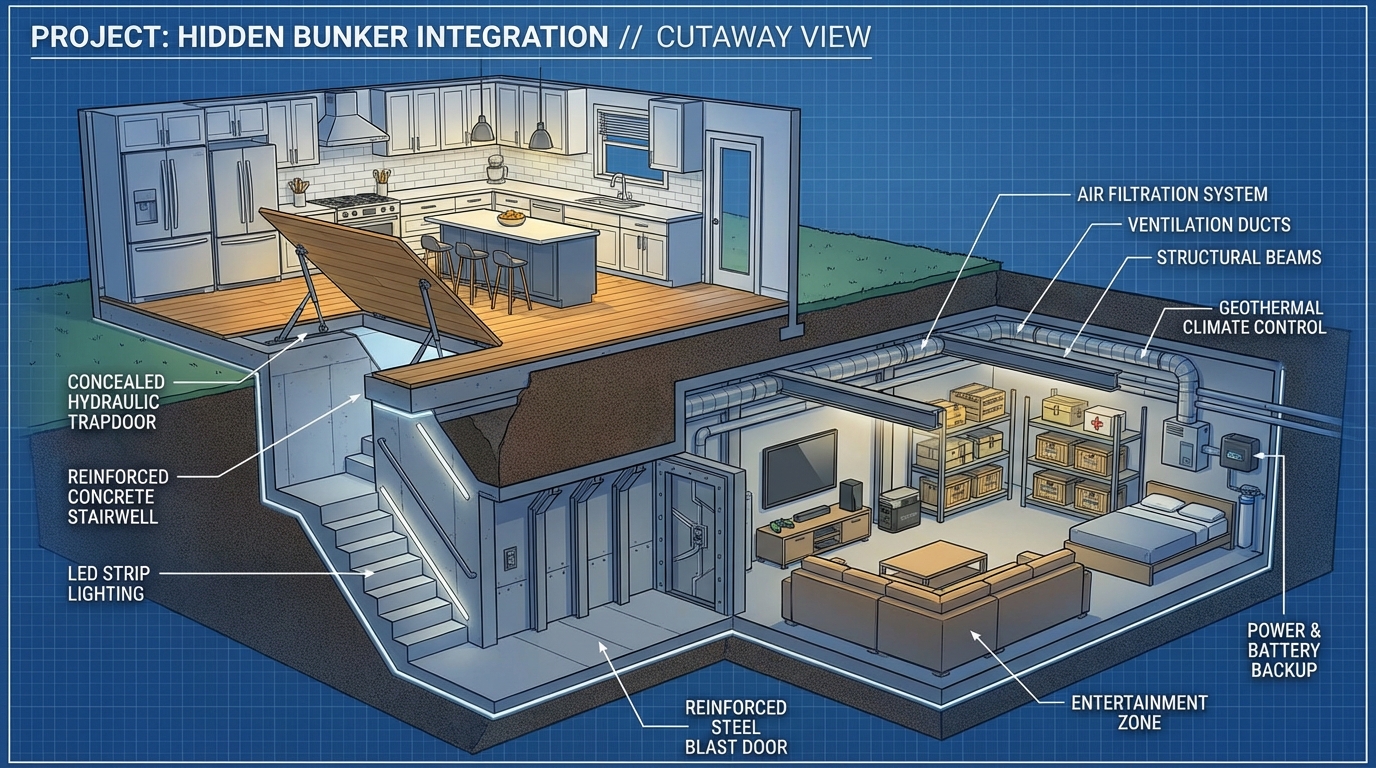
Modern survival architecture increasingly integrates hidden security features directly into residential homes. One of the most discreet and practical designs is a secret underground bunker entrance hidden beneath the kitchen floor.
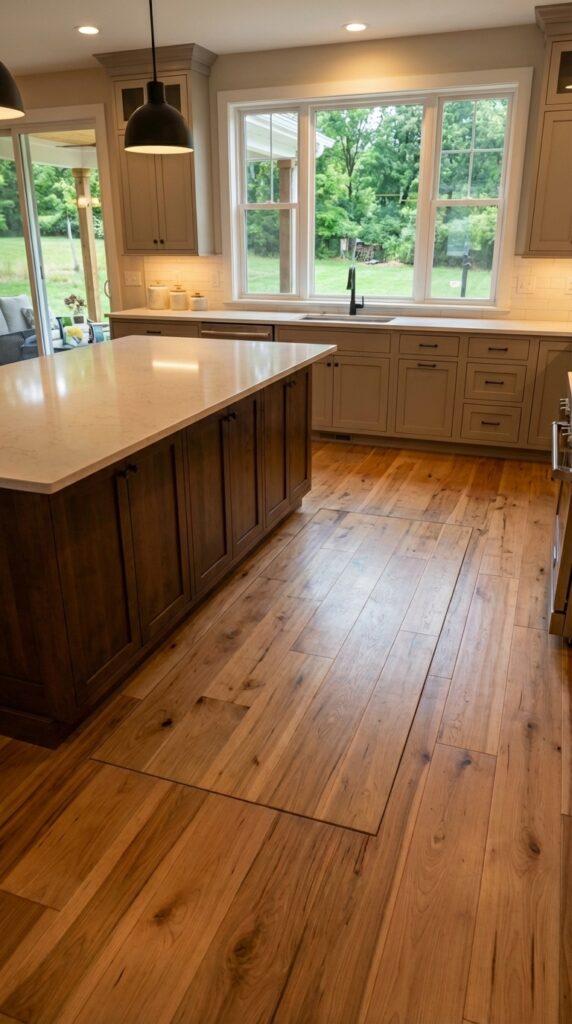
At first glance, the kitchen appears completely normal — a spacious modern interior with wooden flooring, a large kitchen island, and bright windows overlooking the backyard. However, a reinforced section of the floor is carefully engineered to function as a concealed trapdoor hatch.
When closed, the hatch blends seamlessly with the surrounding hardwood flooring, making it almost impossible to notice. Precision cuts in the flooring allow the hatch to sit perfectly flush with the floor surface, maintaining the aesthetic of the kitchen while hiding the access point.
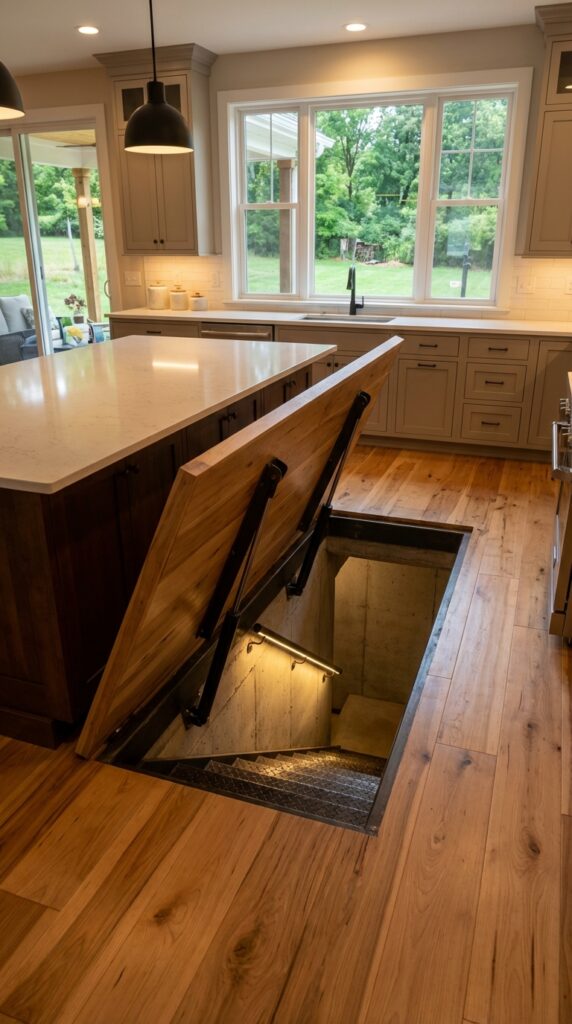
When activated, the reinforced hatch lifts upward using concealed hinges and hydraulic supports. Beneath it, a concrete stairwell descends into the underground bunker, illuminated by built-in LED safety lighting along the walls. The staircase leads to a reinforced corridor that connects to the main underground shelter.
This type of hidden access point offers several advantages. The entrance remains protected inside the house, making it accessible even during extreme weather or emergencies. Because it is integrated into the interior design, it also remains hidden from outside view, significantly increasing security and privacy.
The bunker below can contain survival supplies, sleeping areas, water storage, power systems, and ventilation equipment, allowing the shelter to support occupants during emergencies or natural disasters.
By integrating the entrance directly into the home’s interior, this design creates a fully concealed underground refuge that remains both practical and discreet, turning an ordinary kitchen into the gateway to a hidden underground bunker system.
Interior of a Modern Underground Survival Bunker
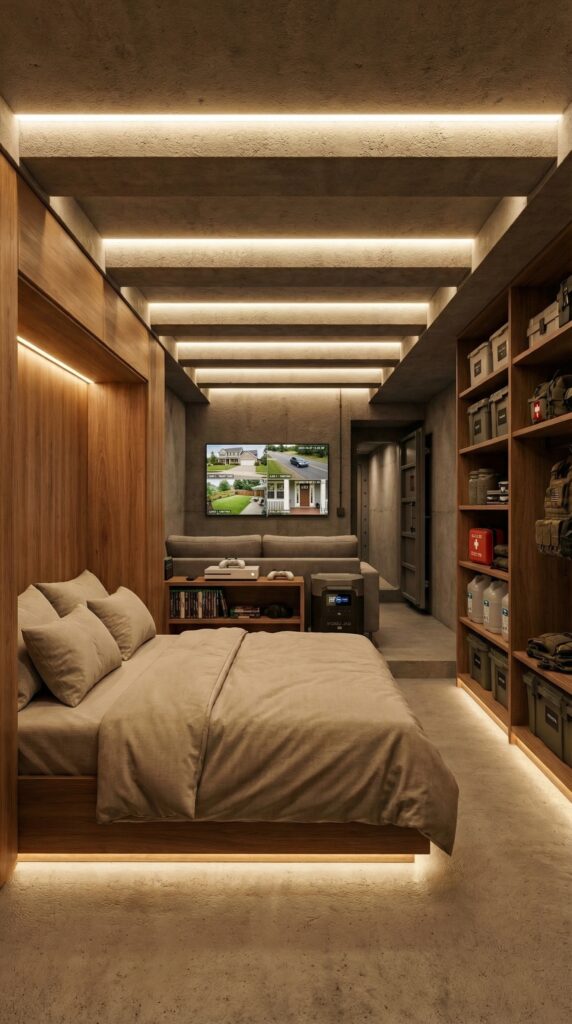
Inside the hidden underground bunker, the space is designed to combine comfort, security, and long-term self-sufficiency. Unlike traditional emergency shelters, this bunker interior resembles a compact modern living space while still maintaining the durability of a reinforced underground structure.
The central area features a comfortable sleeping zone with a large bed built into a wooden frame with soft ambient lighting underneath. Warm wooden panels contrast with the raw concrete bunker walls, creating a balance between a secure underground structure and a cozy living environment.
At the far end of the room sits a small lounge and monitoring area. A sofa and table provide a place to relax, while a mounted screen can display security cameras, outside monitoring systems, or entertainment. This allows occupants to stay informed about the surroundings above ground while remaining safely inside the bunker.
Along one side of the shelter are organized storage shelves containing emergency supplies such as medical kits, survival gear, water containers, and equipment for long-term survival. Carefully arranged storage systems ensure that essential resources remain accessible and protected.
The bunker also includes a reinforced security door leading to additional protected sections of the underground structure. These areas can house air filtration systems, backup batteries, water purification equipment, and other critical life-support infrastructure.
Soft LED lighting integrated into the ceiling beams creates an evenly lit environment without harsh shadows, making the underground space feel calm and livable even during extended stays.
This type of interior design transforms a traditional bunker into a fully functional underground living space, allowing occupants to remain safe, comfortable, and prepared during emergencies while the shelter remains hidden beneath the surface above.
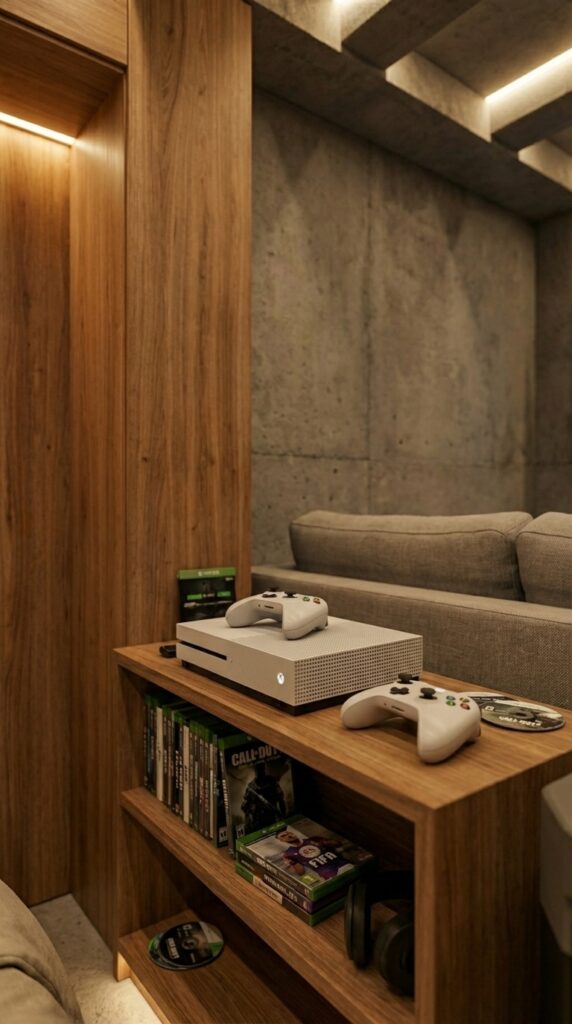
Entertainment Area with Xbox Gaming System
To make long stays underground more comfortable, the bunker also includes a dedicated entertainment area equipped with an Xbox gaming console. This feature helps reduce stress and boredom during extended periods spent inside the shelter.
In the relaxation zone, a large screen is mounted on the wall and connected to the Xbox gaming system, allowing occupants to play video games, watch movies, or access offline media. Comfortable seating nearby creates a small lounge space where people can relax after working or organizing supplies inside the bunker.
A collection of Xbox game titles and controllers is stored on nearby shelves, providing a variety of entertainment options. Popular games, adventure titles, and cooperative games allow multiple people inside the bunker to play together, helping maintain morale during long stays underground.
The Xbox system can run on the bunker’s backup power system, connected to battery storage and inverters that supply stable electricity even when the main power grid is unavailable. This ensures the entertainment system remains operational without affecting the critical life-support systems of the bunker.
By including gaming and entertainment systems, the bunker becomes more than just an emergency shelter — it becomes a livable underground space where occupants can rest, relax, and maintain mental well-being while staying safe underground.
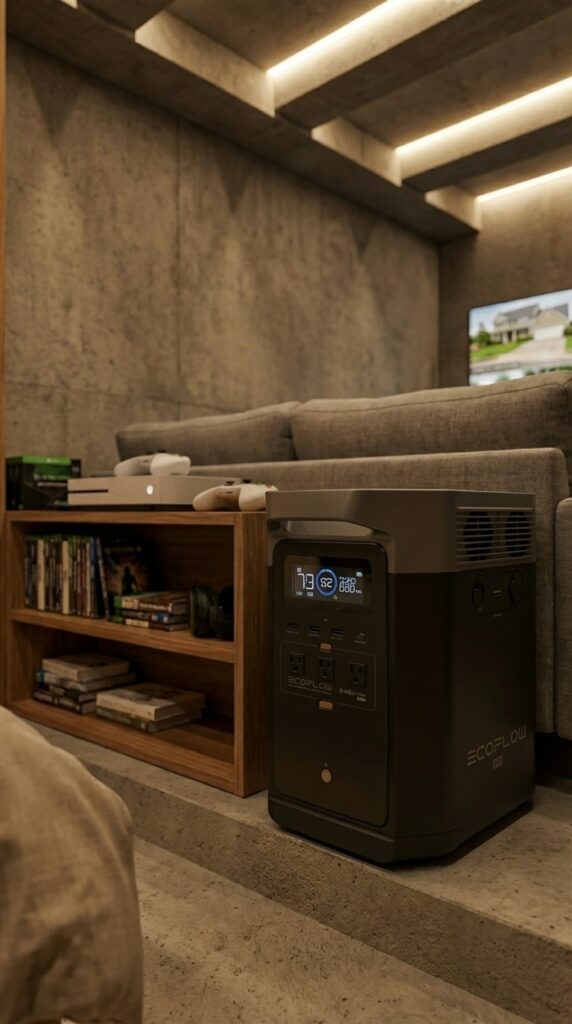
Backup Power System with EcoFlow Energy Station
A critical component of this underground bunker is the high-capacity EcoFlow portable power station, which provides reliable backup electricity for the entire shelter. This powerful energy system ensures that essential devices and systems remain operational even if the main power grid fails.
The EcoFlow unit supplies electricity to lighting, security systems, ventilation equipment, and entertainment devices, including the Xbox gaming console and monitoring screens. With multiple AC outlets, USB ports, and fast charging capabilities, the system can power several devices simultaneously.
One of the key advantages of the EcoFlow power station is its large battery capacity and stable inverter output, which allows it to run electronics safely without fluctuations. The digital display provides real-time information about power usage, remaining battery capacity, and system performance.
The system can be recharged in several ways, including solar panels, standard electrical outlets, or backup generators, making it a versatile power solution for long-term underground living.
By integrating a high-capacity EcoFlow energy station, the bunker gains a reliable independent power source, ensuring that occupants have access to electricity for communication, lighting, air systems, and comfort devices even during extended emergencies.
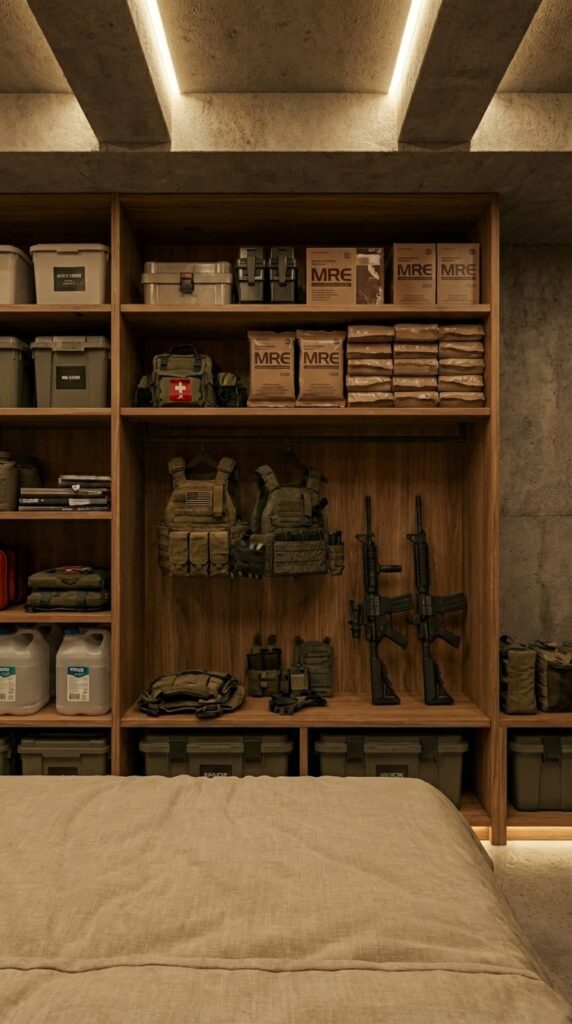
Survival Equipment and Emergency Supply Storage
A well-designed bunker must include a dedicated storage area for survival equipment and emergency supplies. This section of the shelter is organized with reinforced wooden shelving that allows residents to store essential gear in a structured and easily accessible way.
The upper shelves are stocked with long-term food supplies such as MRE (Meals Ready to Eat), dry ration packs, and sealed emergency food kits designed to remain usable for years. These compact food systems provide balanced nutrition and require little preparation, making them ideal for emergency situations.
Nearby are medical kits and first-aid equipment, which are critical for treating injuries or health issues while remaining underground. Emergency medicine, bandages, and survival medical tools are stored in clearly labeled containers for quick access.
The bunker also contains protective gear and tactical equipment, including body armor, utility vests, backpacks, and communication equipment. These items allow occupants to safely move outside the shelter if necessary or respond to emergency situations.
Lower shelves store water containers and sealed storage boxes, which hold additional supplies such as tools, batteries, spare clothing, and maintenance equipment. Keeping these resources organized ensures that the bunker can support occupants during extended periods underground.
This carefully arranged storage area transforms the bunker into a fully prepared survival environment, where food, water, medical supplies, and essential equipment are always ready for use when needed.
Underground Kitchen Bunker – Interior Description and Estimated Cost
This modern underground bunker is designed as a hidden living space located beneath a private home, with the entrance concealed directly in the kitchen floor. When the trapdoor opens, a reinforced concrete staircase leads down into a secure underground corridor and living area.
Inside the bunker, the space is organized to combine comfort, security, and long-term survival functionality. A sleeping area with a large bed provides a comfortable place to rest during extended stays underground. Soft LED lighting built into the ceiling creates a calm atmosphere while maintaining energy efficiency.
Along the wall, reinforced shelving stores long-term emergency supplies, including MRE food packs, water containers, medical kits, and sealed survival equipment. Tactical gear and emergency tools are also organized in dedicated storage compartments so that everything remains accessible in critical situations.
The bunker also features a relaxation and entertainment area with a sofa, screen, and an Xbox gaming system. This space allows occupants to relax, watch movies, or play games while remaining underground, which helps maintain mental well-being during long stays.
A high-capacity EcoFlow power station supplies electricity to the bunker. The system powers lighting, electronics, ventilation equipment, and entertainment systems. The battery unit can be recharged through solar panels, grid electricity, or a backup generator, allowing the bunker to operate independently during power outages.
The structure itself is built using reinforced concrete and steel components designed to withstand heavy soil pressure and provide protection in emergency situations.
Estimated Cost
The price of building an underground bunker varies widely depending on size, depth, materials, and equipment.
- Basic small bunkers can start around $40,000–$80,000.
- Larger or custom shelters typically cost $200–$400 per square foot.
- Fully equipped luxury bunkers can reach $300,000 or more depending on features and reinforcement.
For a bunker like the one shown — with a hidden kitchen entrance, reinforced structure, power systems, living area, and survival supplies — the estimated cost would typically be around $250,000 – $400,000 depending on construction complexity, excavation, and interior equipment.
This type of bunker transforms an ordinary home into a secure and discreet survival shelter, providing protection, comfort, and independence during emergencies while remaining completely hidden beneath the house.
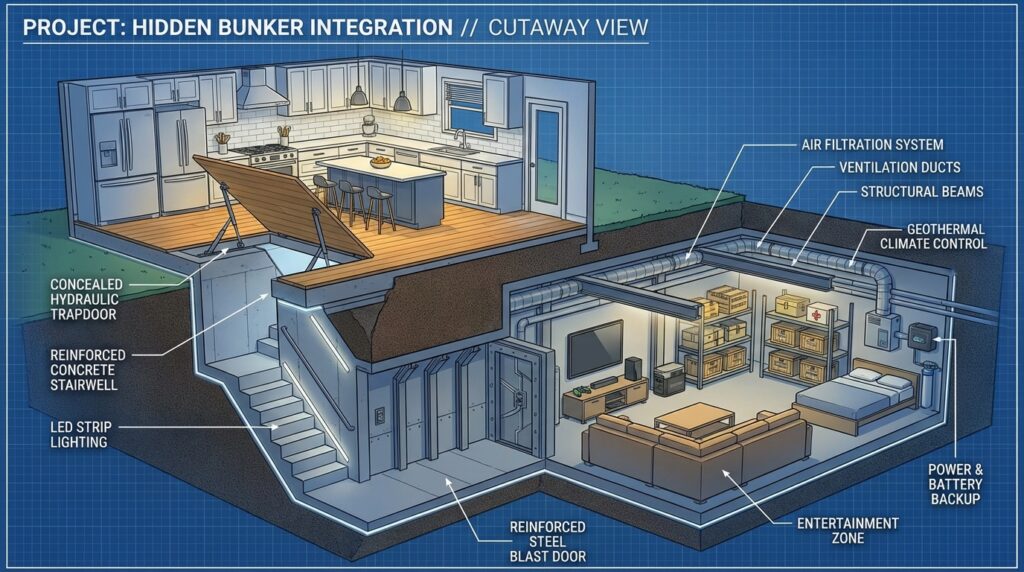
Architectural visualization. It is not a real construction project.
Leave a Reply