This concept shows the construction of a modern underground bunker installed directly beneath the backyard of a suburban home. Hidden below the ground, the reinforced bunker is designed to provide a secure and self-sufficient shelter while remaining completely invisible from the surface once the installation is complete.
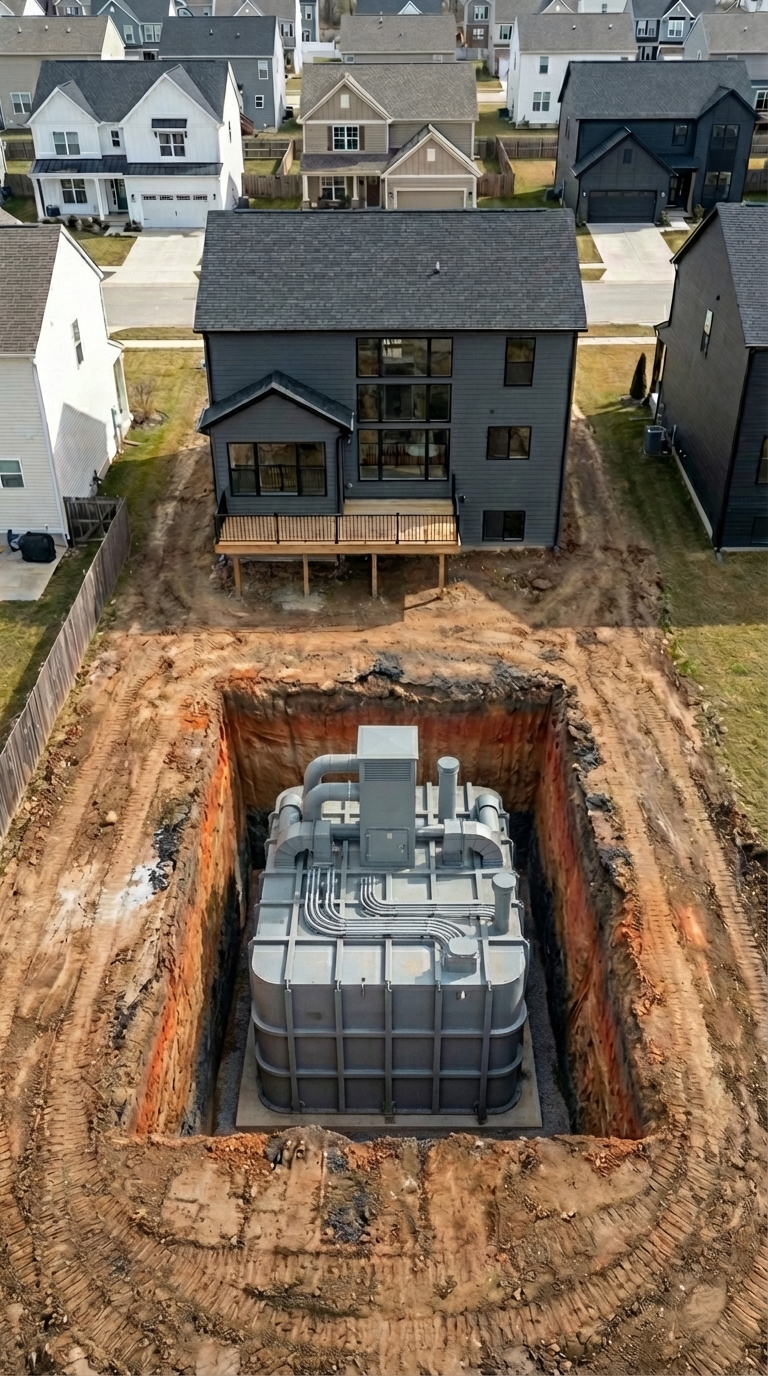
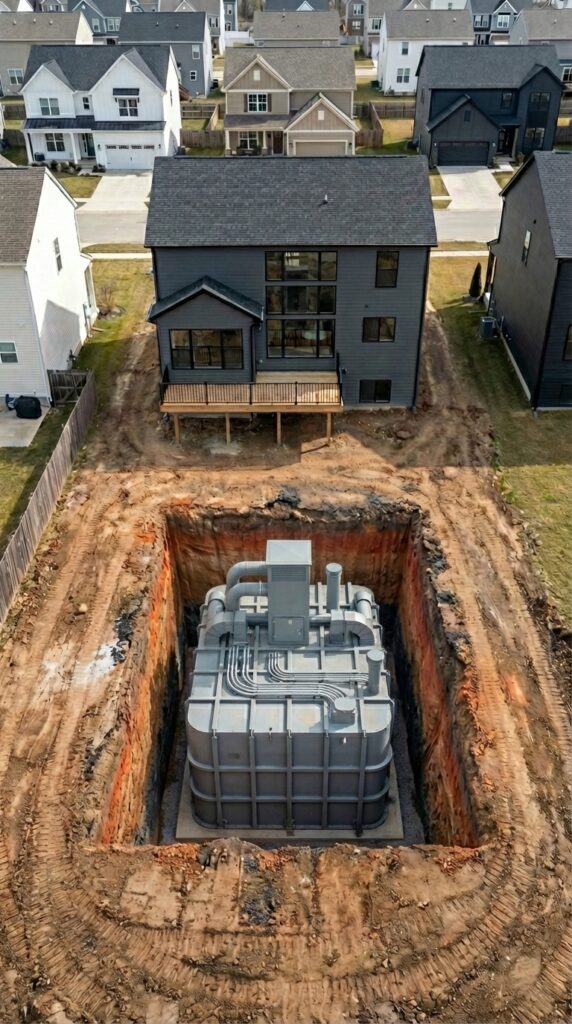
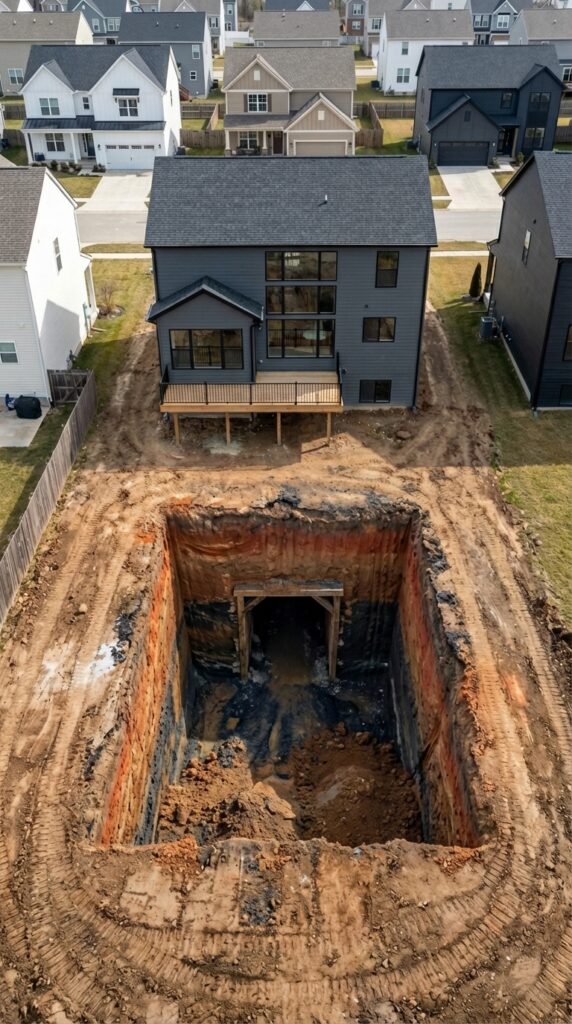
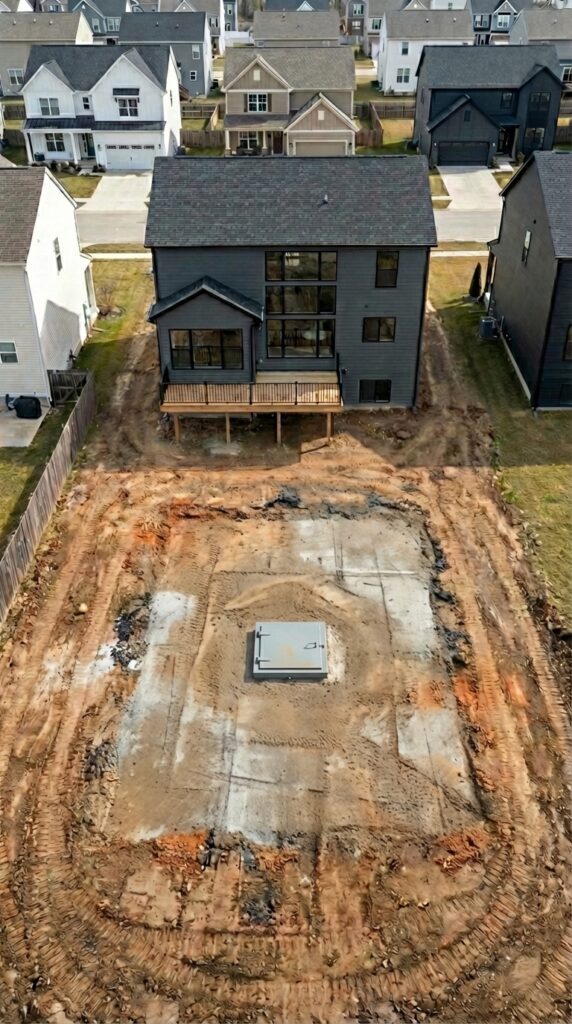
The process begins by excavating a large rectangular pit in the backyard. Heavy equipment removes several meters of soil to create space for the bunker structure. The excavation is carefully shaped to support the installation of a prefabricated reinforced bunker module.
Once the pit is prepared, the reinforced bunker structure is placed into the excavation. The bunker is built from heavy steel and reinforced concrete panels designed to withstand extreme conditions while protecting the interior from soil pressure and groundwater. Ventilation systems, air filtration units, and utility connections are installed on the roof of the bunker before it is sealed underground.
Inside the bunker, the layout typically includes sleeping areas, storage for emergency supplies, water reserves, communication equipment, and independent power systems. The space is designed to support occupants during emergencies while maintaining air circulation, lighting, and basic living conditions.
The bunker also connects to a reinforced underground tunnel that leads toward the house. This passage allows occupants to enter the shelter directly from the basement or another hidden access point inside the home. In some designs, an additional emergency exit may also be installed at a separate location in the yard.
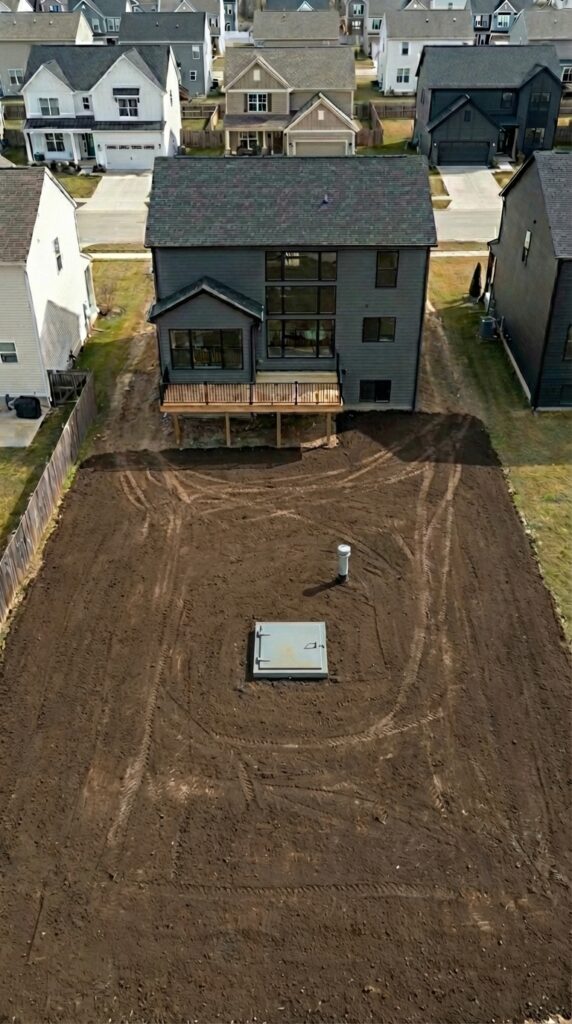
After installation is completed, the excavation area is filled and restored so the backyard appears completely normal again. Grass, landscaping, and outdoor structures can be rebuilt above the bunker without revealing what lies beneath.
A hidden underground bunker like this provides homeowners with a discreet protective space that remains concealed below the property while offering a secure refuge during unexpected situations.
Backyard Landscape Design Above the Underground Bunker
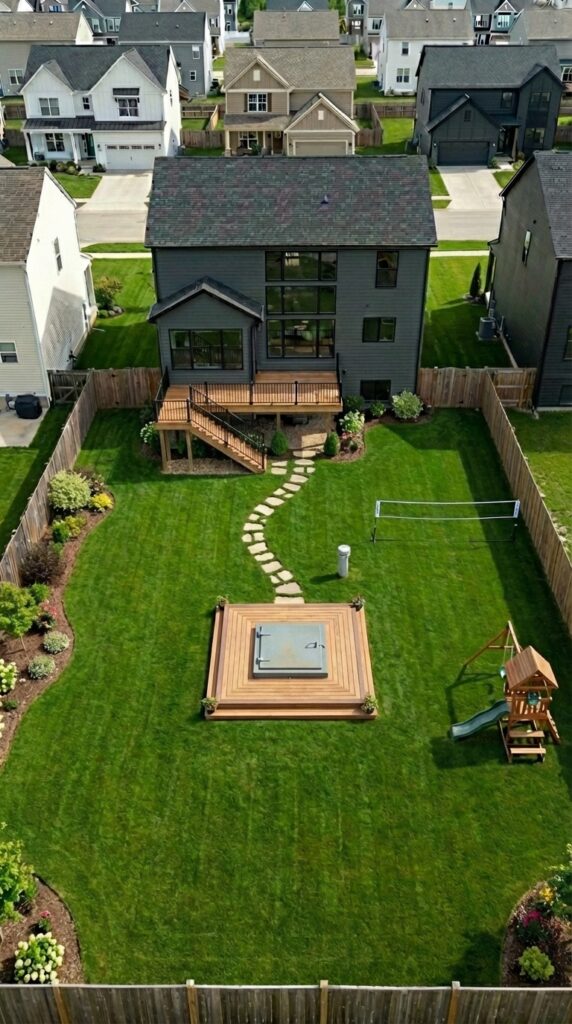
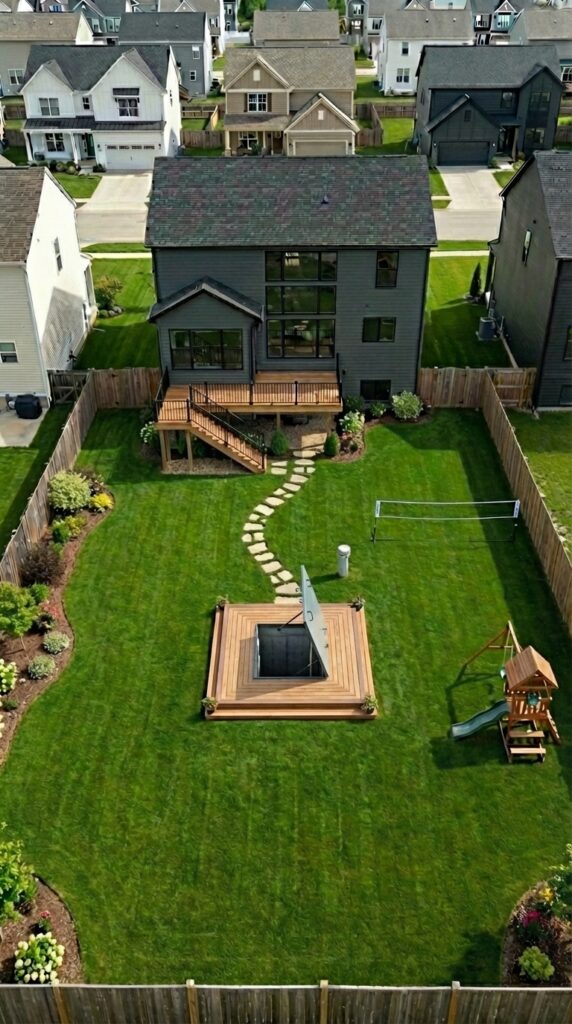
Once the underground bunker is fully installed and sealed beneath the backyard, the entire surface area can be restored and redesigned to look like a normal residential outdoor space. From above ground, the shelter remains completely hidden, with only a reinforced access hatch visible at the center of the yard.
The bunker entrance is integrated into a low-profile deck platform that blends naturally with the landscaping. This raised wooden structure protects the hatch while making it appear like a standard outdoor feature rather than a secure underground entry point. When closed, the hatch sits flush within the deck, maintaining a clean and unobtrusive appearance.
Around the platform, the backyard is covered with freshly planted grass and carefully designed landscaping. Stone pathways lead from the house toward the center of the yard, creating a natural flow through the outdoor space. Decorative plants, shrubs, and flower beds along the edges of the yard soften the design and help conceal the bunker structure beneath the ground.
The backyard also includes typical residential features such as a children’s play structure, open lawn area for recreation, and space for outdoor activities. These elements help the yard appear completely ordinary, ensuring the underground shelter remains unnoticed.
Ventilation pipes for the bunker are discreetly integrated into the landscape as small utility posts or garden elements. These systems allow proper airflow to the underground shelter without drawing attention to the infrastructure below.
From a distance, the backyard simply looks like a well-maintained suburban garden behind a family home. However, beneath the grass and landscaping lies a fully reinforced underground bunker designed to provide protection and self-sufficiency when needed.
By combining practical engineering with thoughtful landscape design, the bunker remains concealed while the backyard continues to function as a comfortable and visually appealing outdoor living space.
Interior of the Underground Bunker With Private House Access
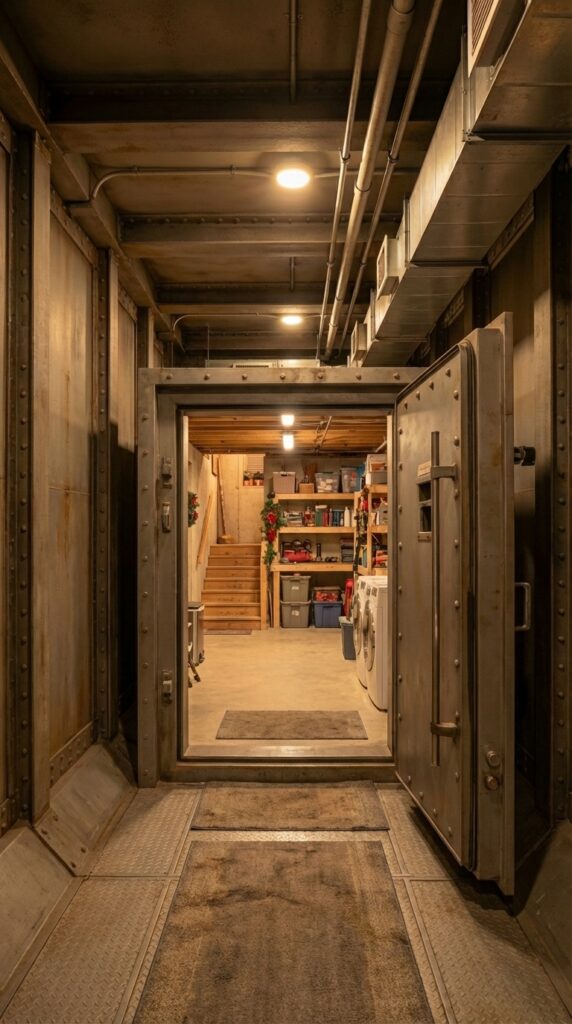
Inside the underground bunker, the interior is designed to combine durability with practical living comfort. The entry begins through a reinforced steel security corridor equipped with thick bunker doors and heavy structural supports. This protected section acts as the main barrier between the outside environment and the living area of the shelter.
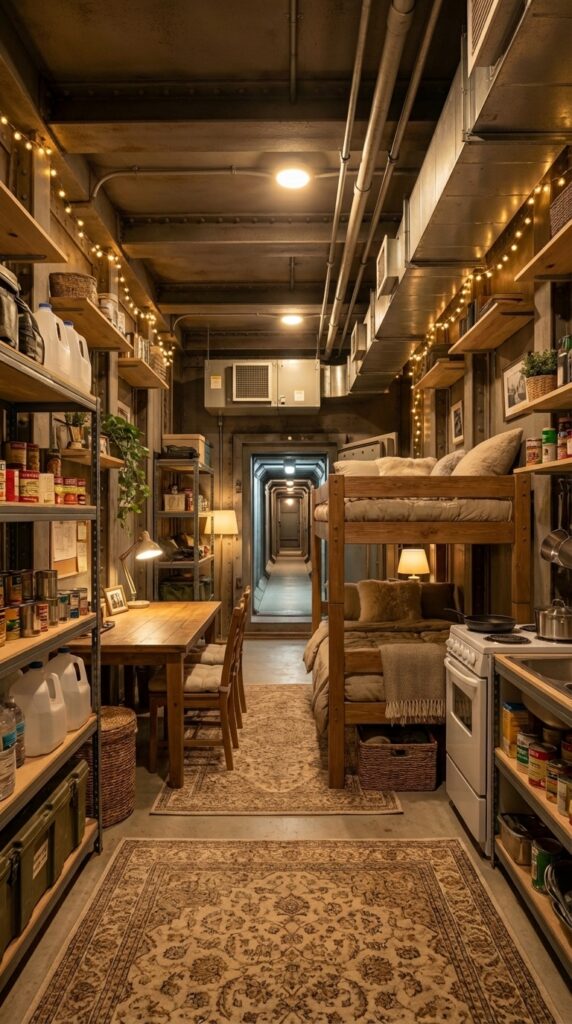
Beyond the steel corridor, the bunker opens into a fully organized underground living space. The interior includes bunk beds for sleeping, storage shelves filled with long-term food supplies, drinking water containers, emergency equipment, and cooking appliances. A compact kitchen area allows basic meal preparation, while a small dining table provides space for planning, communication, and daily activities.
Soft lighting and wooden furniture create a warmer atmosphere inside the otherwise reinforced structure. Shelving along the walls stores canned goods, medical kits, tools, and essential supplies for extended stays underground. Ventilation systems and reinforced air ducts run along the ceiling to maintain proper airflow throughout the bunker.
One of the most important design features is the secondary access tunnel leading directly to the private house basement. This reinforced passage connects the bunker to the home, allowing residents to enter the shelter quickly without going outside. In emergency situations, occupants can move safely from the house basement into the bunker within seconds.
This hidden connection keeps the bunker discreet and practical for everyday use. From the outside yard, only the small access hatch may be visible, while the main internal entry remains concealed inside the house itself.
Together, the reinforced steel corridor, organized living interior, and private basement connection create a secure underground shelter system integrated directly beneath the property. The design ensures both protection and convenience while remaining hidden within a normal residential environment.
Backyard Underground Bunker System – Estimated Cost and Description
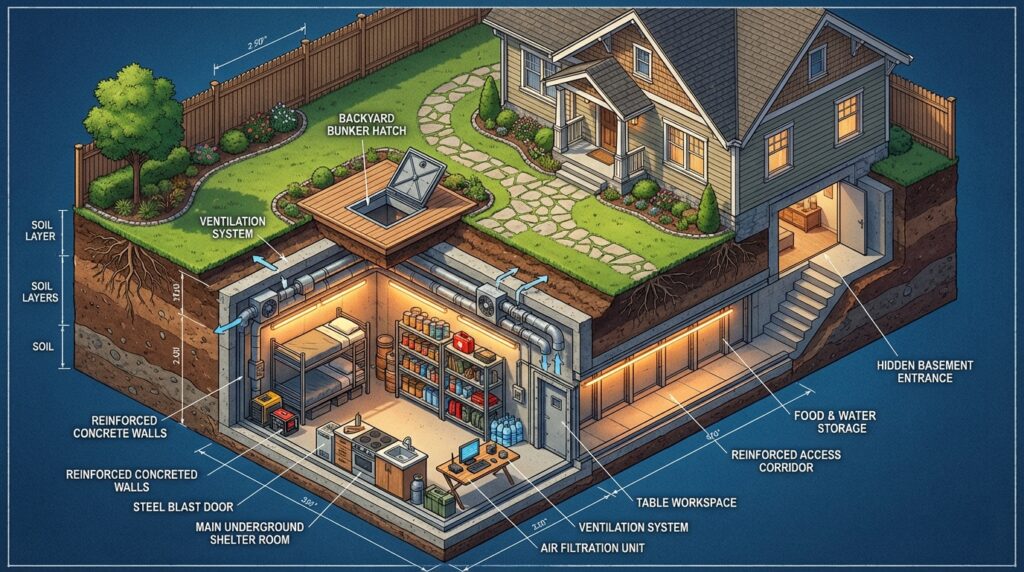
This concept illustrates a modern underground bunker installed beneath the backyard of a private suburban home. Designed for safety, privacy, and long-term shelter, the system combines a reinforced underground living space with a direct access corridor connecting the bunker to the basement of the house.
The construction begins with a large excavation in the backyard where a reinforced steel and concrete bunker module is installed several meters below ground level. The structure is engineered to withstand heavy soil pressure and environmental stress while remaining fully sealed from moisture and external contamination.
Inside the bunker is a compact but fully functional survival living area. The interior typically includes sleeping bunks, a small kitchen space, food and water storage, communication equipment, and emergency supplies for extended stays. Ventilation ducts and air filtration systems run along the ceiling to maintain clean airflow underground.
One of the key features of this design is a reinforced underground corridor that runs directly from the bunker to the basement of the house. This passage allows residents to enter the shelter quickly without going outside. The tunnel is constructed with steel frames and protective doors to ensure structural stability and security.
In addition to the internal house connection, the bunker also includes a surface access hatch located in the backyard lawn. This hatch is integrated into a small deck platform so it blends naturally with the landscape and does not attract attention.
Once construction is complete, the backyard is restored with grass, landscaping, and outdoor features so the underground shelter remains completely hidden beneath the property.
A project of this scale typically requires specialized excavation, reinforced bunker modules, ventilation systems, electrical installation, and structural engineering. The estimated cost for a fully installed residential bunker of this type is approximately $400,000, depending on size, equipment, and site conditions.
This concept illustrates a modern underground bunker installed beneath the backyard of a private suburban home. Designed for safety, privacy, and long-term shelter, the system combines a reinforced underground living space with a direct access corridor connecting the bunker to the basement of the house.
The construction begins with a large excavation in the backyard where a reinforced steel and concrete bunker module is installed several meters below ground level. The structure is engineered to withstand heavy soil pressure and environmental stress while remaining fully sealed from moisture and external contamination.
Inside the bunker is a compact but fully functional survival living area. The interior typically includes sleeping bunks, a small kitchen space, food and water storage, communication equipment, and emergency supplies for extended stays. Ventilation ducts and air filtration systems run along the ceiling to maintain clean airflow underground.
One of the key features of this design is a reinforced underground corridor that runs directly from the bunker to the basement of the house. This passage allows residents to enter the shelter quickly without going outside. The tunnel is constructed with steel frames and protective doors to ensure structural stability and security.
In addition to the internal house connection, the bunker also includes a surface access hatch located in the backyard lawn. This hatch is integrated into a small deck platform so it blends naturally with the landscape and does not attract attention.
Once construction is complete, the backyard is restored with grass, landscaping, and outdoor features so the underground shelter remains completely hidden beneath the property.
A project of this scale typically requires specialized excavation, reinforced bunker modules, ventilation systems, electrical installation, and structural engineering. The estimated cost for a fully installed residential bunker of this type is approximately $400,000, depending on size, equipment, and site conditions.
This type of underground bunker provides homeowners with a discreet and secure shelter integrated directly into their property while maintaining a normal residential appearance above ground.This type of underground bunker provides homeowners with a discreet and secure shelter integrated directly into their property while maintaining a normal residential appearance above ground.
Architectural visualization. It is not a real construction project.

Leave a Reply