A Self-Sufficient American Homestead: Your Own Home, Food, Water & Energy
Imagine owning a private homestead in rural America where your property is designed to provide much more than just a place to live. Instead of depending entirely on supermarkets, municipal utilities and outside services, this type of property combines a comfortable home with gardens, a greenhouse, an orchard, poultry, water storage, solar power and practical outbuildings — creating a highly self-sufficient lifestyle in one location.
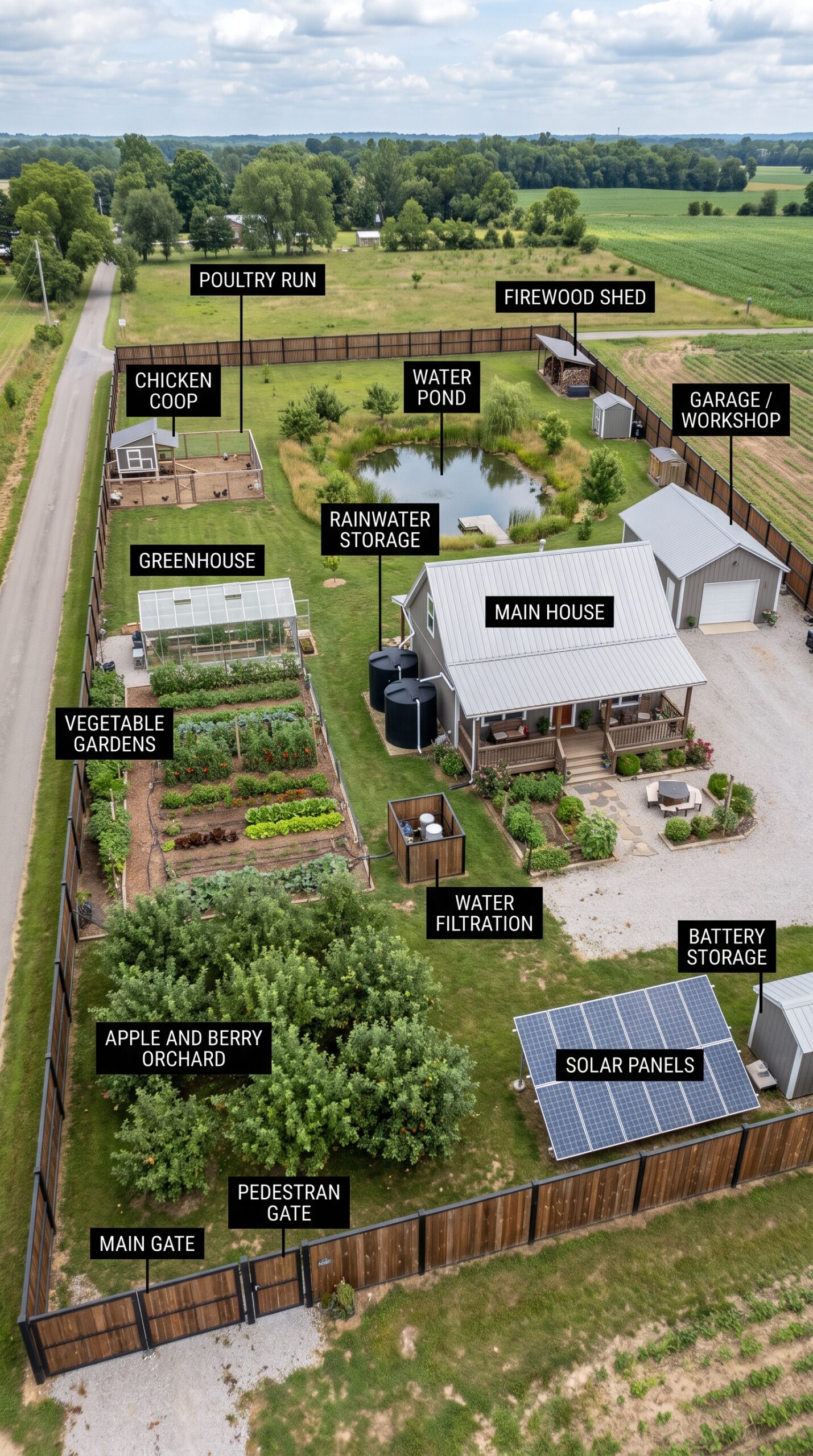
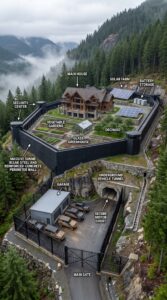
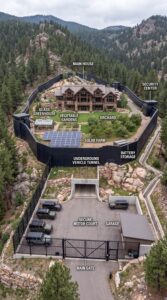
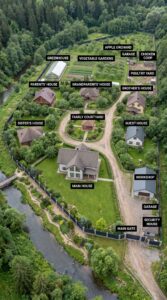
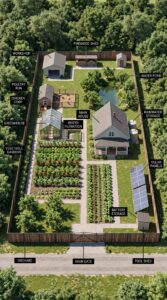
At the center of the property is the main house, positioned close to the productive areas of the homestead. This makes everyday life more convenient: fresh vegetables can be harvested just steps from the house, eggs can be collected from the chicken coop, rainwater can be stored for irrigation, and solar energy can supply electricity throughout the property. The exact size and design of the house would depend on the family’s needs, local building codes and the available budget.
One of the most important features is the vegetable garden. Multiple growing beds can be used for potatoes, tomatoes, cucumbers, peppers, carrots, onions, garlic, cabbage, lettuce, beans and seasonal crops. A larger garden can provide a meaningful portion of a family’s annual produce, especially when excess vegetables are preserved through canning, freezing, drying or fermentation.
Next to the garden is a greenhouse, extending the growing season and providing a controlled environment for seedlings and sensitive crops. In colder parts of the United States, a greenhouse can allow planting to begin earlier in spring and continue later into the fall. With appropriate heating and insulation, production can potentially continue through parts of winter as well.
The property also includes an apple and berry orchard. Fruit trees require patience because they take several years to become highly productive, but once established they can provide harvests for decades with proper care. Apples, cherries, plums, pears, raspberries, blackberries and other berries can become an important source of fresh food. Surplus fruit can also be turned into preserves, dried fruit, frozen produce and other long-term food storage.
For an additional source of food, the homestead has a chicken coop and poultry run. A small flock can provide fresh eggs throughout much of the year. Poultry also fits naturally into a larger homestead system because bedding and manure can be composted and eventually returned to the garden as organic matter.
Another major feature is the water pond. A properly designed pond can become part of the property’s water-management system while also providing habitat for wildlife and adding an attractive natural element to the landscape. However, pond water should never automatically be considered safe for drinking. Any water intended for household consumption requires appropriate testing, treatment and filtration.
The property also uses rainwater storage tanks to collect runoff from building roofs. Capturing rainwater can reduce demand on wells or municipal supplies and provide an additional source for irrigation and other permitted uses. The amount of water that can be collected depends heavily on local rainfall, roof area and storage capacity.
A dedicated water filtration system provides another layer of reliability. Depending on the source, a complete setup could include sediment filtration, activated carbon, iron removal, water softening, UV treatment or other purification technologies. The correct system should always be selected based on an actual laboratory water analysis rather than guesswork.
Electricity comes from the property’s solar panel system. Solar panels convert sunlight into electricity during the day, while the battery storage system stores excess generation for use after sunset or during periods of low solar production. For a truly resilient setup, the system would be sized around the property’s actual electricity consumption, peak loads and seasonal solar conditions.
The garage and workshop provide valuable practical space for maintaining the homestead. Tools, lawn equipment, gardening machinery, spare parts and construction materials can all be stored under cover. A workshop also allows many repairs and maintenance tasks to be handled on the property instead of requiring a trip into town.
A dedicated firewood shed provides covered storage for dry firewood. Even if the primary heating system is electric, propane or another modern system, keeping a secondary heating option can add resilience during severe winter weather or extended power outages.
The entire property can be surrounded by a privacy and security fence, with a controlled main gate and separate pedestrian gate. This creates a clear boundary between the homestead and surrounding farmland or woodland while helping protect gardens, livestock and equipment. The exact fence design would need to comply with local zoning and property regulations.
Estimated Cost in the United States
Building a property like this would vary enormously depending on the state, land prices, terrain, house size, utility requirements and level of finish.
A realistic conceptual budget for a rural U.S. project could look approximately like this:
Land: $100,000–$400,000+
Main house: $300,000–$600,000
Garage/workshop: $60,000–$150,000
Greenhouse: $10,000–$30,000
Gardens, orchard and irrigation: $15,000–$50,000
Chicken coop and poultry run: $5,000–$15,000
Pond and landscaping: $20,000–$70,000
Solar panels + battery storage: $40,000–$100,000
Well, water storage and filtration: $20,000–$60,000
Driveway, gates and site infrastructure: $30,000–$100,000
Fencing and additional landscaping: $30,000–$100,000
That puts a rough construction and infrastructure budget at around $600,000–$1.2 million excluding land. Once the land itself, difficult terrain, premium construction, extensive landscaping or larger energy systems are included, the total investment could realistically reach $1.5 million or more.
The interesting part is that this concept isn’t simply about building an expensive country house. It is about creating a small private ecosystem where food production, water management, renewable energy and comfortable living all work together.
With enough land and careful planning, a family could produce vegetables, fruit and eggs, collect rainwater, generate electricity from the sun and maintain essential equipment without relying on the city for every basic necessity.
And that raises an interesting question:
If your own property could provide your food, water and energy, how much would you really need the city?
This project is a conceptual design created for inspiration and architectural visualization. It is not a real construction project or a technical blueprint.


Leave a Reply