
What if you could create a completely self-sufficient retreat hidden deep inside a forest, protected by massive walls and designed to operate independently from the outside world?
That was the vision behind this extraordinary project.
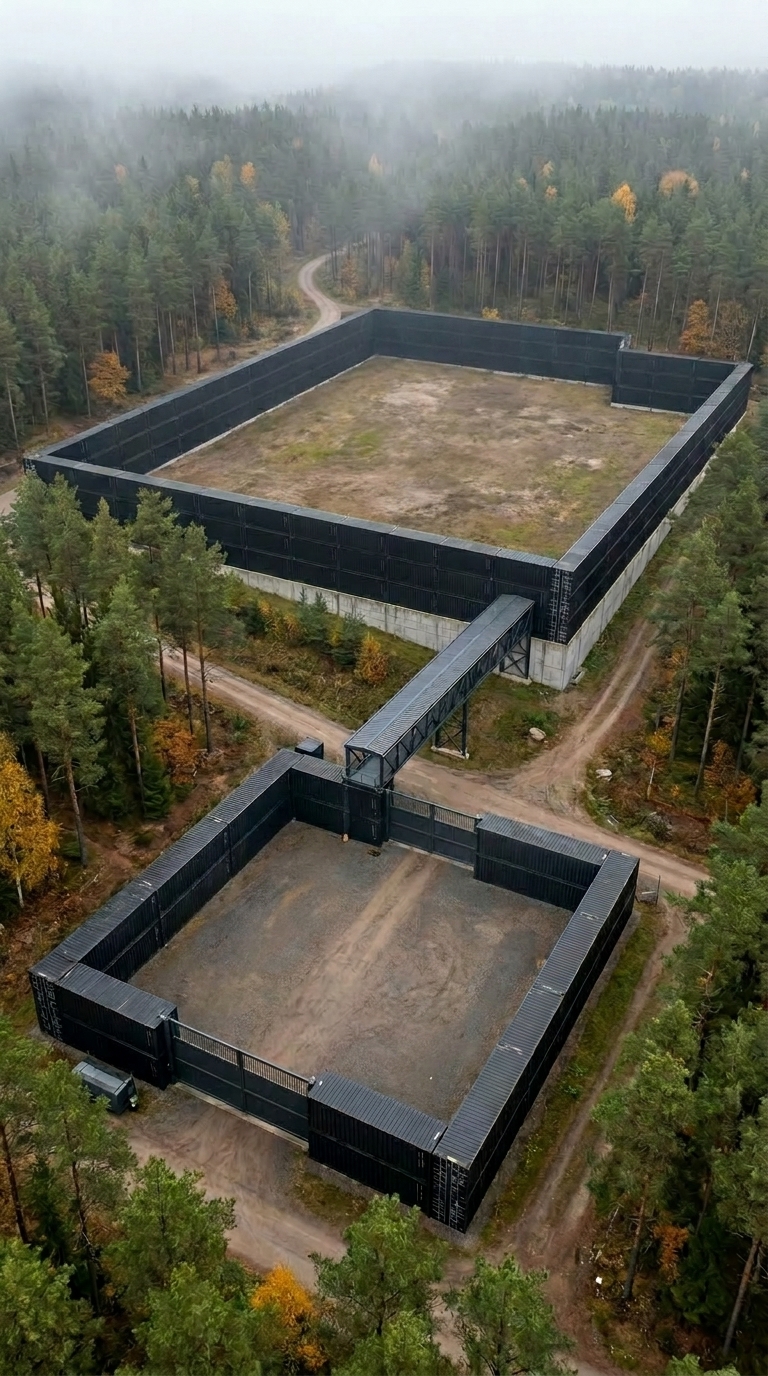
The property began as a remote section of woodland with nothing but dirt roads, dense trees, and open land. The goal was to transform the site into a secure survival compound capable of providing safety, food production, energy independence, and comfortable living for years.
Construction started with the creation of two separate fortified zones.
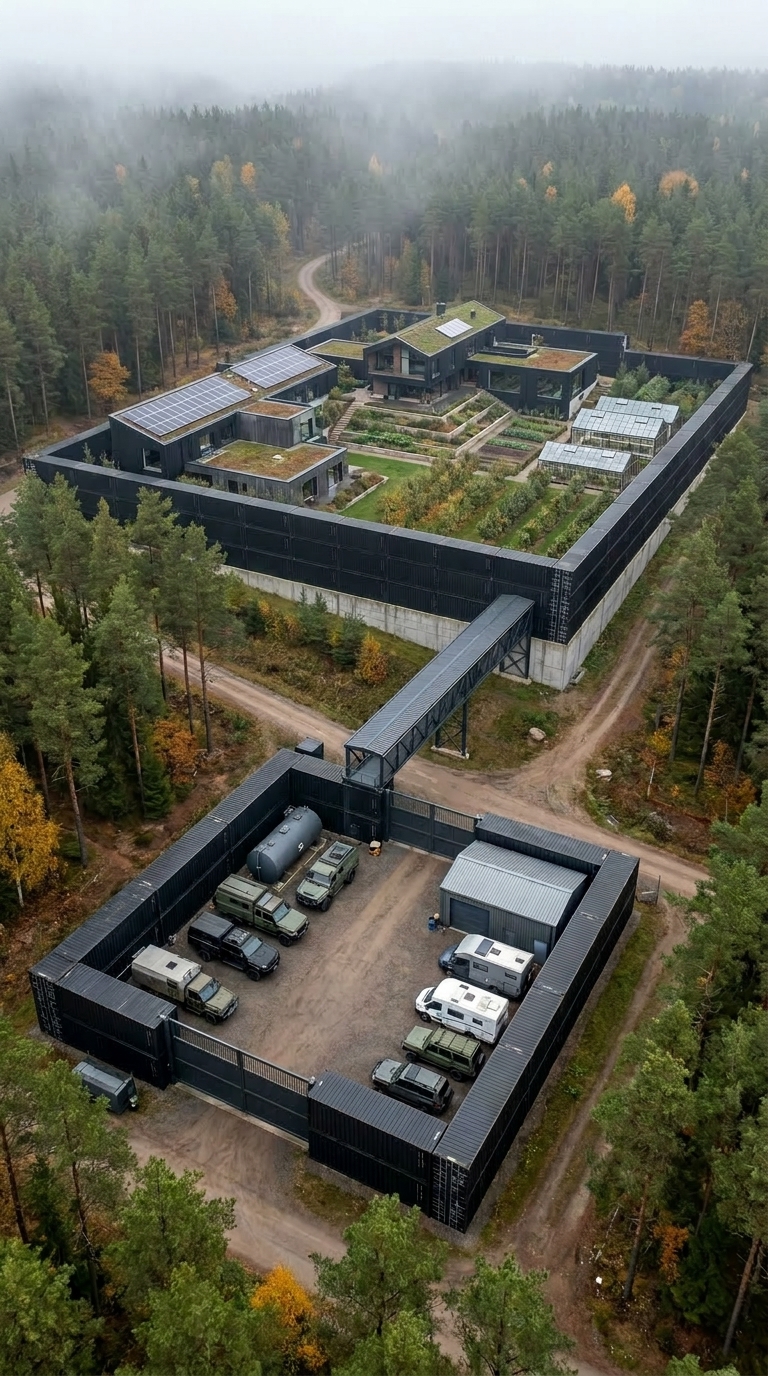
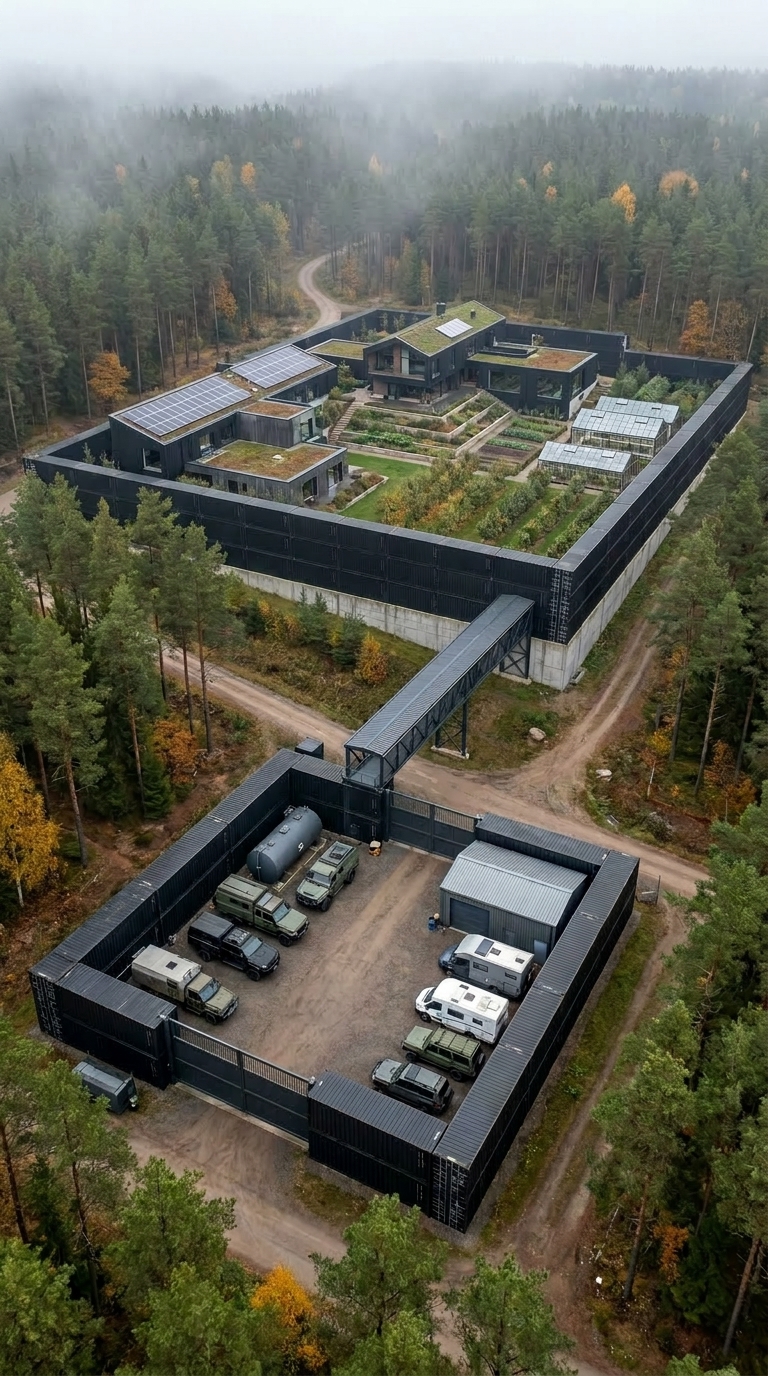
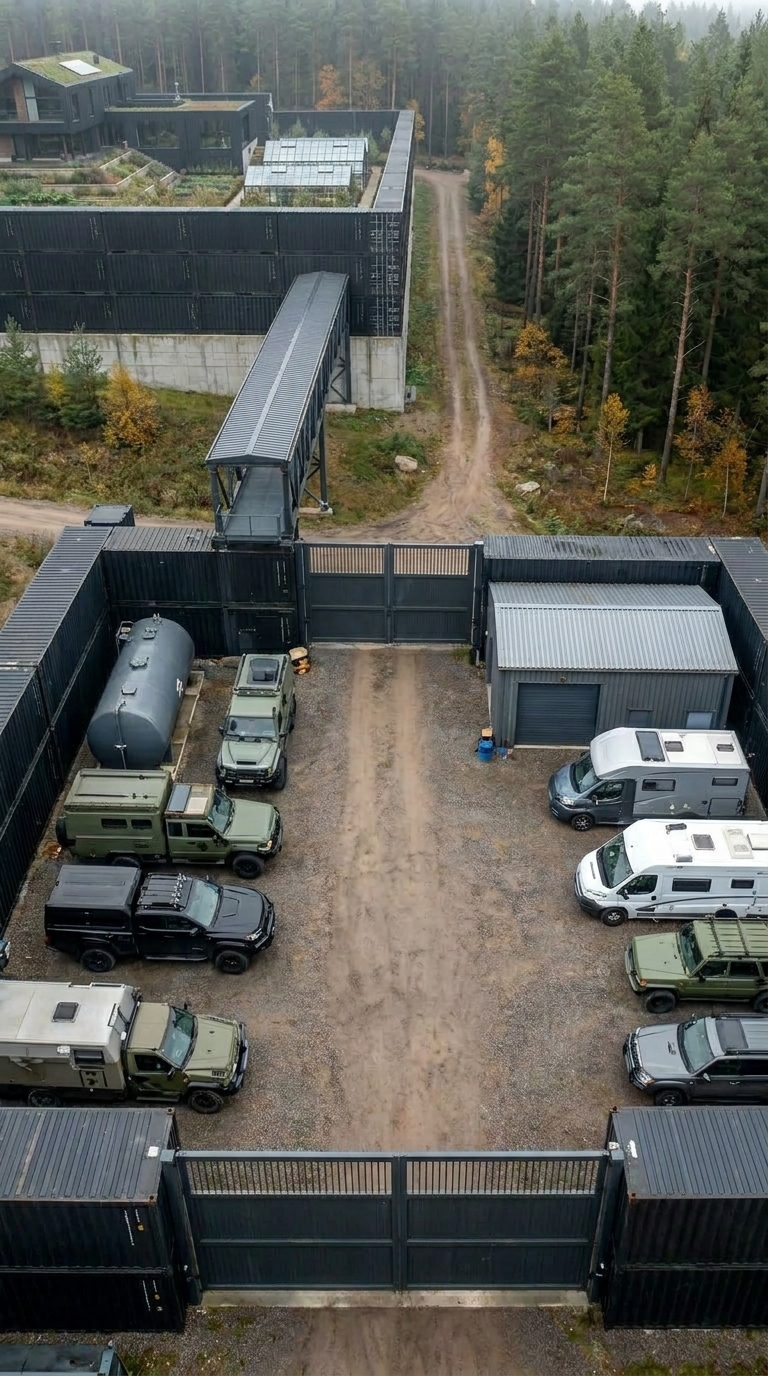
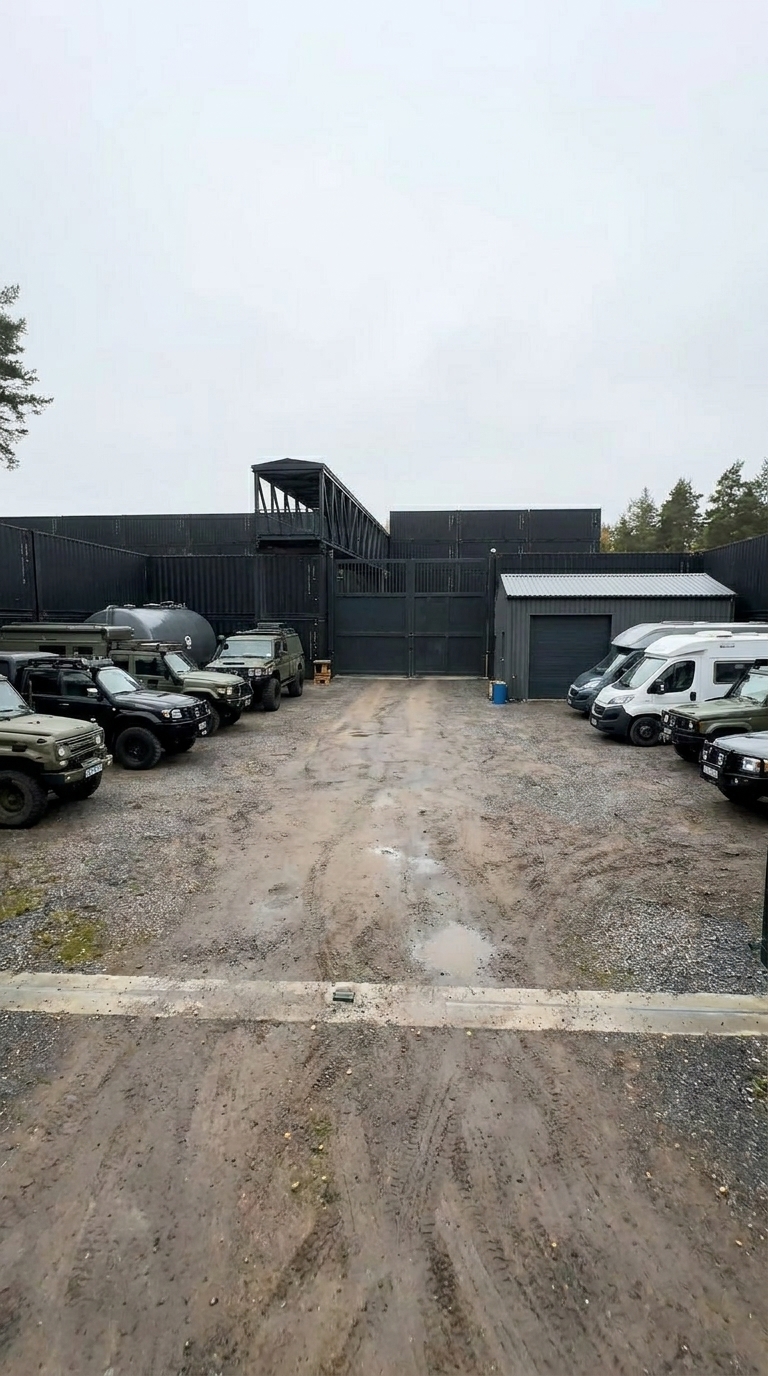
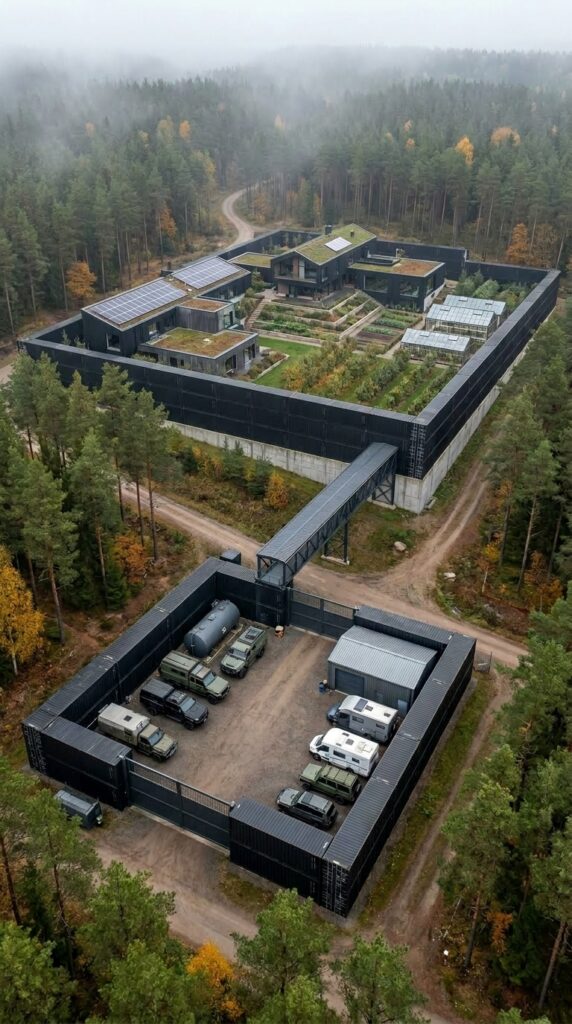
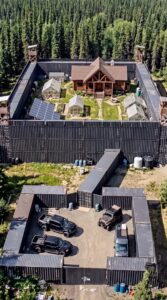
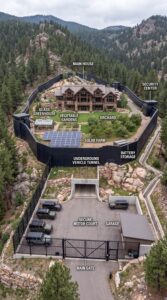
The first area was designed as a secure vehicle and logistics yard. Heavy walls were constructed around the perimeter, creating a protected space for trucks, utility vehicles, fuel storage, maintenance equipment, emergency supplies, and mobile living units. Large access gates allow vehicles to enter while maintaining strict control over the property.
The second and much larger area became the residential and agricultural heart of the compound. Massive reinforced perimeter walls were built around the entire site, creating a protected inner sanctuary hidden within the forest.
A secure elevated corridor was then constructed to connect both zones. This enclosed passageway allows people and supplies to move safely between the vehicle yard and residential section without exposure to weather or outside threats.
Inside the protected residential area, construction focused on creating a comfortable modern homestead capable of supporting long-term independent living.
The central residence features contemporary architecture with large windows, highly insulated walls, and energy-efficient systems. Despite its remote location, the home offers all the comforts of modern living while remaining integrated into the overall survival design.
Around the residence, extensive food-production systems were developed. Raised garden beds provide fresh vegetables throughout the growing season, while orchards and fruit trees help diversify food supplies. Large greenhouses extend production capacity and allow crops to be grown even during colder months.
Renewable energy plays a critical role throughout the property. Solar panels installed across multiple buildings help generate electricity for daily operations, reducing dependence on outside infrastructure. Energy storage systems and backup power equipment provide additional resilience during extended emergencies.
Water storage, filtration systems, maintenance facilities, workshops, and supply areas were integrated into the design to support long-term sustainability. Every major system was planned with redundancy in mind, ensuring that critical functions can continue operating even if one component fails.
The compound was also designed with privacy and security as major priorities. The high perimeter walls create a protected environment while minimizing visibility from outside the property. Multiple access points, secure gates, observation positions, and controlled movement corridors help maintain overall security.
What makes this project unique is the balance between preparedness and everyday comfort. It is not simply a fortress and not simply a homestead. Instead, it combines residential living, agriculture, renewable energy, logistics, and security into a single integrated system.
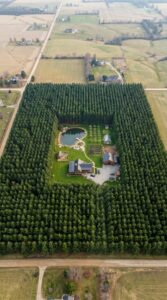
From above, the property appears almost like a private self-contained village hidden within the forest. Inside the walls are gardens, greenhouses, solar infrastructure, modern living spaces, equipment yards, and everything needed to support independent life far from urban centers.
The result is a remarkable example of how a remote forest property can be transformed into a secure and self-sufficient retreat designed for both present-day comfort and long-term resilience in an uncertain future.
Secure Vehicle Yard and Logistics Hub
Separate from the main residential compound, a dedicated vehicle yard was built to store transportation, fuel, equipment, and emergency supplies. This secondary fortified area serves as the operational backbone of the entire property.
Protected by high reinforced walls and heavy security gates, the yard provides secure parking for off-road vehicles, trucks, utility trailers, camper vans, and maintenance equipment. The enclosed design protects valuable assets from weather, theft, and unauthorized access while keeping everything organized and ready for deployment.
Large fuel storage tanks allow vehicles and backup systems to remain operational for extended periods without outside support. Nearby maintenance facilities and storage buildings contain tools, spare parts, recovery equipment, and repair supplies necessary for long-term self-sufficiency.
A covered logistics structure connects the vehicle yard directly to the main residential compound. This elevated secure corridor allows people, supplies, equipment, and harvested food to move safely between both zones regardless of weather conditions.
The yard was designed with wide access lanes to accommodate larger vehicles and trailers, making it possible to transport construction materials, fuel deliveries, agricultural equipment, and emergency supplies throughout the property.
In a long-term emergency scenario, this area functions as a transportation hub, fuel depot, maintenance center, and storage facility all in one location. Every vehicle can be kept protected, fueled, serviced, and ready for use at any time.
By separating the logistics zone from the residential section, the compound maintains greater security, reduces noise around living areas, and creates a more efficient layout for everyday operations.
Together, the vehicle yard and residential compound form a complete self-sufficient system where transportation, energy, food production, security, and comfortable living work together inside one protected forest retreat.
The Protected Courtyard and Self-Sufficient Garden
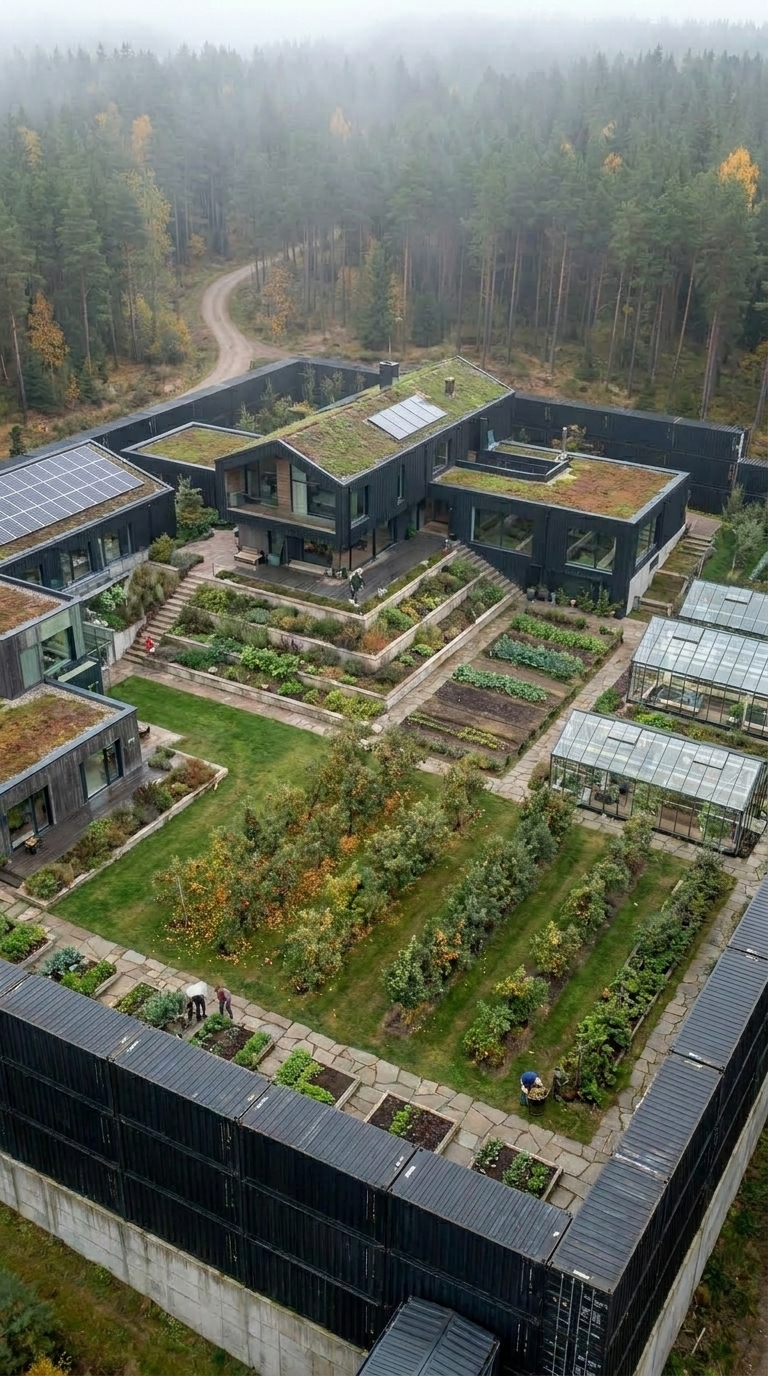
At the heart of the compound lies a private courtyard designed to combine food production, sustainability, and comfortable daily living within a fully protected environment.
Surrounded by massive security walls, the inner grounds were transformed into a productive landscape featuring orchards, vegetable gardens, greenhouses, walking paths, and open green spaces. Every section was carefully planned to maximize both beauty and long-term self-sufficiency.
The orchard contains a variety of fruit trees that provide seasonal harvests year after year. Between the rows of trees, fertile growing beds produce vegetables, herbs, berries, and other crops that help reduce dependence on outside food supplies.
Several climate-controlled greenhouses extend the growing season and allow fresh produce to be cultivated even during colder months. These structures support year-round food production and create a reliable source of vegetables regardless of outside weather conditions.
Raised garden beds throughout the courtyard make planting, irrigation, and harvesting more efficient while keeping the property organized and easy to maintain. Stone pathways connect every area, allowing convenient access to crops, greenhouses, and residential buildings.
The central residence overlooks the entire courtyard, creating a unique balance between security and open living. Large windows provide views of the gardens, orchards, and landscaped grounds while maintaining privacy inside the protected perimeter.
Solar panels installed throughout the compound help power essential systems, while rainwater collection and irrigation infrastructure support agricultural operations. Together, these systems create a resilient environment capable of supporting long-term independent living.
More than just a garden, the courtyard functions as the food-producing heart of the compound. It supplies fresh fruits and vegetables, provides outdoor recreation space, and creates a peaceful atmosphere within the fortified walls.
The result is a rare combination of modern architecture, sustainable agriculture, and defensive design—a private forest sanctuary where security, comfort, and self-reliance exist side by side.
Inside the Self-Sufficient Survival Compound
Behind the fortified walls, the compound was designed to function as a complete long-term living environment capable of supporting residents for extended periods without relying on outside infrastructure.
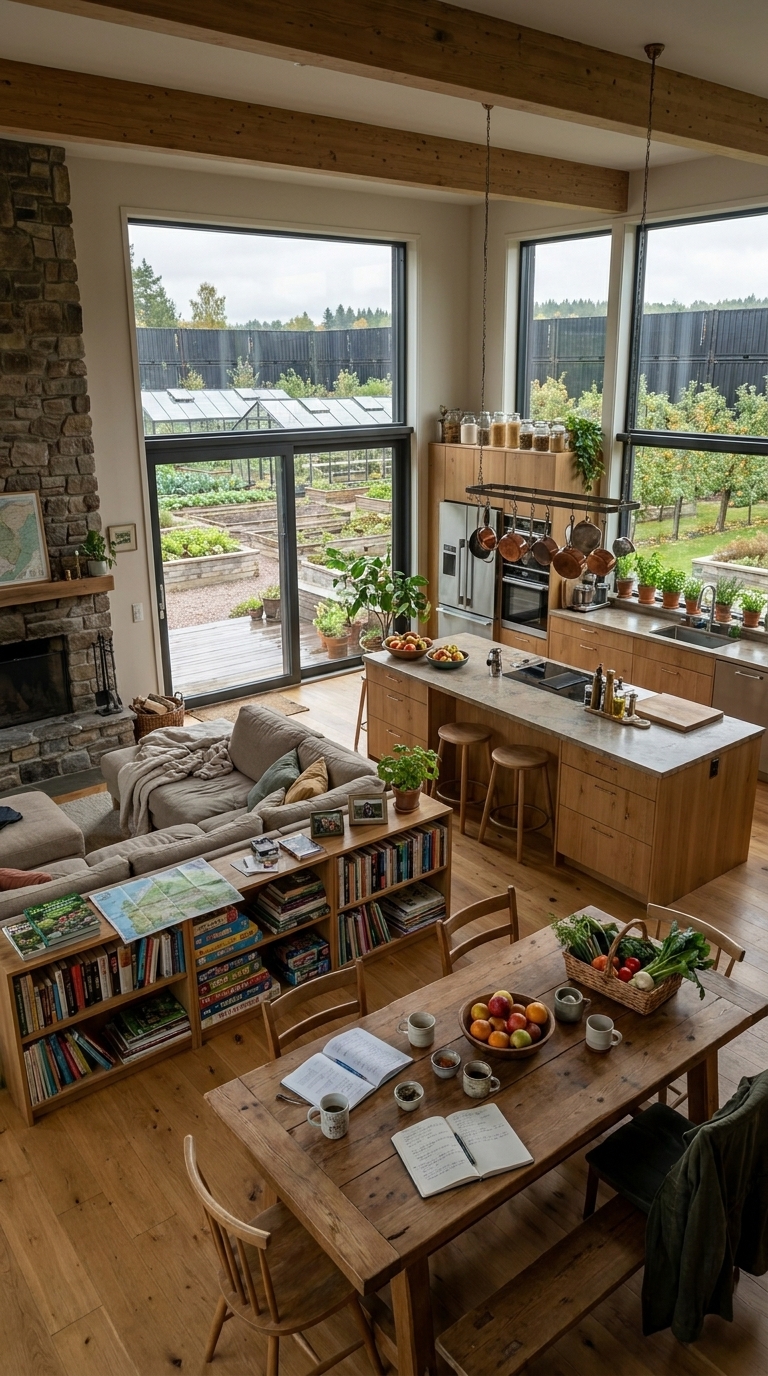
The main residence serves as the center of daily life. Large windows overlook the gardens, orchards, and greenhouses, creating a connection between modern living and food production. The open-concept kitchen, dining area, and living room provide comfortable gathering spaces where families can work, relax, and spend time together while remaining completely inside the protected perimeter.
The kitchen was built with long-term sustainability in mind. Fresh vegetables, fruits, and herbs harvested directly from the surrounding gardens and greenhouses can be prepared and preserved on-site. Large storage areas allow food reserves to be maintained alongside fresh produce grown throughout the year.
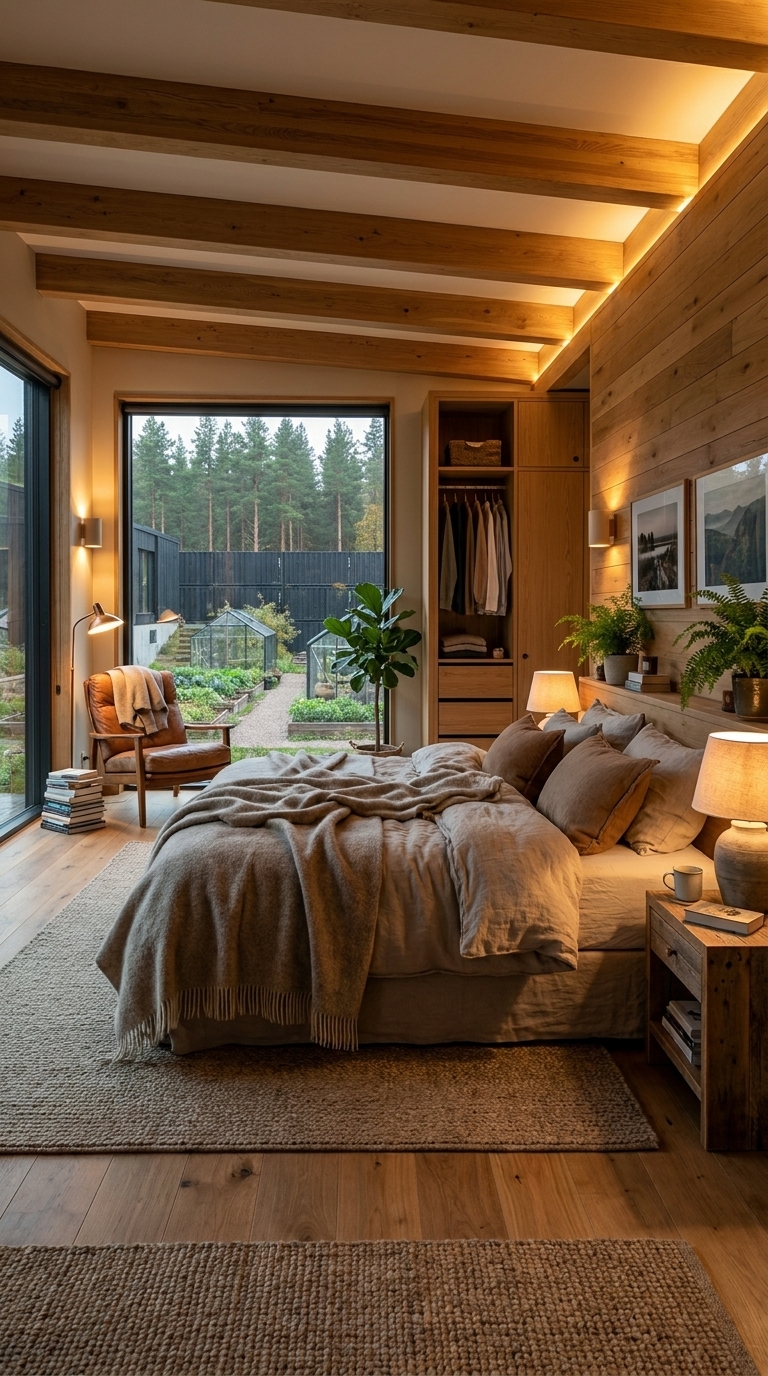
Private bedrooms provide quiet personal space while maintaining views of the gardens and forest beyond the walls. Natural materials, warm lighting, and energy-efficient design create a comfortable environment suitable for everyday living rather than temporary emergency shelter.
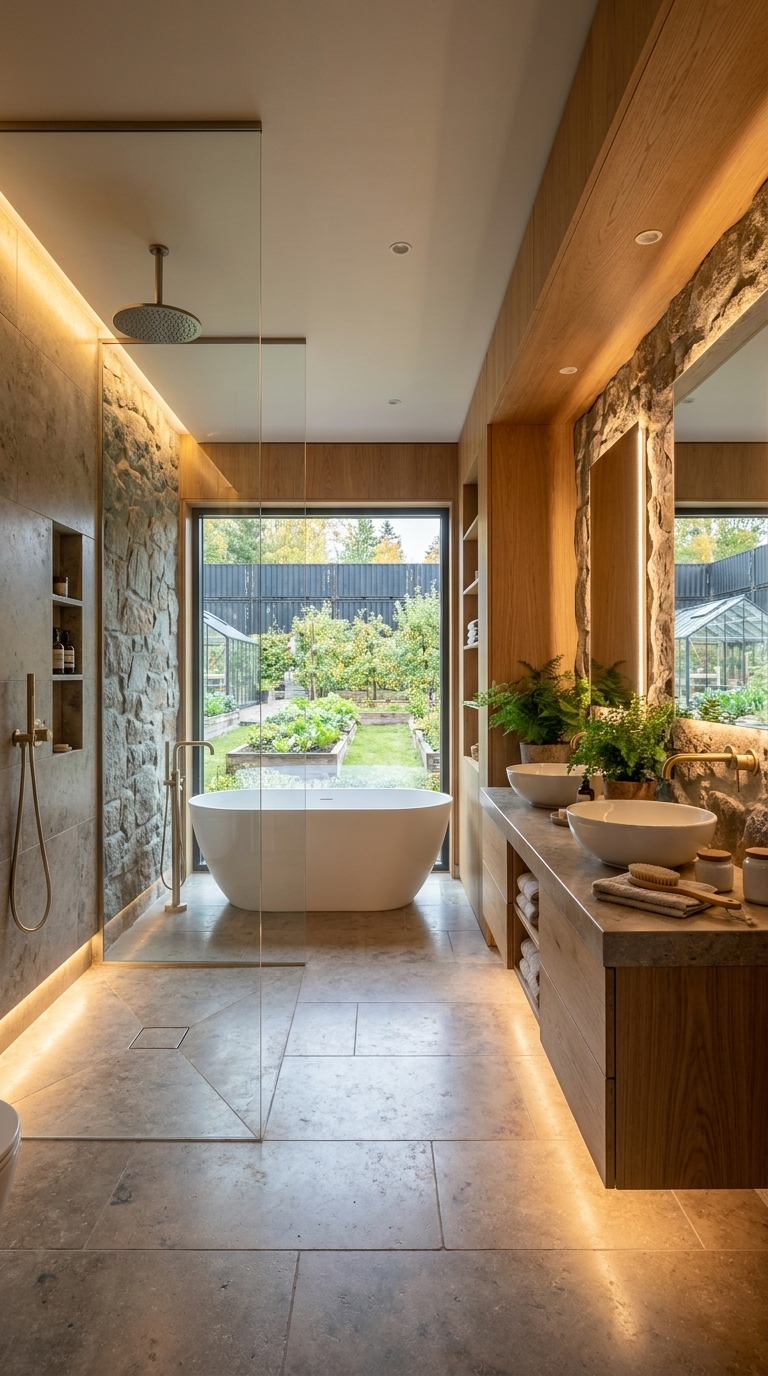
The residence also includes modern bathrooms, water-saving fixtures, and filtration systems designed to operate efficiently during both normal and emergency conditions.
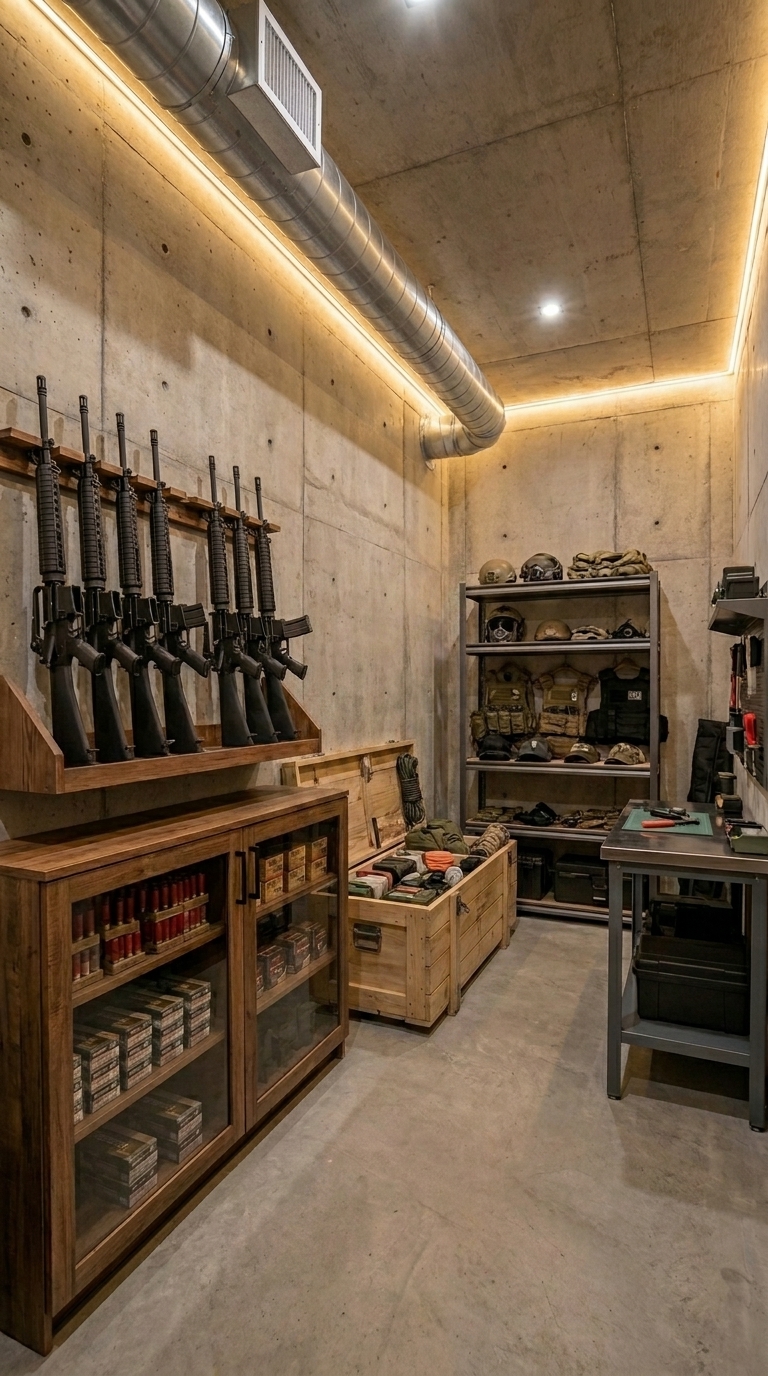
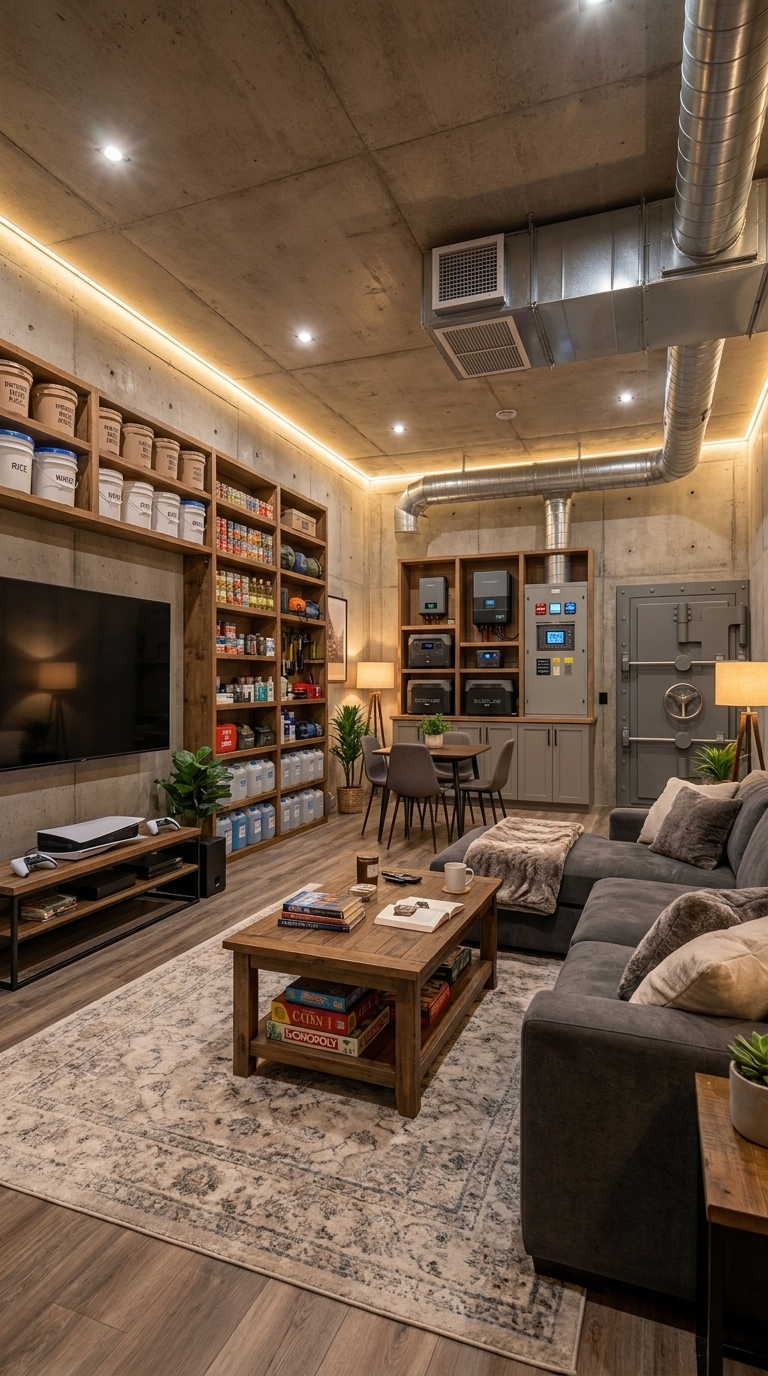
Beneath the property, a concealed underground bunker serves as the compound’s ultimate backup facility. Accessed through hidden secured entrances, the bunker contains reinforced living quarters, emergency sleeping areas, protected storage rooms, and multiple security zones.
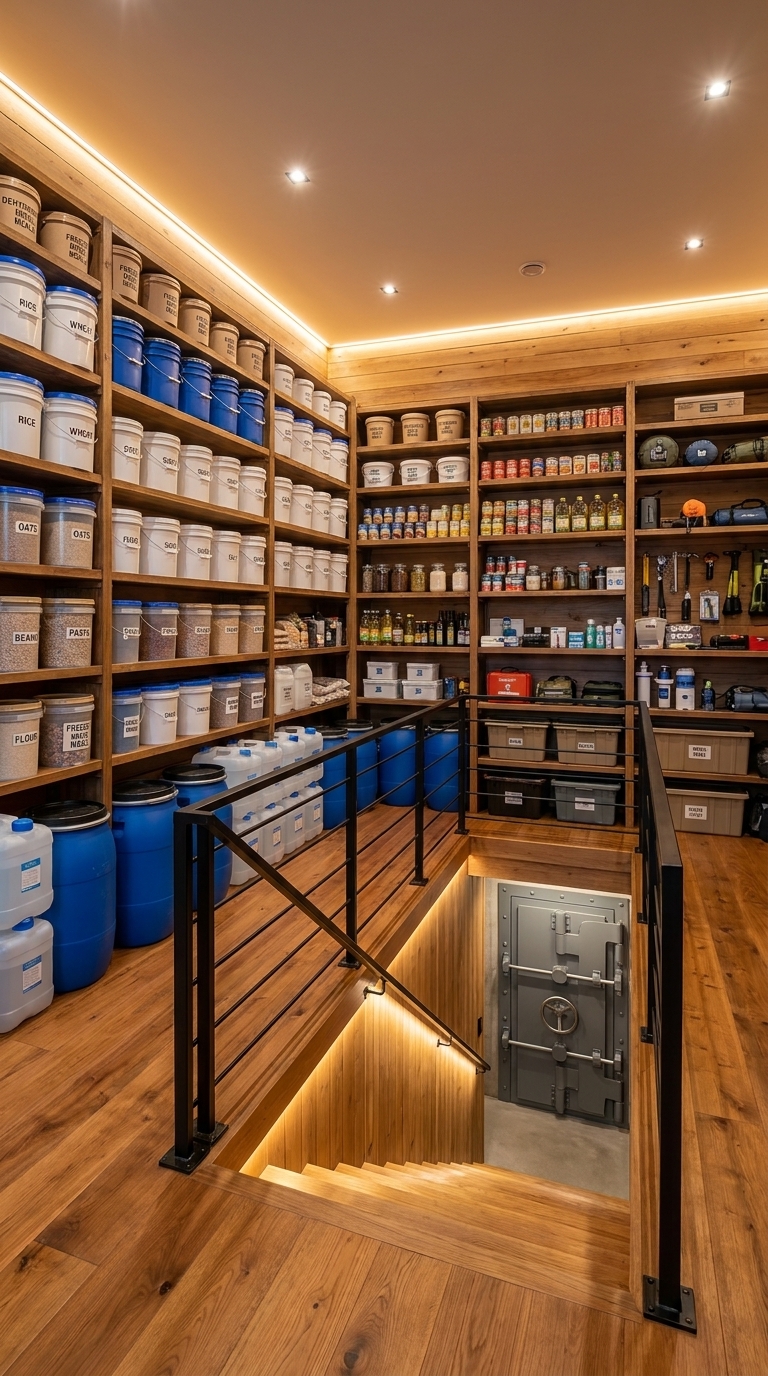
Large preparedness storage areas hold long-term food supplies, emergency equipment, medical resources, water reserves, tools, and maintenance materials. Shelving systems are designed to organize thousands of pounds of essential supplies while allowing easy access when needed.
Dedicated mechanical rooms contain power management systems, battery storage, ventilation equipment, filtration units, backup communications hardware, and environmental controls. These systems help maintain safe living conditions underground for extended periods.
The bunker also includes secure monitoring stations capable of overseeing entrances, perimeter areas, utility systems, and critical infrastructure throughout the compound. Independent ventilation and filtration systems help ensure continuous access to clean air regardless of outside conditions.
Additional rooms were designed for fitness, recreation, work, and long-term habitability. Exercise equipment, workshops, communication systems, and multipurpose living areas help transform the bunker from a simple shelter into a functional underground residence.
Together, the house above and the bunker below create a layered survival strategy. The residence provides comfortable day-to-day living surrounded by productive gardens and greenhouses, while the underground facility offers a hardened backup location capable of supporting residents during severe emergencies.
The result is a unique combination of modern homestead, private retreat, and self-sufficient preparedness compound designed to provide security, comfort, food production, energy independence, and long-term resilience all within a single protected forest sanctuary.
Estimated Cost of Building the Entire Forest Survival Compound
Because the project includes a fortified residential compound, vehicle yard, greenhouses, solar infrastructure, agricultural systems, security features, and a large underground bunker, the total investment would be substantial.
Land Acquisition
Remote forest property (40–100 acres)
Estimated Cost: $150,000–$600,000
Site Preparation and Infrastructure
Roads, clearing, grading, excavation, drainage, utilities
Estimated Cost: $250,000–$600,000
Fortified Perimeter Walls
Massive reinforced walls surrounding both compounds
Estimated Cost: $800,000–$2,000,000
Secure Vehicle Compound
Storage yard, gates, fuel area, maintenance building, covered corridor
Estimated Cost: $300,000–$800,000
Main Residence
Luxury energy-efficient home with high-end finishes
Estimated Cost: $700,000–$1,800,000
Underground Bunker Complex
Multi-room reinforced bunker, storage areas, ventilation systems, emergency exits, living quarters
Estimated Cost: $1,500,000–$5,000,000
Solar Power System
Panels, battery banks, inverters, backup controls
Estimated Cost: $250,000–$800,000
Backup Power Generation
Industrial diesel generators, fuel systems
Estimated Cost: $100,000–$400,000
Water Systems
Wells, filtration equipment, storage tanks, treatment systems
Estimated Cost: $100,000–$350,000
Greenhouses and Agriculture
Commercial greenhouses, raised beds, orchards, irrigation
Estimated Cost: $150,000–$600,000
Security Infrastructure
Cameras, monitoring systems, access control, communications
Estimated Cost: $100,000–$500,000
Furnishings and Supplies
Food reserves, tools, equipment, furnishings, preparedness inventory
Estimated Cost: $200,000–$1,000,000
Total Estimated Investment
Conservative Estimate: approximately $4.5 million
Realistic Estimate: approximately $7–10 million
High-End Fully Equipped Version: $12–15+ million
Article Conclusion
Projects like this are far beyond a typical survival bunker. This is essentially a private self-sufficient village hidden inside a fortified forest compound. It combines food production, energy independence, water security, transportation infrastructure, luxury living spaces, and a hardened underground shelter into one integrated system.
While most people would never build something on this scale, the concept demonstrates what a fully independent survival retreat could look like when security, comfort, and long-term sustainability are combined into a single project.
For those who dream about complete self-reliance, this type of compound represents one of the most ambitious off-grid survival concepts imaginable. Would you live in a place like this if you had the opportunity?
This is an architectural concept visualization and not a real construction project.
Leave a Reply