Hidden Rock Bunker in the Forest: A Perfectly Camouflaged Survival Shelter
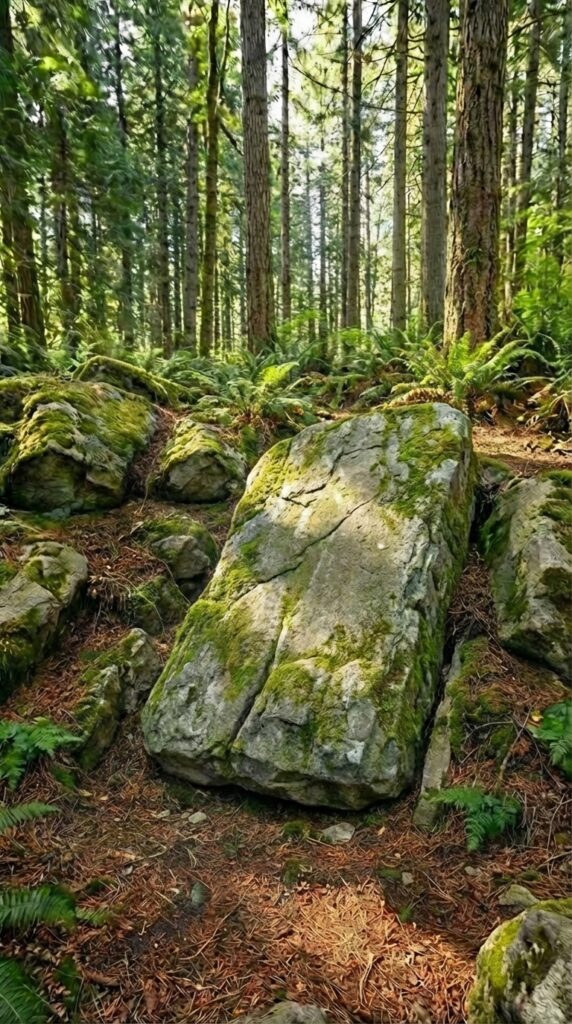
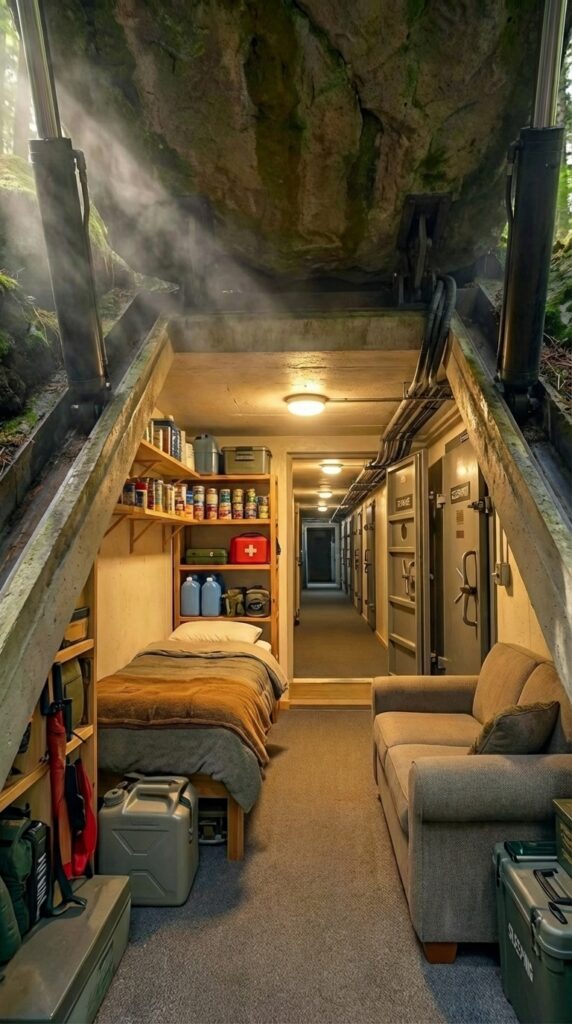
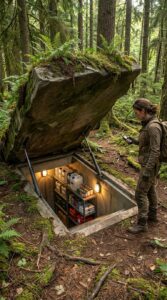
Deep in a quiet forest surrounded by tall pine trees and moss-covered stones, an ordinary looking boulder hides a secret underground bunker. From the outside the rock blends perfectly into the natural landscape, covered with moss and surrounded by ferns, making the entrance almost impossible to notice.
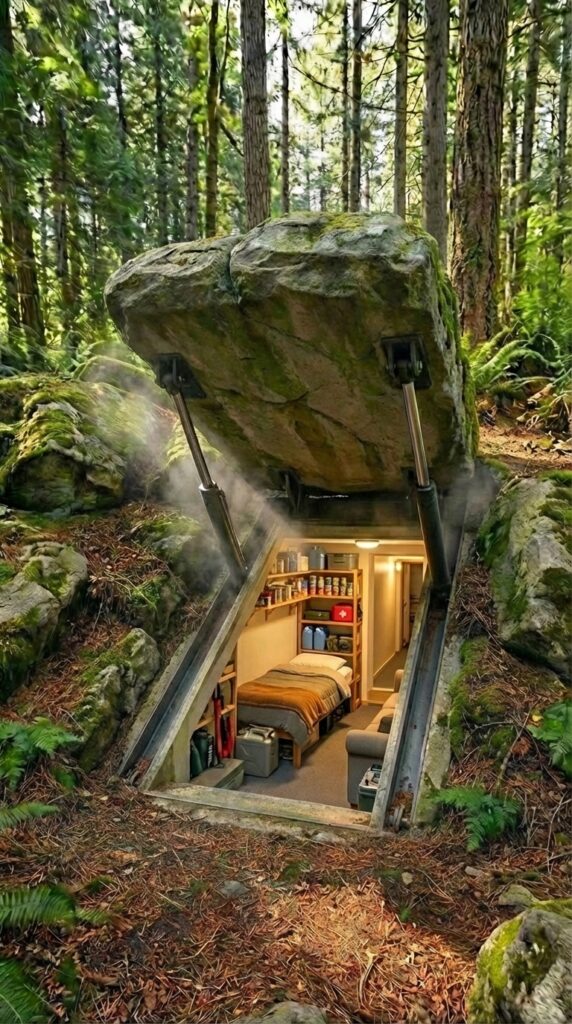
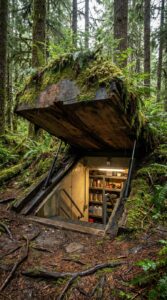
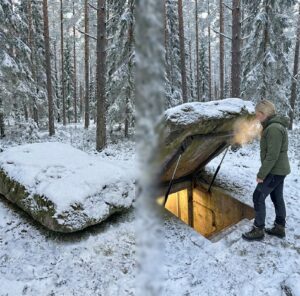
In reality this large stone is a camouflaged hydraulic hatch. When activated, the rock slowly lifts using hidden hydraulic arms and reveals a narrow stairway leading down into a concealed survival shelter beneath the ground.
Inside the bunker is a compact but practical underground space designed for emergency shelter and short-term survival. The interior includes a small sleeping area, shelves with food and water supplies, storage containers for equipment, and warm lighting that creates a comfortable atmosphere underground.
The main idea of this design is complete natural camouflage. When the rock closes, the entrance disappears completely and the bunker becomes invisible within the forest environment.
This type of hidden shelter demonstrates how modern engineering can be combined with natural surroundings to create a discreet and secure underground refuge.
Supply Storage and Hydroponic Growing Area
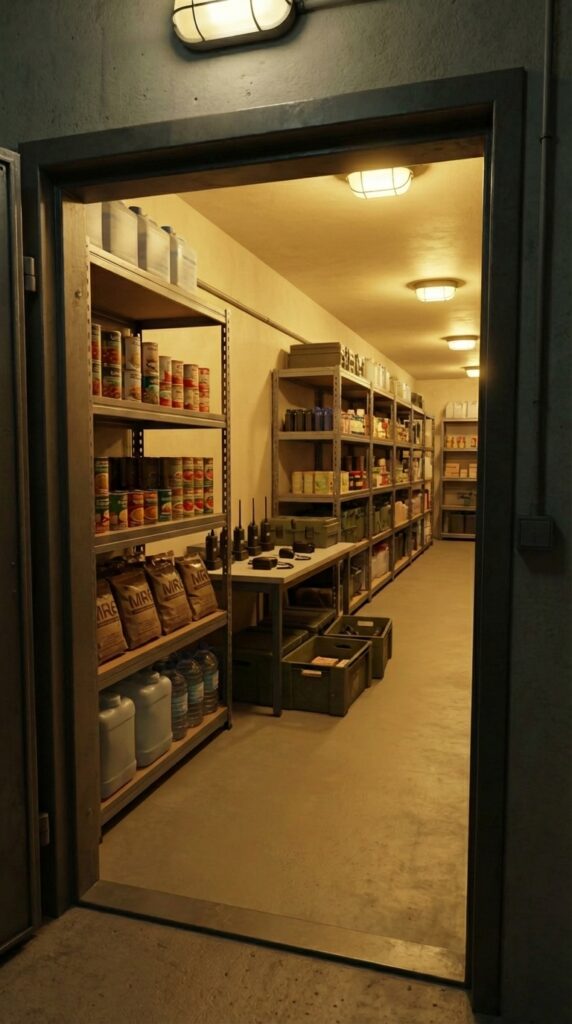
Inside the bunker there is a dedicated supply storage zone designed to hold long-term emergency provisions. Strong metal and wooden shelves store canned food, dry supplies, water containers, medical kits, batteries, and survival equipment. The storage area is organized so that supplies can be easily accessed while also maximizing the use of the limited underground space.
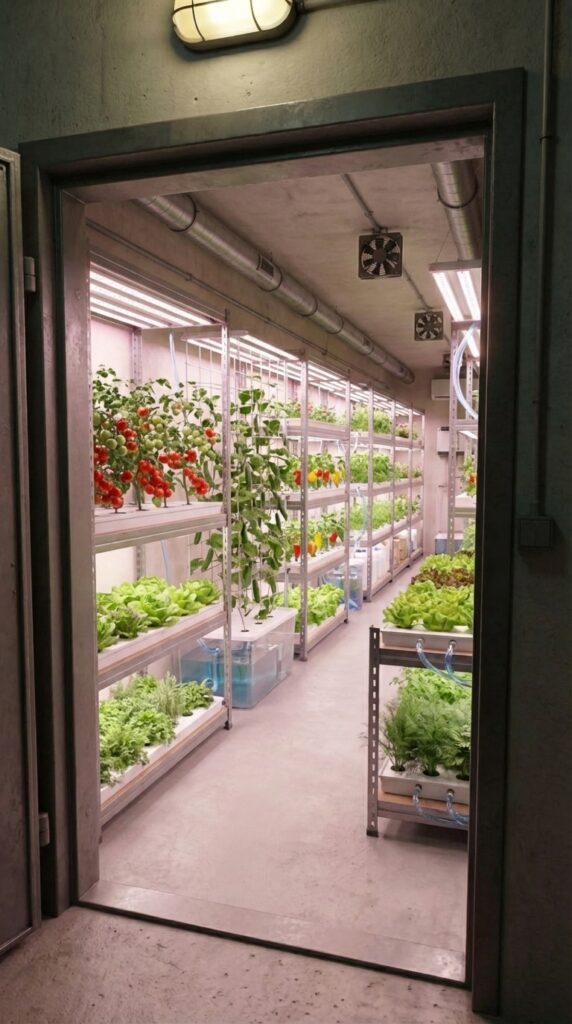
Next to the storage section is a small hydroponic growing zone, allowing fresh food to be produced directly inside the bunker. Using hydroponic systems, plants grow in nutrient-rich water instead of soil. LED grow lights provide the necessary light for vegetables and herbs, while the controlled environment helps maintain stable temperature and humidity.
This hydroponic area can produce small amounts of fresh greens such as lettuce, herbs, and microgreens, which helps improve nutrition during extended stays underground. Combined with the stored supplies, the system makes the bunker more self-sufficient and better prepared for long-term shelter situations.
Gym Area and Mini Home Theater
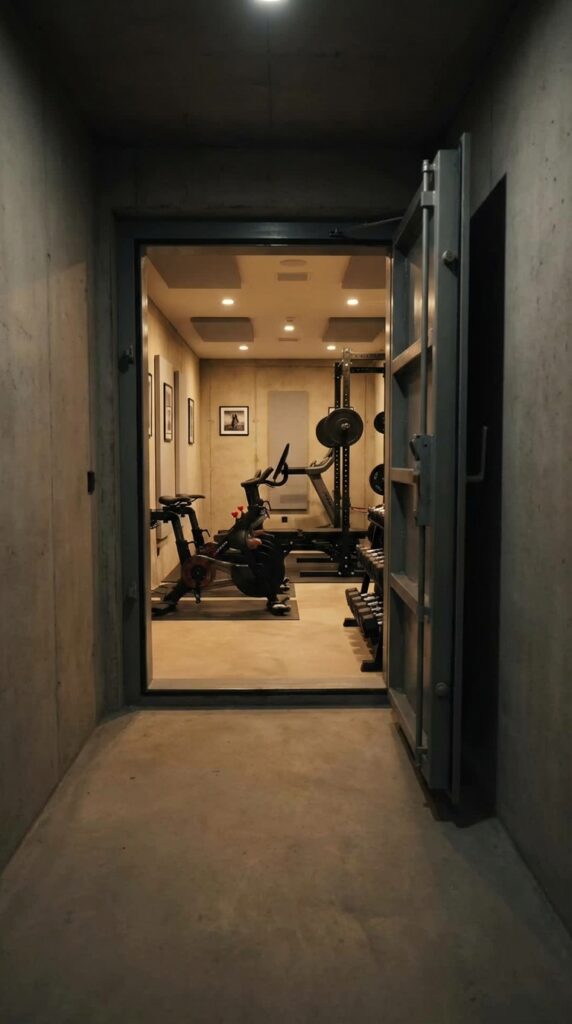
The bunker also includes a small underground gym area, allowing occupants to stay active even during long stays inside the shelter. The compact workout space can include basic equipment such as adjustable dumbbells, resistance bands, a pull-up bar, and a compact exercise bench. Rubber flooring helps reduce noise and provides comfortable support during workouts. Regular physical activity helps maintain both physical health and mental well-being in a confined environment.
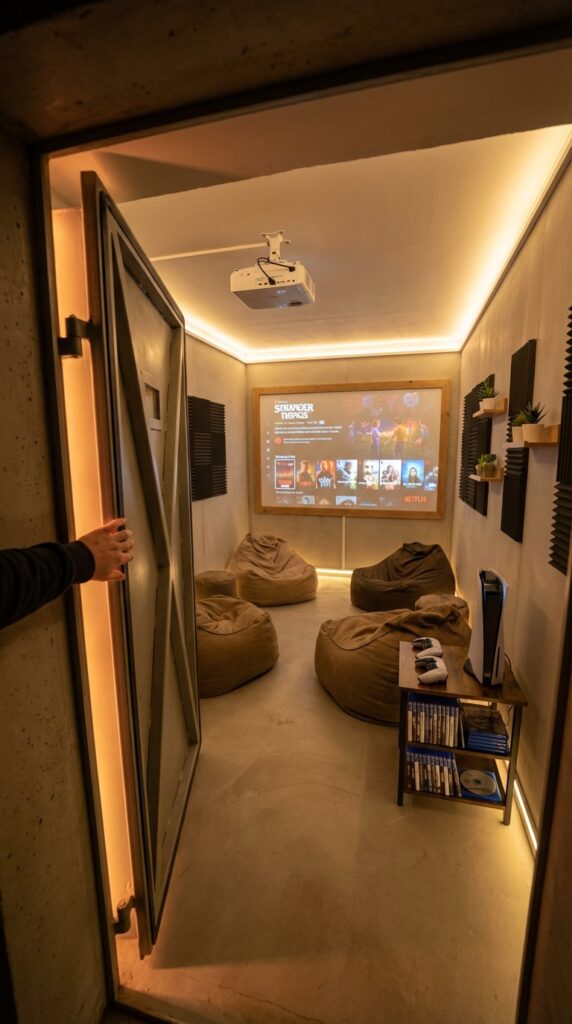
Next to the gym is a mini home theater and relaxation zone designed for rest and entertainment. A comfortable sofa or lounge chairs face a large screen or projector system mounted on the wall. Soft lighting and sound insulation create a cozy atmosphere similar to a private cinema. This space allows occupants to watch movies, listen to music, or simply relax, helping reduce stress during extended time underground.
The Heart of the Bunker: Power, Air and Water Systems
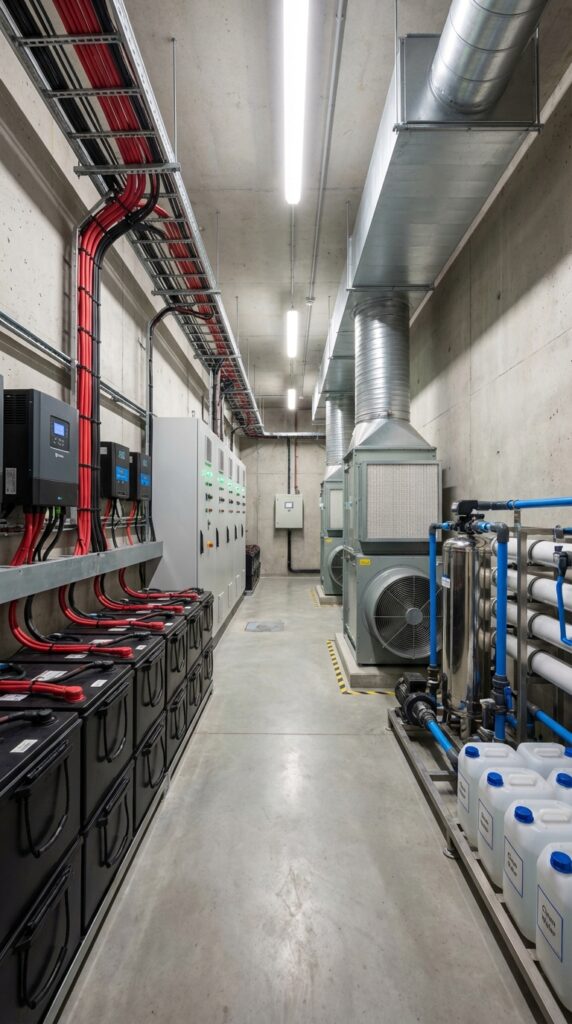
At the center of the bunker is the technical control room, often called the heart of the shelter. This area contains the critical systems that keep the bunker functioning independently from the outside world.
Large battery banks and power storage units provide electricity for lighting, ventilation, hydroponic systems, communication devices, and other equipment. These batteries can be connected to solar panels or backup generators to ensure long-term power supply.
Next to the power system is the air filtration and ventilation unit. This system constantly circulates fresh air into the bunker while filtering out dust, smoke, and potential contaminants. Specialized filters help maintain clean breathable air even during long stays underground.
The technical room also contains a water purification and storage system. Large water tanks store emergency reserves while filtration units purify collected or stored water, making it safe for drinking and daily use.
Together these systems form the core infrastructure of the bunker, ensuring that the shelter can remain functional, safe, and self-sufficient for extended periods of time.
Hidden Emergency Exit Inside a Tree Stump
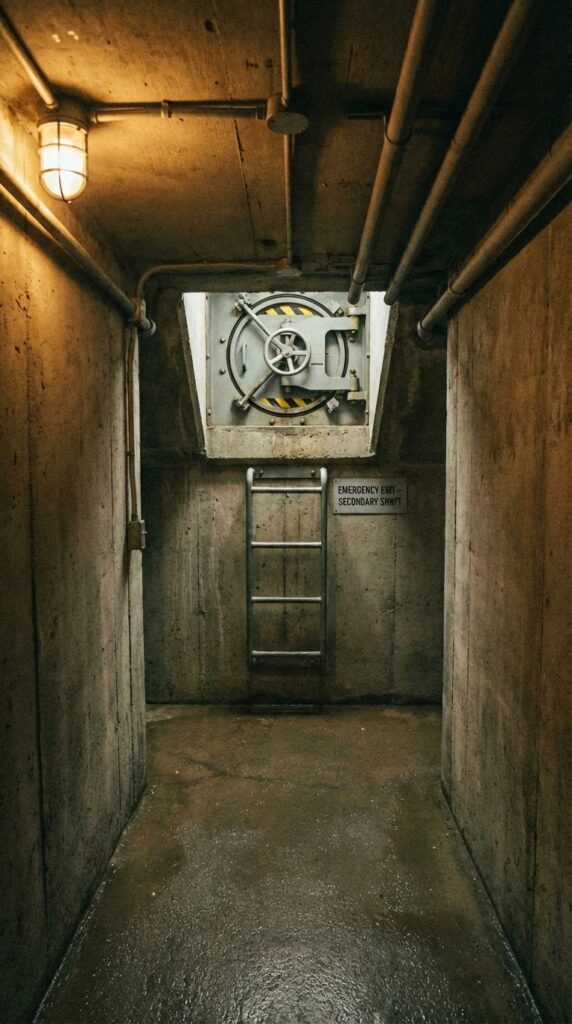
In addition to the main entrance concealed beneath the rock, the bunker also includes a secondary emergency exit hidden inside a forest tree stump. This backup route provides an important safety feature, ensuring that the shelter is never a dead end if the primary entrance becomes inaccessible.
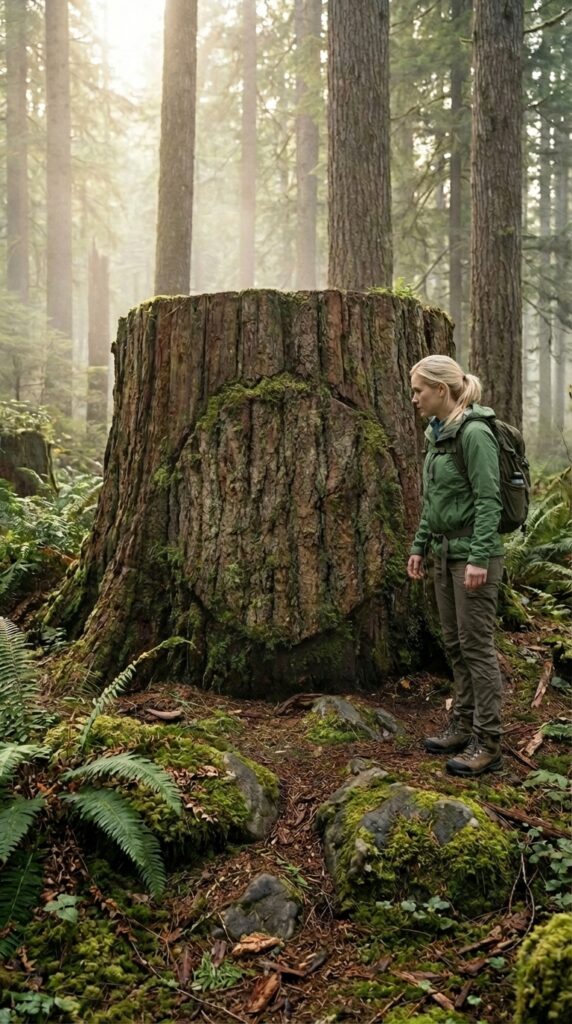
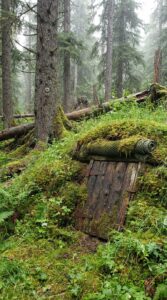
The escape tunnel runs beneath the forest floor and leads away from the main bunker chamber to a second hidden location deeper in the woods. From the outside, the exit appears to be nothing more than an old tree stump covered with moss and natural forest debris.
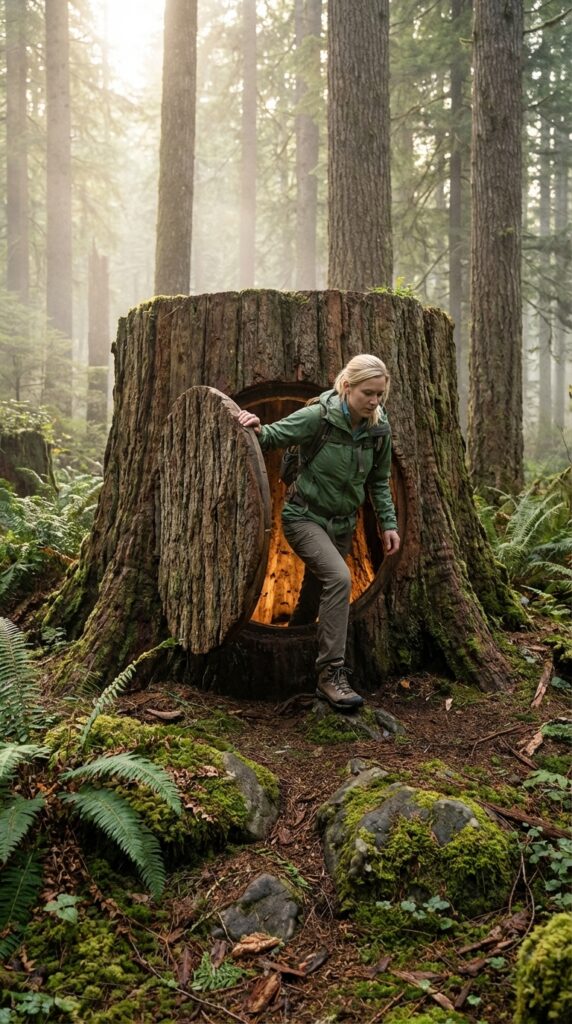
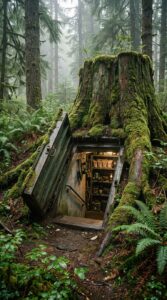
The stump contains a camouflaged hatch door built into the side of the wood, carefully designed to match the texture of natural bark. When closed, the door blends seamlessly into the stump and is almost impossible to detect unless someone knows exactly where to look.
Inside the stump, a ladder allows occupants to climb up from the underground tunnel and quietly exit back into the forest. This hidden exit ensures that the bunker remains both secure and flexible, allowing a safe and discreet escape route when needed.
Hidden Forest Rock Bunker With Secret Stump Escape
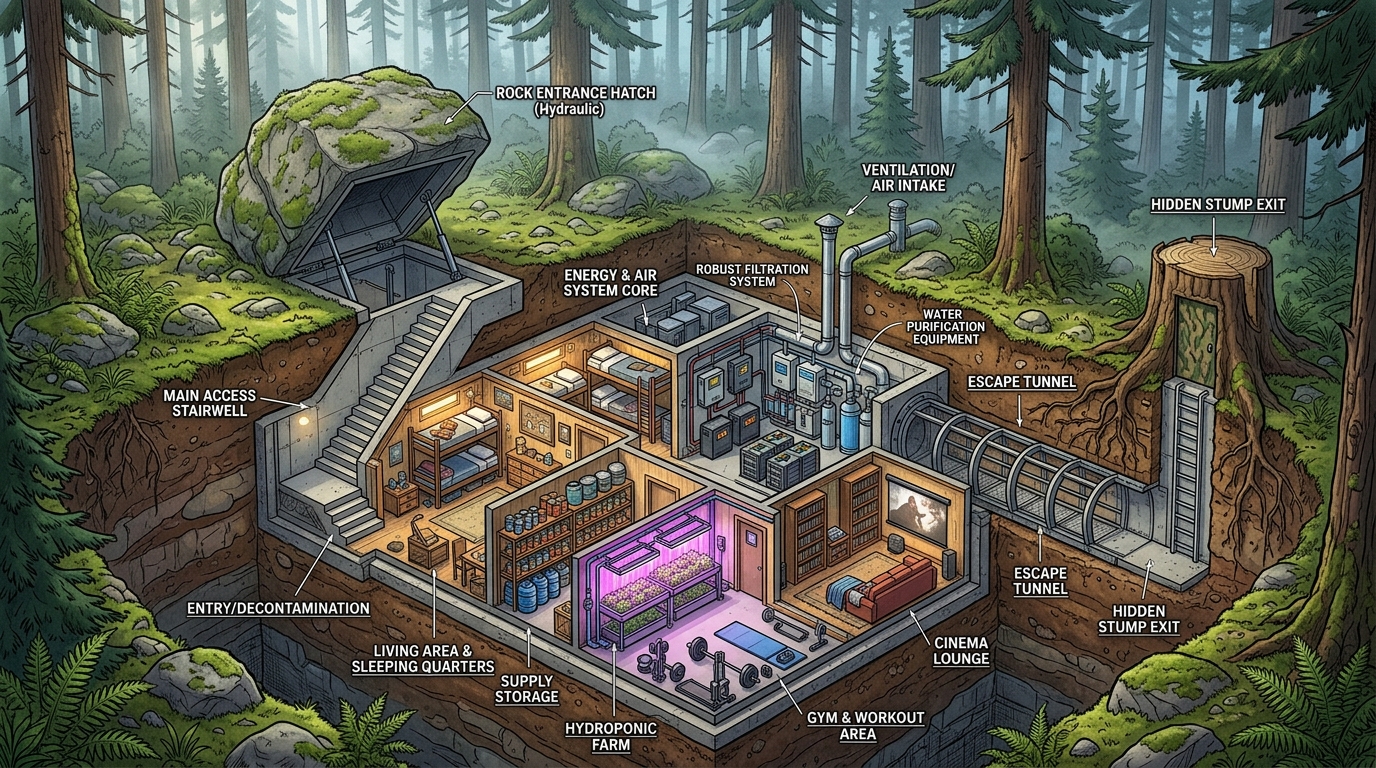
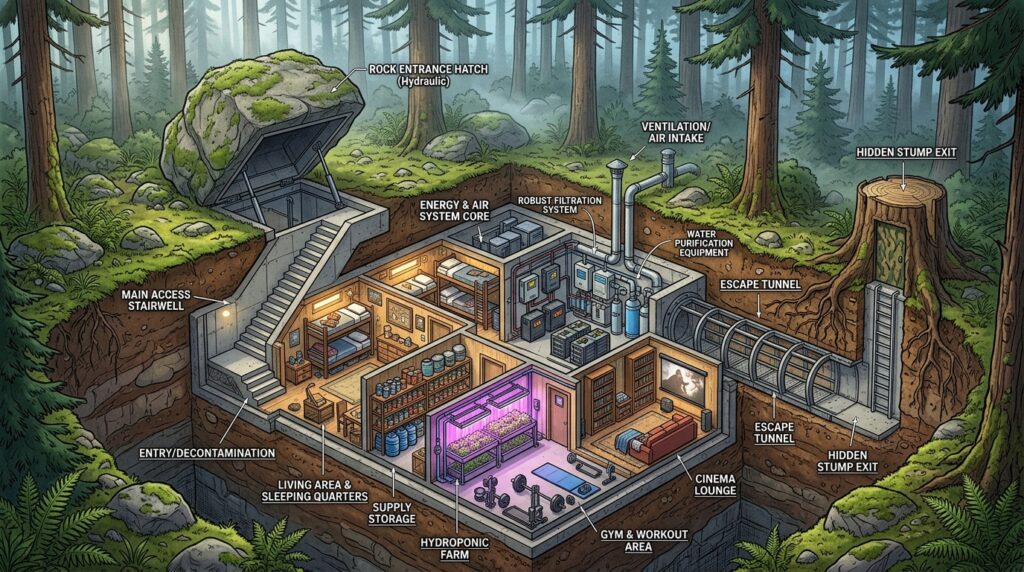
This blueprint concept shows a fully integrated underground survival bunker hidden deep inside a forest landscape. The shelter is designed to remain completely camouflaged in nature while providing a secure and functional underground living space with multiple zones and a hidden escape system.
The main entrance is concealed beneath a large natural boulder. From the outside, the rock appears to be part of the forest terrain, covered with moss and surrounded by trees. In reality, the stone functions as a hydraulic hatch that lifts to reveal a stairway leading down into the bunker.
Beneath the surface lies a multi-zone underground shelter designed for comfort and long-term survival. The interior includes a sleeping area, a large supply storage section filled with food and water reserves, and a hydroponic growing zone where fresh vegetables and greens can be produced using nutrient water systems and LED lighting.
The bunker also contains a small gym area for physical activity and a relaxation zone with a mini cinema setup where occupants can watch movies or rest. These areas help maintain both physical and mental well-being during extended time underground.
At the center of the bunker is the technical control room, often considered the heart of the shelter. This area houses large battery banks for energy storage, air filtration systems, ventilation equipment, and water purification units that keep the bunker functioning safely and independently.
From the main bunker chamber extends a reinforced underground escape tunnel running beneath the forest soil and tree roots. The tunnel leads approximately 50 meters away to a secondary hidden exit built inside a natural tree stump. The stump contains a camouflaged door disguised as bark, allowing occupants to quietly exit the bunker without returning to the main entrance.
This concept demonstrates how modern underground engineering can be combined with natural camouflage to create a secure and discreet forest survival shelter. The rock entrance, multi-functional living zones, and hidden stump escape route form a complete system designed for safety, concealment, and long-term resilience in the wilderness.
Architectural visualization. It is not a real construction project.

Leave a Reply