Hidden Bunker Entrance Disguised as a Stone in the Winter Forest
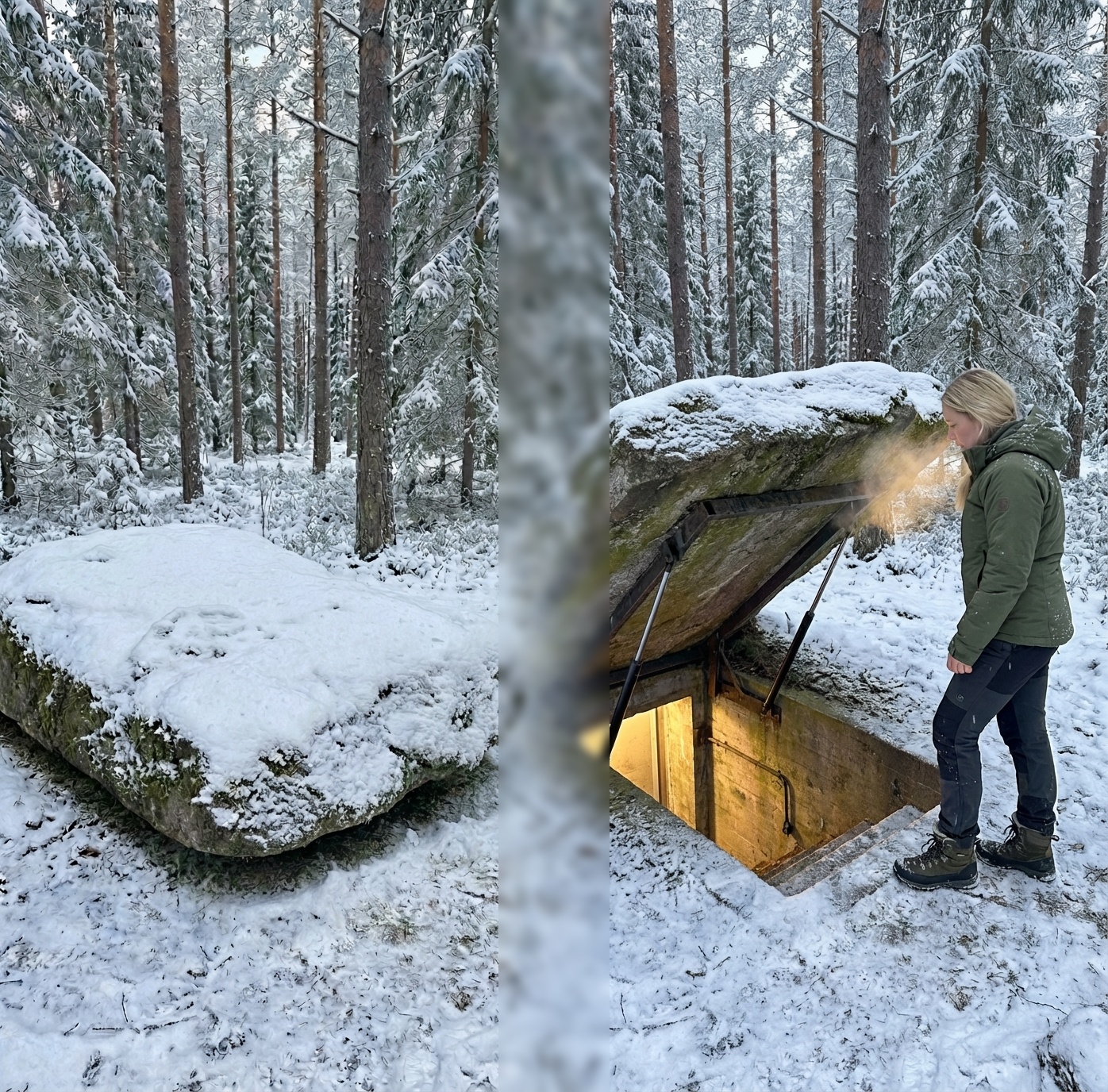
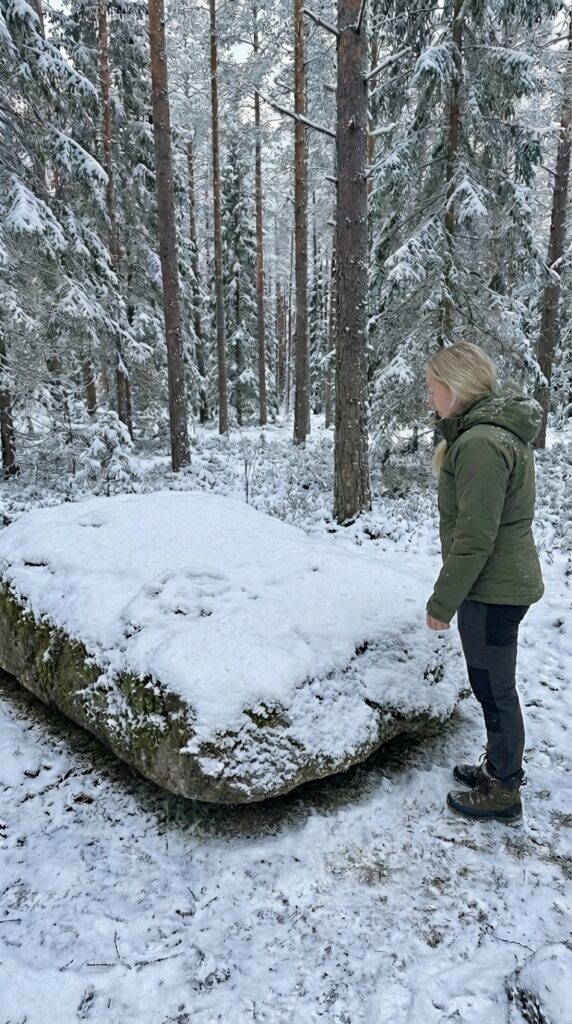
Deep in the middle of a snowy forest, this large stone appears completely natural, blending perfectly with the surrounding winter landscape. Covered with snow, moss, and forest debris, it looks like just another boulder resting quietly among the tall pine trees. However, beneath this carefully designed camouflage lies the hidden entrance to a reinforced underground bunker.
The stone above the entrance is not a real rock, but a specially constructed camouflage cover. It is made from durable composite material designed to look identical to natural stone while remaining lighter and easier to move. Inside the structure, the stone contains a reinforced armored steel plate that provides additional protection and structural strength.
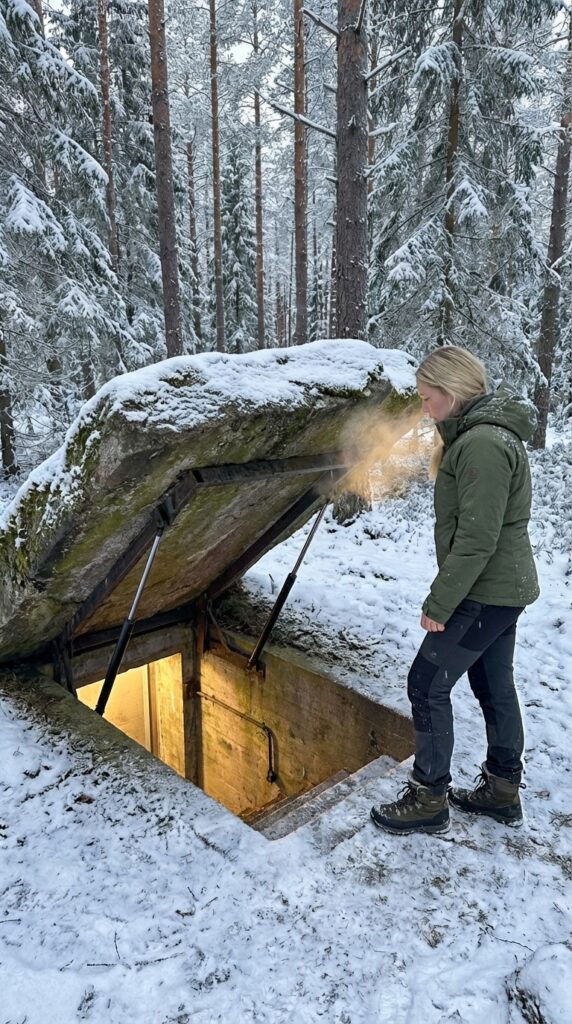
The entire camouflage rock is mounted on strong gas struts that allow it to lift upward smoothly when opened. Once raised, it reveals a concealed concrete stairway leading down into the underground bunker.
The bunker itself is built from thick reinforced concrete walls designed to withstand harsh weather conditions and provide a secure underground shelter. The stairway leads deeper into the bunker where the corridor turns to the right, protecting the interior from direct exposure to the entrance.
This type of hidden bunker design allows the entrance to remain nearly invisible in the natural environment while still providing reliable access to a secure underground shelter during emergencies.
Underground Bunker Living Area Built for Long-Term Survival
Beneath the forest floor, hidden behind a carefully concealed entrance, this underground bunker reveals a surprisingly organized and practical living space designed for long-term survival. Built with thick reinforced concrete walls and ceilings, the bunker provides a secure environment protected from extreme weather and external threats.
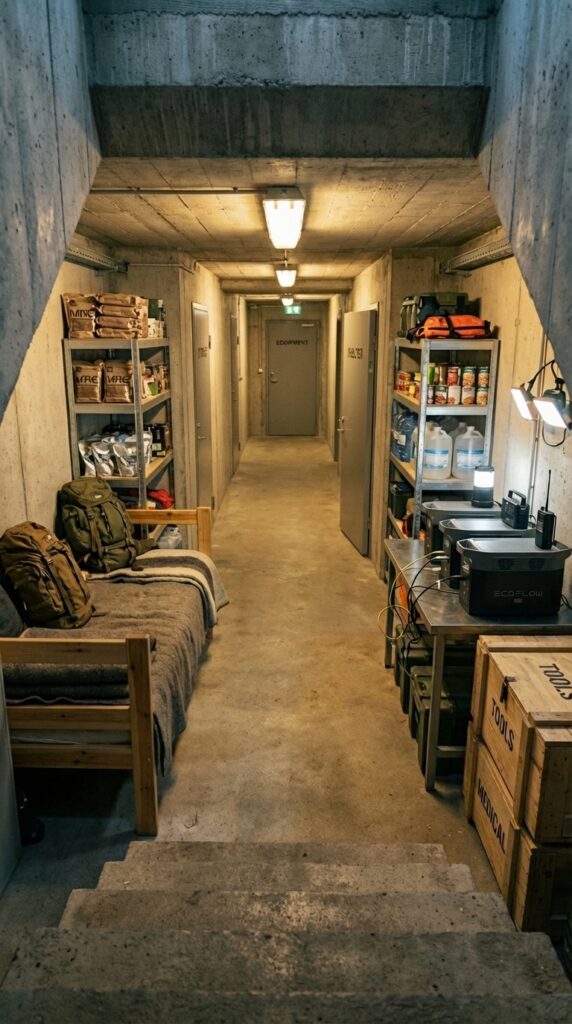
At the bottom of the entrance stairs, the bunker opens into a main corridor that serves as the central living and storage area. Along both sides of the hallway are strong metal shelves filled with carefully organized supplies including canned food, dry rations, drinking water, and emergency equipment. Every item is arranged to maximize storage space while ensuring quick access when needed.
The living area also includes a compact resting space with a simple bed where occupants can sleep and recover during extended stays underground. Soft lighting installed along the concrete ceiling provides reliable illumination while consuming minimal power.
Portable power stations and battery systems are connected to provide electricity for lighting, communication devices, and essential equipment. Nearby storage crates contain additional tools, medical kits, and emergency gear needed for survival situations.
Multiple reinforced doors lead from the main corridor into separate rooms that may include additional storage areas, technical equipment rooms, or protected sleeping quarters.
Designed for efficiency, safety, and preparedness, this underground bunker living zone demonstrates how a well-planned survival shelter can provide both protection and comfort while remaining completely hidden beneath the natural landscape.
Human-Powered Energy Room Inside the Survival Bunker
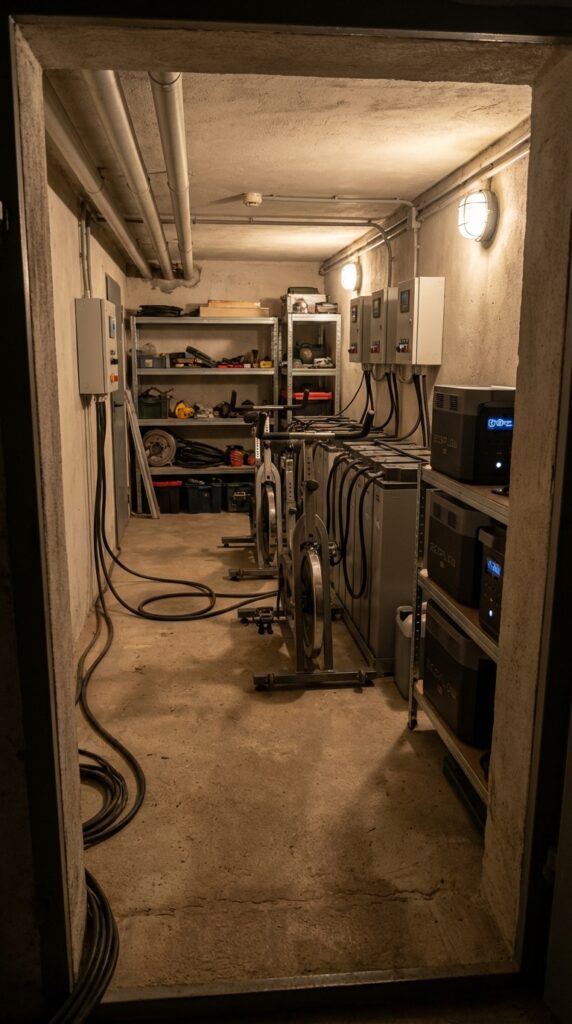
Deep inside the underground bunker, one of the most important areas is the energy generation room. This section of the bunker is designed to provide backup electricity even if all external power sources fail. The room contains two specially modified stationary bicycles connected to electric generators that convert human pedaling into usable electrical energy.
Each bicycle is mounted on a reinforced frame and connected to a generator system through a mechanical drive. As a person pedals the bike, the motion spins the generator, producing electricity that is directed into the bunker’s battery storage system. This allows the occupants to recharge power stations and maintain essential electrical systems during emergencies.
The generated energy is stored in large battery units that power the bunker’s lighting, communication equipment, monitoring systems, and other critical devices. These batteries act as the central energy reserve of the bunker, ensuring that electricity is available even during long periods underground.
Human-powered energy systems are often used in survival shelters as a reliable last-resort power source. Unlike solar panels or fuel generators, pedal generators do not depend on weather conditions or fuel supplies. As long as someone can pedal, electricity can be produced.
This energy room demonstrates how a well-prepared bunker can remain operational even in extreme situations. By combining stored battery power with human-powered generators, the bunker maintains a sustainable and dependable energy system capable of supporting long-term survival underground.
Underground Bunker Bedroom with Supplies and Entertainment Area
Inside the underground bunker, the bedroom area is designed to provide both rest and long-term comfort while remaining fully prepared for extended stays underground. Built within thick reinforced concrete walls, the room maintains a stable temperature and a secure environment protected from harsh weather conditions and external threats.
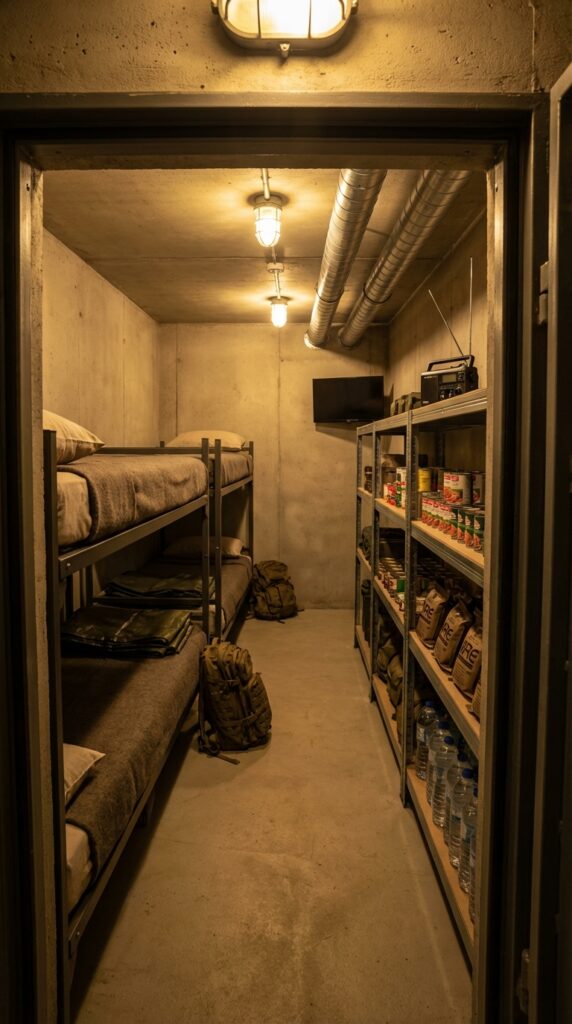
The bedroom features a compact but comfortable sleeping space with a sturdy bed, warm blankets, and essential personal storage nearby. This area allows occupants to rest properly after long hours of monitoring, maintaining systems, or working within the bunker.
Along one side of the room, strong metal shelving holds carefully organized emergency supplies. These shelves contain canned food, dry rations, drinking water, and other long-term storage items that ensure the bunker can support occupants for extended periods without outside assistance.
In addition to survival supplies, the room also includes a mounted television connected to the bunker’s internal power system. The television can be used for monitoring external camera feeds, watching recorded media, or receiving emergency broadcasts when communication systems are available.
Lighting installed along the ceiling provides soft and energy-efficient illumination powered by the bunker’s battery systems. This ensures the room remains functional while conserving energy.
By combining a comfortable sleeping area with organized food supplies and entertainment or monitoring systems, this bunker bedroom creates a balanced living space where occupants can maintain both physical safety and mental well-being during long stays underground.
Hidden Emergency Exit Camouflaged Deep in the Forest
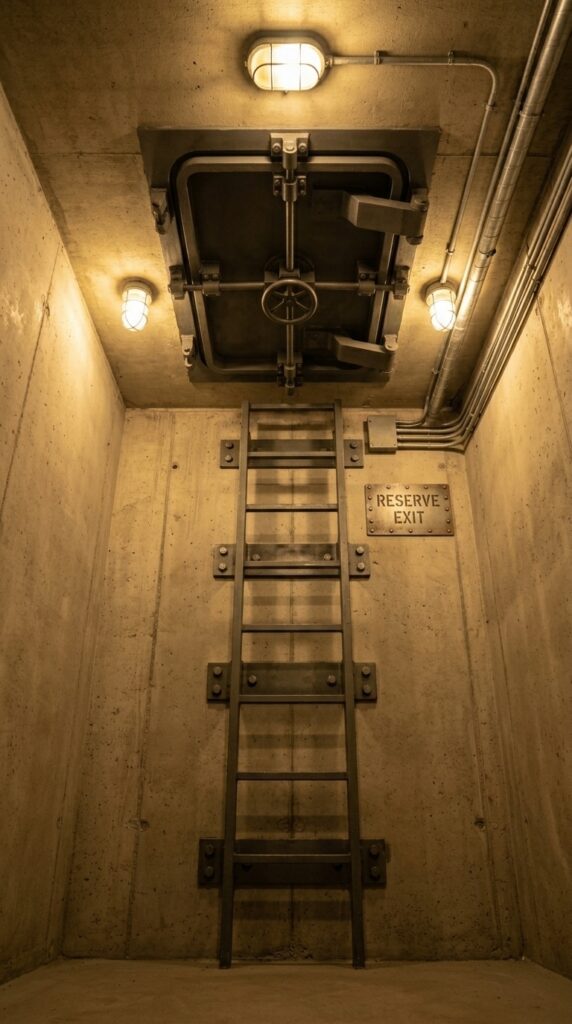
A well-designed survival bunker always includes more than one way in and out. In this underground shelter, a carefully concealed emergency exit provides an additional layer of safety. Hidden deep in the surrounding forest, this secondary exit is designed to remain completely unnoticed while still allowing occupants to safely leave the bunker if the main entrance becomes blocked or unsafe.
The emergency tunnel extends from the main bunker structure and leads several meters away from the primary entrance. This distance helps ensure that anyone discovering the main bunker door would not easily locate the backup exit. The tunnel itself is reinforced with concrete walls and supported by structural beams to maintain stability underground.
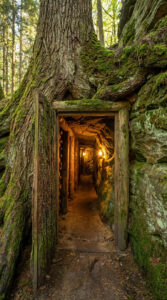
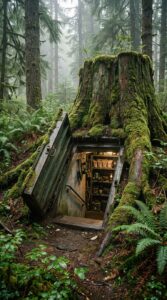
At the surface, the exit is cleverly disguised using natural forest elements such as rocks, moss, fallen branches, and vegetation. From above, it appears to be nothing more than part of the natural forest floor. There are no visible signs that a hidden escape route exists beneath it.
Inside the bunker, the emergency corridor is clearly marked and illuminated with low-power lighting to ensure it can be used quickly during urgent situations. The exit hatch is designed to open silently and smoothly from the inside.
Having a concealed backup exit is an essential feature in survival bunker design. It ensures that occupants always have an alternative route to safety while maintaining the secrecy and protection of the underground shelter hidden beneath the forest.
Hidden Winter Forest Bunker with Camouflaged Emergency Exit
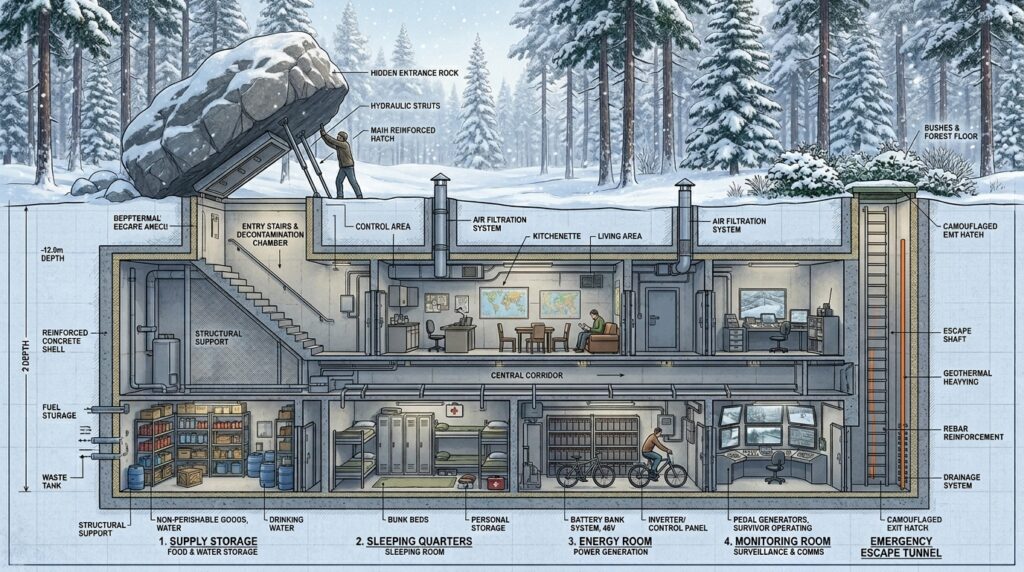
This detailed bunker concept illustrates a hidden underground survival shelter carefully integrated into a snowy forest landscape. The main entrance is concealed beneath a large natural-looking stone that rests quietly on the forest floor. Covered in snow and surrounded by tall pine trees, the rock blends perfectly with the environment, making the entrance almost impossible to notice. The stone hatch is mounted on hydraulic supports that allow it to lift upward smoothly, revealing a reinforced stairway descending into the underground bunker.
At the bottom of the stairs lies the first main room, which serves as the central access area of the shelter. From here, a long reinforced corridor leads deeper underground to several separate rooms designed for survival and long-term use. These rooms include a storage area filled with food and water supplies, a sleeping space, an energy room with backup battery systems and power equipment, and a monitoring room connected to external cameras for observing the surrounding forest.
At the far end of the corridor, the bunker includes a carefully hidden emergency escape route. This secondary exit leads up through a vertical tunnel to the surface, where the hatch is disguised beneath natural forest vegetation and bushes.
Built from thick reinforced concrete and designed to remain completely concealed within the natural landscape, this bunker concept demonstrates how modern survival shelters can combine security, functionality, and natural camouflage while remaining hidden deep within the wilderness.
Architectural visualization. It is not a real construction project.

Leave a Reply