
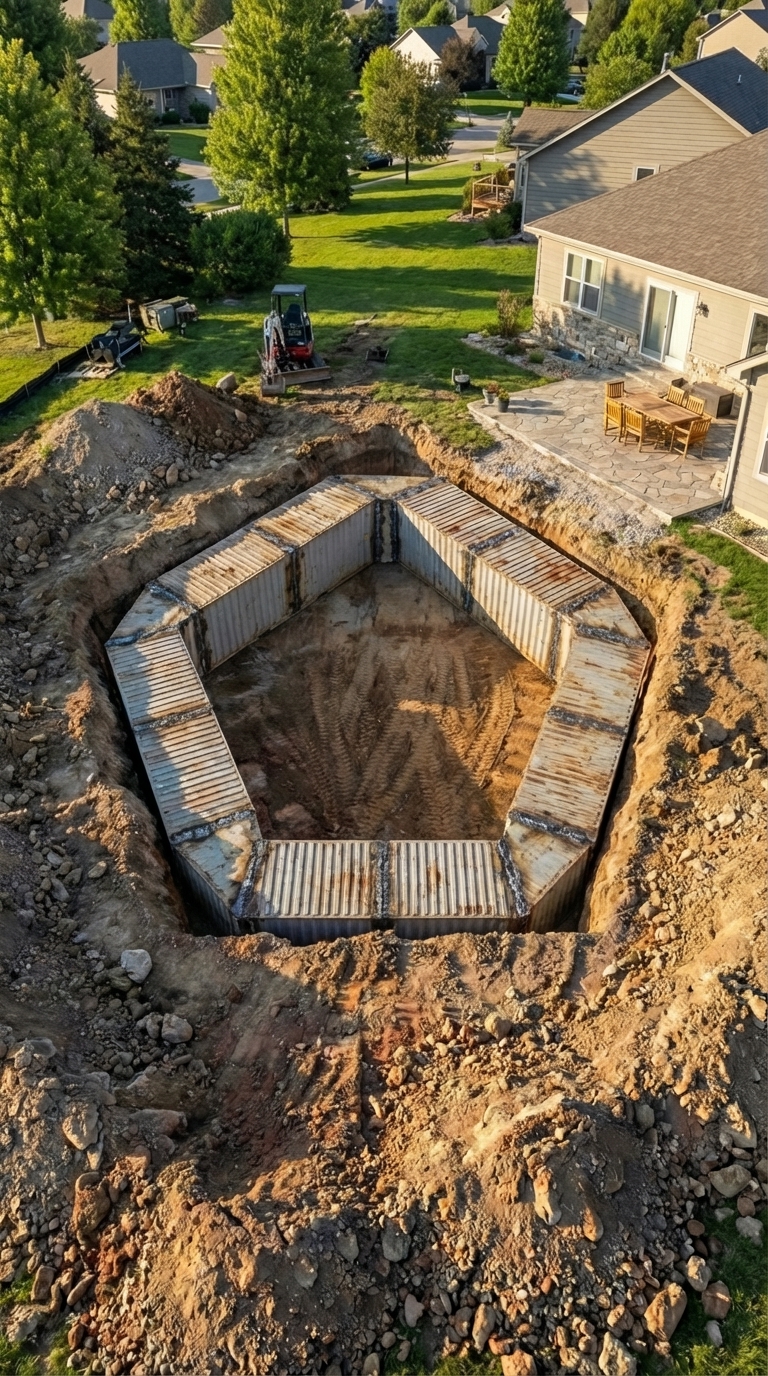
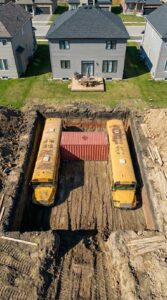
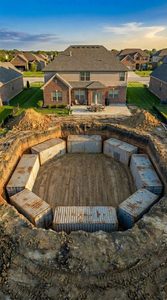
This project demonstrates a practical approach to building a hidden underground bunker using standard shipping containers arranged in a closed geometric layout. The structure is installed beneath a residential backyard, transforming unused space into a secure and functional underground environment. By positioning containers in a circular formation, the design distributes soil pressure evenly, increasing stability and reducing structural stress points. Each container acts as a reinforced module, creating a strong base that can withstand long-term underground conditions when properly sealed and protected.
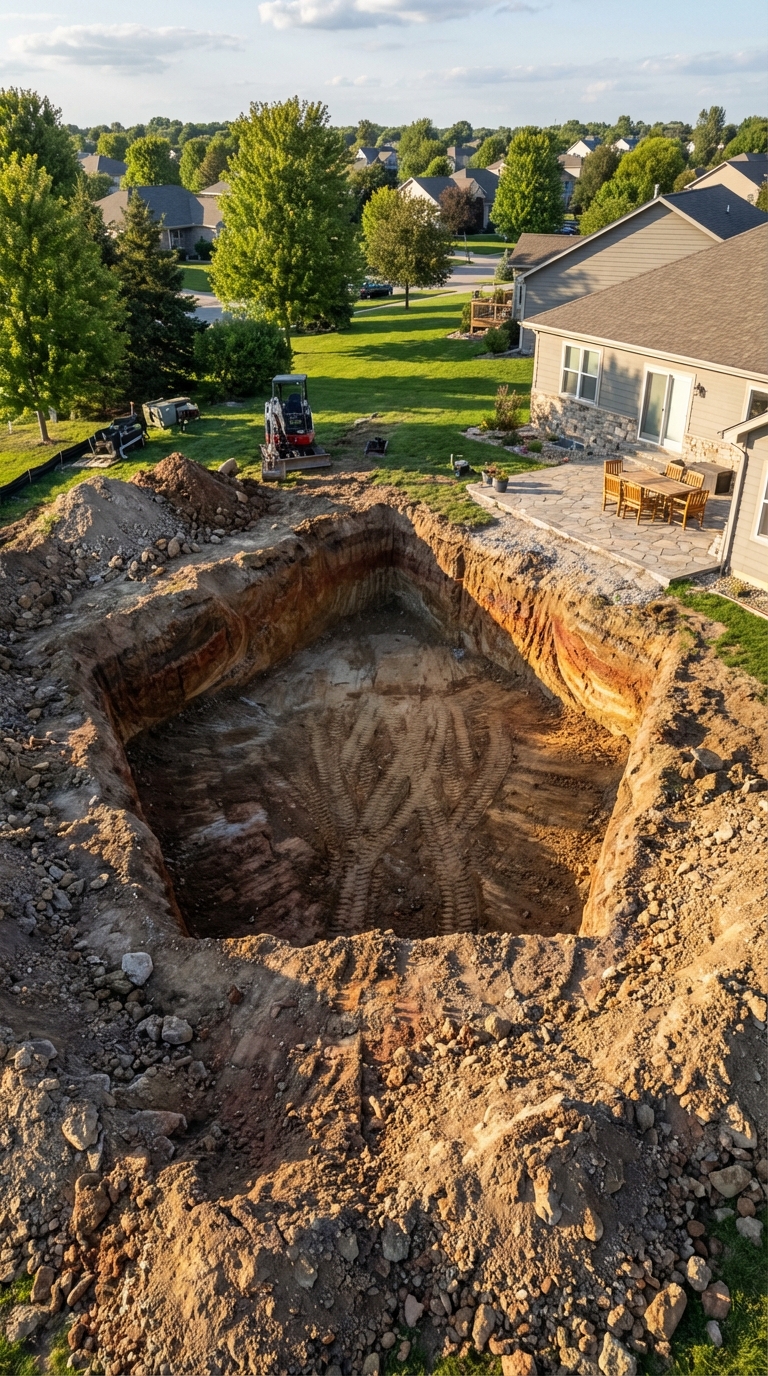
The construction process begins with deep excavation, followed by precise placement of containers using heavy equipment. Once aligned, the units are welded and sealed together to form a continuous structure. Waterproofing layers and drainage systems are added to prevent moisture intrusion, which is critical for durability. After installation, the entire bunker is covered with soil and the surface is restored, making the structure nearly invisible from above.
Inside, the bunker can be divided into multiple functional zones such as living space, storage, and technical systems. With proper ventilation, lighting, and power solutions, it becomes a fully independent underground shelter suitable for long-term use.
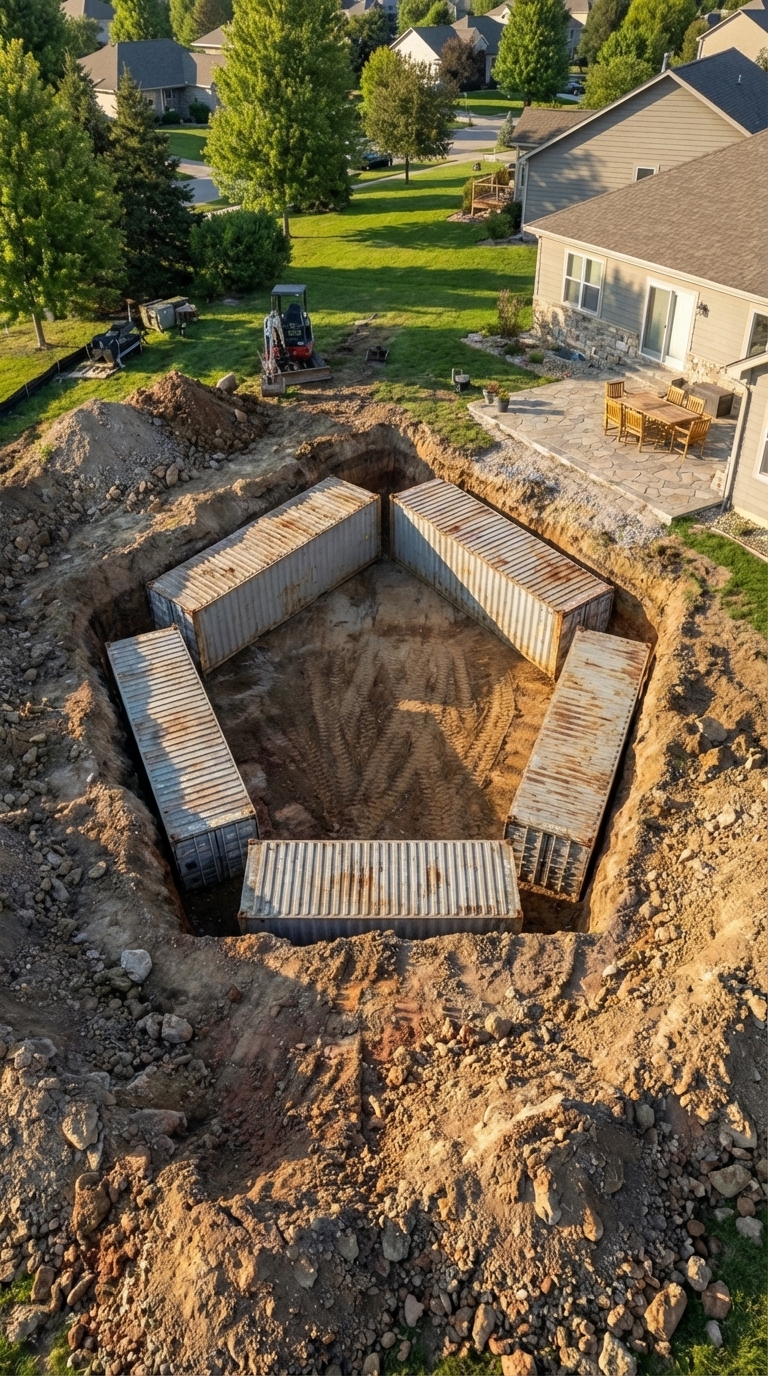
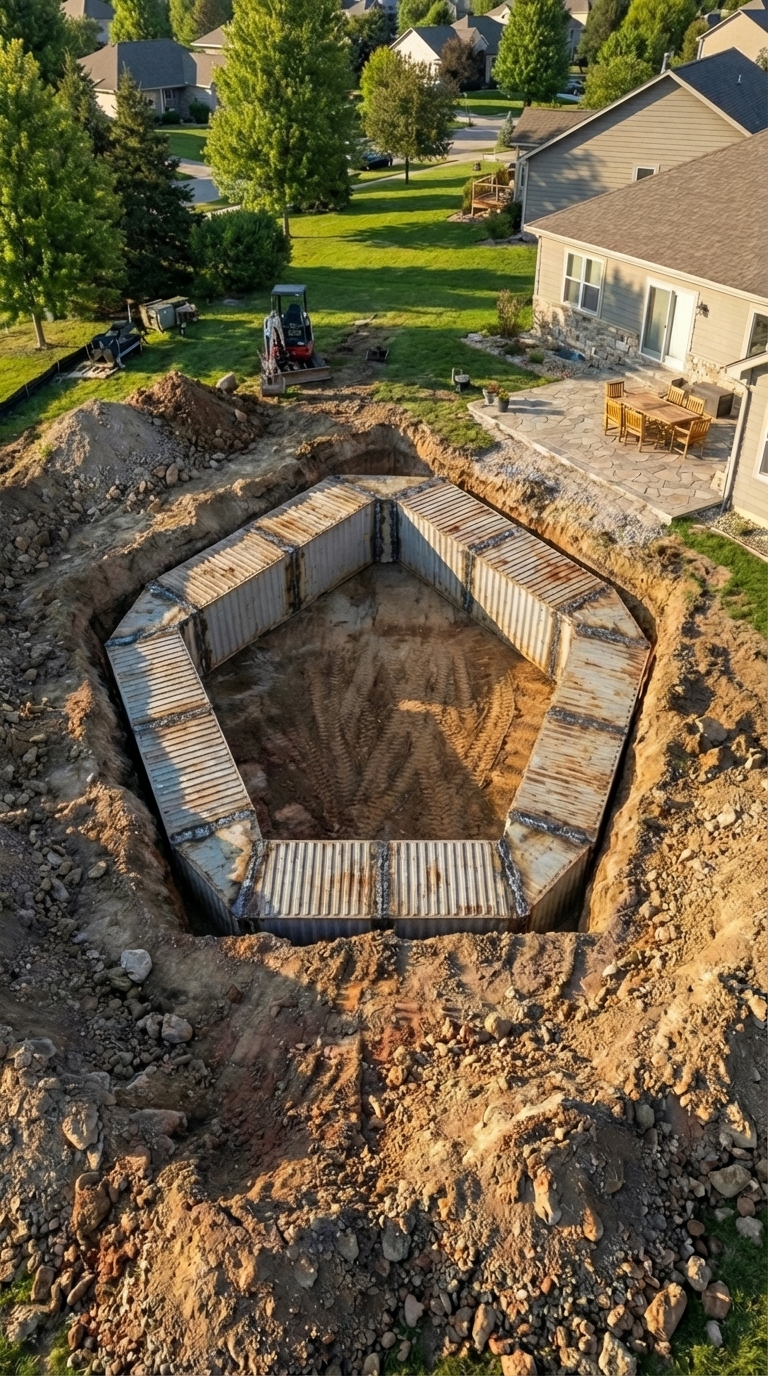
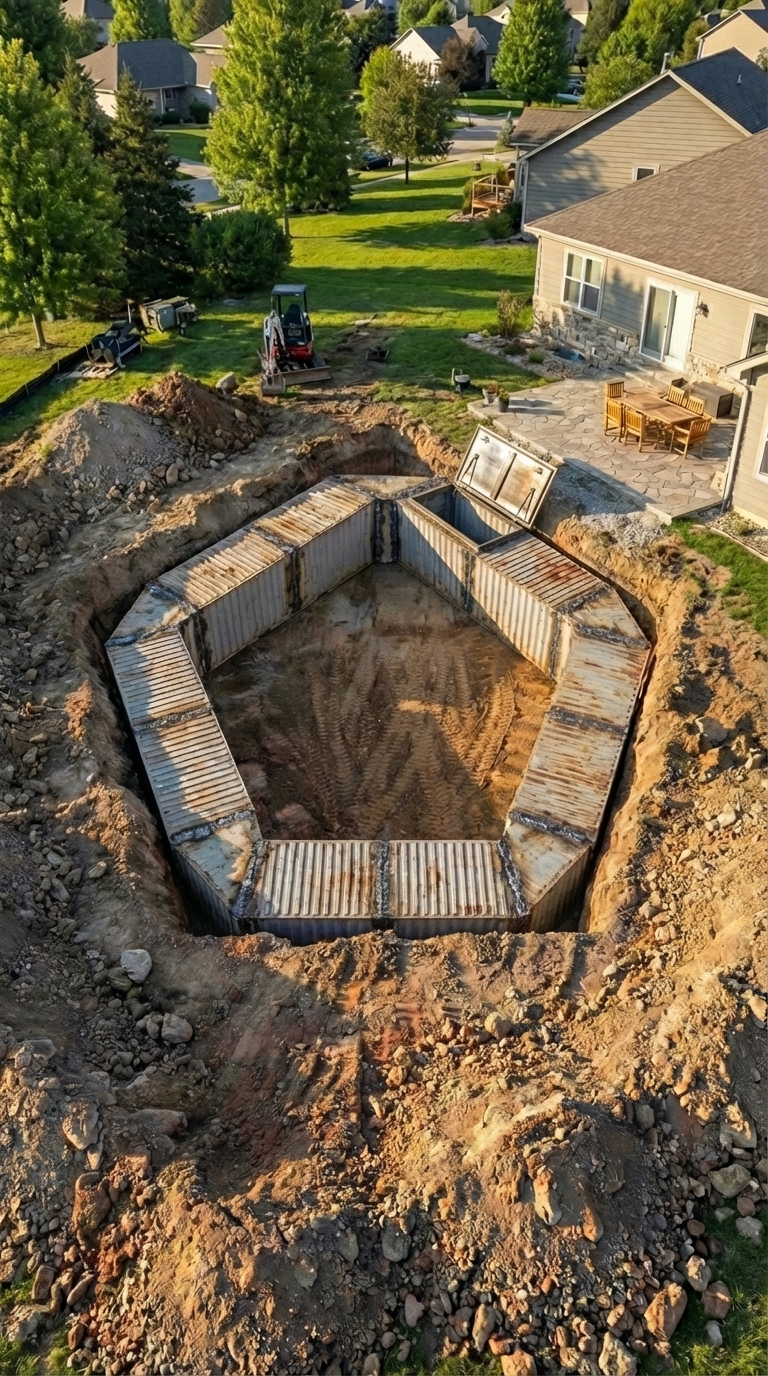
Additionally, this type of bunker offers significant flexibility in both design and long-term use. The modular nature of shipping containers allows the structure to be expanded over time by adding additional units, creating separate zones for storage, living space, technical systems, or even emergency exits. This makes the project scalable without requiring a complete rebuild, which is a major advantage compared to traditional underground construction.
From a practical standpoint, containers are widely available and relatively affordable, which reduces initial material costs while still providing a strong steel framework. When combined with proper reinforcement, sealing, and insulation, the structure becomes highly durable and capable of withstanding external pressure and environmental conditions. The addition of drainage systems and protective coatings further extends the lifespan of the bunker.
Another key benefit is the ability to integrate independent systems. Power can be supplied through battery units or generators, while ventilation systems ensure continuous airflow. Water storage and filtration can also be incorporated, allowing the bunker to function as a self-sufficient environment.
Overall, this approach combines efficiency, adaptability, and structural reliability, making it a realistic solution for creating a hidden underground space that can support long-term use while remaining discreet on the surface.
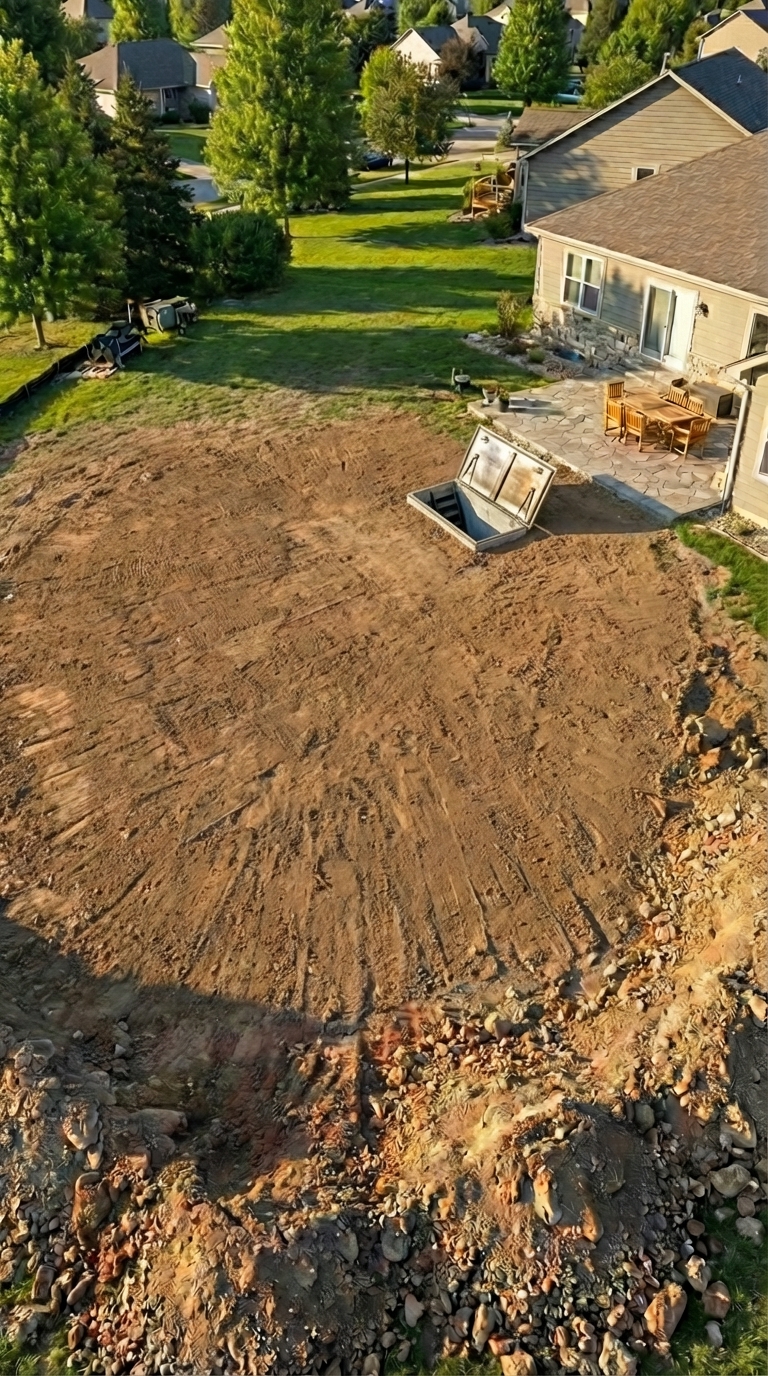
Reinforced Concrete Bunker with Cross-Bracing Core
This stage of the project focuses on transforming the underground structure into a fully reinforced concrete bunker designed for maximum strength and durability. After the initial excavation and layout preparation, the entire perimeter was formed using heavy-duty molds and then filled with high-strength concrete, creating a solid outer shell capable of withstanding significant soil pressure and long-term environmental impact.
To enhance structural integrity, a central cross-shaped reinforcement core was constructed inside the bunker. This cross-bracing system acts as a load-distribution element, dividing internal pressure across multiple directions and preventing deformation of the walls. The design significantly increases resistance to ground movement, weight from above, and potential structural stress over time.
The concrete used in this build is a high-density mix, ensuring durability, moisture resistance, and long lifespan. Additional waterproofing layers are applied externally to protect against groundwater and seepage. The combination of thick outer walls and internal reinforcement creates a rigid, monolithic structure that behaves as a single unit rather than separate elements.
This method provides a major advantage over simpler underground builds, as it minimizes weak points and extends the operational lifespan of the bunker. With the foundation complete, the structure is now ready for interior development, system installation, and final concealment beneath the restored landscape.
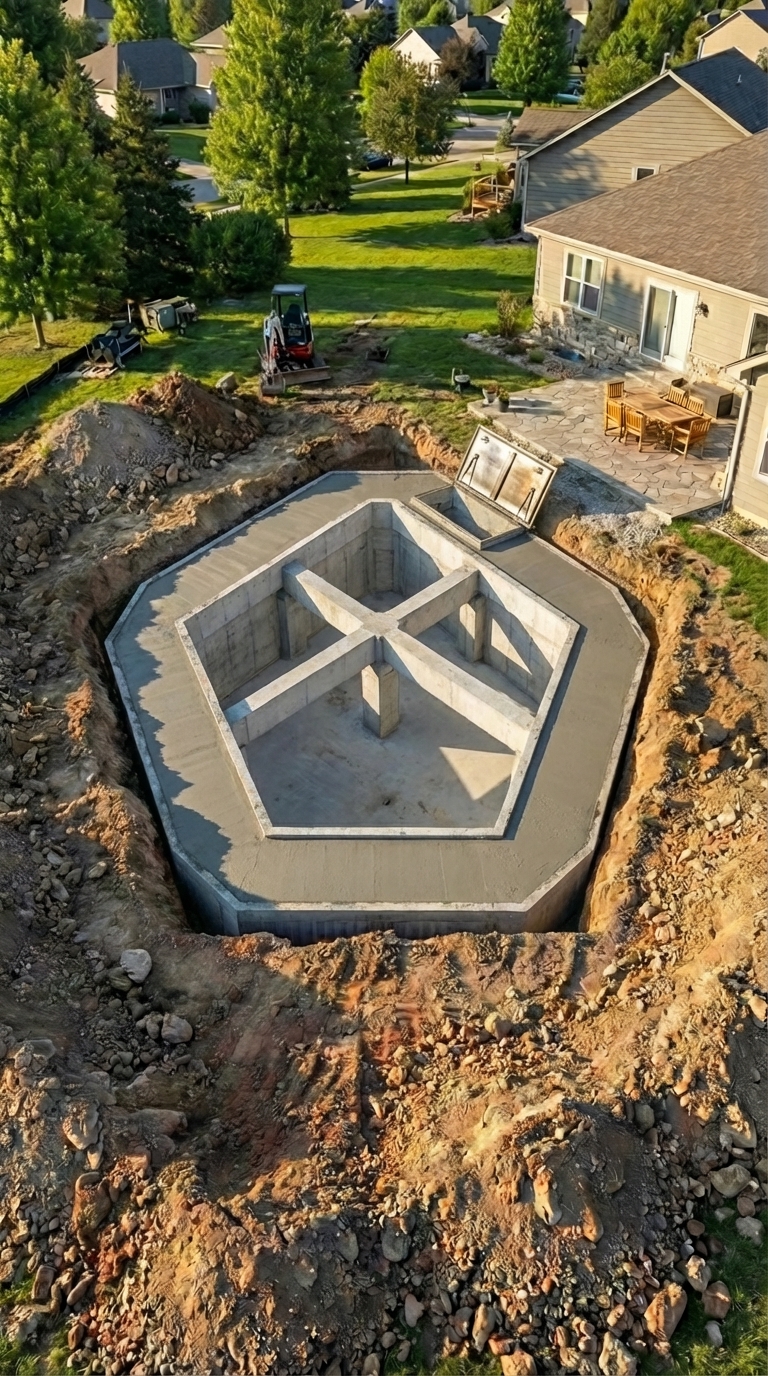
Hidden Entrance Design with Landscaping Integration
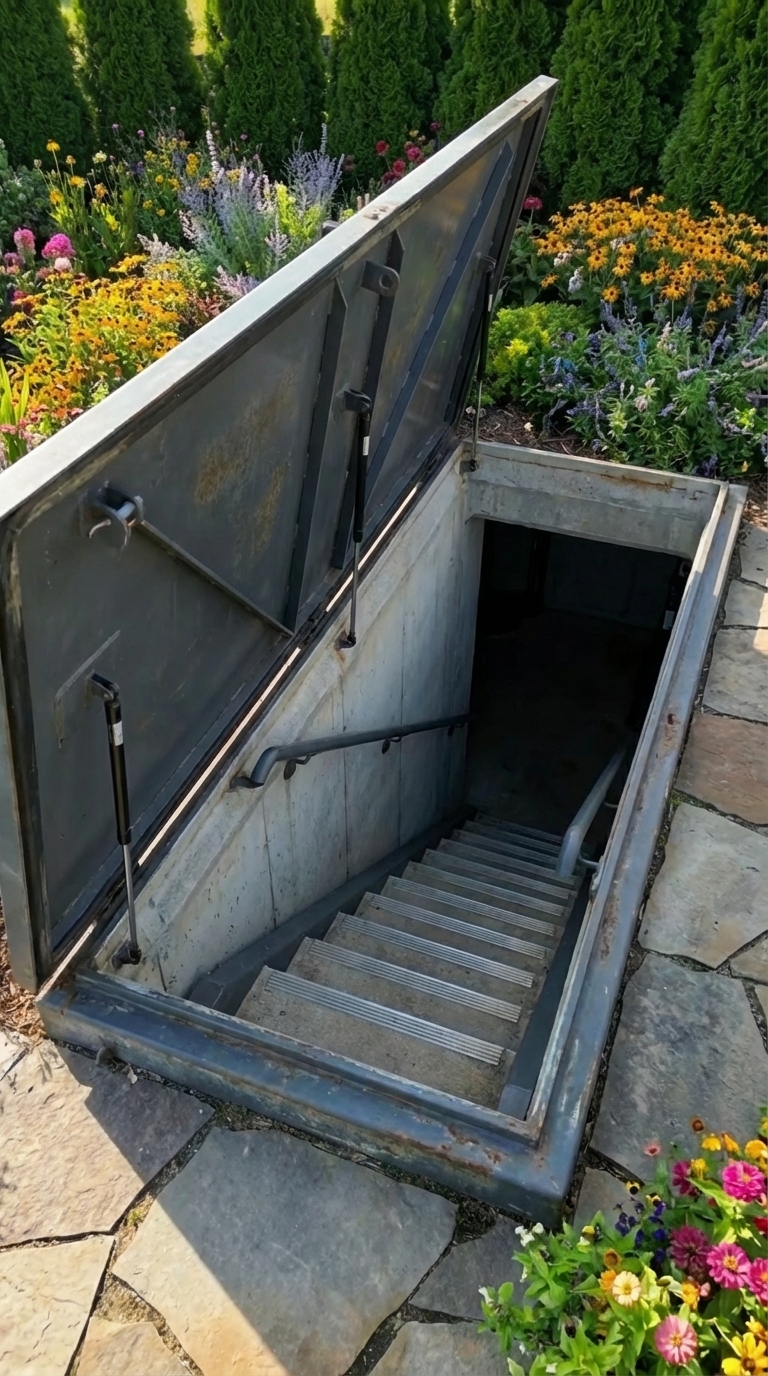
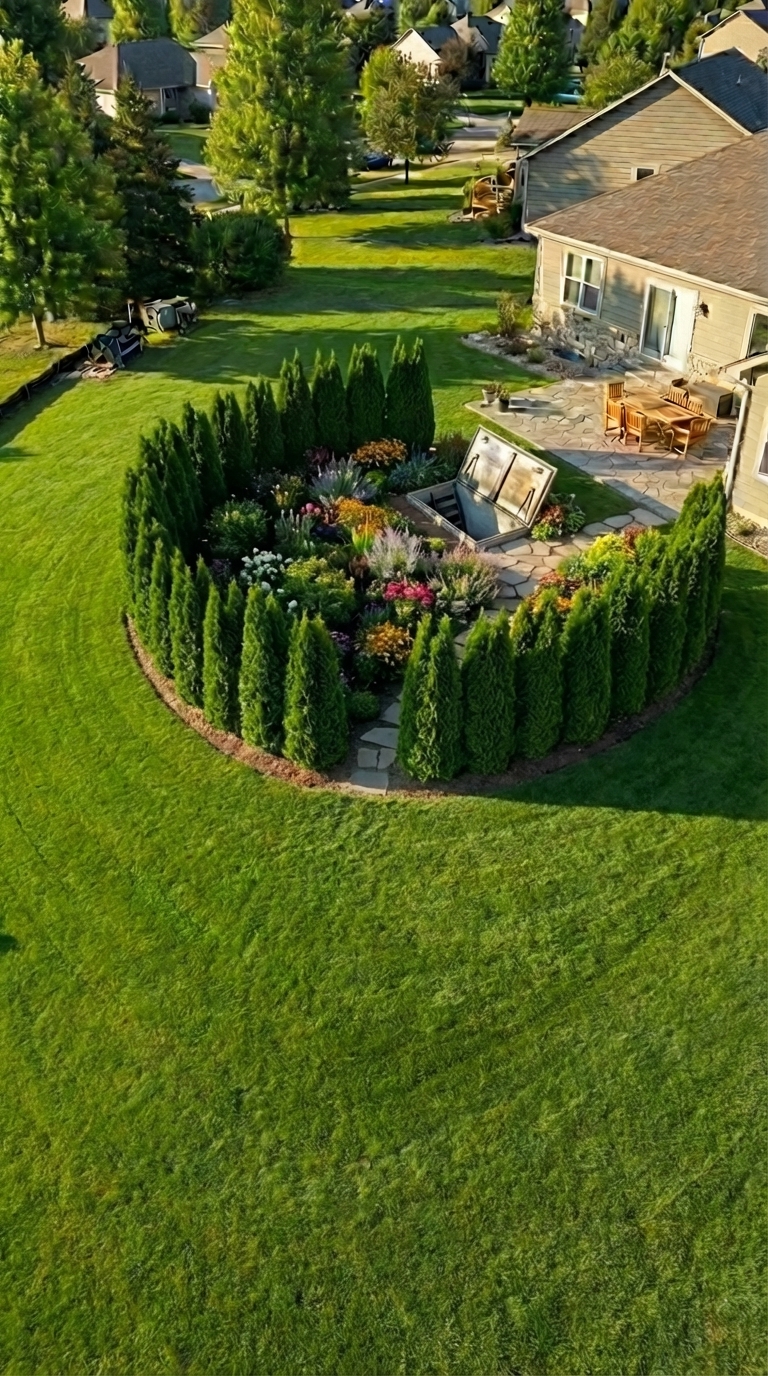
After completing the structural work, the final step was to fully conceal the bunker within the natural backyard environment. The main goal was to make the entrance visually indistinguishable from a standard landscape design, ensuring both privacy and security.
The access point was built as a reinforced underground hatch with a sealed metal door, positioned flush with the ground. Around it, decorative stonework and garden elements were carefully arranged to blend the structure into the surrounding patio area. The hatch opens smoothly, revealing a stairway leading directly into the bunker while remaining completely hidden when closed.
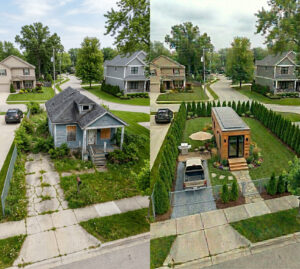
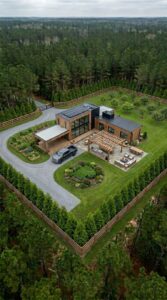
To enhance concealment, a dense perimeter of thuja trees was planted around the central zone. These evergreen plants create a natural visual barrier, blocking direct lines of sight from neighboring houses and adding an additional layer of privacy. Over time, as the trees grow thicker, the bunker entrance becomes even less noticeable.
The landscaping design also includes grass restoration, symmetrical planting, and clean pathways, making the area appear like a regular backyard relaxation space. No visible signs suggest the presence of an underground structure.
This approach combines functional engineering with subtle exterior design, allowing the bunker to remain hidden in plain sight while maintaining easy and secure access when needed.
Complete Interior Layout of a Container Bunker: Living, Storage, Control, and Security Zones
The interior of this underground bunker is designed as a fully functional independent system, where each zone serves a specific purpose while maintaining efficiency, safety, and long-term sustainability. The layout is divided into five key areas: sleeping quarters, storage zone, kitchen, control room, and secure equipment storage.
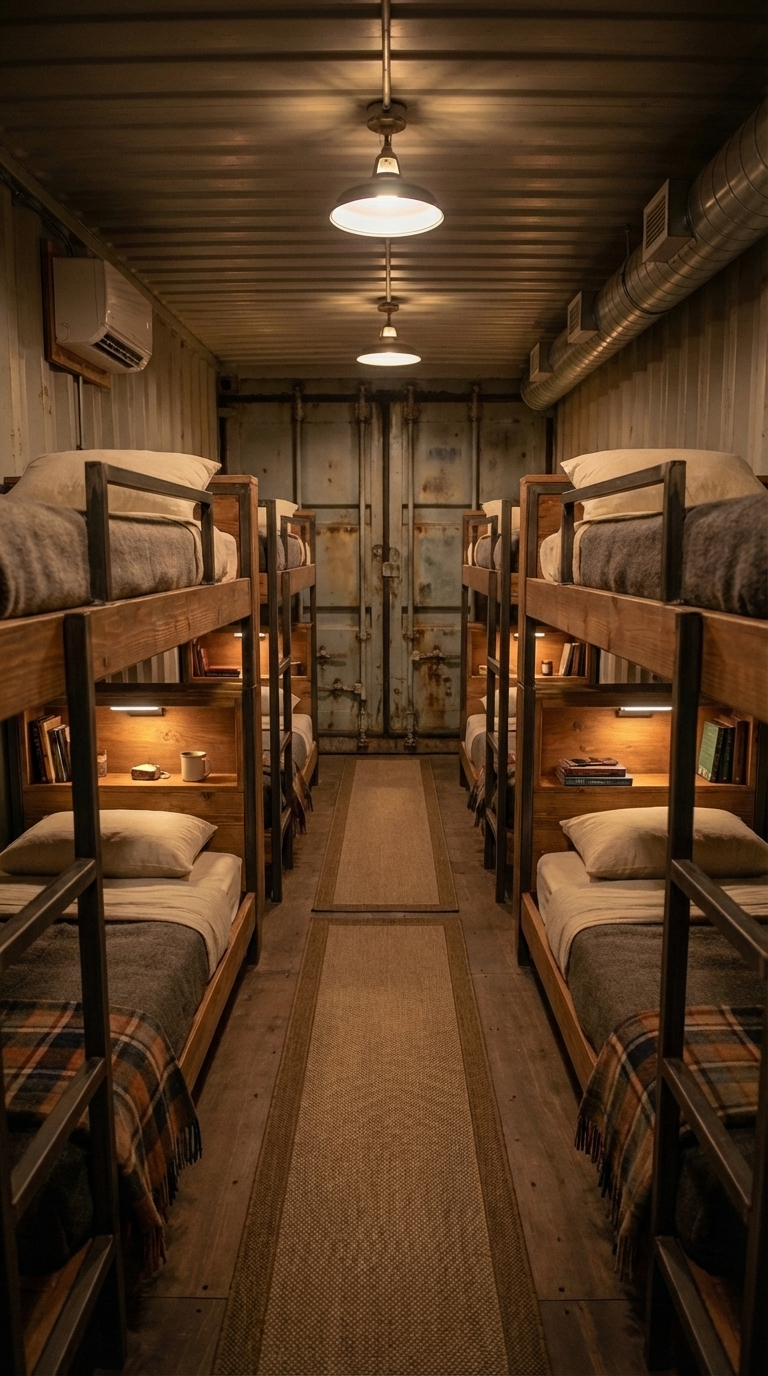
The sleeping area is built using reinforced bunk beds aligned along the container walls to maximize space. Each bed includes integrated lighting, small storage compartments, and durable materials designed for long-term use. The compact arrangement allows multiple people to stay comfortably without overcrowding the space.
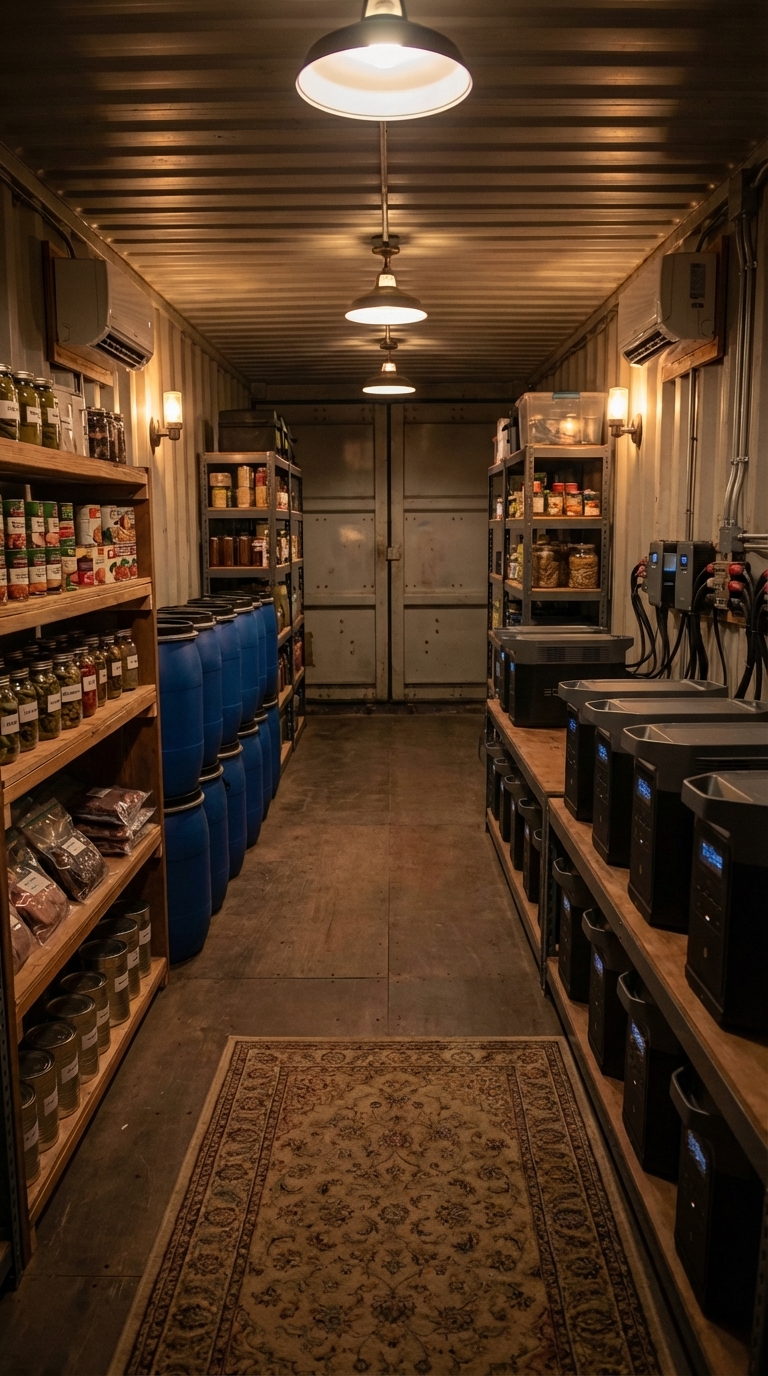
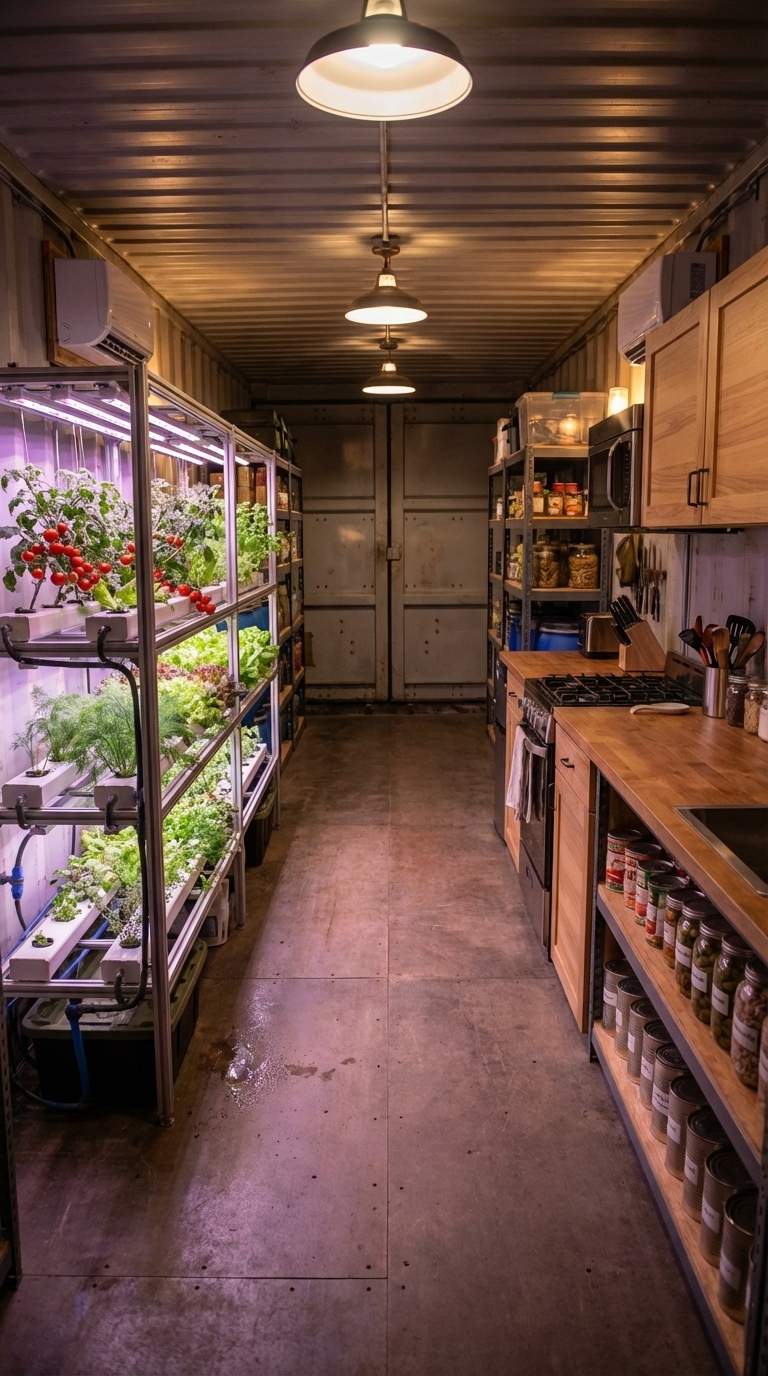
The supply storage zone is one of the most critical parts of the bunker. It contains organized shelving filled with preserved food, water containers, and essential daily supplies. Large water reserves ensure long-term independence, while battery systems and portable power stations are placed nearby for quick access and maintenance. Everything is arranged for efficiency, allowing fast inventory checks and easy access in any situation.
The kitchen area is compact but highly functional. It includes a cooking surface, storage cabinets, and even a hydroponic growing system for fresh vegetables. This setup allows the bunker to support extended off-grid living without relying entirely on stored food. Proper ventilation and lighting ensure safe and comfortable cooking conditions underground.
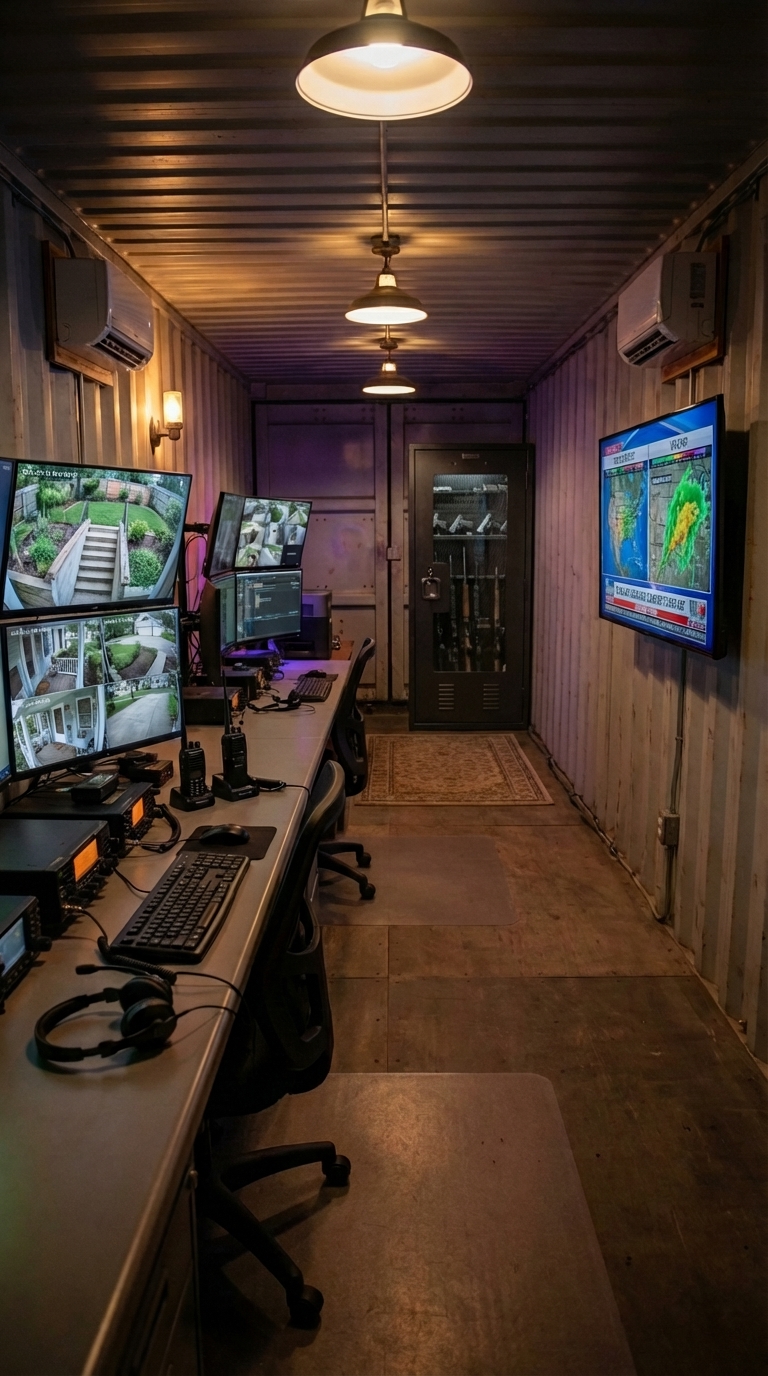
The control and monitoring room acts as the central hub of the bunker. Equipped with multiple screens, communication devices, and surveillance systems, it allows full monitoring of the exterior environment. Cameras placed around the property provide real-time visibility, while radio systems ensure communication even in isolated conditions.
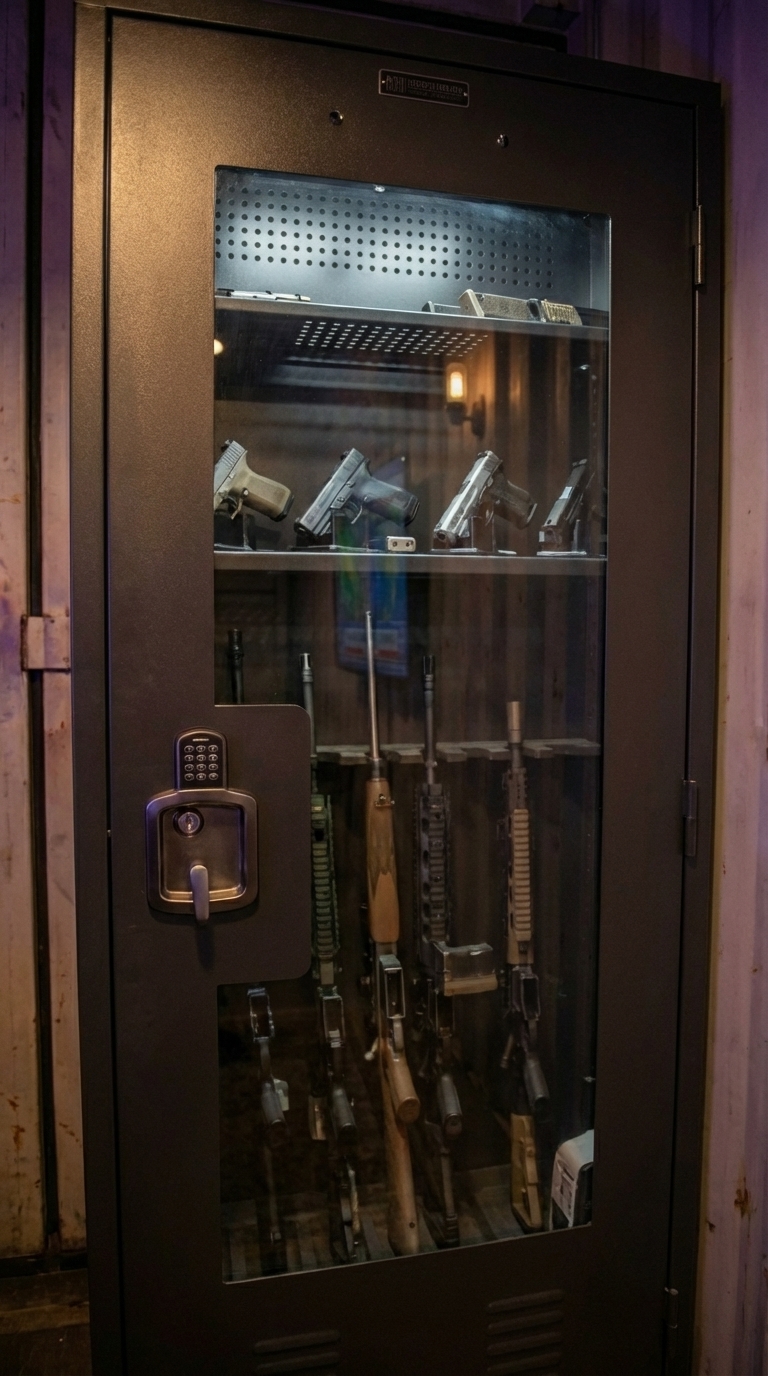
Finally, the secure storage section includes a reinforced locker designed for equipment and restricted-access items. Built with a heavy-duty locking system, it ensures that sensitive gear is safely stored and protected.
Together, these zones create a balanced and realistic underground living environment, combining practicality, security, and long-term independent functionality in a compact container-based design.
How Much Does It Cost to Build a 5-Container Underground Bunker?
Building a serious underground bunker in the United States using five shipping containers is a complex project that combines excavation, structural engineering, ?????????? systems, and full interior construction. Below is a realistic and detailed cost breakdown that shows where the money actually goes.
1. Containers + Structural Preparation
- 5 used containers: $10,000 – $25,000
- Cutting, welding, reinforcement: $8,000 – $20,000
- Anti-rust treatment + waterproofing: $5,000 – $15,000
? Subtotal: $23,000 – $60,000
2. Excavation and Site Work
- Excavation (large pit + machinery): $12,000 – $30,000
- Soil removal and transport: $5,000 – $15,000
- Gravel base + leveling: $4,000 – $10,000
? Subtotal: $21,000 – $55,000
3. Concrete Reinforcement (Critical Stage)
- Foundation slab: $10,000 – $25,000
- Reinforced ????? walls around containers: $15,000 – $40,000
- Internal support (cross beam / rib structure): $5,000 – $15,000
? Subtotal: $30,000 – $80,000
4. Interior Build (Full Setup)
- Beds, furniture, storage systems: $10,000 – $25,000
- Kitchen setup + equipment: $8,000 – $20,000
- Finishing, lighting, insulation: $10,000 – $25,000
? Subtotal: $28,000 – $70,000
5. Power System (EcoFlow / Battery Setup)
- Multiple power stations: $8,000 – $20,000
- Wiring + electrical setup: $3,000 – $10,000
? Subtotal: $11,000 – $30,000
6. Ventilation and Air Filtration
- Air ducts + fans: $3,000 – $8,000
- Filtration system: $2,000 – $7,000
? Subtotal: $5,000 – $15,000
7. Security and Control Systems
- Cameras + monitoring setup: $2,000 – $8,000
- Reinforced doors + locks: $3,000 – $12,000
? Subtotal: $5,000 – $20,000
8. Landscaping and Hidden Entrances
- Hidden hatch construction: $5,000 – $15,000
- Backyard design (plants, paths, masking): $5,000 – $10,000
? Subtotal: $10,000 – $25,000
FINAL TOTAL
| Build Level | Cost |
|---|---|
| Basic functional bunker | $180,000 |
| Well-designed full setup | $220,000 |
| High-end hidden bunker | $250,000 – $270,000 |
This is an architectural concept visualization and not a real construction project.
Leave a Reply