Hidden Foam Lift Cabin in the Forest – Elevated Off-Grid Survival Concept
Deep in remote northern forests, where heavy snowfall, wildlife activity, and extreme cold challenge traditional shelters, a new generation of lightweight elevated survival cabins is emerging. One of the most innovative concepts is the foam-insulated suspended cabin with a lifting mechanism — a compact off-grid home designed for safety, warmth, and stealth living in harsh wilderness environments.
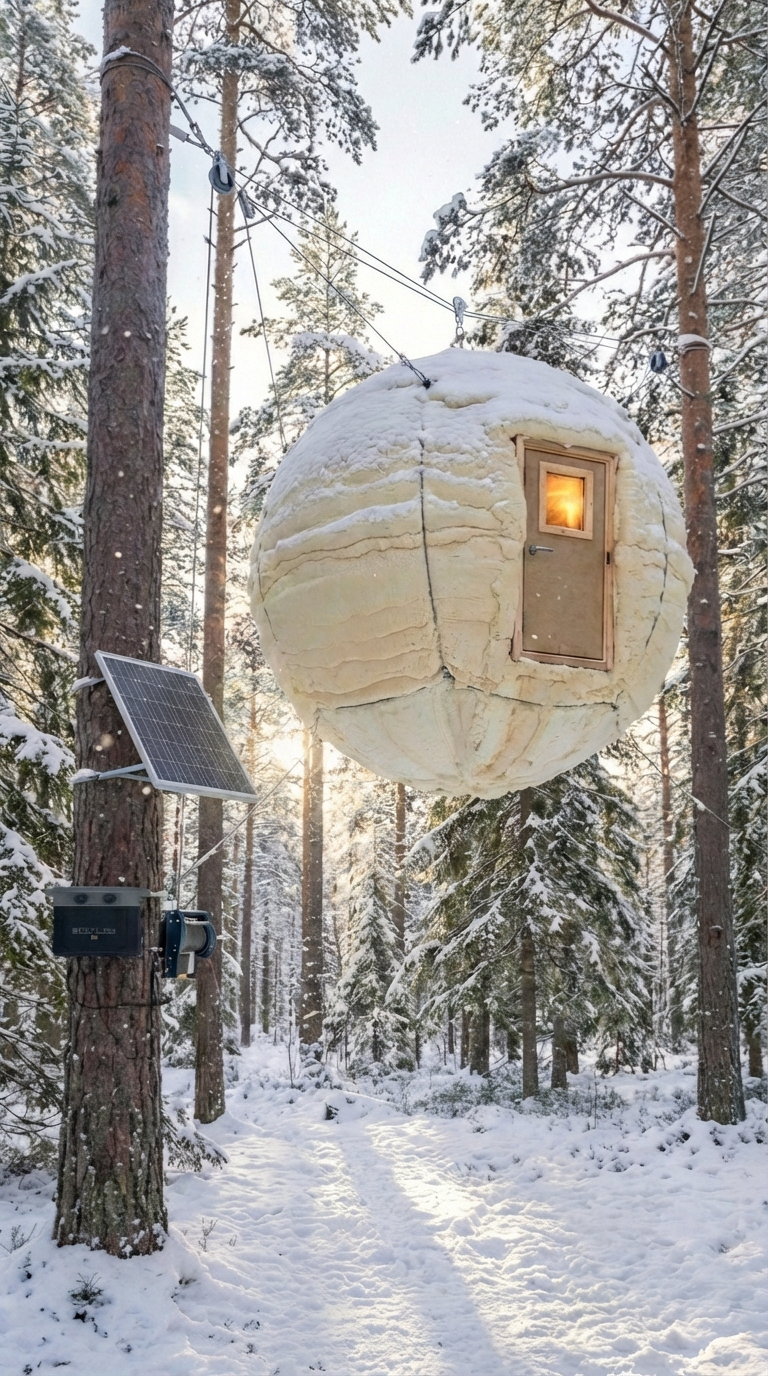
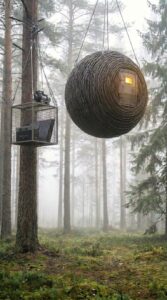
Unlike traditional ground shelters or heavy log cabins, this structure uses high-density insulated foam as its primary shell material. The spherical design helps evenly distribute structural stress while dramatically reducing heat loss. Foam insulation traps warm air inside the walls, allowing the interior to stay comfortable even during freezing outdoor temperatures. At the same time, the lightweight construction allows the entire shelter to be suspended above ground using reinforced cables and pulley systems anchored to surrounding trees.
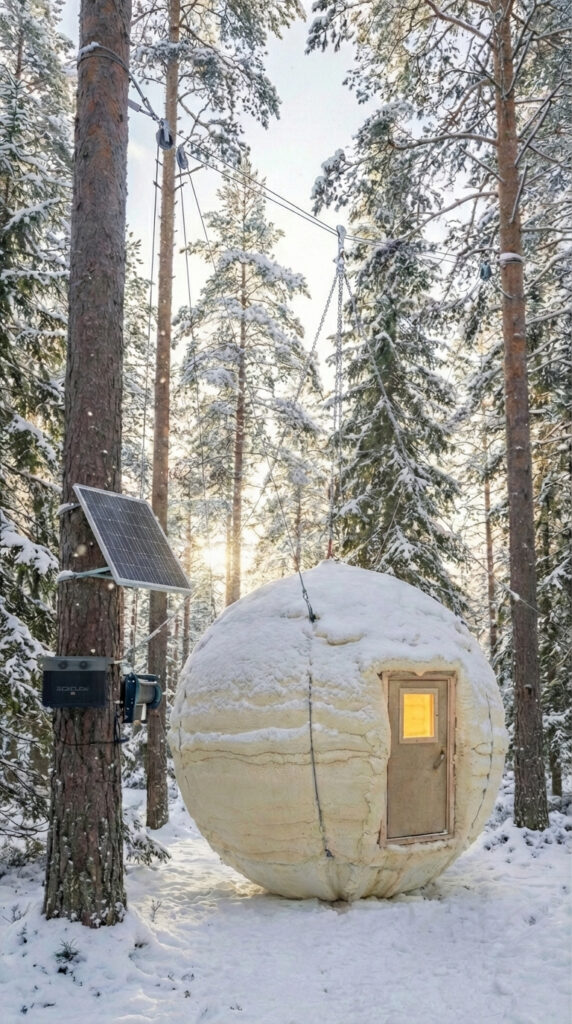
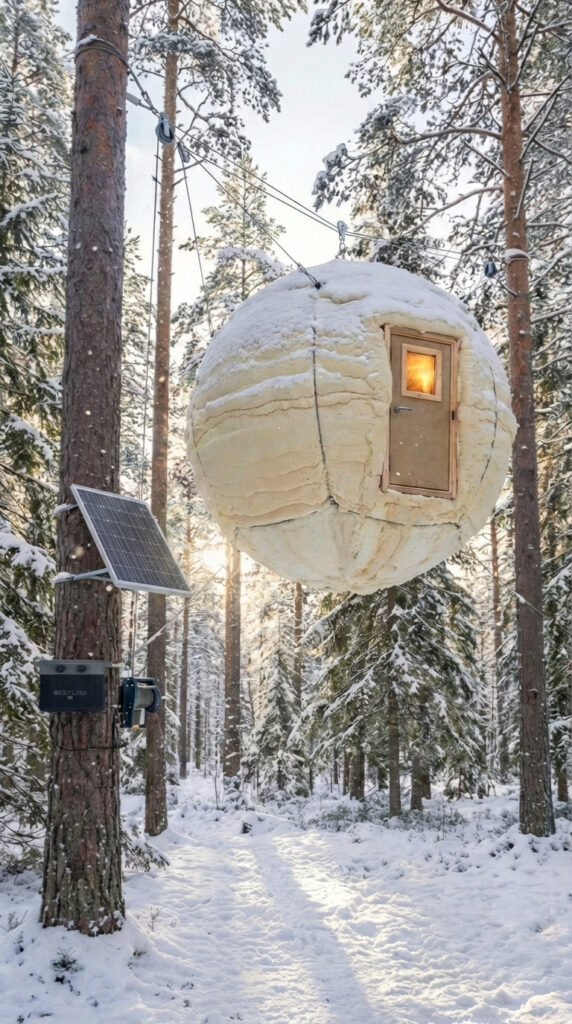
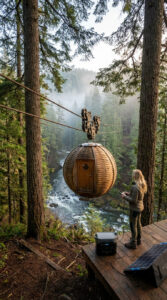
The lifting system is one of the cabin’s most important survival features. The shelter can be lowered to ground level for safe entry and supply loading. Once occupied, it can be raised several meters into the air, protecting residents from wildlife, snowdrifts, ground moisture, and flooding. The elevated design also improves air circulation around the structure, helping reduce condensation and mold formation inside the cabin.
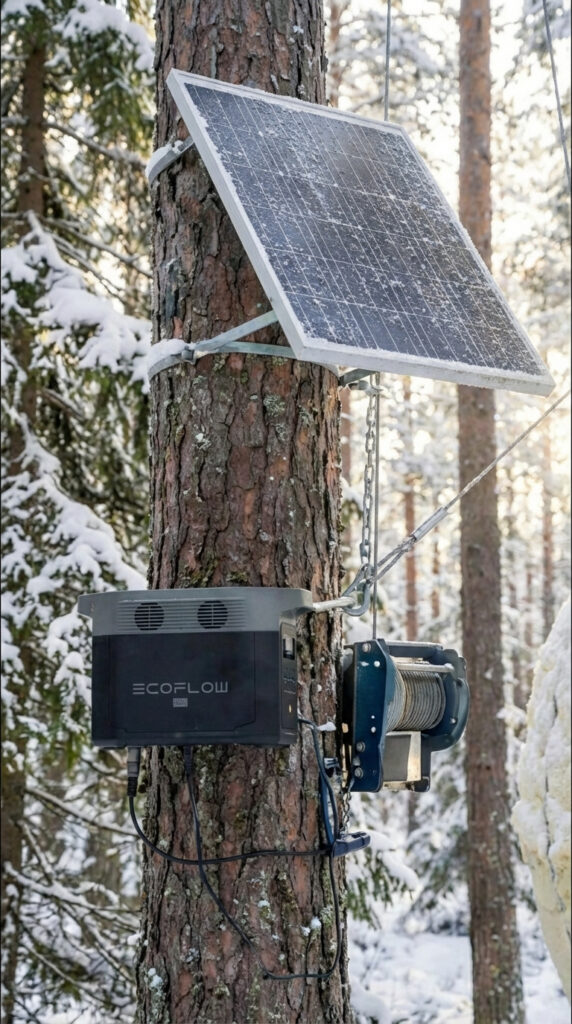
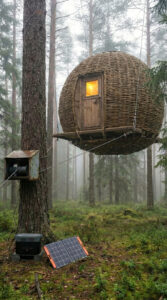
Energy independence is achieved through an external solar power station installed on nearby trees. Solar panels collect renewable energy during daylight hours and store it in portable battery systems inside the cabin. This allows the shelter to operate lighting, communication devices, small heating systems, and ventilation units without reliance on external infrastructure. The off-grid electrical system ensures long-term and emergency readiness.
Inside, the cabin is designed to maximize efficiency in a compact space. Wood interior finishing provides additional insulation and creates a warm, livable atmosphere. The layout typically includes a sleeping zone, compact storage shelves for survival supplies, emergency food reserves, and basic cooking equipment. Energy-efficient LED lighting is integrated along the internal structure to provide low-consumption illumination.
The spherical exterior also improves wind resistance and snow shedding, making the structure more stable during storms. Because the cabin is suspended rather than built on foundations, it minimizes environmental impact and preserves natural terrain. This makes the design especially attractive for remote wilderness retreats and temporary survival installations.
Foam lifting cabins represent a modern approach to off-grid survival architecture. By combining lightweight insulation, renewable energy, suspended engineering, and compact interior planning, they offer a unique solution for safe living in extreme natural environments. Whether used as an emergency refuge, wilderness exploration base, or experimental remote home, these elevated shelters demonstrate how innovative materials and smart engineering can redefine survival housing.
Stage of Construction: Insulating the Spherical Forest Cabin
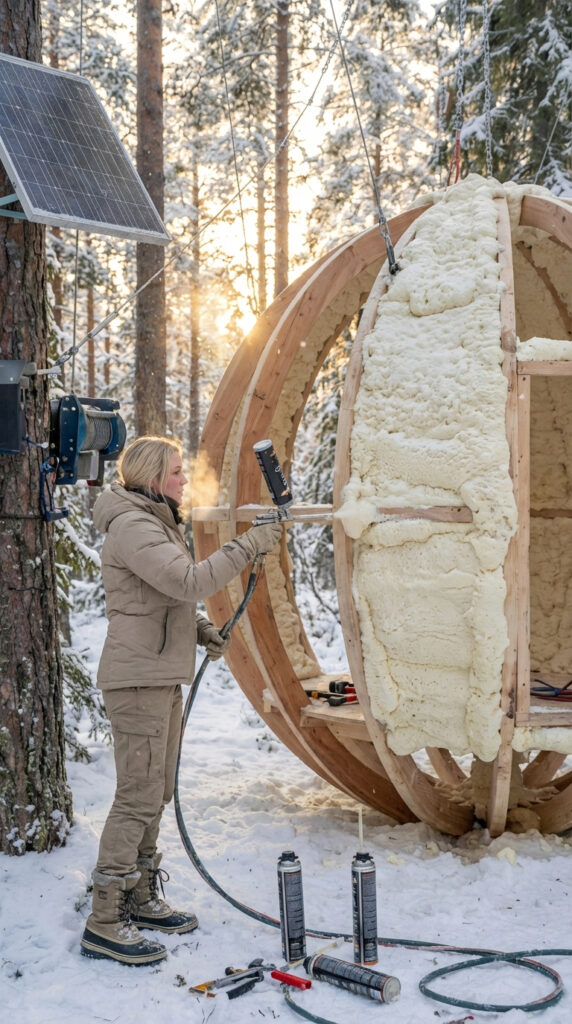
This stage captures one of the most important moments in the construction of the suspended foam cabin — thermal insulation. After the circular wooden frame is fully assembled and reinforced, the structure begins to transform from an open skeleton into a fully insulated living shell.
1. Structural Frame Completion
The foundation of the spherical house is a precisely engineered wooden ring framework. Curved timber ribs are fixed together to form a strong circular geometry capable of evenly distributing weight once lifted. Steel anchor points are installed at the top of the frame for connection to the lifting system and cable supports between trees.
At this point, the structure is stable but still open to the environment.
2. Partial Foam Application
Spray polyurethane foam is applied directly onto the inner and outer surfaces of the wooden frame. During this phase:
Insulation is layered section by section
Foam expands naturally, filling gaps and sealing air leaks
Thermal bridges are minimized
Structural rigidity increases
The expanding foam bonds tightly to the timber ribs, creating a continuous insulated shell. This stage is done gradually to ensure even thickness and controlled expansion.
3. Environmental Considerations
Because construction takes place in a cold forest environment, insulation must be applied carefully:
Outdoor temperature affects curing time
Snow and moisture must be cleared from the surface
Fresh foam expands unevenly and requires trimming after curing
The partially insulated structure already begins to retain internal warmth, even before final cladding is installed.
4. Preparation for Exterior Finishing
Once insulation thickness reaches the required level, the surface will be:
Trimmed and shaped
Reinforced with protective coating
Sealed against moisture and UV exposure
After full curing, the spherical form becomes a rigid insulated envelope ready for interior finishing and integration of doors, windows, and internal systems.
Suspended Foam Cabin Lifting System – Smart Elevated Forest Living
Suspended Foam Cabin Lifting System – Smart Elevated Forest Living
The suspended foam cabin uses an advanced lifting system designed to safely elevate the structure above ground level, protecting the living space from wildlife, snow accumulation, ground moisture, and environmental hazards. This innovative solution combines durability, reliability, and modern off-grid engineering to create a secure elevated shelter hidden within the forest landscape.
Structural Support and Suspension System
The cabin is suspended using high-strength steel cables connected to reinforced anchor points mounted on surrounding trees. Load distribution chains and support brackets ensure that the spherical structure remains balanced and stable during lifting and stationary positioning.
The circular design of the cabin naturally distributes weight evenly across the suspension points, increasing structural strength while reducing stress on individual support components. The system is engineered to withstand strong wind, snow load, and dynamic movement.
Electric Lifting Mechanism
The vertical movement of the cabin is controlled by a heavy-duty electric winch mounted to a reinforced tree support platform. The winch allows smooth, controlled lifting and lowering of the structure, providing safe access to the elevated living space.
The lifting system is designed with multiple safety layers including reinforced steel cables, locking support chains, and emergency stop controls. These features ensure reliable operation even in harsh weather conditions.
Solar Powered Energy Supply
The lifting system operates using renewable solar energy installed directly on nearby trees. A weather-resistant solar panel continuously charges portable power stations that supply electricity to the winch and support systems.
This energy setup provides long-term operation without dependence on traditional power infrastructure. Stored battery power allows the lifting system to remain operational for several days even without direct sunlight.
Safety and Weather Protection
Elevating the cabin significantly improves survival efficiency and comfort. By raising the structure above ground level, the system protects the shelter from snow buildup, flooding, and animal interference. The suspension design also improves insulation performance by minimizing direct ground heat loss.
Accessibility and User Operation
The lifting system is designed for simple user control. The cabin can be lowered for entry and raised once occupants are inside. The controlled lifting speed ensures safe operation while maintaining structural stability.
Integrated Forest Survival Concept
This elevated foam cabin demonstrates how modern materials, renewable energy, and mechanical lifting technology can be combined to create secure and discreet forest living spaces. The system provides safety, mobility, and environmental adaptability while maintaining comfort inside a compact spherical shelter.
The lifting mechanism transforms the cabin from a ground-level structure into a suspended survival habitat, allowing residents to safely live among the trees while remaining protected from the unpredictable wilderness environment.
Cozy Living Zone Inside the Insulated Foam Cabin
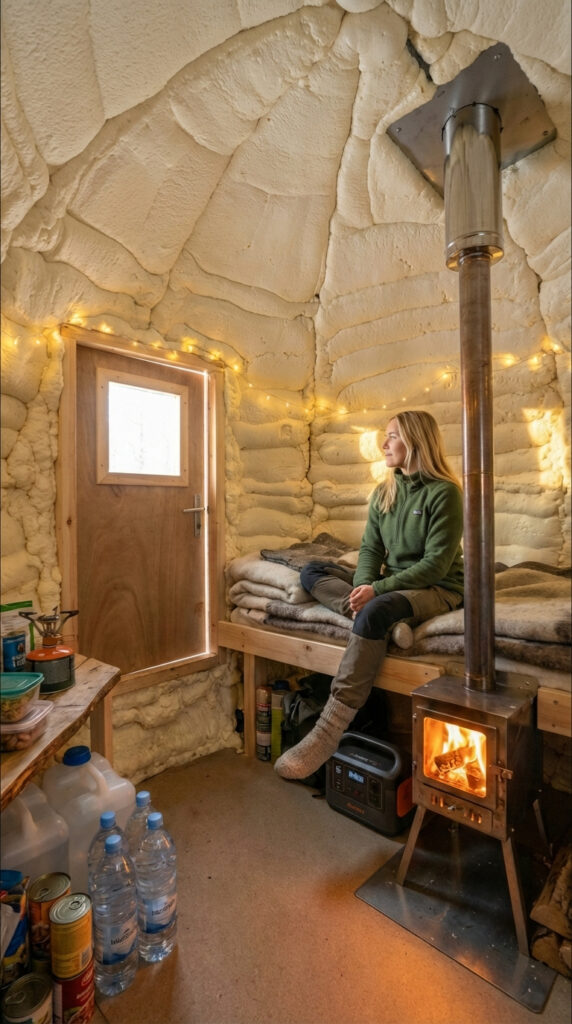
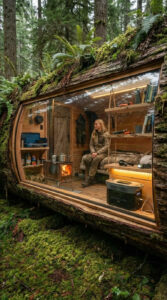
The living zone inside this insulated foam cabin is carefully designed to provide warmth, efficiency, and comfort within a compact protected space. The curved walls are fully sealed with high-density spray foam insulation, creating a strong thermal barrier that helps maintain stable indoor temperatures during harsh winter conditions. This layered insulation reduces heat loss while improving structural durability and energy efficiency.
At the center of the living area, a compact wood-burning stove provides reliable heating. Its safe installation with a reinforced floor plate and insulated chimney allows consistent heat distribution throughout the cabin, creating a warm and secure environment. The raised wooden sleeping platform offers both comfort and practical storage space underneath, helping maximize the available interior area while protecting bedding from floor-level cold.
Essential water containers and emergency food supplies are organized along the walls for quick access without overcrowding the space. A portable power station supports lighting and small electronics, while warm low-consumption LED lighting creates a calm and functional atmosphere. The circular layout allows every element of the living zone to work together, combining heat retention, smart storage, and survival functionality while maintaining a cozy and livable interior designed for remote forest environments.
Emergency Food Supply and Storage System
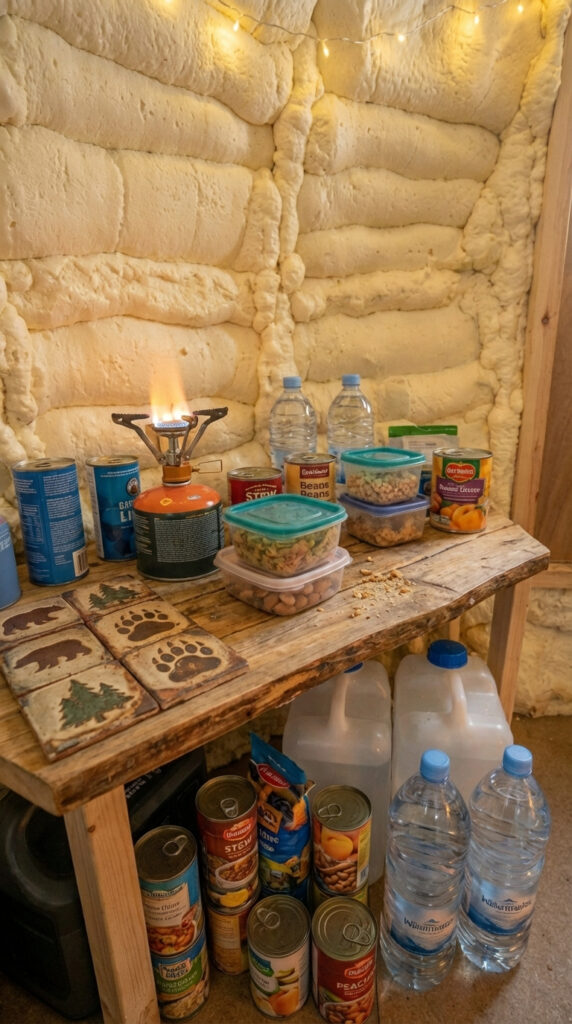
The food supply zone inside the cabin is organized to provide reliable long-term nutrition while maintaining efficient use of space. A combination of canned meals, preserved vegetables, legumes, and dry food containers ensures a balanced food reserve that can be safely stored for extended periods without refrigeration. These products are selected for durability, calorie density, and ease of preparation, making them suitable for remote living environments.
Water storage is positioned directly below the food preparation surface, allowing quick access while maintaining stability and weight distribution inside the structure. Large sealed water containers provide dependable hydration reserves and can also support cooking and hygiene needs when required.
The wooden preparation table serves as a multifunctional surface for food storage, meal preparation, and emergency cooking. A compact portable gas burner allows safe and efficient heating of meals while minimizing energy consumption. The layout ensures that essential supplies remain organized, protected from moisture, and easily accessible, supporting safe and sustainable living conditions inside the cabin.
This food storage system is designed to maximize shelf life, simplify daily use, and maintain readiness for extended stays in remote forest locations while keeping the interior clean, functional, and efficiently arranged.
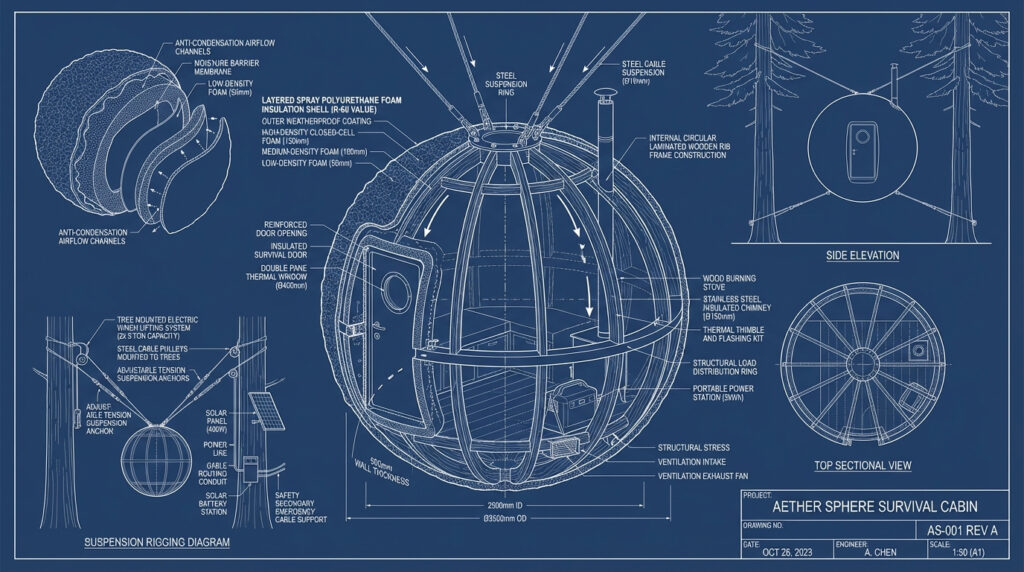
This engineering blueprint illustrates the structural concept and internal layout of the suspended foam sphere survival cabin — an off-grid micro shelter designed for extreme climate efficiency, structural durability, and autonomous living in remote forest environments.
The drawing presents a full cross-section of the spherical shelter, revealing a multilayer polyurethane foam insulation shell constructed over a reinforced circular laminated wooden rib frame. This layered insulation system provides exceptional thermal retention, moisture resistance, and acoustic dampening, making the structure suitable for year-round survival habitation in cold wilderness conditions.
At the core of the structure, a steel suspension hub distributes the load evenly across multiple high-tension cables connected to surrounding trees. This suspension design allows the cabin to remain elevated above snow accumulation, ground moisture, wildlife intrusion, and uneven terrain while maintaining structural balance through adjustable tension anchors and safety redundancy cables.
The internal living zone is compact yet fully functional, featuring a built-in sleeping platform, integrated survival storage compartments, and a portable off-grid power station. A wood-burning stove with an insulated stainless chimney system provides heating while maintaining safe ventilation through thermal sealing components and airflow regulation channels built into the foam shell.
The blueprint also highlights the shelter’s environmental support systems, including intake and exhaust ventilation pathways designed to prevent condensation buildup and maintain fresh air circulation. Moisture barrier membranes and anti-condensation airflow channels are layered within the insulation envelope to ensure long-term structural integrity and occupant comfort.
Externally, the diagram details the tree-mounted lifting and stabilization system, which includes an electric winch, pulley routing assemblies, solar charging panel integration, and an independent battery station that powers the lifting mechanism and emergency support systems. This lifting technology allows the shelter to be lowered for maintenance or access and raised for maximum security and environmental protection.
Dimension markings within the blueprint confirm the compact survival design, optimized for efficient heat retention and structural strength while minimizing material weight. The spherical geometry distributes external loads evenly, significantly improving wind resistance and snow load performance compared to traditional micro-cabins.
Overall, the blueprint demonstrates a hybrid survival architecture concept that merges modern insulation technology, mechanical suspension engineering, and off-grid living infrastructure into a single elevated micro-shelter system built for resilience, efficiency, and long-term wilderness habitation.
architectural visualization. It is not a real construction project.

Leave a Reply