
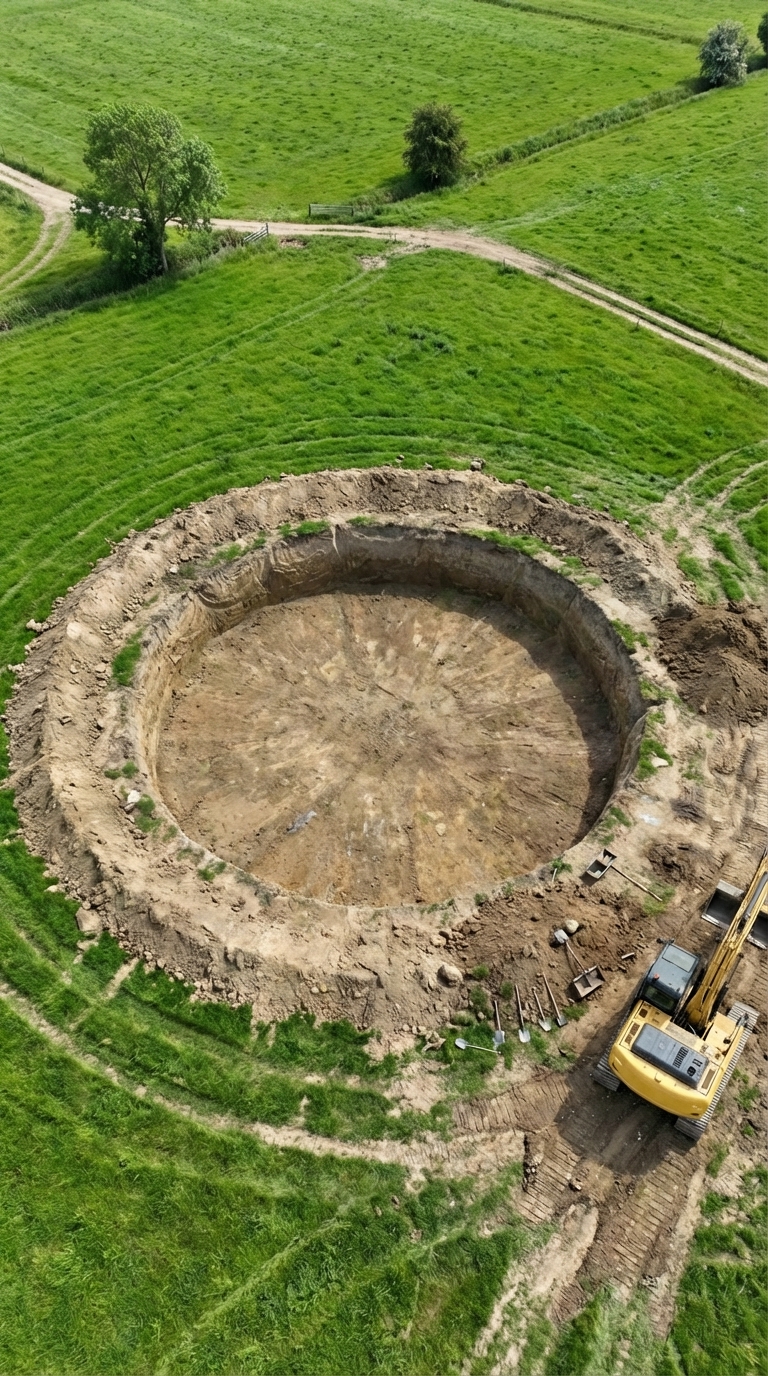
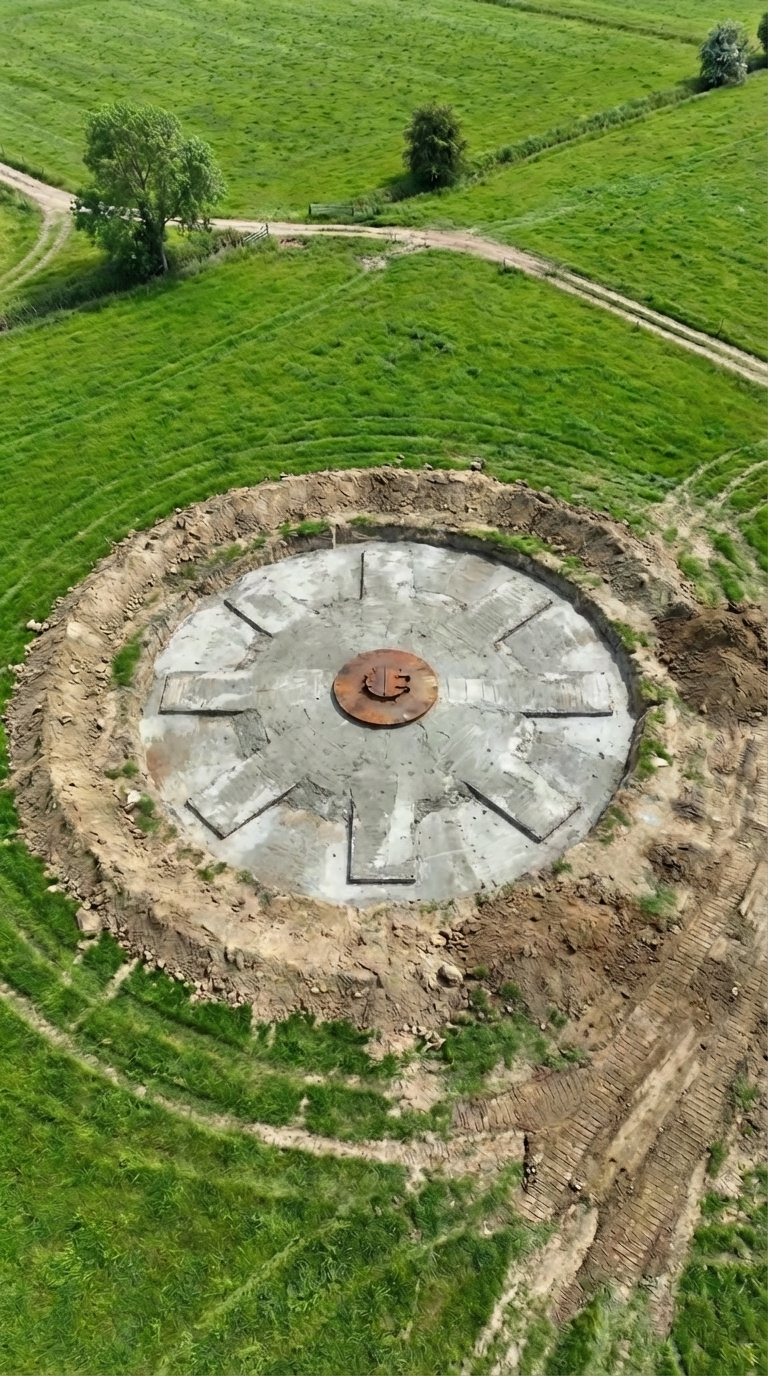
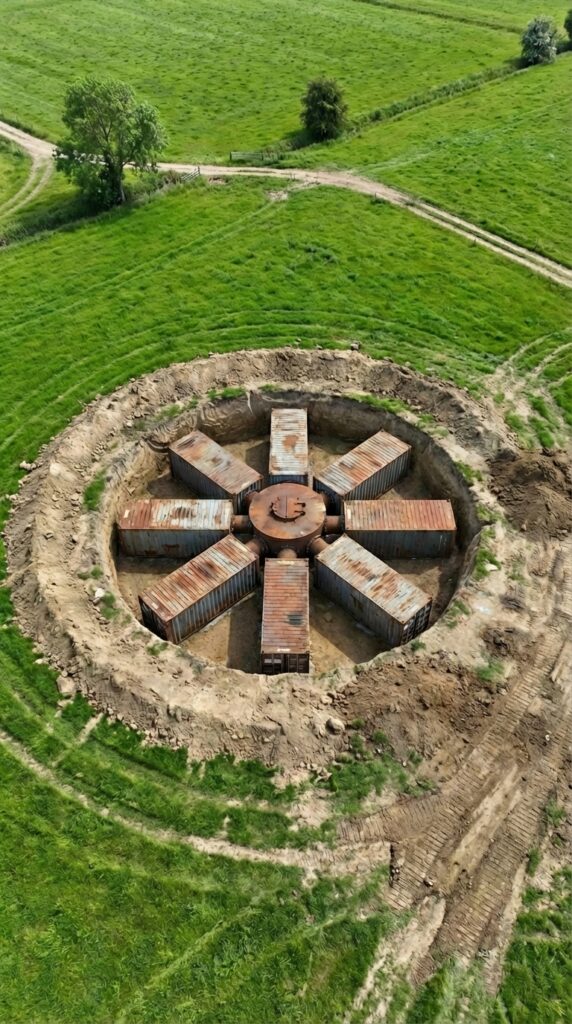
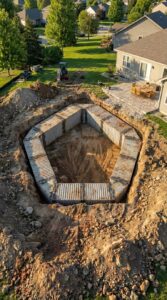
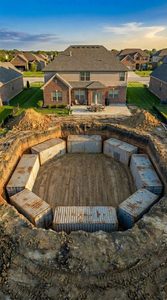
The construction of this underground bunker begins with precise land excavation, forming a perfectly circular pit designed to maximize structural stability and efficient space distribution. This initial stage is critical, as the geometry of the foundation directly impacts the durability and load resistance of the entire system. Heavy machinery is used to remove soil layer by layer, creating a deep, uniform base that will support the bunker’s reinforced structure.
Once the excavation is complete, the foundation is prepared and leveled to ensure proper weight distribution. A reinforced concrete slab is then poured, acting as the central base of the entire underground complex. This slab is not only a floor but a structural anchor that stabilizes all future elements, protecting the bunker from ground movement and moisture intrusion.
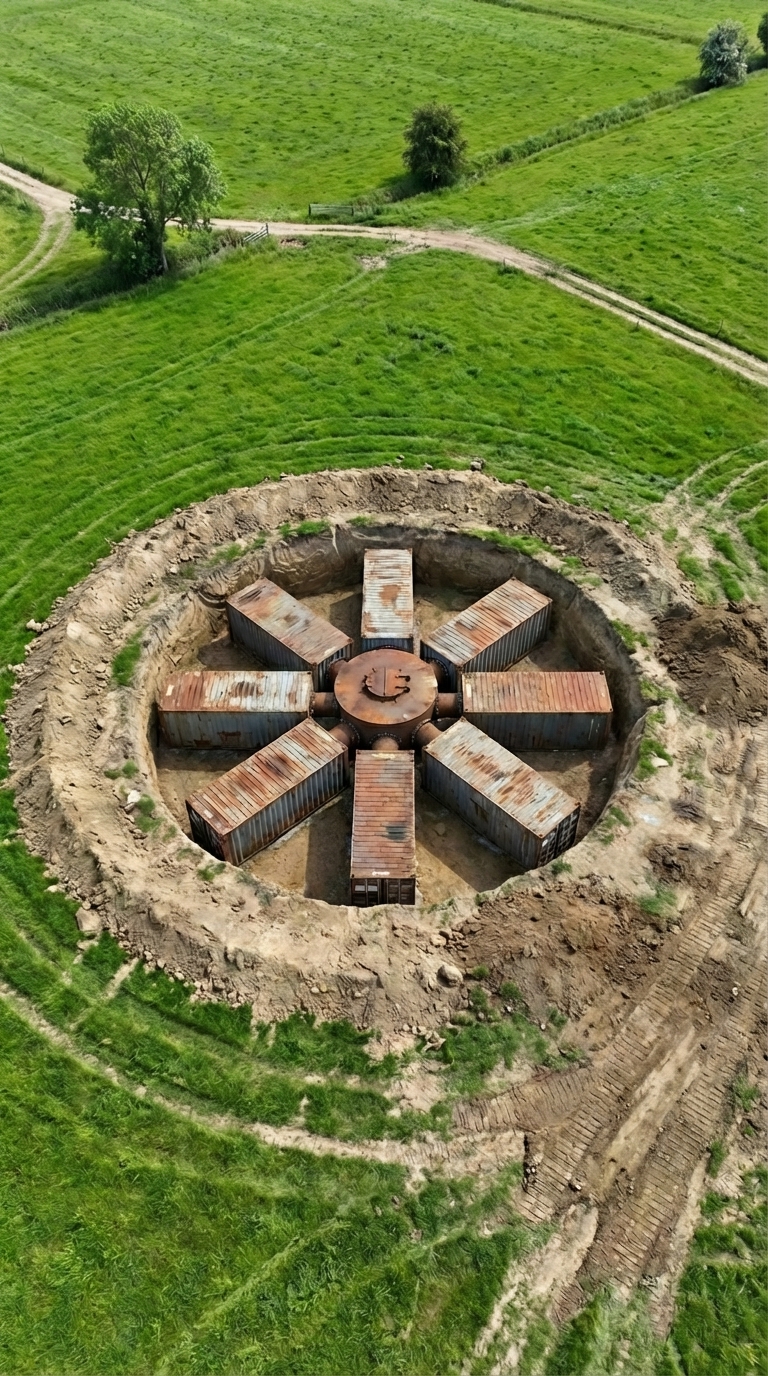
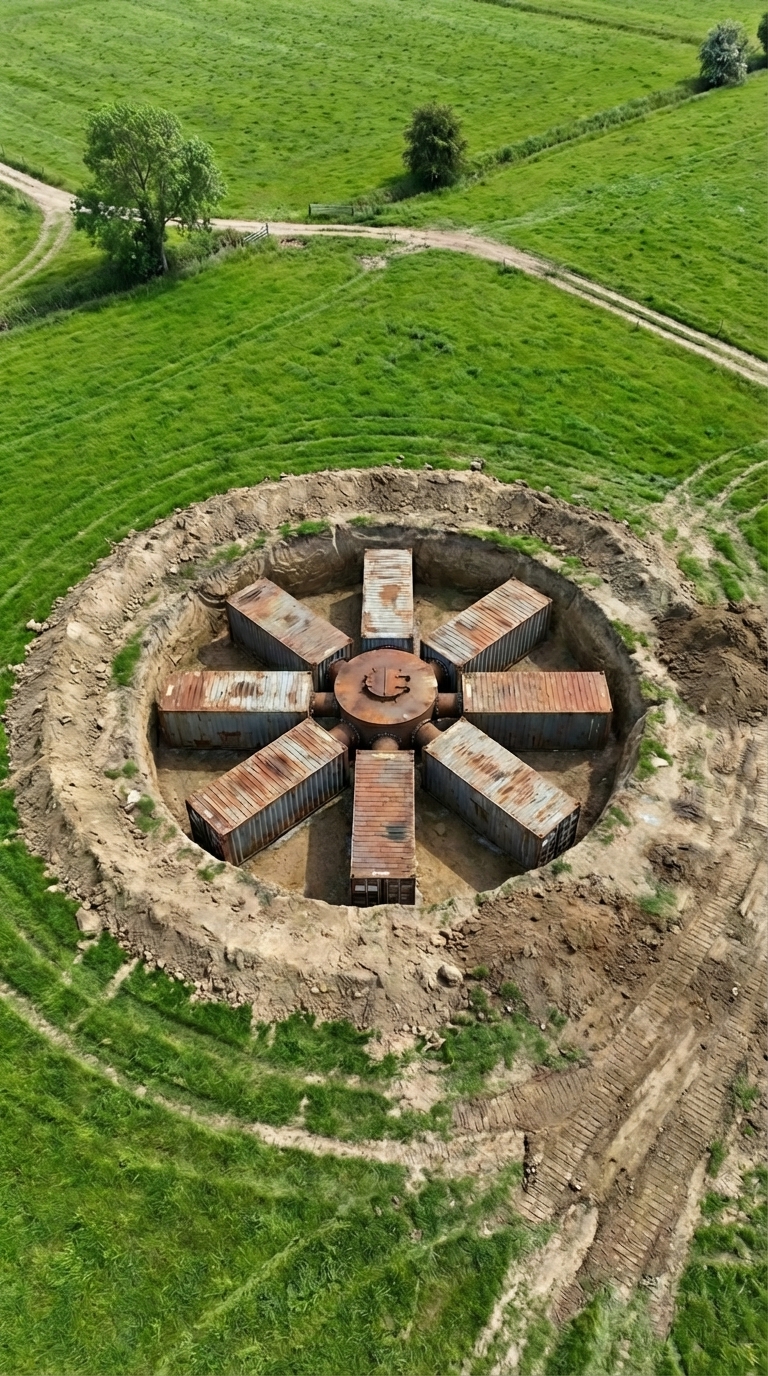
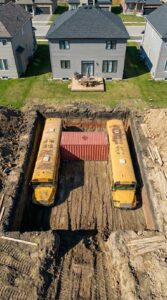
The next stage introduces the core design concept — a radial layout built around a central hub. Shipping containers are strategically placed in a circular formation, each extending outward like spokes. This configuration allows for clear zoning of functional areas, including storage, living space, and technical rooms, while maintaining easy access through the central connection point.
A metal central node connects all containers, forming the heart of the bunker. This hub will later serve as a passage system, ventilation junction, and control point for internal operations. The use of containers provides a strong modular framework, combining industrial durability with construction efficiency.
At this phase, the bunker already demonstrates its key advantages: structural strength, smart spatial organization, and scalability. Each element is positioned with long-term independence in mind, ensuring that future systems — from air filtration to power supply — can be seamlessly integrated into the design.

As construction progresses, the focus shifts from structure to functionality. The installed containers are reinforced, sealed, and prepared for insulation to withstand underground conditions such as pressure, humidity, and temperature fluctuations. Waterproofing layers and protective coatings are applied to prevent corrosion and extend the lifespan of the entire system.
The central hub becomes a critical engineering zone, where ventilation pipes, electrical lines, and access points are integrated. This allows all essential systems to be distributed efficiently across each section of the bunker. The radial design ensures that no space is wasted, while also providing redundancy — if one section is compromised, others remain operational.
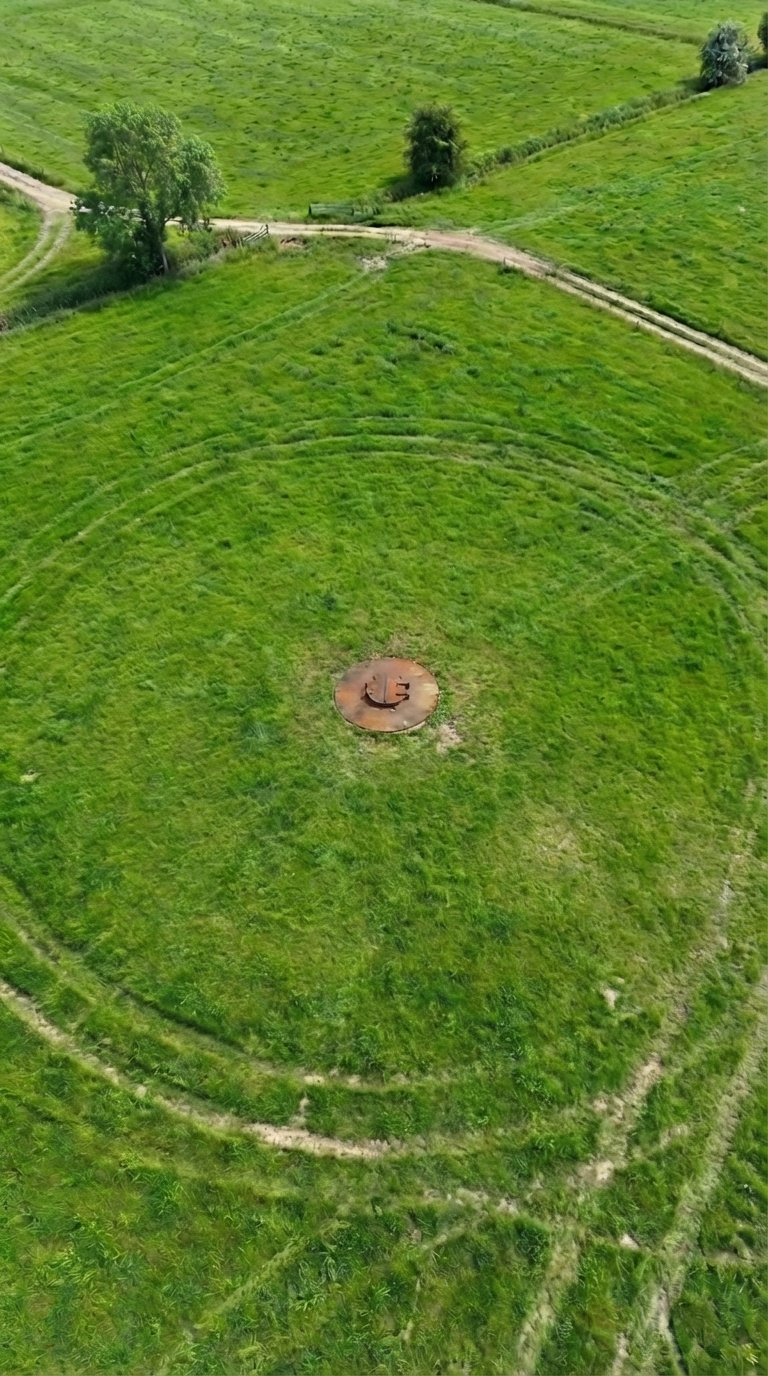
Additional structural support is added around the perimeter, reinforcing the walls of the excavation and preparing the site for backfilling. Once all major components are installed, the bunker will be gradually covered, restoring the natural landscape above and making the entire structure invisible from the outside.
This project represents a balance between engineering precision and practical survival design. It is not simply an underground shelter, but a scalable living system capable of supporting long-term habitation in a secure and controlled environment.
Hidden Bunker Entrance with Modular Home and Self-Sufficient Courtyard
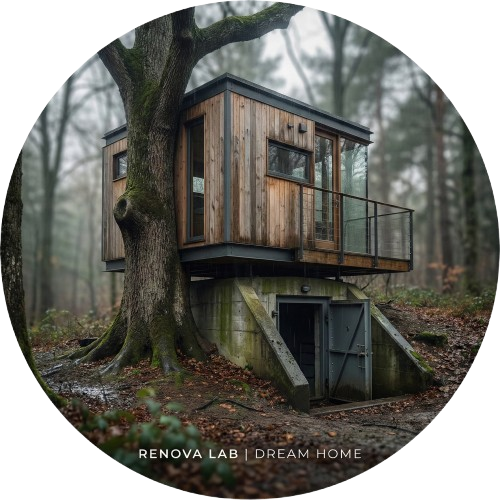
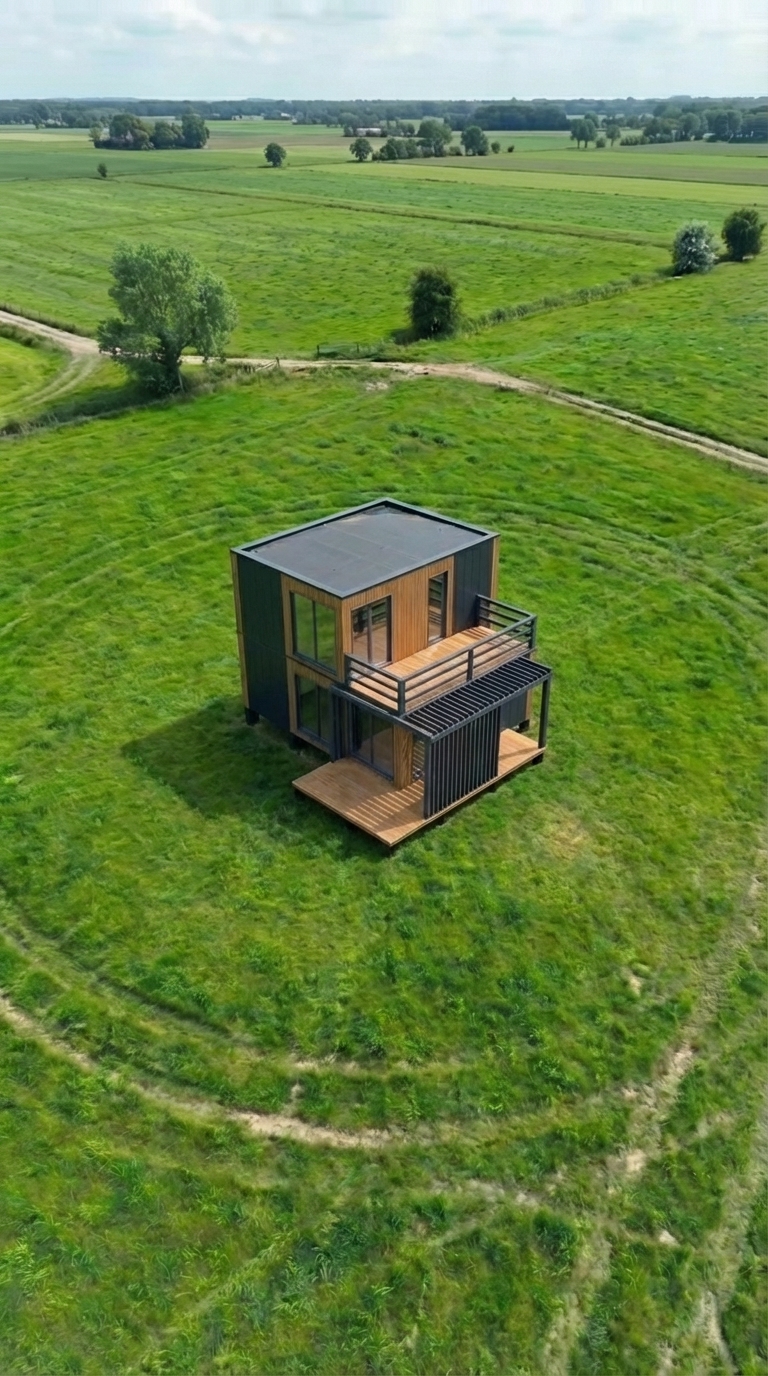
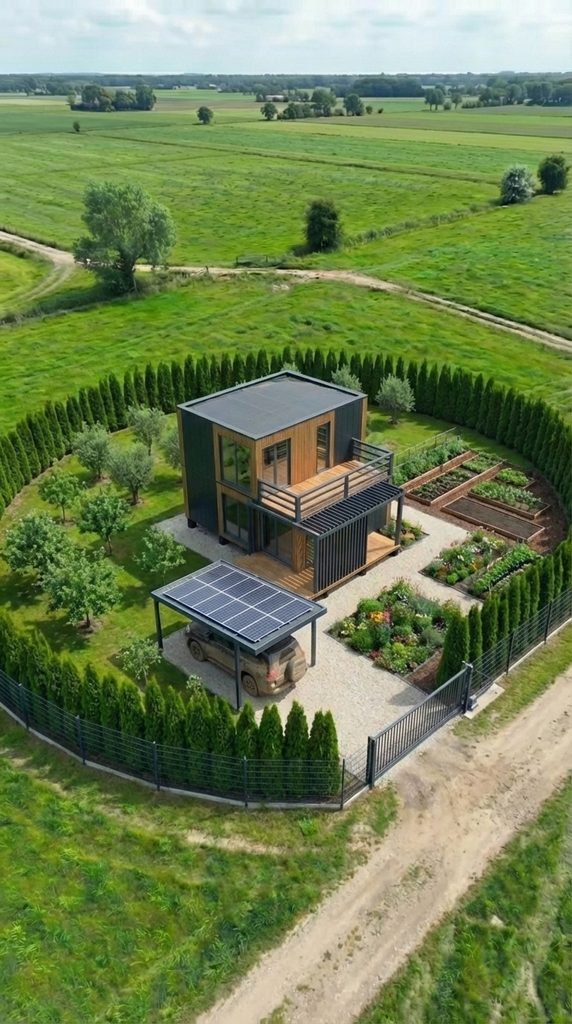
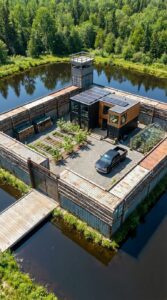
The final stage of this underground project transforms the hidden bunker into a fully integrated surface-level living space. A compact modular home is installed directly above the reinforced hatch, precisely aligned to conceal the entrance. This solution not only protects access to the bunker but also makes it completely unnoticeable within a natural residential environment.
The house features a modern, minimalist design built for durability and comfort. Slightly elevated above ground level, it improves protection from moisture while allowing space for hidden utilities and technical systems. Large windows provide natural light, creating an open and livable atmosphere that contrasts with the secure underground structure below.
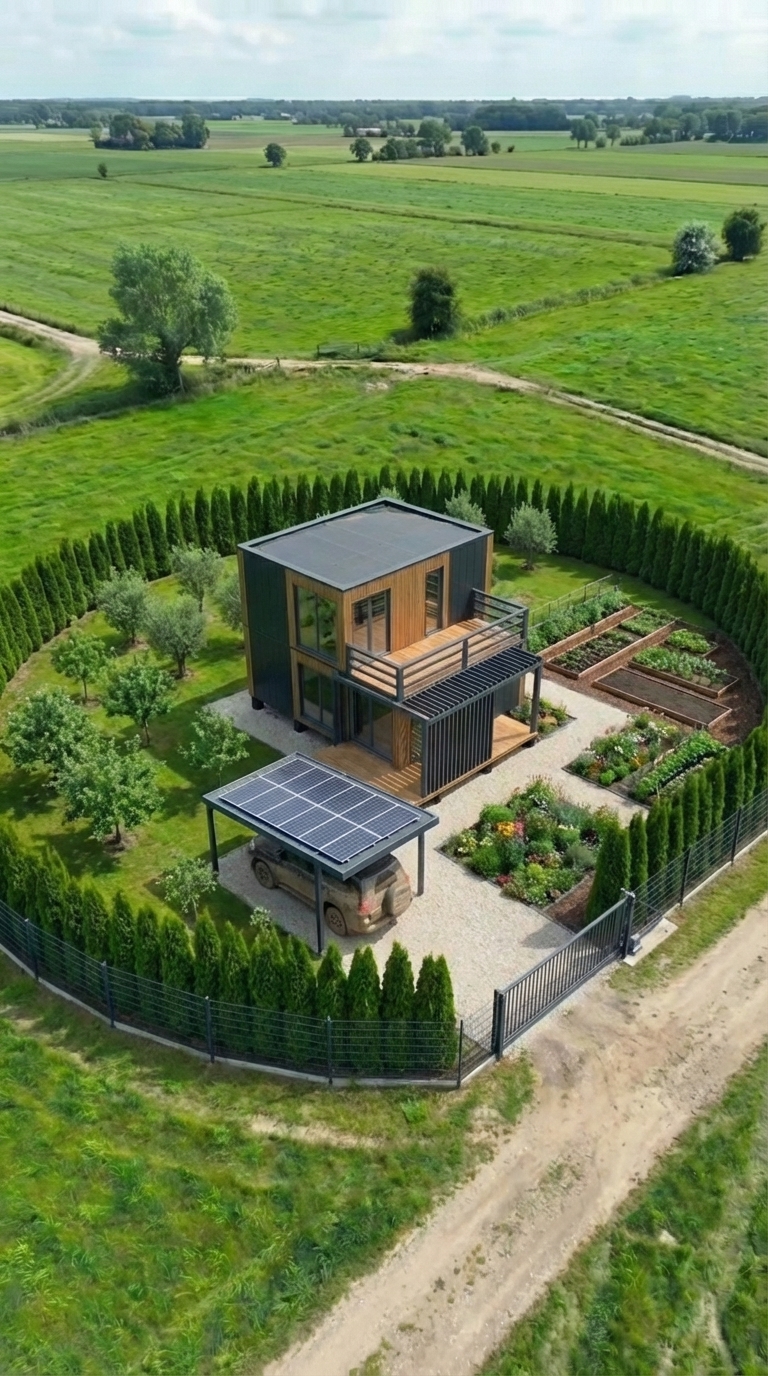
The surrounding courtyard is carefully planned to support self-sufficiency and everyday living. A fenced perimeter ensures privacy and security, while greenery and landscaping help the property blend seamlessly into its natural surroundings. Raised garden beds allow for growing fresh food, reducing dependence on external supplies and supporting long-term independence.
A dedicated area with solar panels provides a reliable energy source for both the house and essential bunker systems. This setup ensures stable power in remote conditions and adds another layer of resilience to the entire system. Every element of the layout is designed with purpose, from pathways to functional zones.
What makes this project truly effective is its dual nature. On the surface, it appears to be a peaceful countryside home. Beneath it lies a reinforced underground bunker designed for long-term survival. Together, they form a complete living system where security, independence, and comfort are seamlessly combined.
Underground Bunker Interior: Hidden Access and Fully Equipped Living System
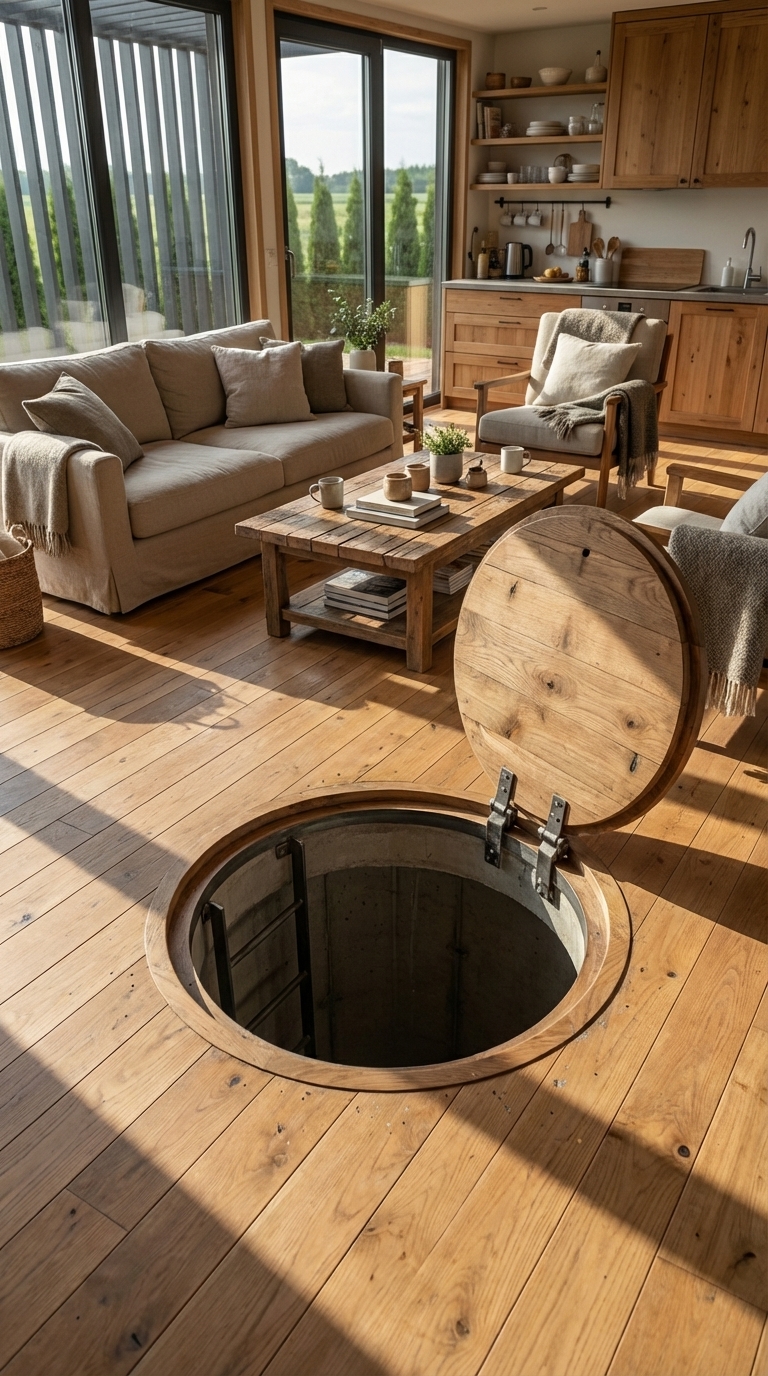
The entrance to the underground bunker is seamlessly integrated into the interior of the house, hidden beneath a reinforced floor hatch. At first glance, the space appears to be a warm and modern living room with natural wood finishes, soft furniture, and large windows that bring in daylight. However, beneath this calm and comfortable environment lies a secure access point leading directly into the underground system. The hatch is built with a solid sealing mechanism, ensuring both safety and insulation, while a fixed ladder provides quick and reliable descent into the bunker.
Once inside, the structure reveals a fully functional underground living space designed for long-term use. Each container module is carefully organized to serve a specific purpose, creating a balanced system where every essential need is covered without wasting space.
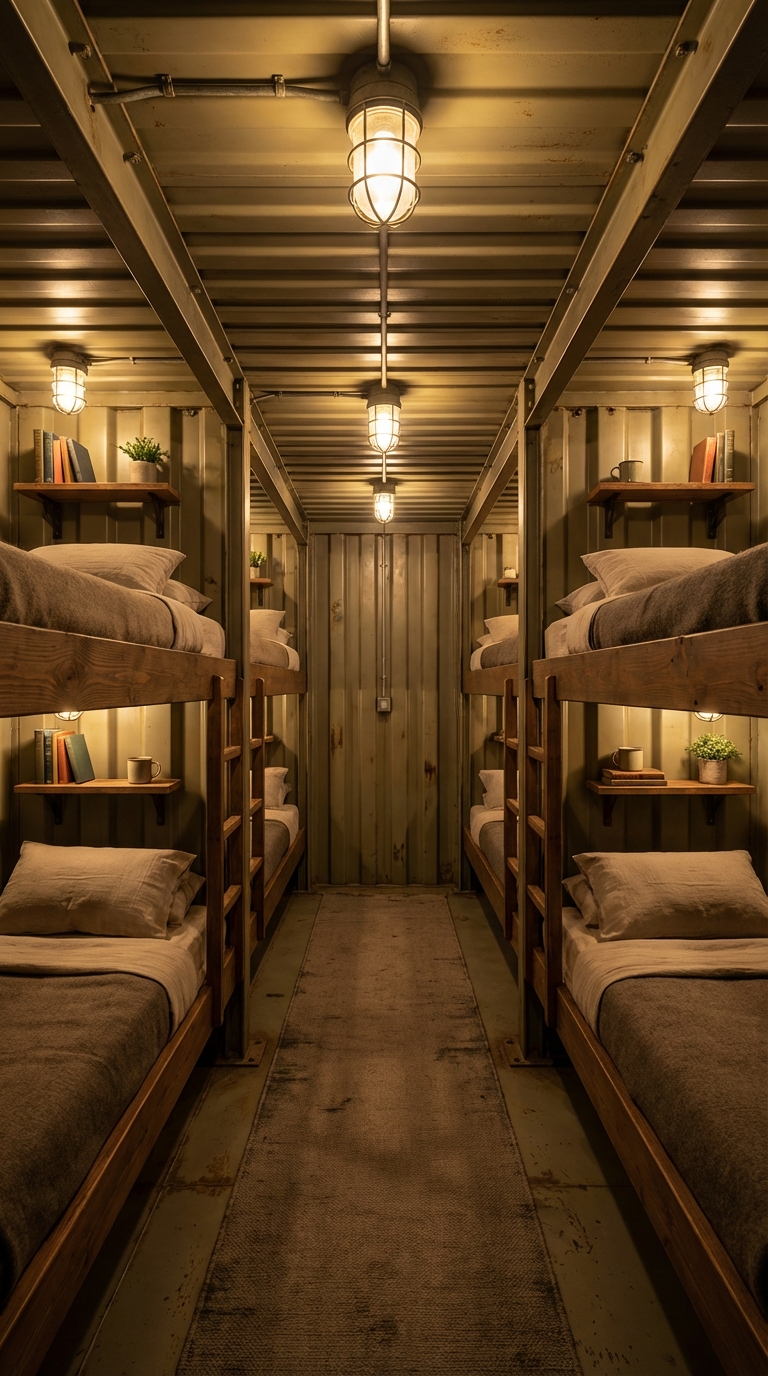
The sleeping area is designed with efficiency and comfort in mind. Bunk beds are installed along both sides, maximizing capacity while maintaining enough room for movement. Warm lighting, wooden elements, and small personal shelves create a more livable atmosphere, reducing the psychological pressure of staying underground for extended periods.
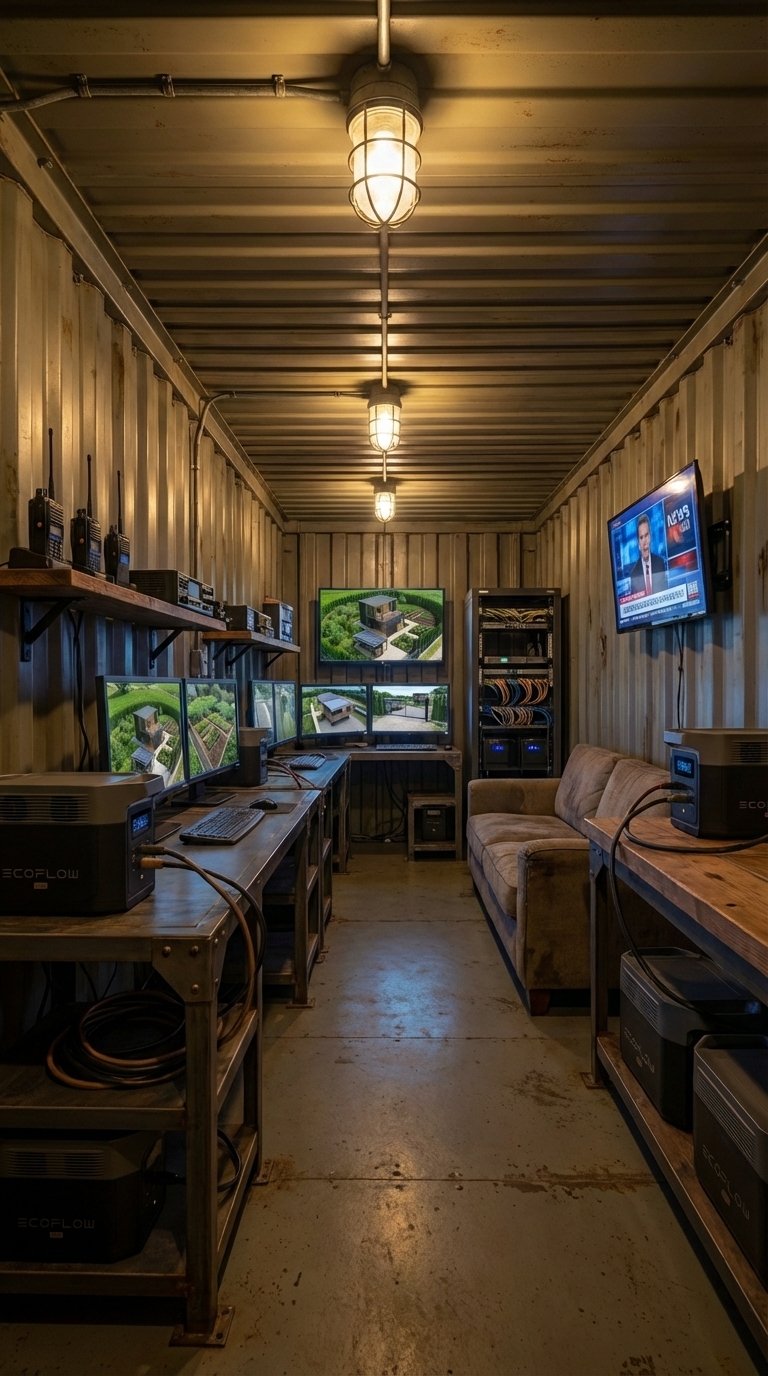
The technical control room acts as the operational center of the bunker. Multiple monitors display real-time surveillance from external cameras, allowing full control over the surrounding area. Power stations, communication devices, and system controls are all concentrated here, ensuring that energy supply, security, and information are always under supervision.
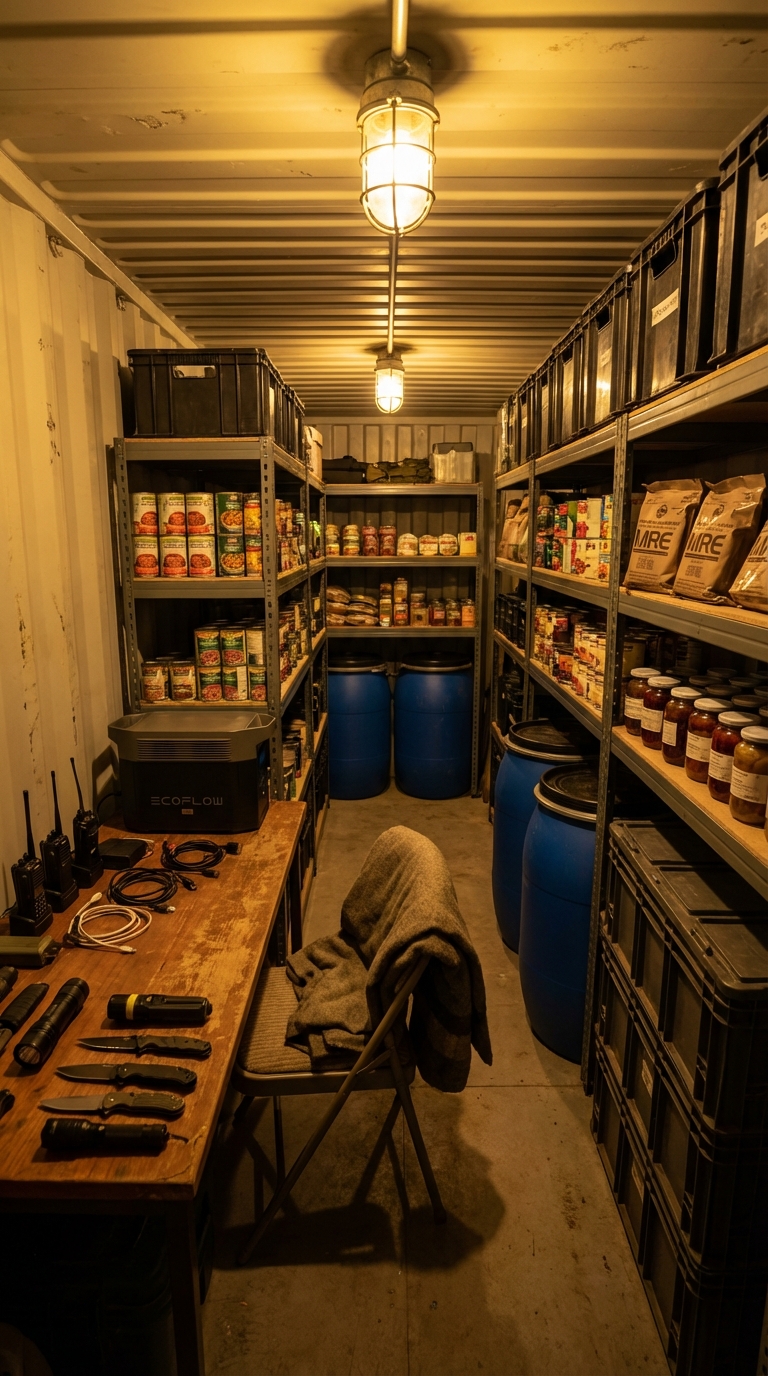
A dedicated storage room holds long-term food supplies, water reserves, and essential equipment. Shelving systems are used to organize canned goods, dry food, and emergency tools, while large containers store water for extended independence. Everything is arranged for quick access and efficient inventory management.
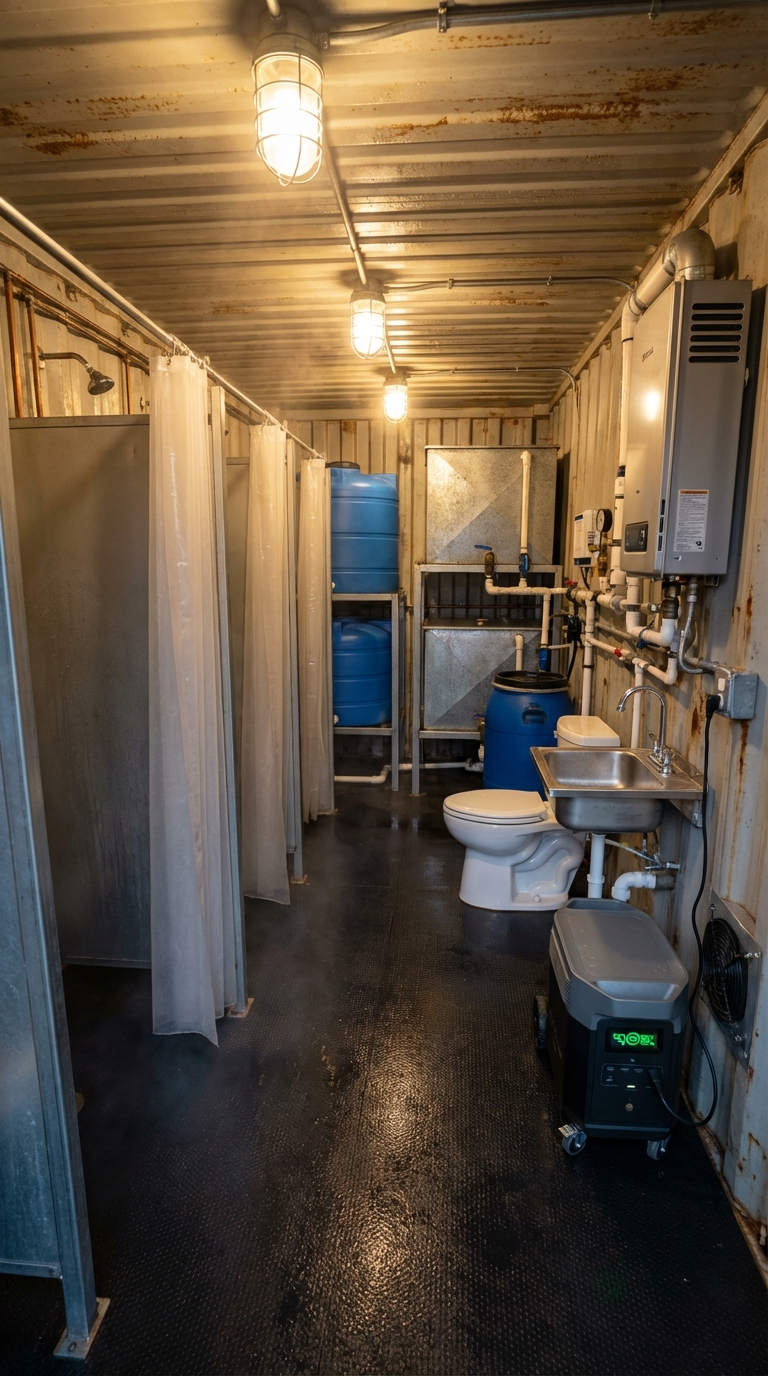
The sanitation area is built to support daily hygiene needs in a closed environment. It includes a shower, toilet, water tanks, and a compact plumbing system connected to filtration and heating units. Despite being located inside a container, the space is fully functional and designed for regular use without compromising cleanliness.
Together, these zones form a complete underground ecosystem. The combination of smart engineering and a practical layout transforms the bunker from a simple shelter into a fully self-contained living space built for safety, resilience, and long-term comfort.
Estimated Cost of a Full Underground Bunker System with Modular Home
Building a complete underground bunker system with a surface-level modular home is a complex project that combines excavation, structural engineering, ?????????? systems, and interior setup. The total cost depends on location, materials, and system quality, but a realistic estimate can be broken down into key stages.
The first major expense is excavation and site preparation. Creating a deep circular pit with proper leveling and drainage typically costs between $8,000 and $20,000, depending on soil conditions and equipment required. Reinforced concrete work for the foundation and structural base adds another $10,000 to $25,000.
Shipping containers form the core of the bunker. Purchasing and delivering 6–8 used containers can cost around $12,000 to $25,000. However, modification, reinforcement, waterproofing, and installation significantly increase this cost, bringing the total container structure to approximately $25,000–$60,000.
Engineering systems are one of the most important investments. Ventilation, air filtration, plumbing, electrical wiring, and battery storage systems typically range from $15,000 to $40,000. Solar panels and backup power solutions can add an additional $8,000 to $20,000 depending on capacity.
Interior finishing, including sleeping areas, storage, control room equipment, and sanitation setup, usually requires $10,000 to $30,000. This stage determines the comfort and usability of the bunker for long-term living.
The modular house built above the bunker entrance can cost between $20,000 and $60,000 depending on design, materials, and size. Landscaping, fencing, and courtyard development may add another $5,000 to $15,000.
In total, a fully functional underground bunker system with a concealed entrance and livable surface home typically falls within the range of $90,000 to $240,000. Lower budgets are possible with simpler systems, while high-end builds with advanced technology can exceed this range.
This type of project is not just an expense, but a long-term investment in security, independence, and resilience, combining hidden protection with everyday living comfort.
This is an architectural concept visualization and not a real construction project.

Leave a Reply to AnthonyCancel reply