Backyard Bunker in the USA: How Two Retired Armored Trucks Became a Hidden Underground Shelter
In a quiet rural area of the United States, a homeowner came up with an unusual idea to increase safety and self-reliance. Instead of building a traditional storm shelter, he decided to repurpose two decommissioned armored cash-in-transit trucks and turn them into a fully functional underground bunker right beneath his backyard.
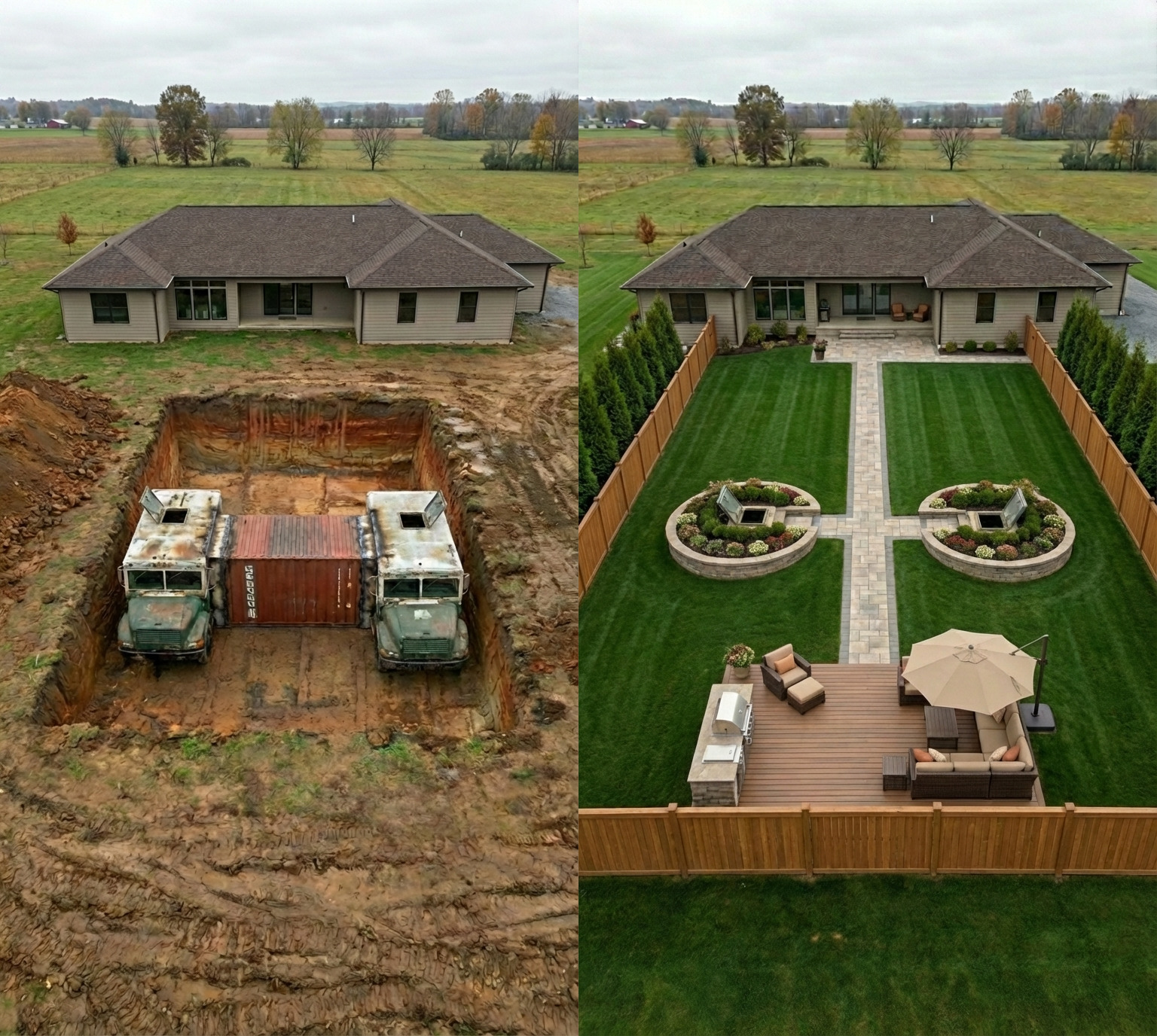
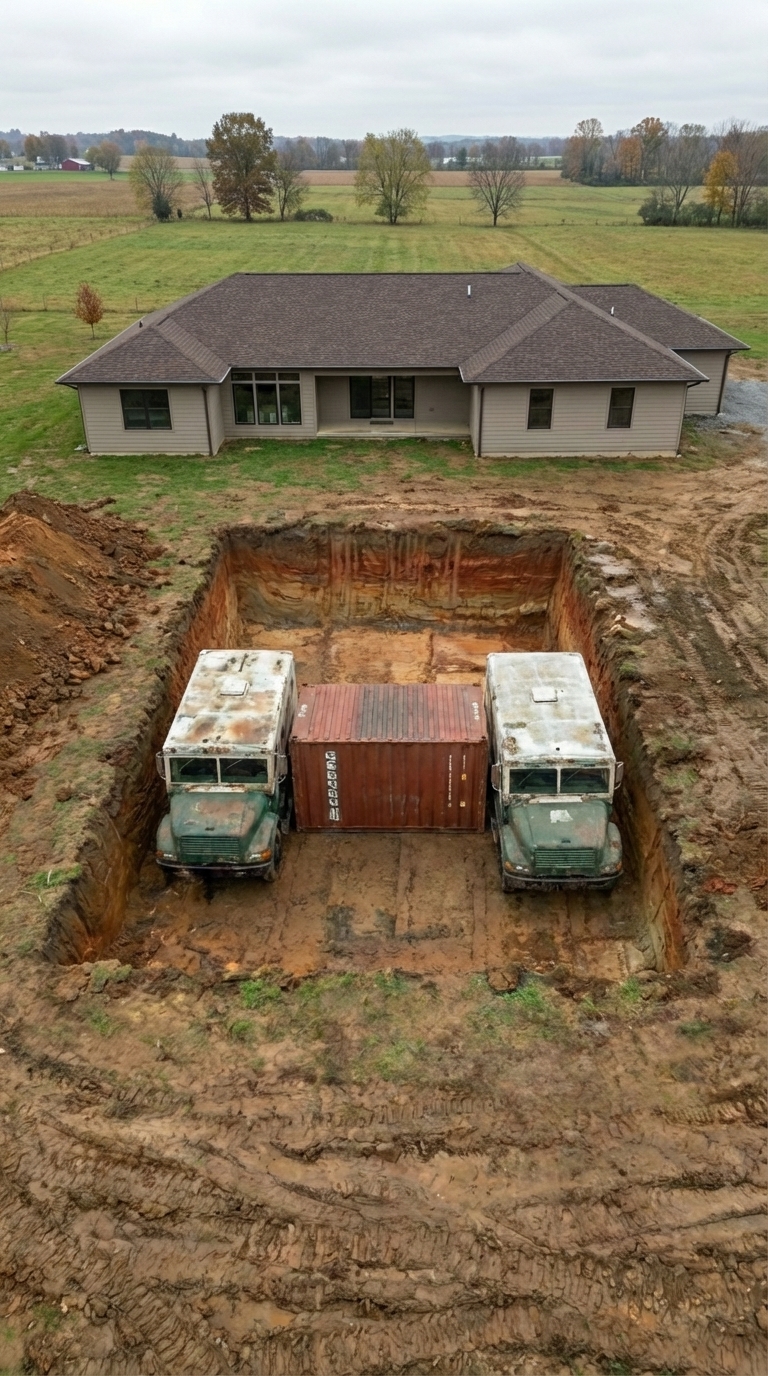
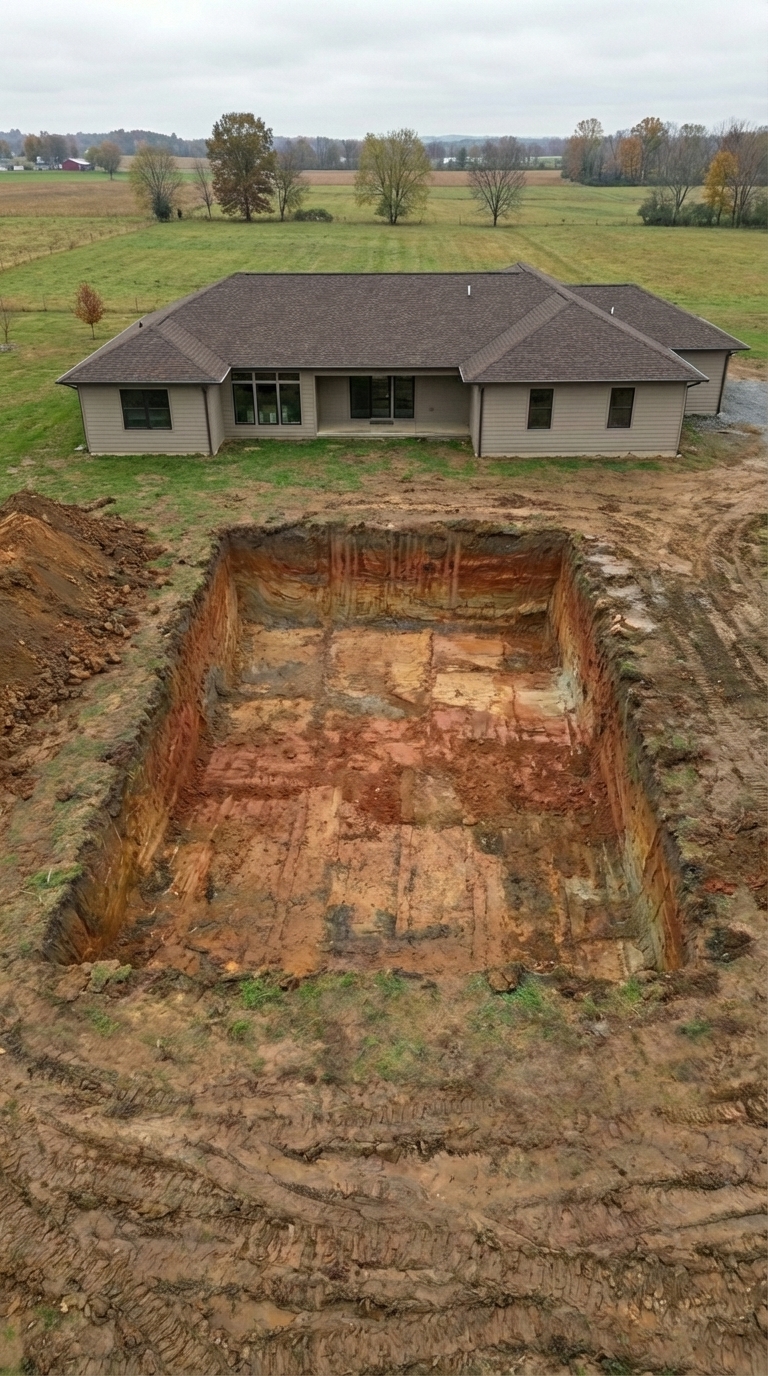
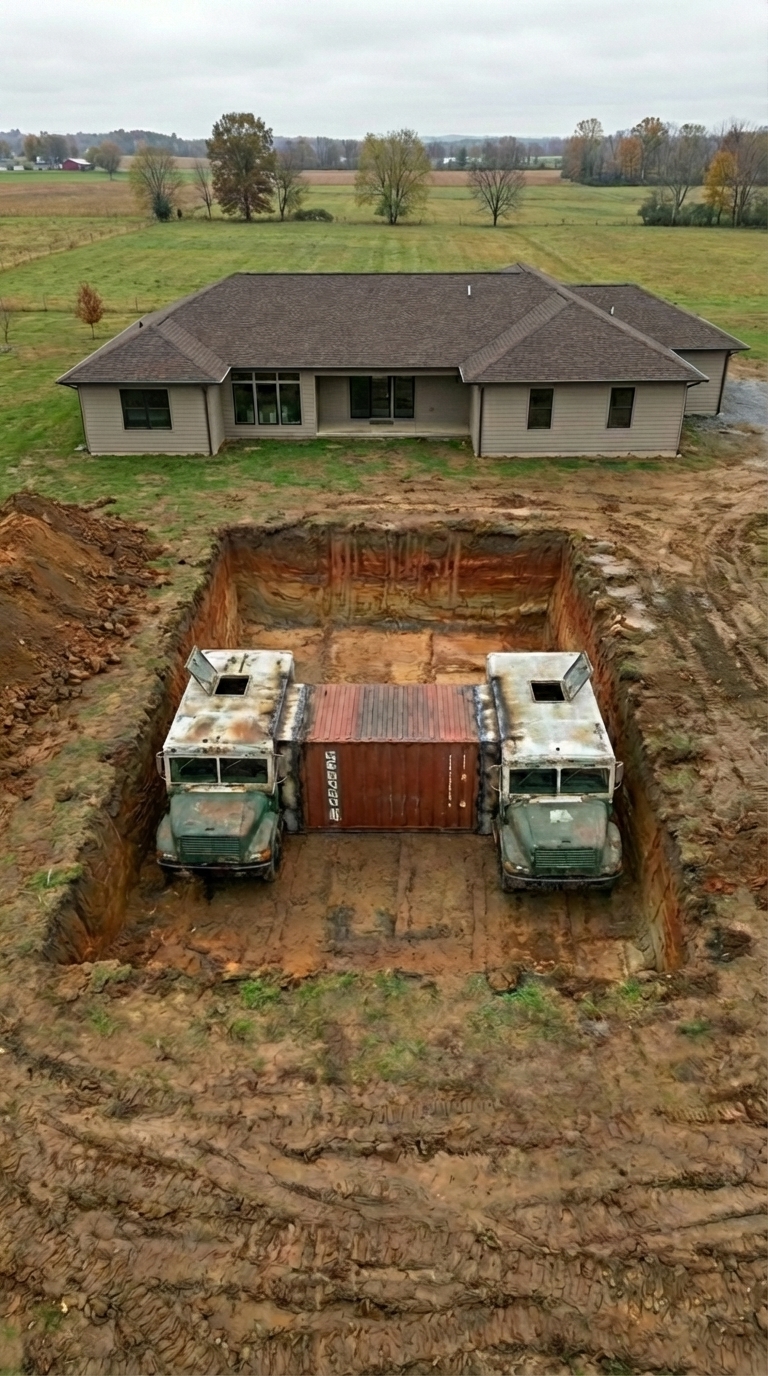
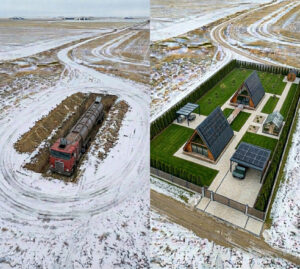
The project started with excavation. A deep rectangular pit was carefully dug behind the house, with reinforced walls to prevent soil collapse. Once the foundation was prepared, the two armored trucks were lowered into the pit side by side, leaving a narrow gap between them. That space was later sealed using a reinforced shipping container, which acted as a central corridor connecting both vehicles into one continuous structure.
Each armored truck brought its own advantages. Built to withstand high-impact threats, the steel bodies provided a naturally durable shell for the bunker. The interiors were stripped down and redesigned to serve different functions: one side became a sleeping and rest area, while the other was converted into storage and a compact utility space. The connecting container was modified into an access hallway with additional reinforcement and insulation.
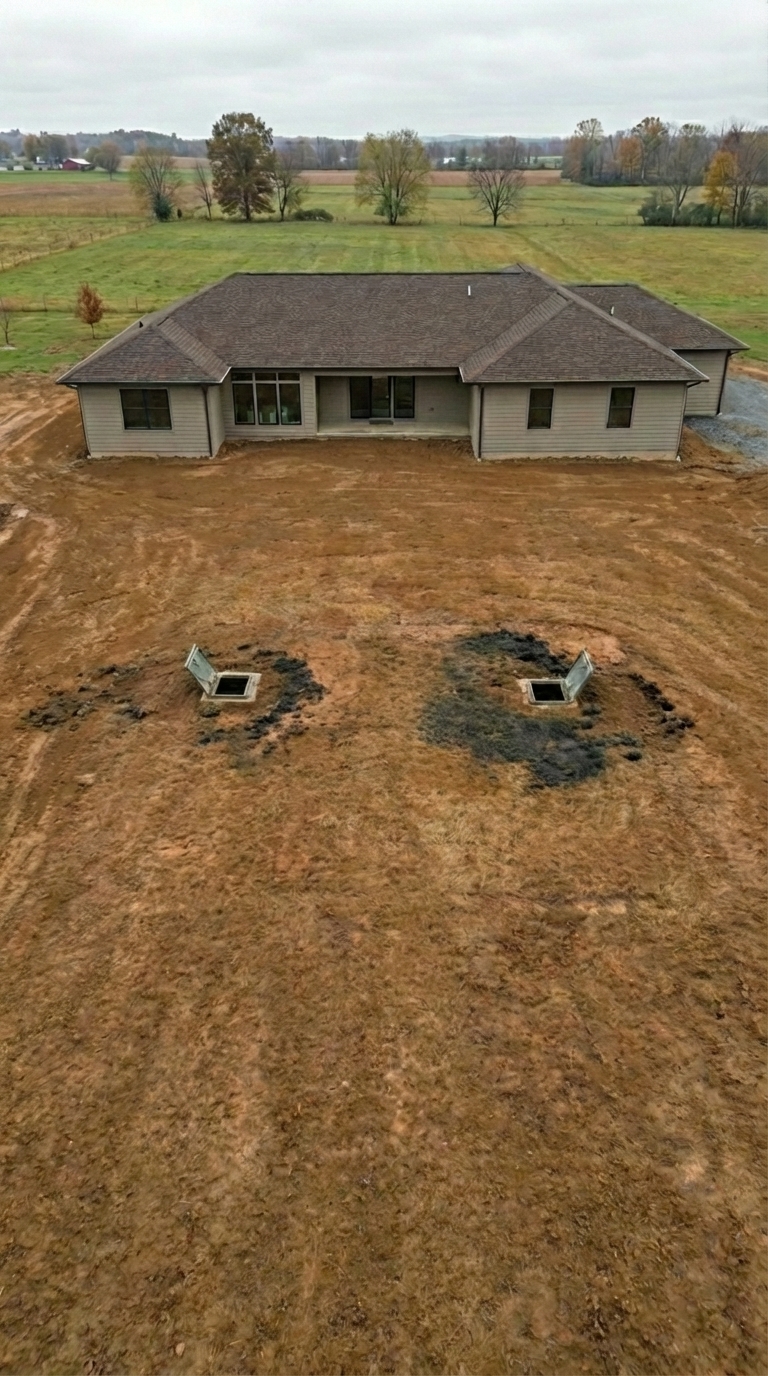
Ventilation and moisture control were critical. Air intake and exhaust pipes were installed vertically, hidden at ground level to remain discreet. Waterproof coatings and drainage layers were added around the entire structure to protect it from groundwater and long-term corrosion. Electrical wiring was routed from the main house, with backup battery systems installed for emergencies.
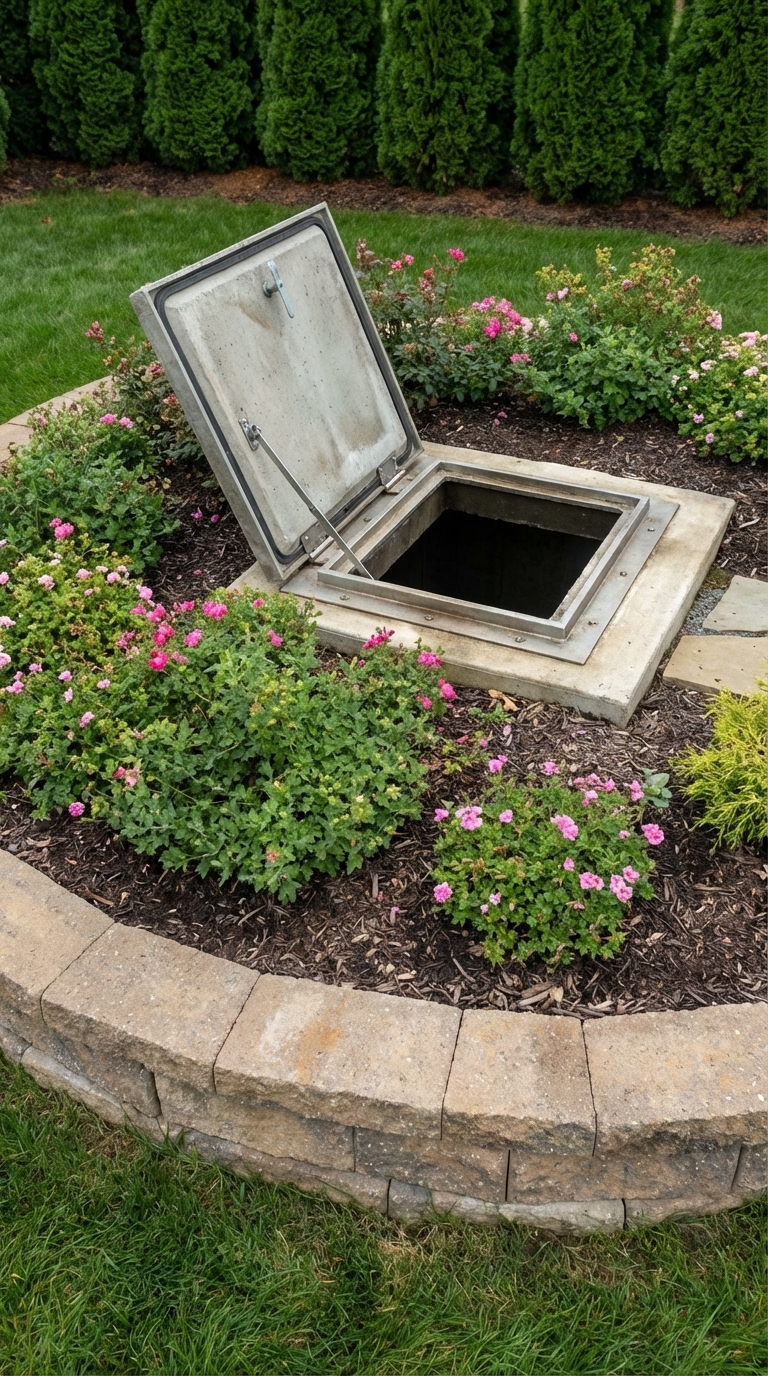
After all structural work was completed, the bunker was covered with layers of soil and compacted to restore the natural look of the yard. From the surface, nothing unusual could be seen—just a normal backyard hiding a reinforced shelter below.
This project highlights how unconventional materials can be transformed into practical solutions. By combining engineering, creativity, and reuse, the owner created a discreet, durable, and highly unique underground bunker designed for preparedness and peace of mind.
To make the bunker more livable for extended periods, the owner focused on comfort and efficiency. Compact insulation panels were installed along the interior walls to regulate temperature year-round, keeping the space cool in summer and warm in winter. LED lighting systems with low power consumption were added throughout, along with a small control panel to monitor electricity, airflow, and battery levels.
Water supply was another key element. A reserve water tank was integrated into the system, paired with basic filtration to ensure safe use if needed. For sanitation, a compact dry toilet system was installed, designed to function without complex plumbing. Every detail was planned to minimize dependence on external resources.
Security was also considered. The original armored doors of the trucks were preserved and reinforced, creating multiple secure entry points. Access hatches were carefully integrated into the landscape, making them almost invisible from the outside. In case of emergency, the bunker could be sealed from the inside, providing a high level of protection.
To avoid a confined feeling, the interior design used light colors and simple layouts. Foldable furniture and multi-purpose storage solutions helped maximize the limited space. Despite being underground, the bunker feels organized and surprisingly practical for short- to mid-term stays.
What makes this project stand out is its simplicity and ingenuity. Instead of expensive custom construction, the owner reused existing armored vehicles, reducing costs while maintaining strength and durability. It is a clear example of how creative thinking can turn ordinary materials into something highly functional.
In the end, this hidden bunker is more than just a shelter—it is a statement about preparedness, independence, and smart use of resources in an unpredictable world.
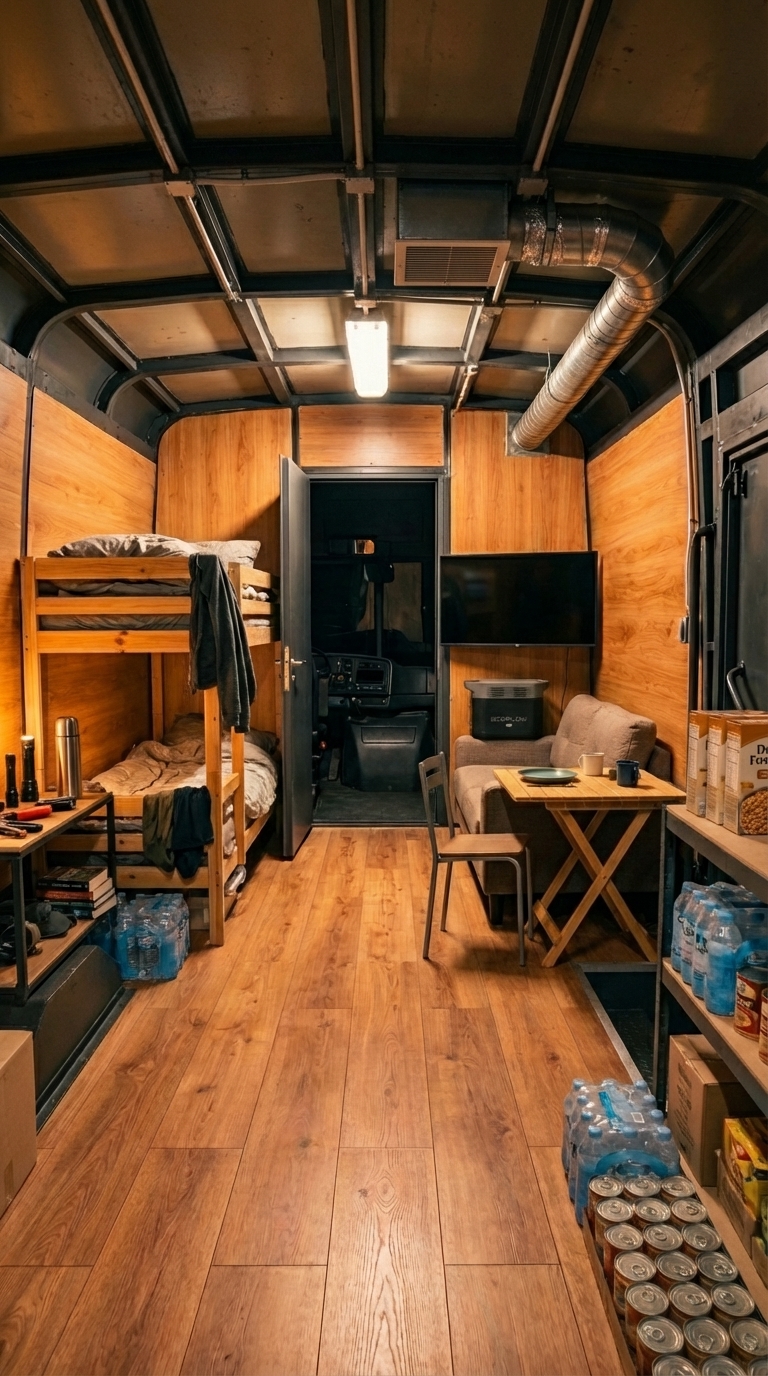
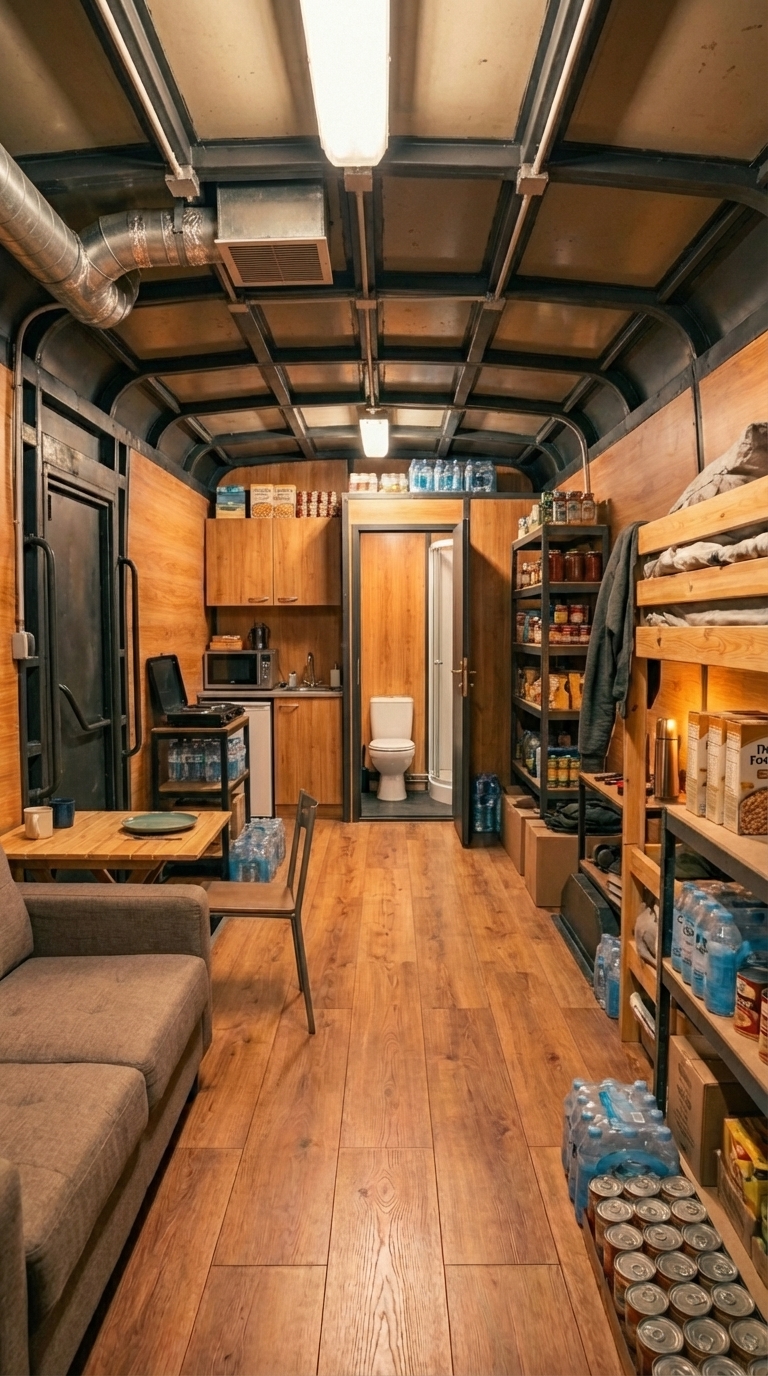
Inside, each armored truck was designed with a specific purpose to make the bunker fully functional and surprisingly comfortable.
One vehicle was transformed into a living and rest area. It includes bunk beds, storage shelves packed with supplies, and a compact lounge space. A unique feature is a built-in driving simulator setup, allowing the owner to relax and play realistic driving games, creating a sense of normal life even while underground. Food supplies and bottled water are neatly organized along the walls, ensuring long-term storage without clutter.
The second armored truck serves as the utility and survival unit. It features a small but efficient kitchen area with basic cooking equipment, a sink, and storage for dry food. In the back, a compact bathroom was installed, including a toilet and a simple shower system designed to work with minimal water usage. Additional shelves hold emergency supplies, tools, and hygiene essentials.
Together, the two units create a balanced underground space — one focused on comfort and ?????, the other on functionality and survival — all connected through a reinforced central corridor.
How Much Does a Backyard Bunker from Armored Trucks Cost in the USA?
Building a hidden underground bunker using decommissioned armored trucks may look like a creative DIY project, but it still requires a realistic budget. In the United States, the total cost depends on three main factors: the price of used armored vehicles, excavation and construction, and interior setup.
The biggest variable is the armored trucks themselves. On the second-hand market, old cash-in-transit trucks can be surprisingly affordable. Basic used armored trucks can be found starting from around $13,000–$30,000 for older models in working condition . More modern or upgraded armored vehicles typically range from $70,000 up to $180,000 depending on condition and protection level . For comparison, newly built armored trucks can easily cost $100,000–$200,000 or more .
For a project like this, using two older decommissioned trucks is the most cost-effective approach. In practice, a realistic budget would be around $25,000–$60,000 for both vehicles combined.
Excavation and structural work is the next major expense. Digging a large reinforced pit, stabilizing the soil, installing drainage, and placing the vehicles with a crane can cost anywhere from $10,000 to $40,000 depending on soil conditions and location in the U.S. Additional reinforcement, waterproofing, and sealing the structure may add another $5,000–$15,000.
The interior build-out can vary widely. A basic survival setup with beds, storage, ventilation, and lighting might cost around $5,000–$10,000. A more advanced setup — including a small kitchen, shower, toilet, electrical system, and even features like a driving simulator — can push the cost to $15,000–$30,000.
In total, a realistic estimate for a project like this ranges from approximately $40,000 on the low end to $120,000+ for a more advanced and comfortable bunker. Compared to traditional custom-built underground shelters, which often exceed $200,000, this approach can be significantly more affordable.
What makes this concept appealing is the balance between cost, durability, and creativity. By reusing armored vehicles originally designed for high-risk environments, homeowners can create a strong and discreet underground shelter without starting entirely from scratch.
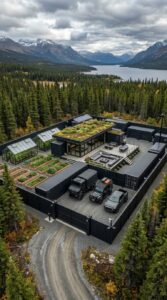
This is an architectural concept visualization and not a real construction project.



Leave a Reply