
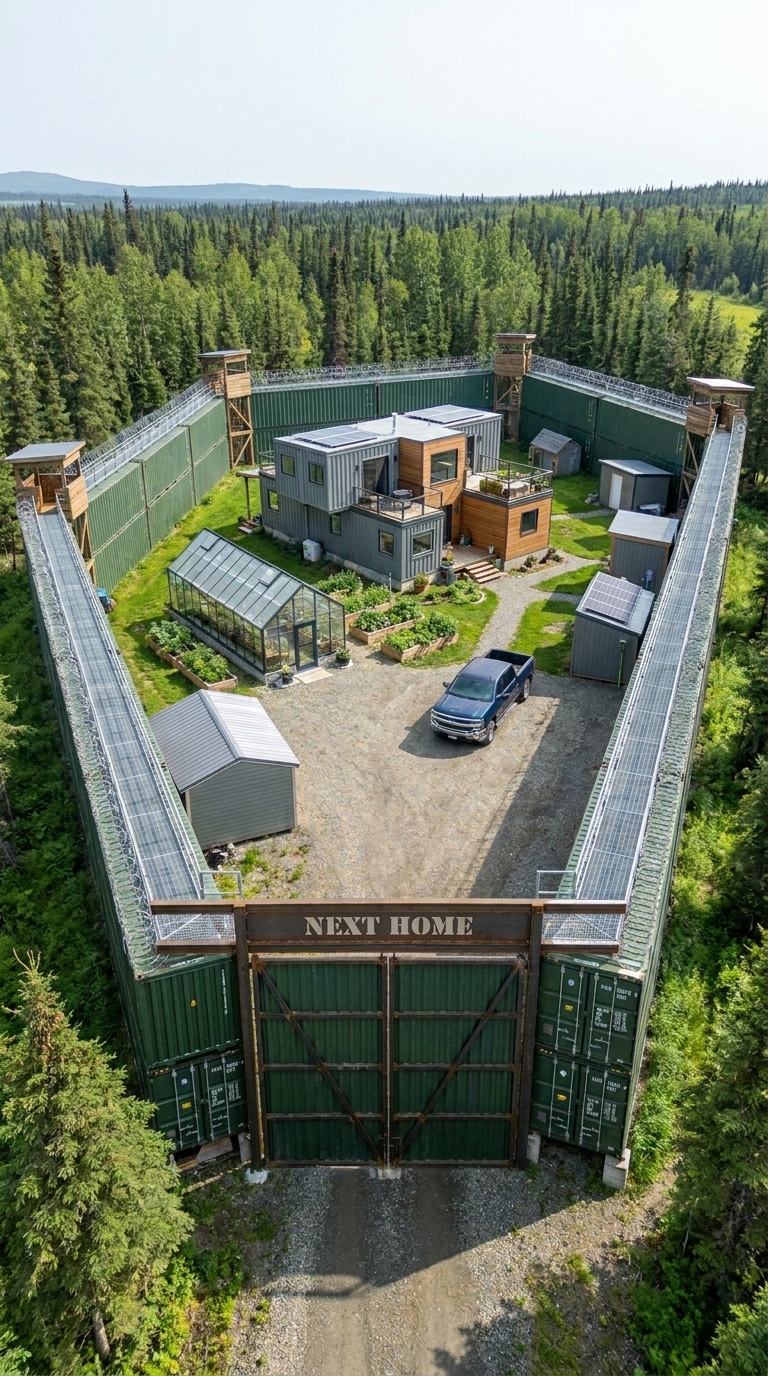
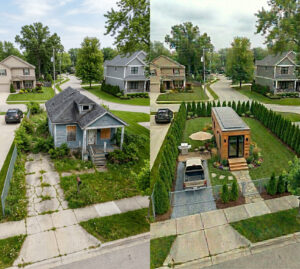
We sold our apartments in New York and invested everything into building a remote, fully autonomous fortress base deep in the forests of Alaska. What started as an idea quickly turned into a complete lifestyle transformation — from city life to total independence in the wilderness.
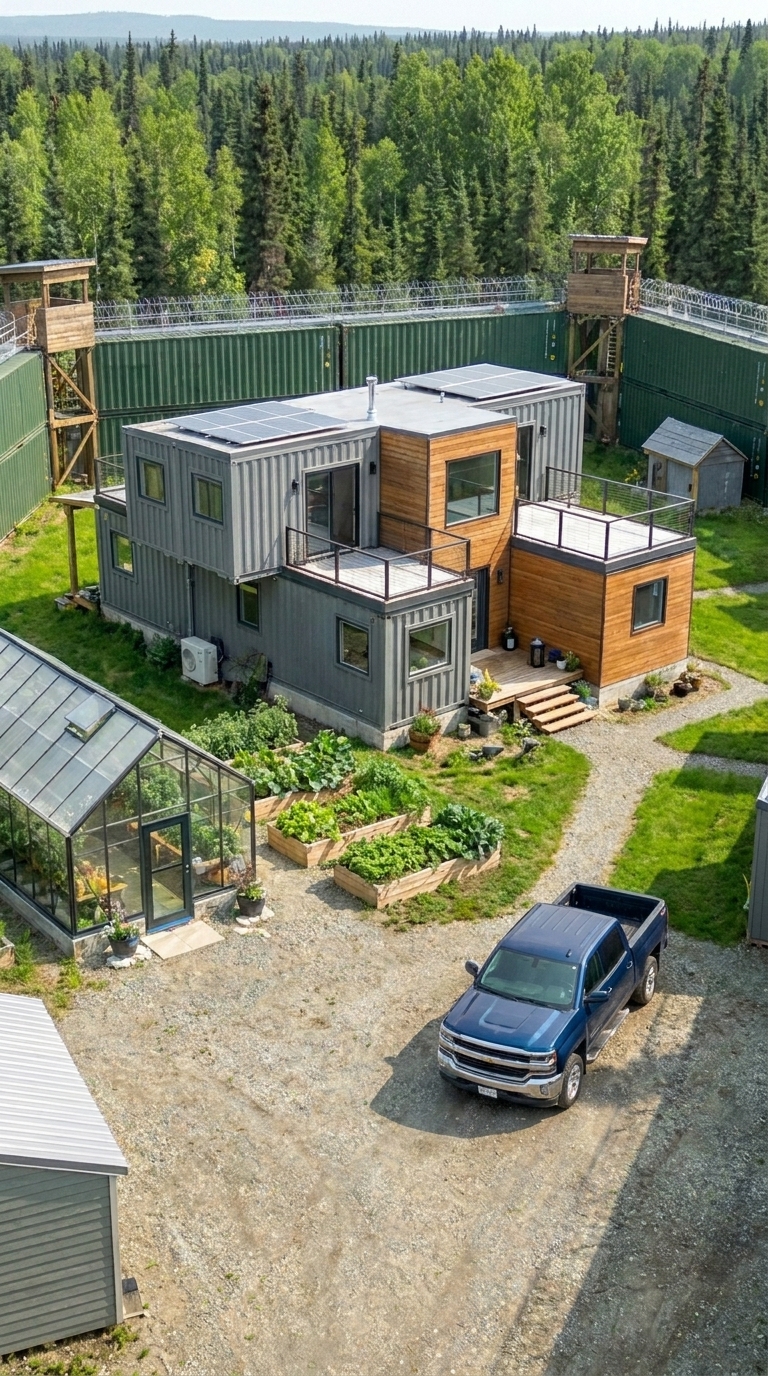
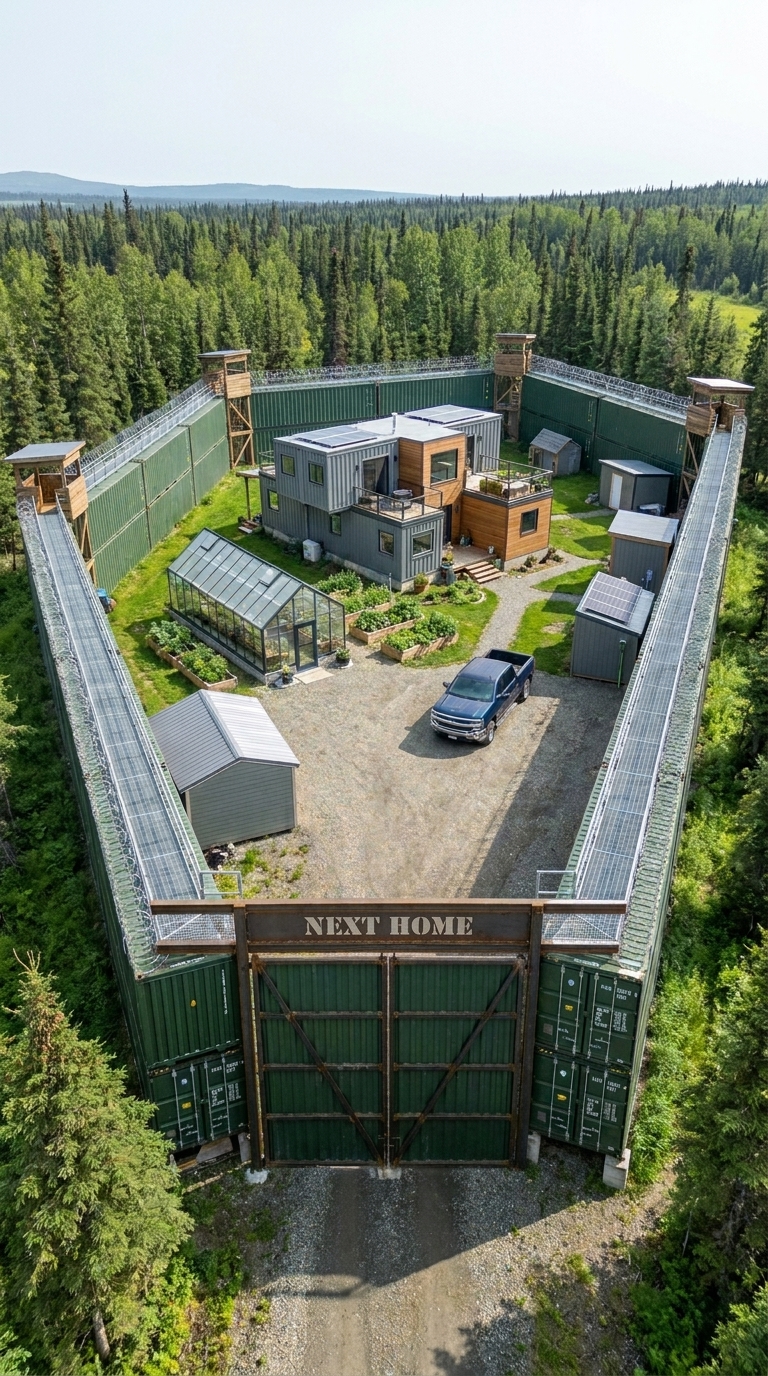
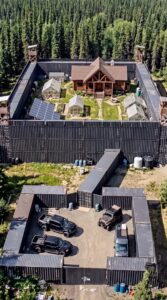
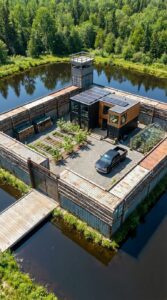
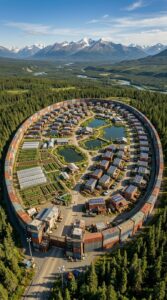
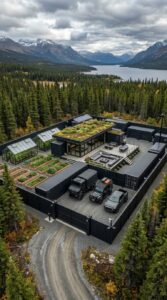
The first step was security. We constructed a massive perimeter wall using reinforced shipping containers, forming a closed defensive structure around the entire property. Watchtowers were installed at key points, giving full visibility over the surrounding forest and ensuring constant control of the area.
Mobility was just as important. We equipped the base with a powerful all-wheel-drive Chevrolet pickup, capable of handling rough terrain, mud, snow, and long off-road distances. Out here, reliability is everything.
Inside the perimeter, we built a self-sustaining ecosystem. A greenhouse with a heating system allows us to grow vegetables all year round, even in harsh climates. Around it, we created outdoor garden beds for seasonal crops. Storage units are filled with long-term supplies, tools, and fuel reserves — everything needed to stay off-grid for extended periods.
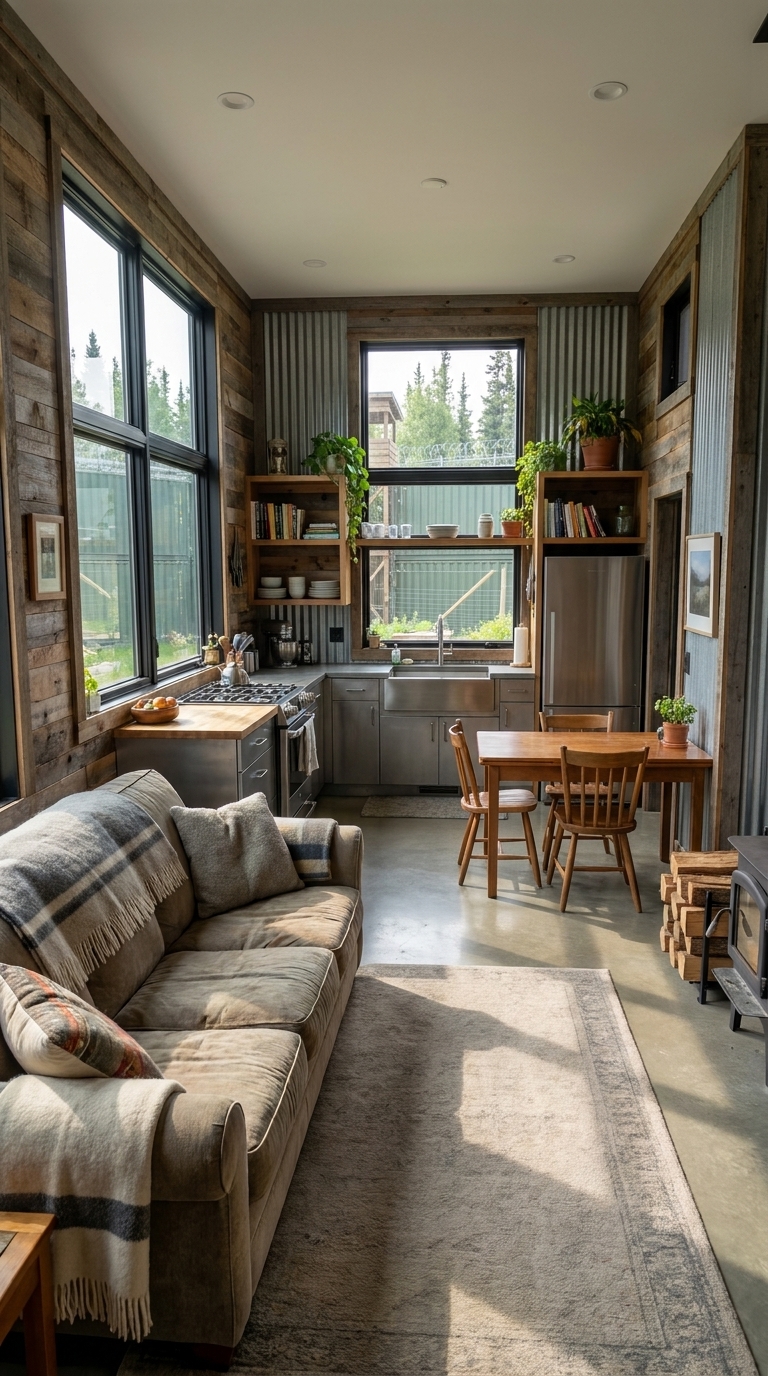
The main house is also constructed from containers, blending durability with comfort. Inside, it feels like a modern home: a fully functional kitchen, a clean and cozy bathroom, solar-powered energy systems, and a complete water filtration setup. Every detail was designed for efficiency and independence.
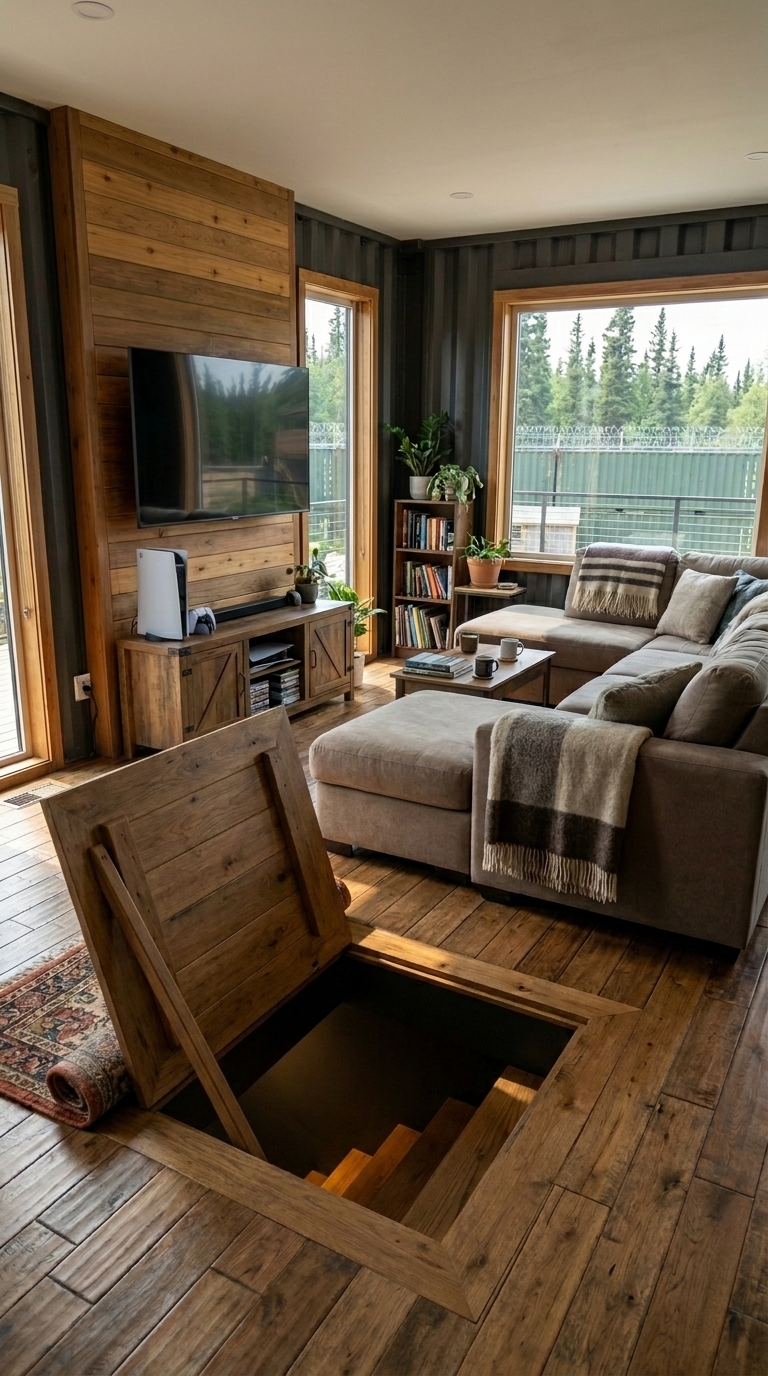
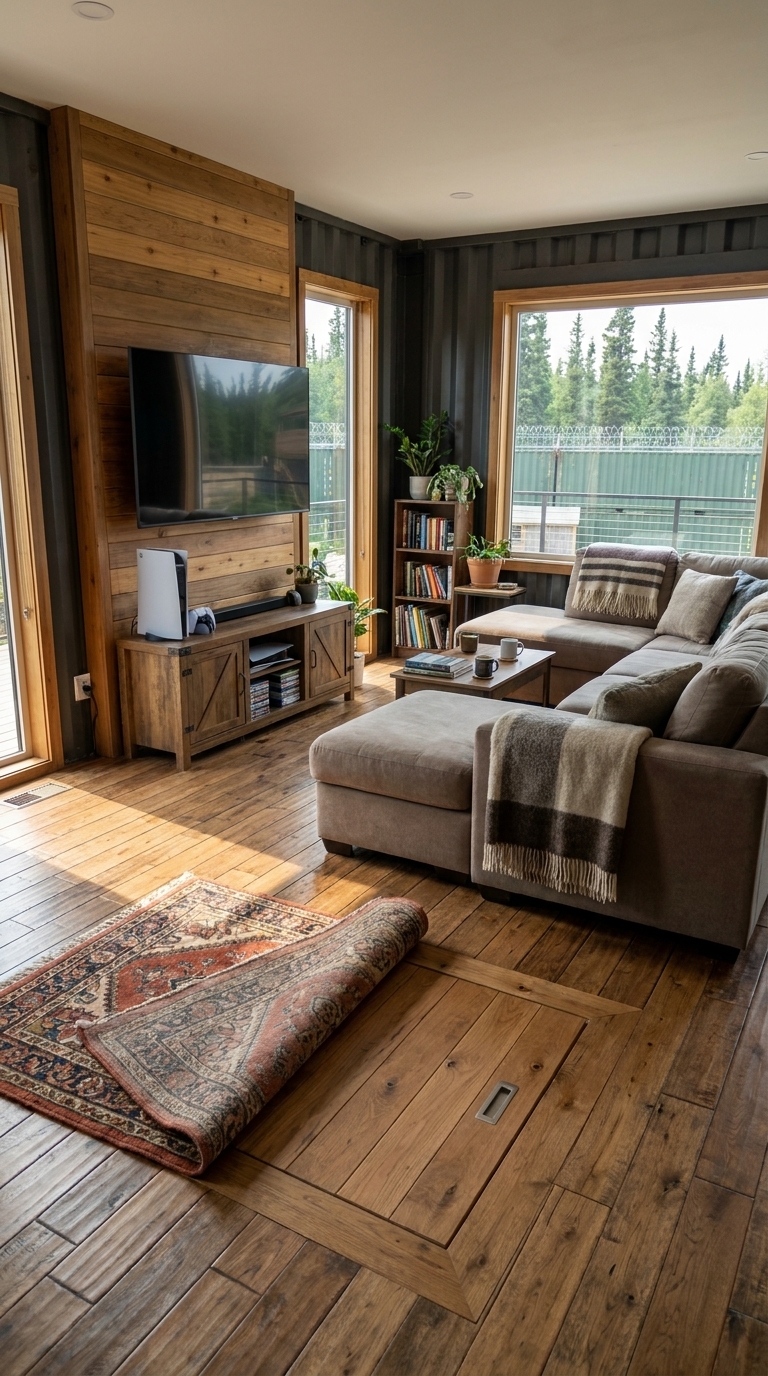
There’s a bedroom and a living room for everyday life… but the most important part is hidden.
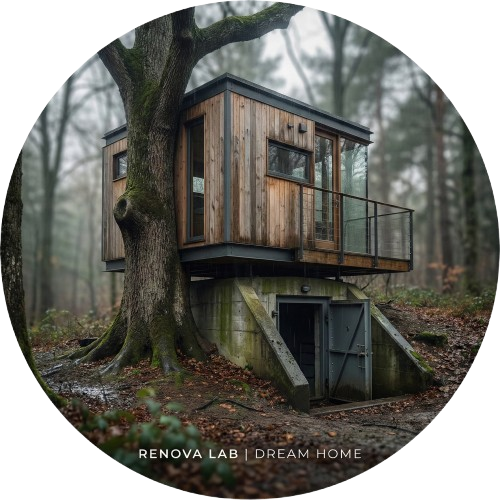
Beneath the floor, there’s a concealed hatch leading to an underground bunker. This space is built for extreme scenarios — from natural disasters to potential air or nuclear threats. Reinforced, isolated, and fully equipped, it provides an additional layer of security when it matters most.
Four Observation Towers for Full Perimeter Control
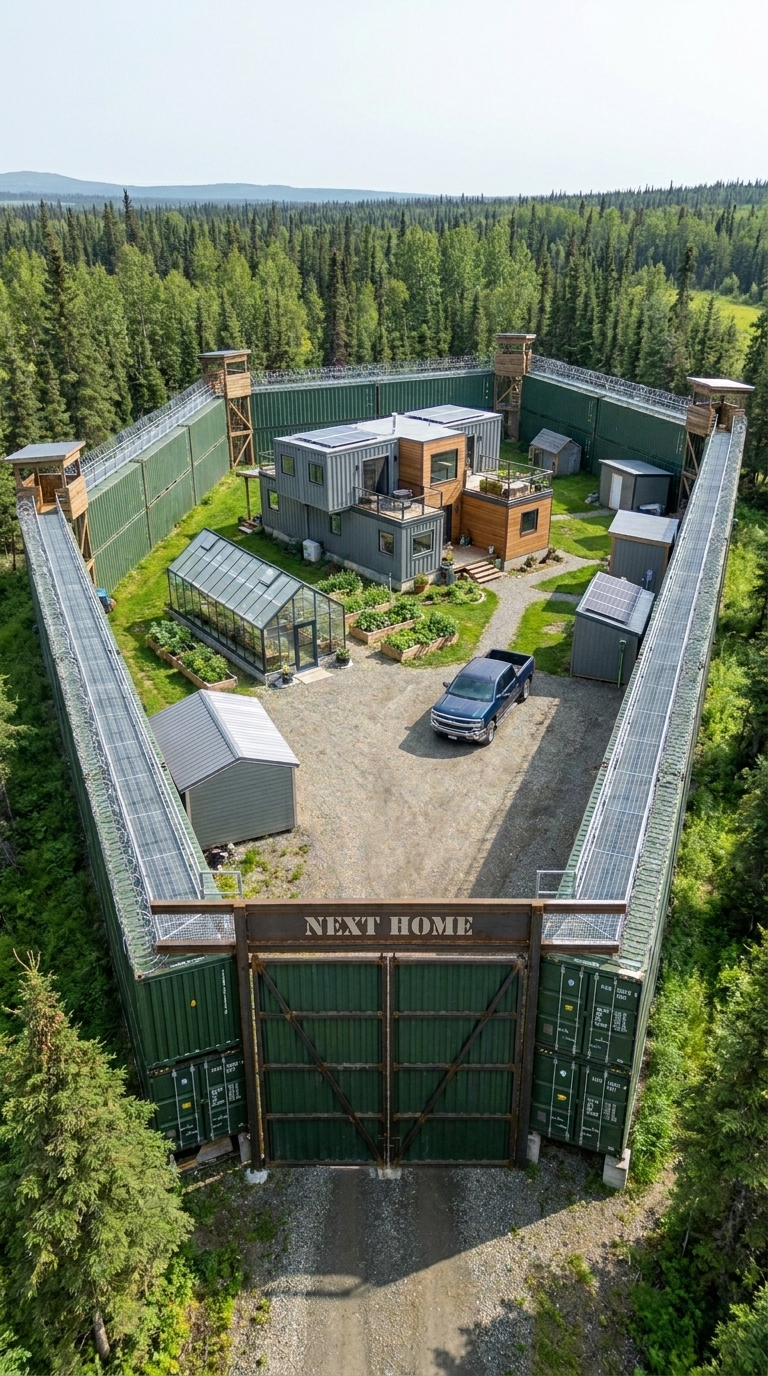
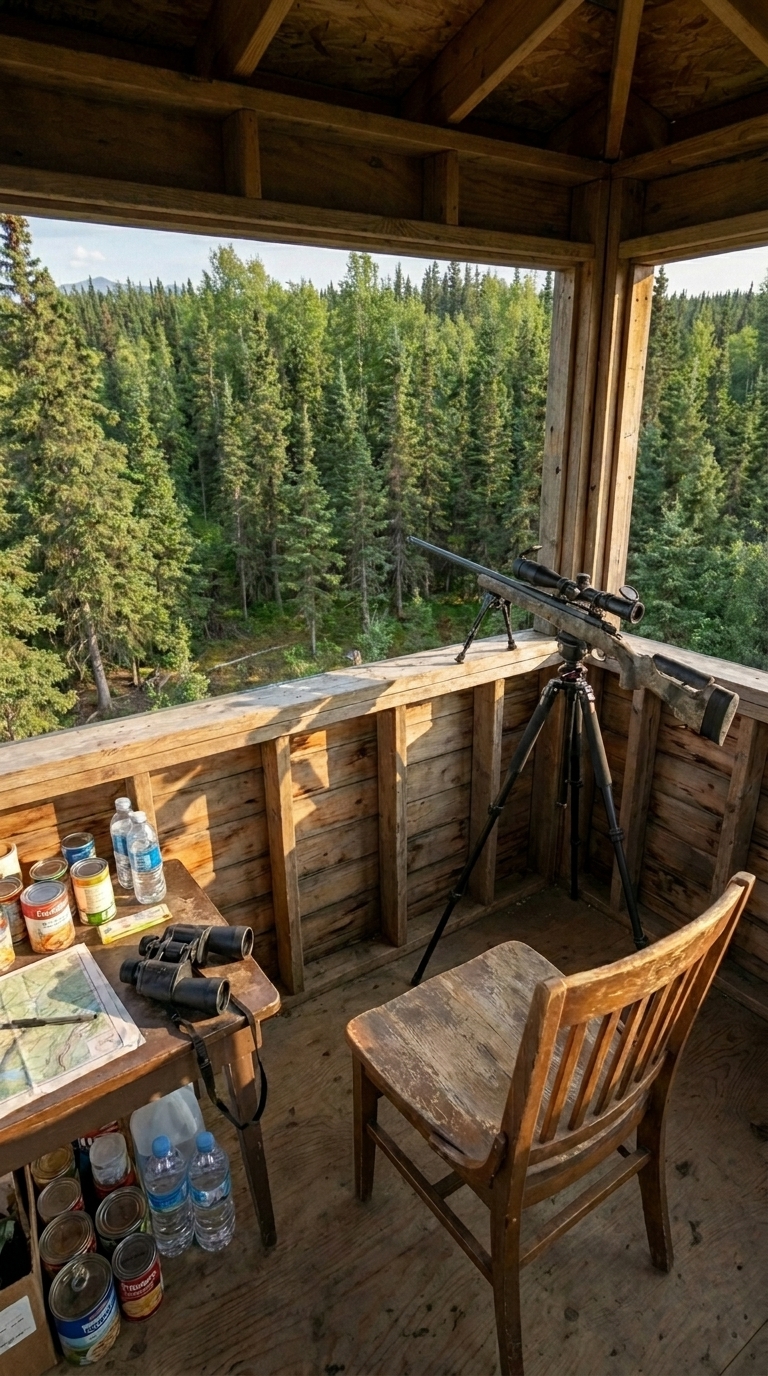
The property is secured by four strategically placed observation towers, each positioned at a corner of the perimeter to provide complete 360-degree visibility over the surrounding forest and territory. These towers act as the first line of awareness, allowing constant monitoring of movement, weather conditions, and any potential threats approaching the base.
Each tower is built from reinforced wood and steel elements, elevated above the fence line to maximize visibility. From the top, there is a clear panoramic view stretching deep into the wilderness, making it possible to detect activity long before it reaches the perimeter.
Inside every tower, the space is designed for long observation shifts. A stable platform supports precision optics, including binoculars and long-range scopes mounted on tripods for steady surveillance. A small workstation with maps and essential supplies allows for planning, tracking, and communication. Food and water supplies ensure that each position can remain operational without constant resupply.
The towers are not just for defense—they are also about control and confidence. From here, you always know what’s happening beyond your walls. In a remote environment like Alaska, where isolation can be both a strength and a risk, this level of visibility becomes critical.
With four towers working together, the entire base is under continuous watch, creating a secure and controlled zone where nothing goes unnoticed.
The Backbone of Mobility: Our All-Terrain Pickup
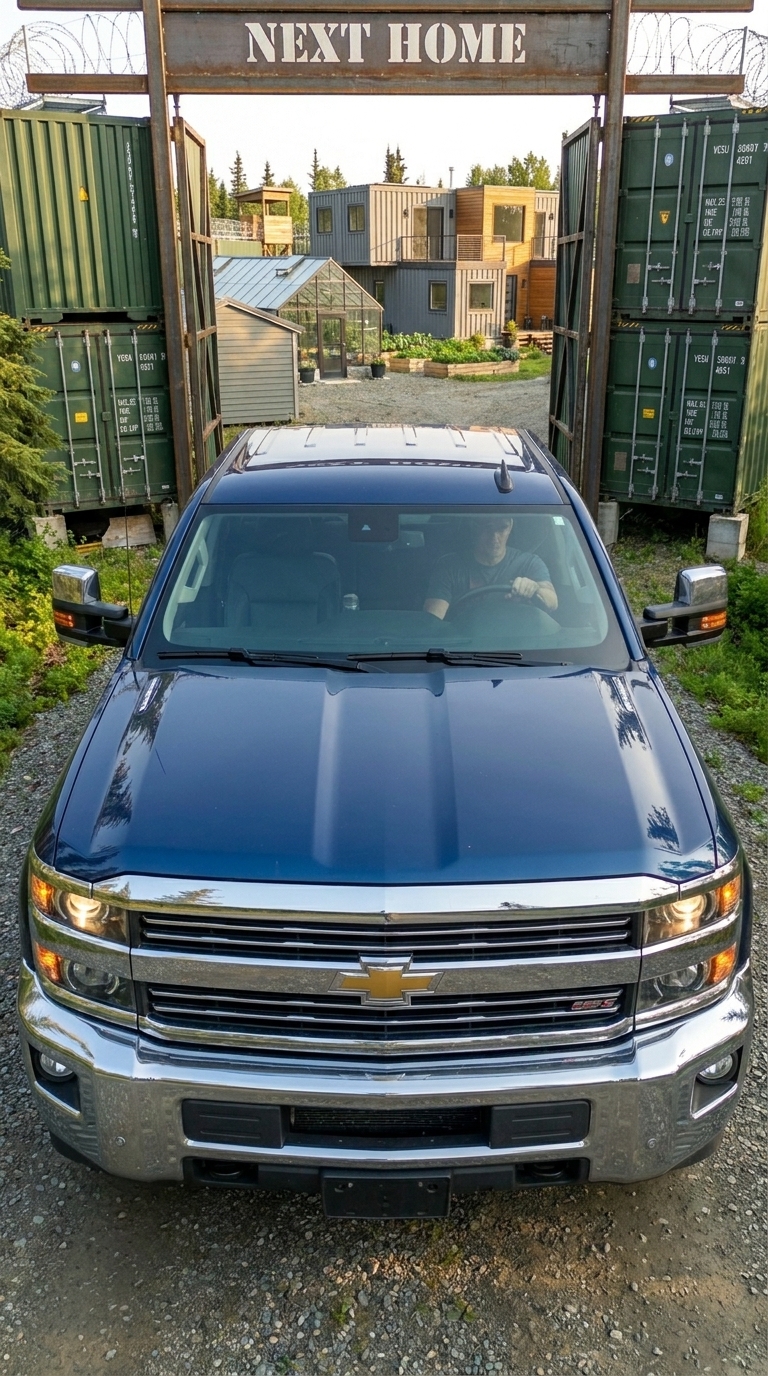
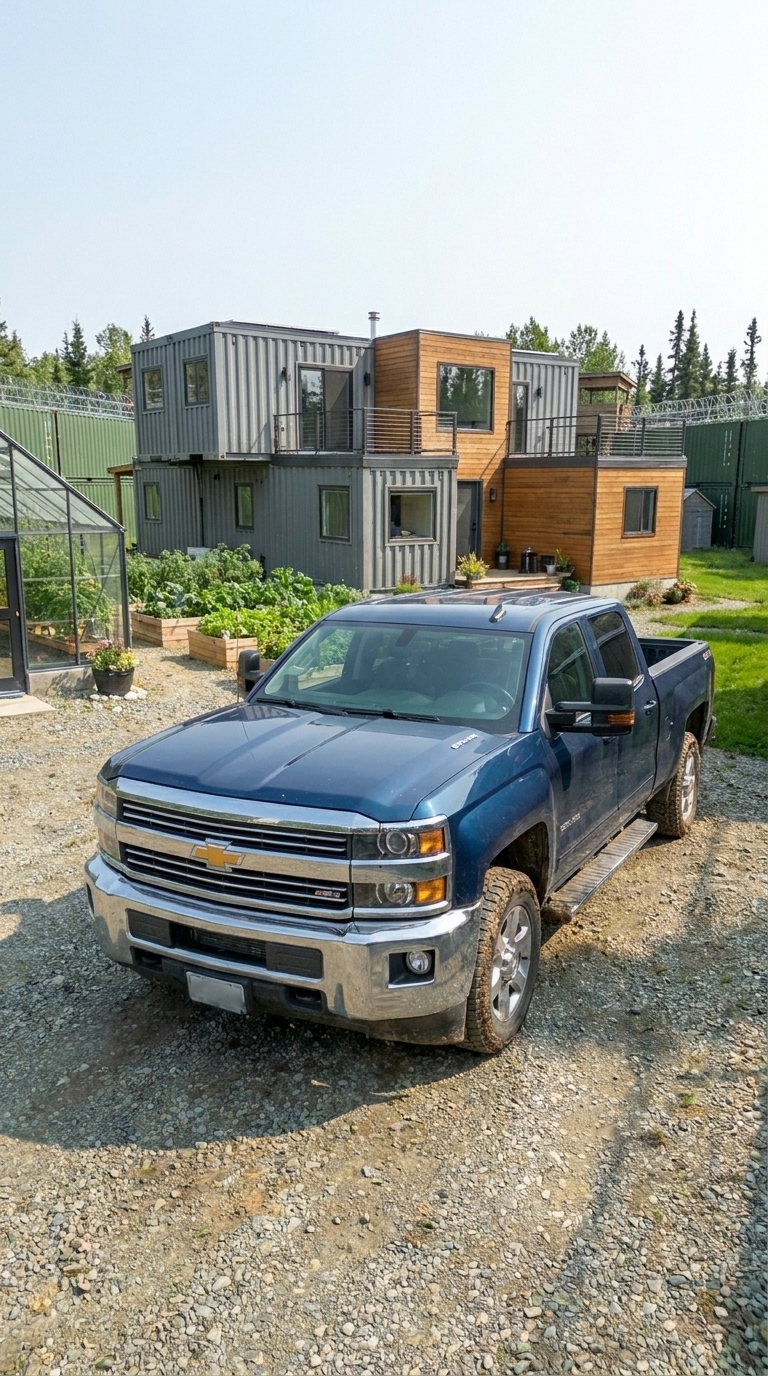
In a remote location like this, a vehicle is not just transportation — it is survival infrastructure. That’s why we chose a powerful all-wheel-drive pickup built to handle harsh terrain, unpredictable weather, and complete off-grid independence. From the moment we enter through the heavy container gates, the truck becomes an essential part of daily life inside the base.
The pickup is designed for reliability above all else. Equipped with a high-torque engine and reinforced suspension, it moves effortlessly across mud, gravel, snow, and uneven forest ground. Deep tire tracks on the entrance road are a constant reminder that this environment demands strength and capability, not comfort-focused city driving. Whether it’s hauling supplies, transporting equipment, or navigating rough terrain beyond the perimeter, the truck performs without compromise.
Inside the base, it connects every part of the operation. It’s used to bring in fuel for generators, materials for construction, and food for long-term storage. It also plays a key role in maintaining the greenhouse and garden areas, allowing quick transport of soil, tools, and harvested crops. In a place where everything must be planned and managed independently, mobility becomes efficiency — and this vehicle delivers exactly that.
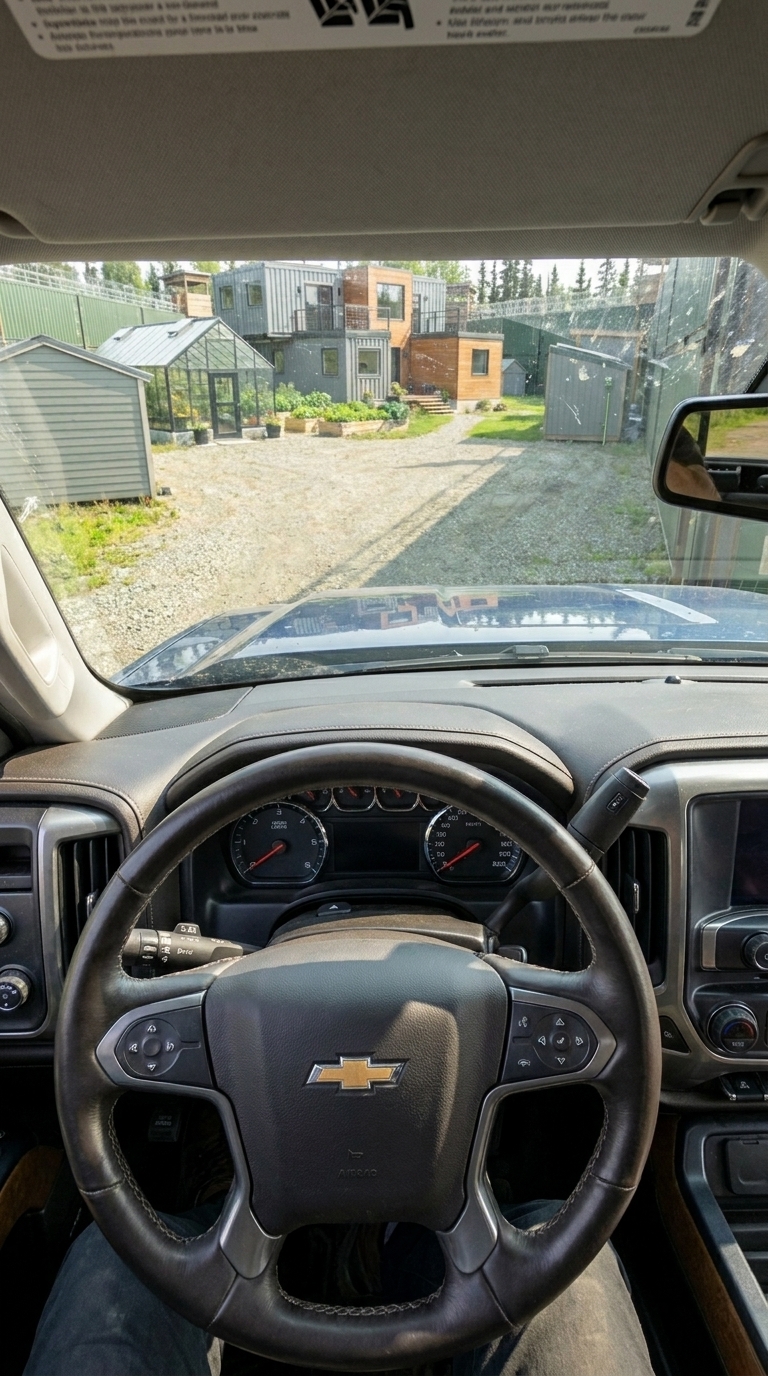
The interior is practical and functional, with everything positioned for control and durability. From behind the wheel, you have a clear view of the entire base — the container house, greenhouse, storage units, and perimeter towers. It’s more than just driving; it’s overseeing and managing your environment in real time.
In emergency scenarios, the pickup becomes even more critical. It provides rapid evacuation capability, extended range for reaching distant locations, and the power needed to carry essential equipment. Paired with on-site fuel reserves stored on-site, it ensures that movement is never limited by external conditions.
This truck is not a luxury — it is a tool built for survival, independence, and control. In a remote fortress like this, it becomes just as important as the walls, the bunker, and the systems that keep everything running.
Supply Sheds: The Lifeline of Long-Term Survival
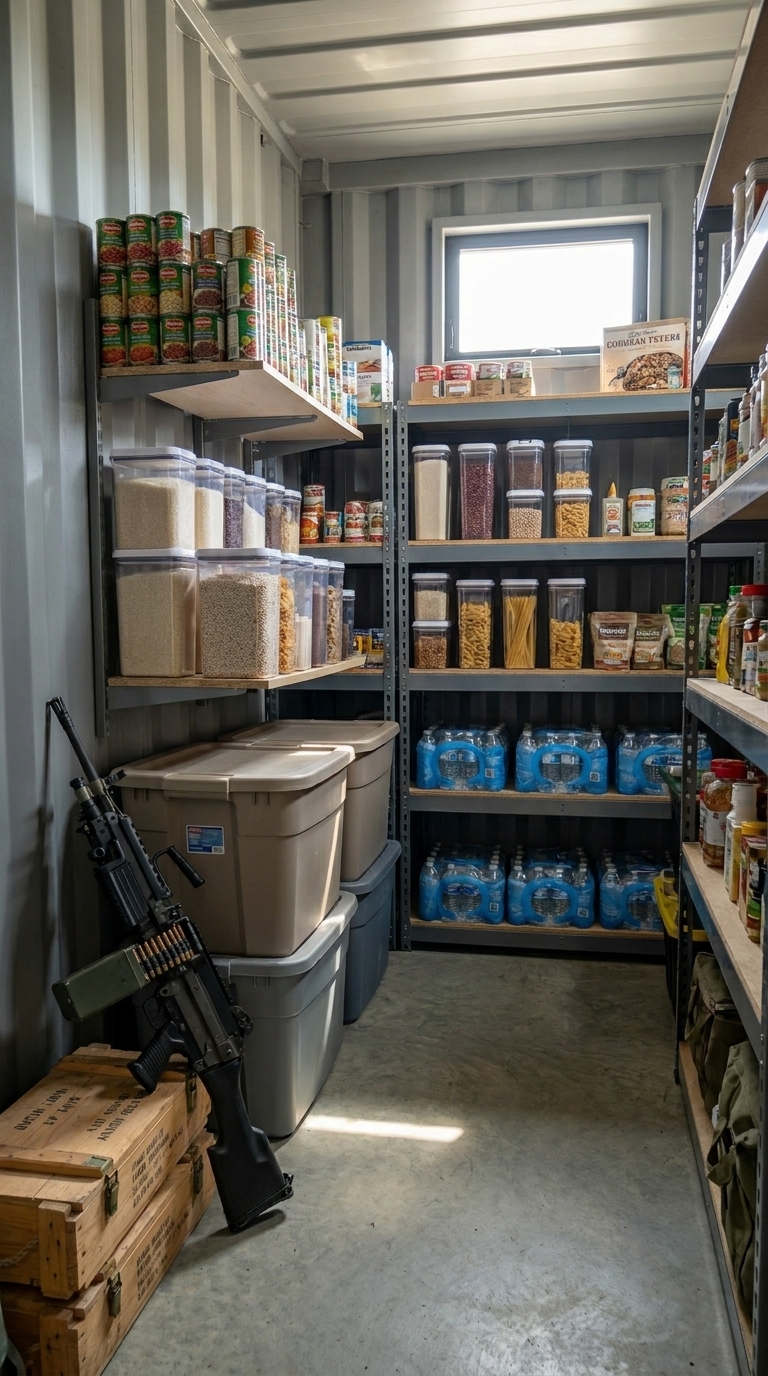
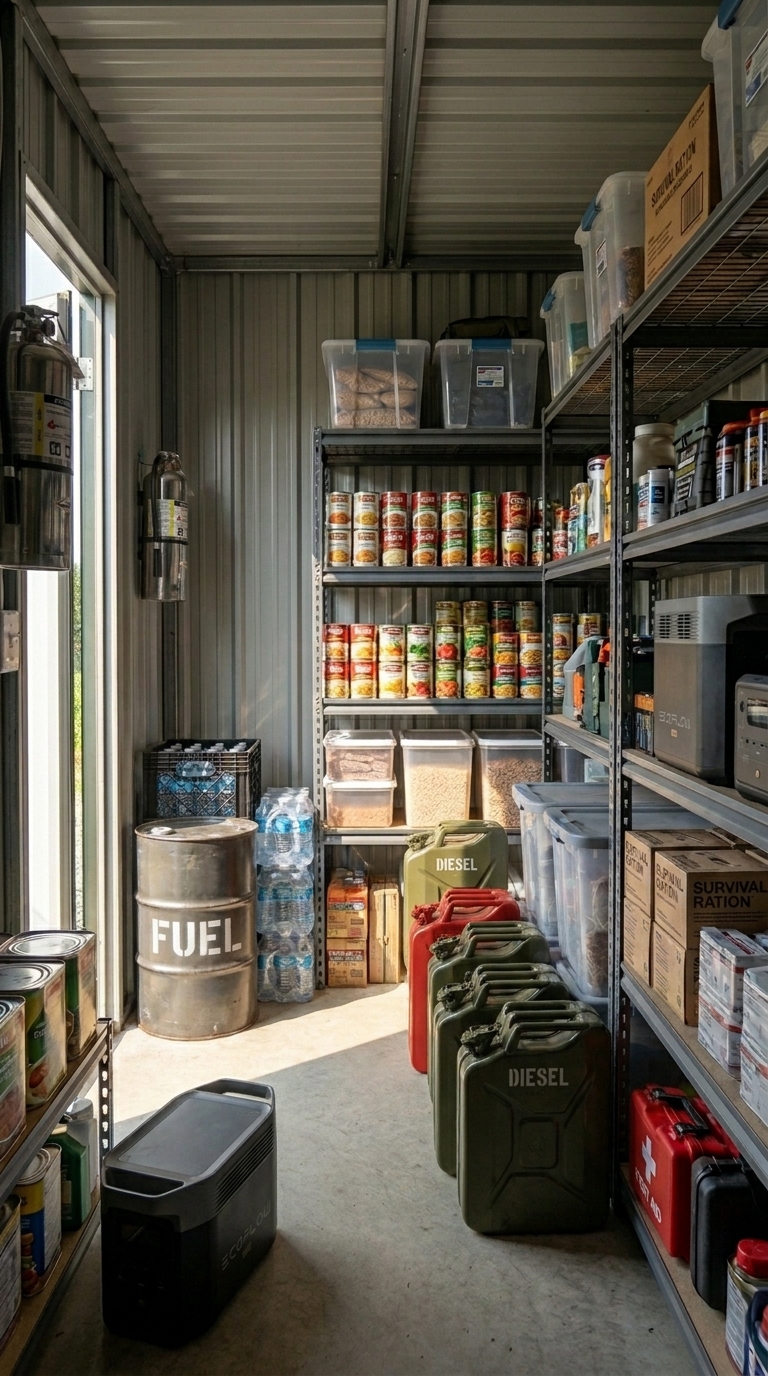
Across the territory of the base, several compact storage sheds serve as the backbone of long-term sustainability. While the main house and bunker provide comfort and protection, these sheds are where true independence is secured. Each structure is carefully organized to store essential resources — food, water, fuel, tools, and emergency equipment — all distributed in a way that minimizes risk and maximizes efficiency.
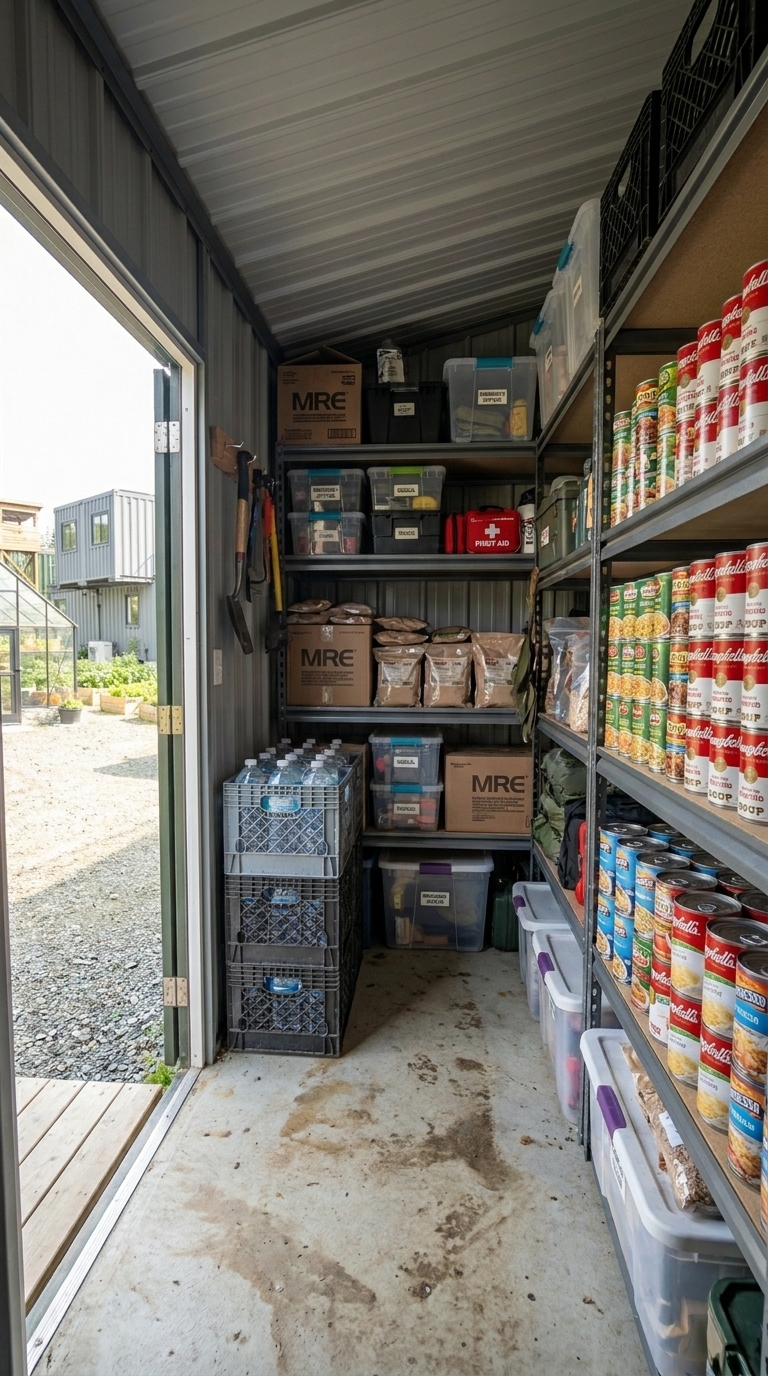
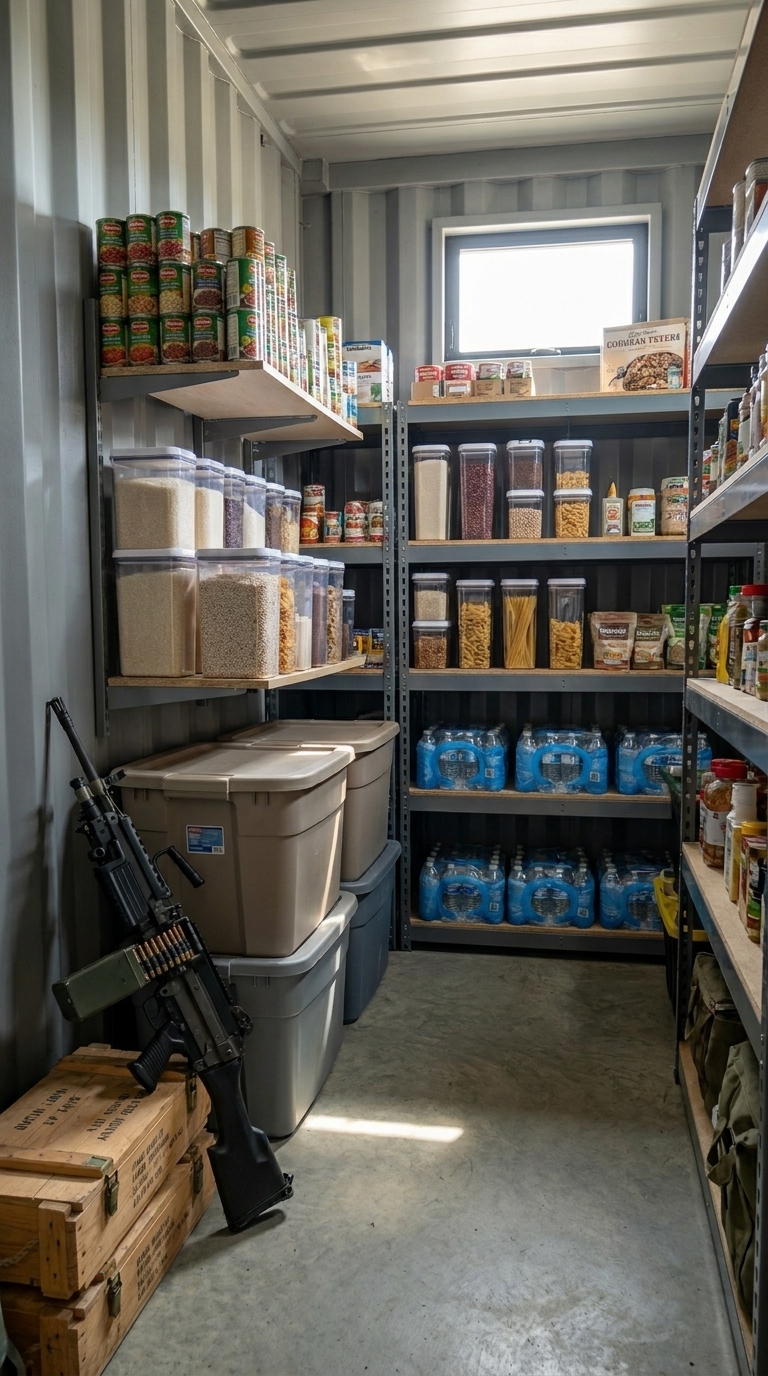
Inside, industrial shelving systems hold a wide range of long-term supplies. Rows of canned goods, dry foods like rice, pasta, and grains, as well as sealed containers with bulk ingredients ensure that there is always a reliable food reserve. Everything is categorized and labeled for quick access, allowing instant inventory checks without unnecessary searching. This level of organization is critical in situations where time and clarity matter.
Water storage plays a central role. Large packs of bottled water and reserve containers guarantee a stable supply even if primary filtration systems fail. In parallel, backup power stations and portable battery units are stored here, ready to support essential systems or provide mobile energy when needed.
Fuel storage is separated and secured, with clearly marked diesel canisters and reinforced containers. This fuel supports generators, vehicles, and critical equipment, ensuring that the entire base remains operational even during extended isolation. Safety is a priority — proper spacing, ventilation, and containment reduce any associated risks.
Beyond basic supplies, the sheds also function as equipment hubs. Tools, repair kits, medical supplies, and emergency rations (MREs) are all stored in designated sections. This allows each shed to act as a mini autonomous support unit, meaning that even if one area becomes inaccessible, others can fully compensate.
What makes these sheds especially important is their distribution across the property. Instead of concentrating everything in one location, resources are strategically spread out, increasing resilience and redundancy. In a worst-case scenario, this ensures that survival does not depend on a single point of failure.
These supply sheds are not just storage spaces — they are a carefully planned system designed to support long-term living, stability, and complete self-reliance in even the most remote environments.
Growing Zone: Sustainable Food Production Inside the Base
At the heart of long-term independence lies the growing zone — a carefully designed area dedicated to producing fresh food year-round. Unlike simple garden beds, this system combines outdoor cultivation with a fully equipped greenhouse, creating a reliable and controlled environment for continuous harvests regardless of external conditions.
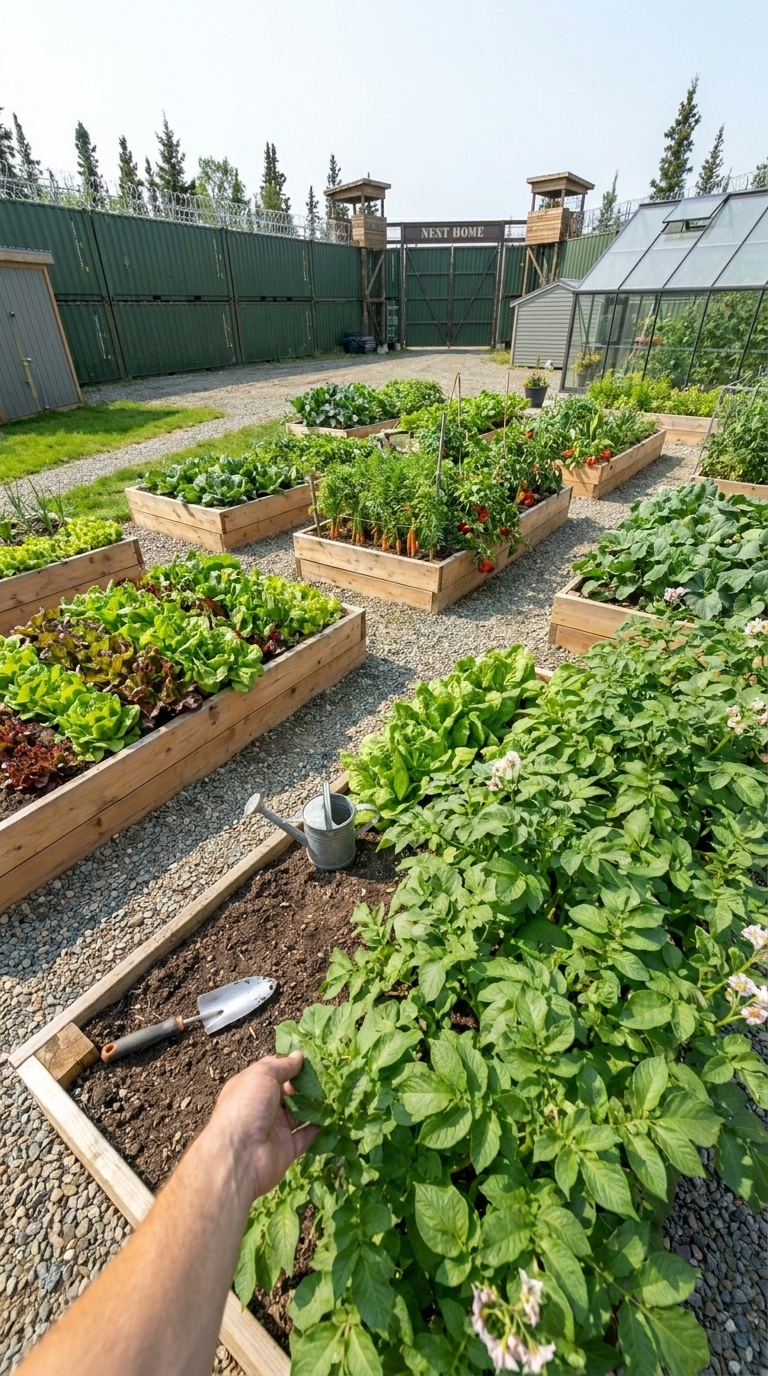
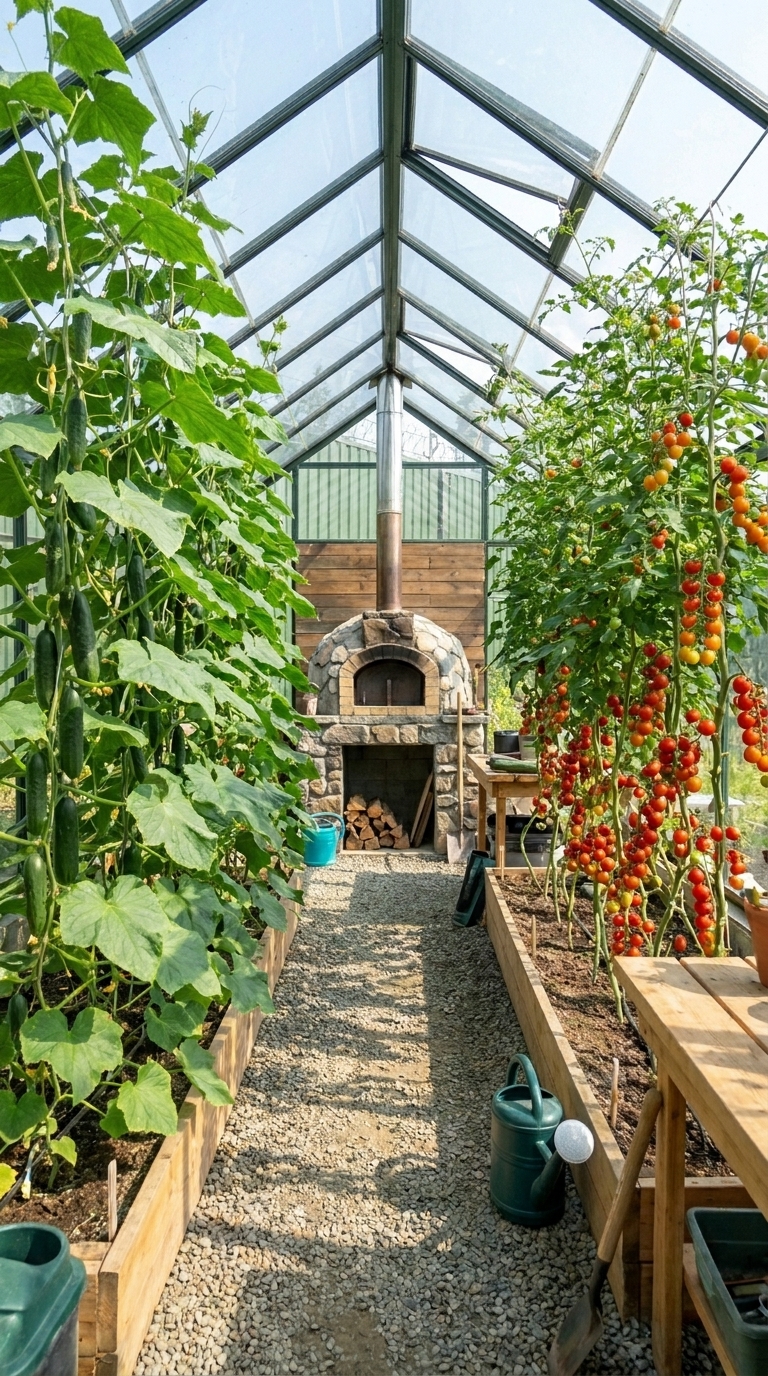
The outdoor section features raised wooden beds, each organized by crop type for maximum efficiency. Leafy greens, root vegetables, and seasonal plants are grown in structured rows, making maintenance simple and predictable. The raised design improves soil quality, drainage, and accessibility, allowing for consistent yields with minimal effort. Gravel pathways between the beds keep the area clean and functional in all weather conditions.
Inside the greenhouse, the system becomes even more advanced. Protected by transparent panels, crops such as tomatoes and cucumbers grow in a stable microclimate, shielded from cold temperatures and harsh winds. A built-in wood-fired stove provides additional heat during colder periods, extending the growing season far beyond natural limits. This ensures that fresh vegetables are available even when the outside environment becomes hostile.
Vertical growth techniques maximize the use of space, allowing high-density production within a compact footprint. Hanging vines, stacked planting zones, and organized irrigation systems create a highly efficient ecosystem where every square meter is utilized. Watering tools and storage are kept within reach, supporting daily care without disrupting workflow.
This growing zone is not just about food — it is about resilience and self-reliance. By combining open-air gardening with protected greenhouse cultivation, the system reduces dependence on external supply chains and ensures a steady source of nutrition. Fresh produce improves both physical health and morale, which is critical during extended isolation.
In a remote base like this, the ability to grow your own food transforms survival into sustainability. It turns the environment from a challenge into an advantage, creating a closed-loop system where preparation meets independence.
The Container Home That Redefines Off-Grid Living
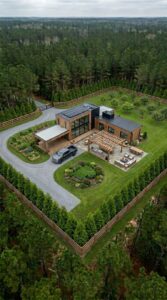
This container house stands at the center of the entire base, combining modern comfort with survival-grade engineering. Built from reinforced shipping containers and designed with a clean architectural approach, it proves that off-grid living does not require sacrificing quality, aesthetics, or functionality. Every detail of the structure is carefully planned to support long-term independence while maintaining the feeling of a real home.
From the outside, the house presents a minimalist yet solid appearance, blending industrial steel with warm wooden accents. Elevated slightly above ground level, it offers protection from moisture and improves insulation efficiency. Large windows bring in natural light, creating a bright and open atmosphere that contrasts with the surrounding wilderness. Solar panels installed on the roof provide a stable and renewable energy source, reducing dependence on external infrastructure.
Inside, the layout is organized into clearly defined living zones. The main living area combines a cozy lounge with a fully functional kitchen, forming a central space for daily life. Natural materials, soft textures, and warm lighting transform the interior into a comfortable environment where residents can relax and recharge. Despite being built from containers, the space feels open and breathable, avoiding the typical sense of confinement.
The kitchen is designed for efficiency and practicality. It includes modern appliances, durable surfaces, and smart storage solutions that maximize every centimeter of space. Everything is positioned to support everyday cooking, making it possible to maintain a normal routine even in a remote location. Nearby, a compact dining area creates a place for shared meals, reinforcing a sense of normalcy and structure.
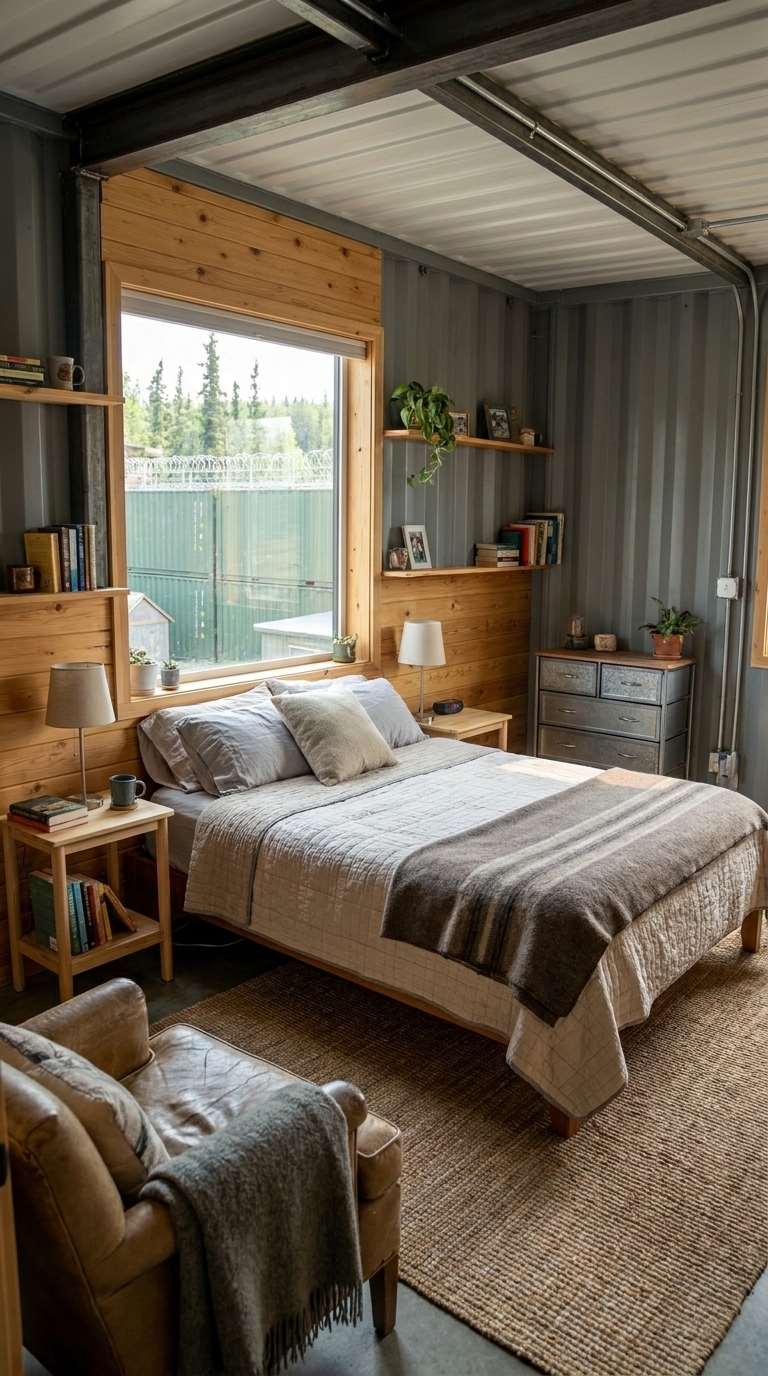
The bedroom area provides privacy and comfort, featuring a well-insulated environment with soft furnishings and natural light. It is designed not just for rest, but for recovery — an essential factor in any long-term off-grid scenario. The use of wood elements adds warmth, balancing the industrial nature of the container walls.
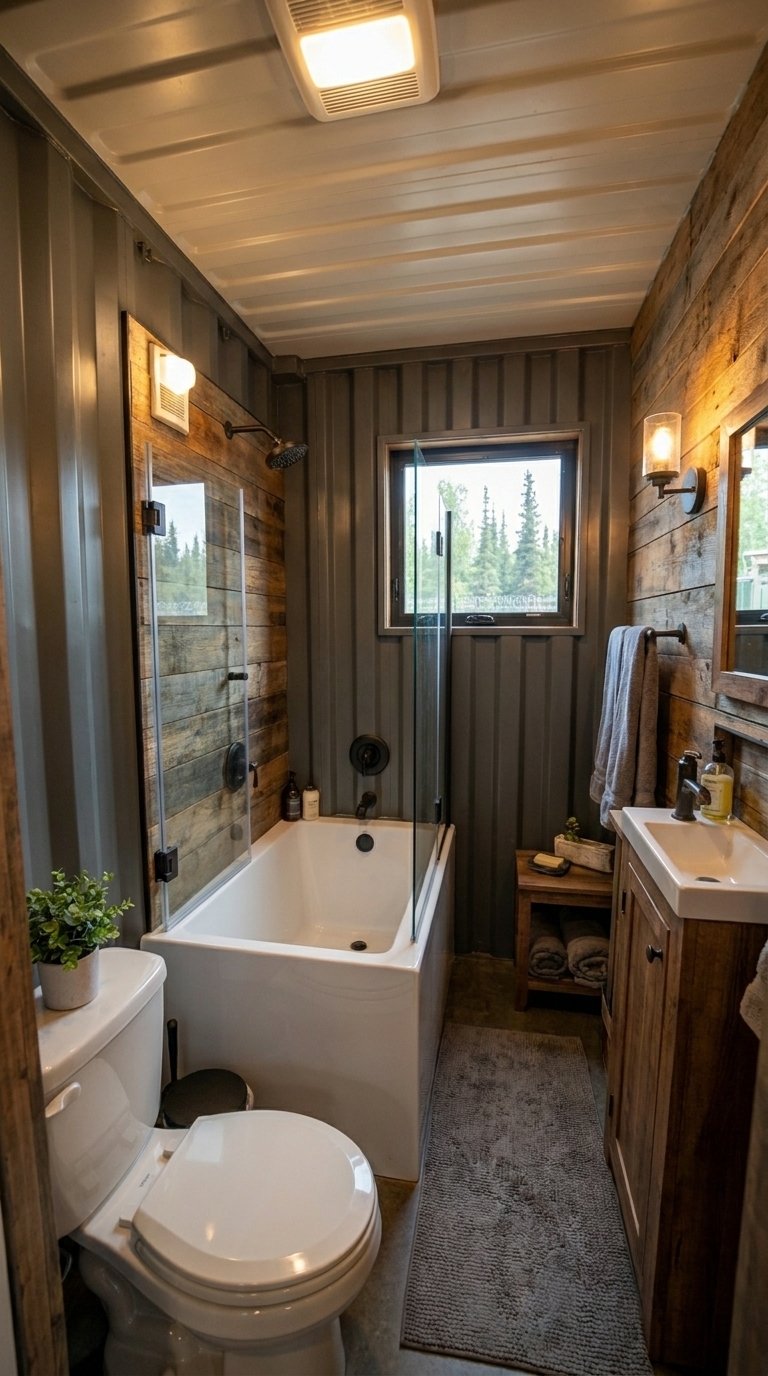
A fully equipped bathroom completes the living system. With a shower, toilet, and integrated water management, it ensures hygiene standards comparable to a traditional home. The water supply is supported by filtration and storage systems, allowing safe and consistent use over extended periods.
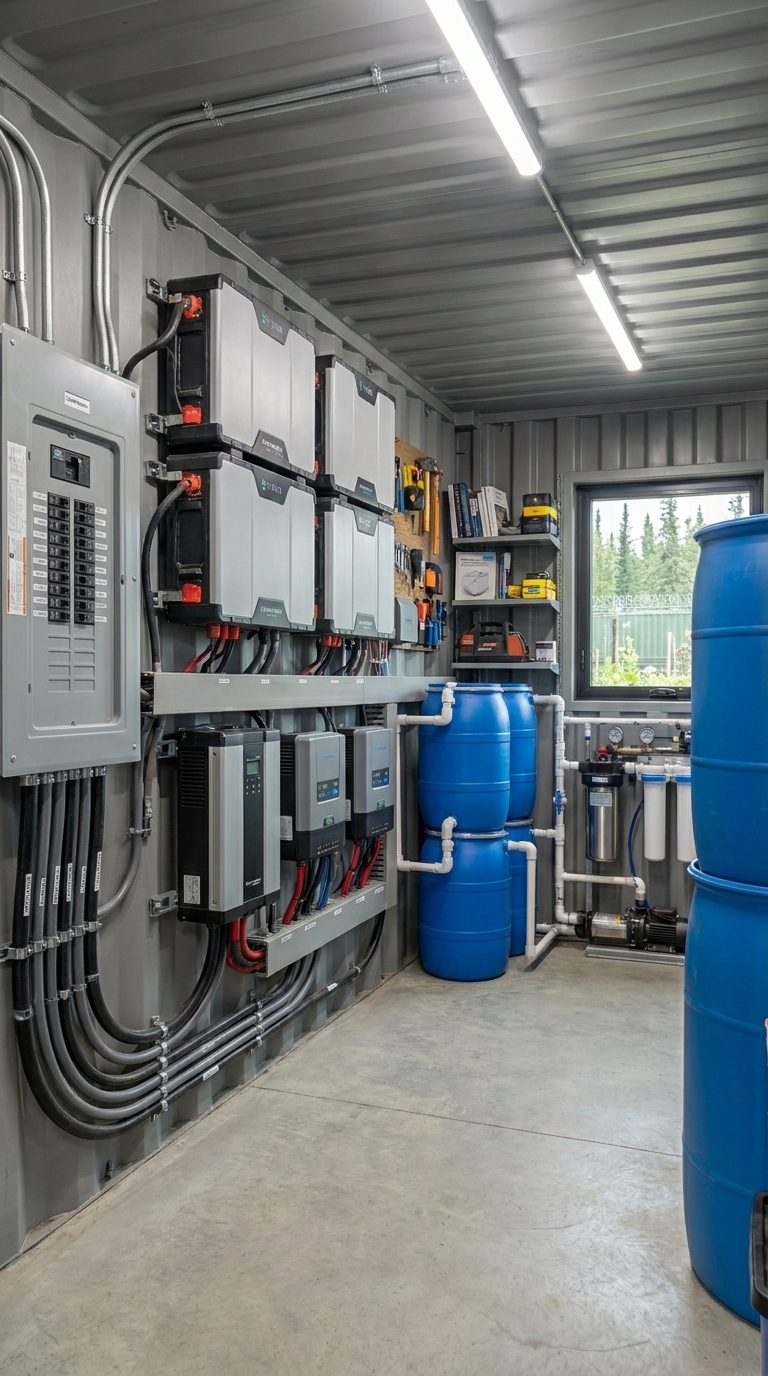
Behind the comfort, there is a strong technical backbone. Electrical systems are carefully installed and protected, managing energy distribution from solar panels and backup sources. Ventilation ensures fresh air circulation, while insulation maintains stable temperatures throughout the year. Every system is designed with redundancy and reliability in mind.
What makes this container home truly unique is the hidden layer beneath it. Integrated into the structure is access to an underground bunker, providing an additional level of safety in extreme situations. This dual-layer concept — comfortable living above, reinforced protection below — creates a complete survival solution without compromising everyday life.
This is not just a house built from containers. It is a fully functional, self-sustaining living system designed for independence, resilience, and long-term comfort. In a remote environment, it becomes more than shelter — it becomes a secure, reliable, and livable foundation for an entirely new way of life.
Hidden Underground Bunker Beneath the House
Beneath the calm and comfortable surface of the house lies its most critical element — a fully engineered underground bunker designed for maximum safety, autonomy, and long-term survival.
The bunker is built from solid reinforced concrete, forming a sealed and highly durable structure capable of withstanding extreme external conditions. Its layout is carefully divided into multiple functional zones, allowing it to operate not just as a shelter, but as a fully independent living environment.
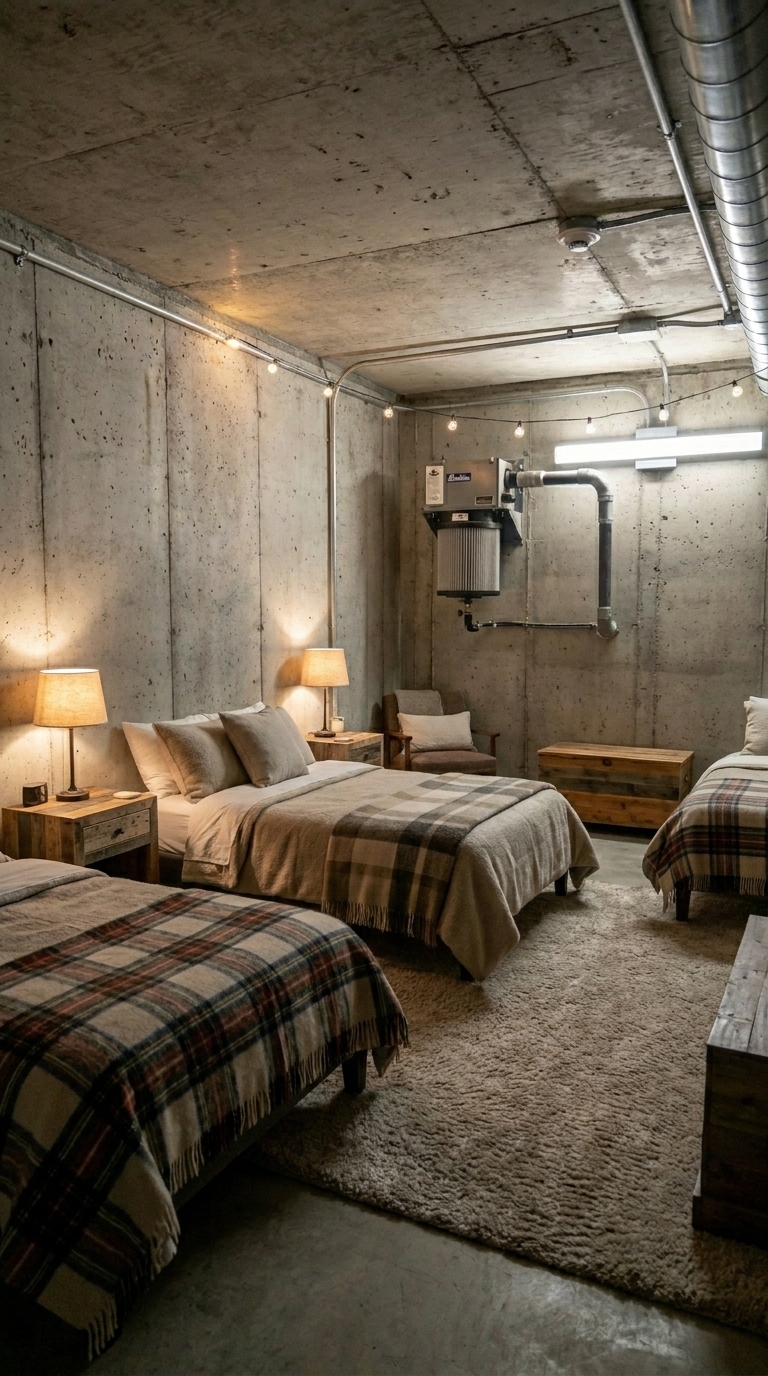
One of the key areas is the sleeping zone. Unlike traditional cold shelters, this space is designed for comfort and recovery. Soft lighting, insulated walls, and simple but functional furniture create a calm atmosphere where occupants can rest both physically and mentally. Even underground, the environment feels controlled and livable rather than confined.
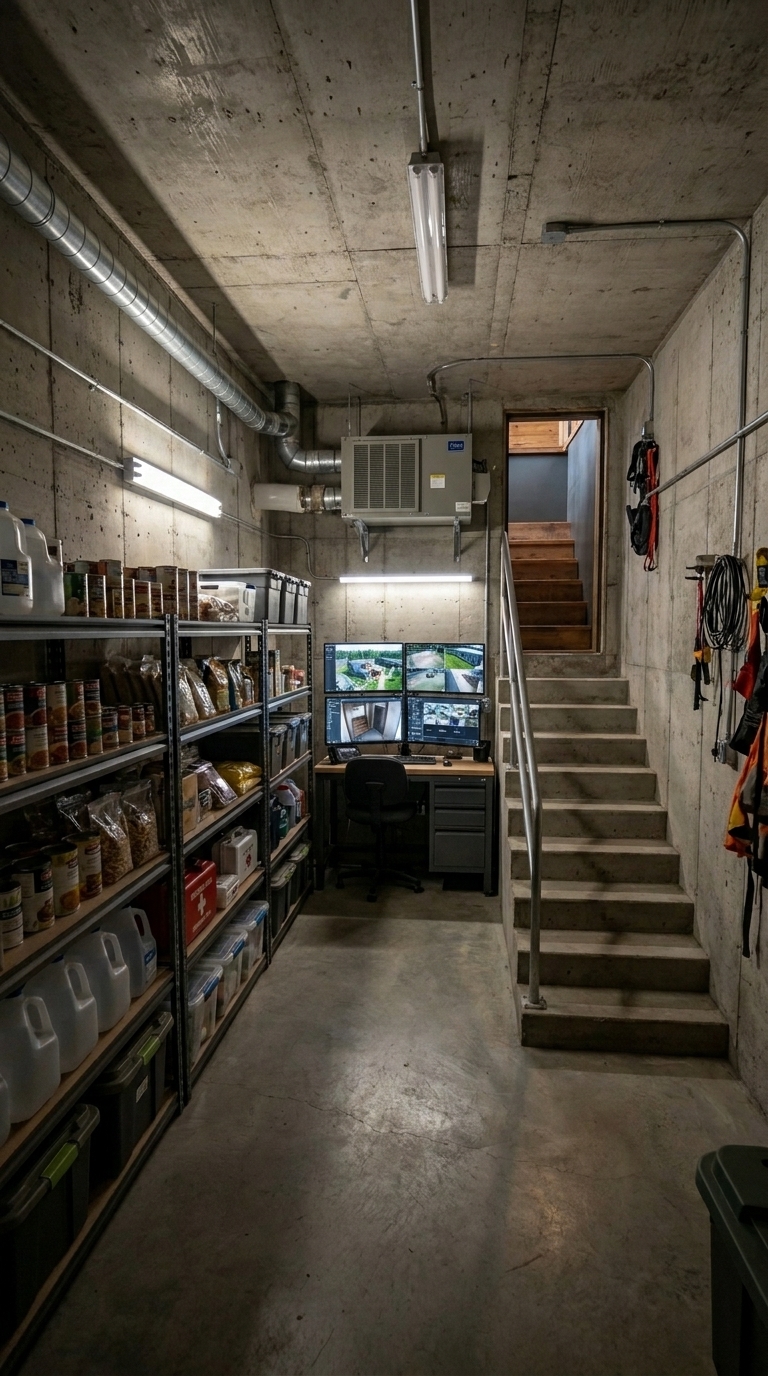
Adjacent to it is the storage and supply section. Industrial shelving systems hold long-term food reserves, water containers, and essential equipment. Everything is organized for quick access and efficient inventory management. This ensures that during extended isolation, all necessary resources are immediately available without chaos or delay.
A dedicated technical zone supports the entire bunker system. Here, air filtration units, ventilation systems, and power control modules work continuously to maintain a safe internal environment. Advanced filters protect against contaminated air, while controlled airflow keeps oxygen levels stable. Backup energy systems ensure that lighting, communication, and critical infrastructure remain operational at all times.
The bunker is also connected to a secondary exit route, leading either to another hidden point on the property or directly into the house structure. This provides an additional layer of safety, allowing movement without exposure if the main entrance becomes inaccessible.
What makes this underground system exceptional is how seamlessly it integrates with the house above. From the outside, it is just a modern container home in a quiet, remote location. But beneath it exists a hidden layer of protection — a space designed not only to survive extreme scenarios, but to do so in a controlled, organized, and surprisingly comfortable way.
This is not just a bunker. It is a concealed, self-sufficient underground extension of the home — built for resilience, security, and complete independence when it matters most.
Full Project Cost Breakdown — $2,000,000 Off-Grid Bunker Estate
Building a fully independent container home with an underground bunker and secured perimeter is a serious but realistic investment when planned efficiently. The total cost of this project came to approximately $2,000,000, distributed across several key components that together create a complete Autonomous living system.
Land and Preparation — $300,000
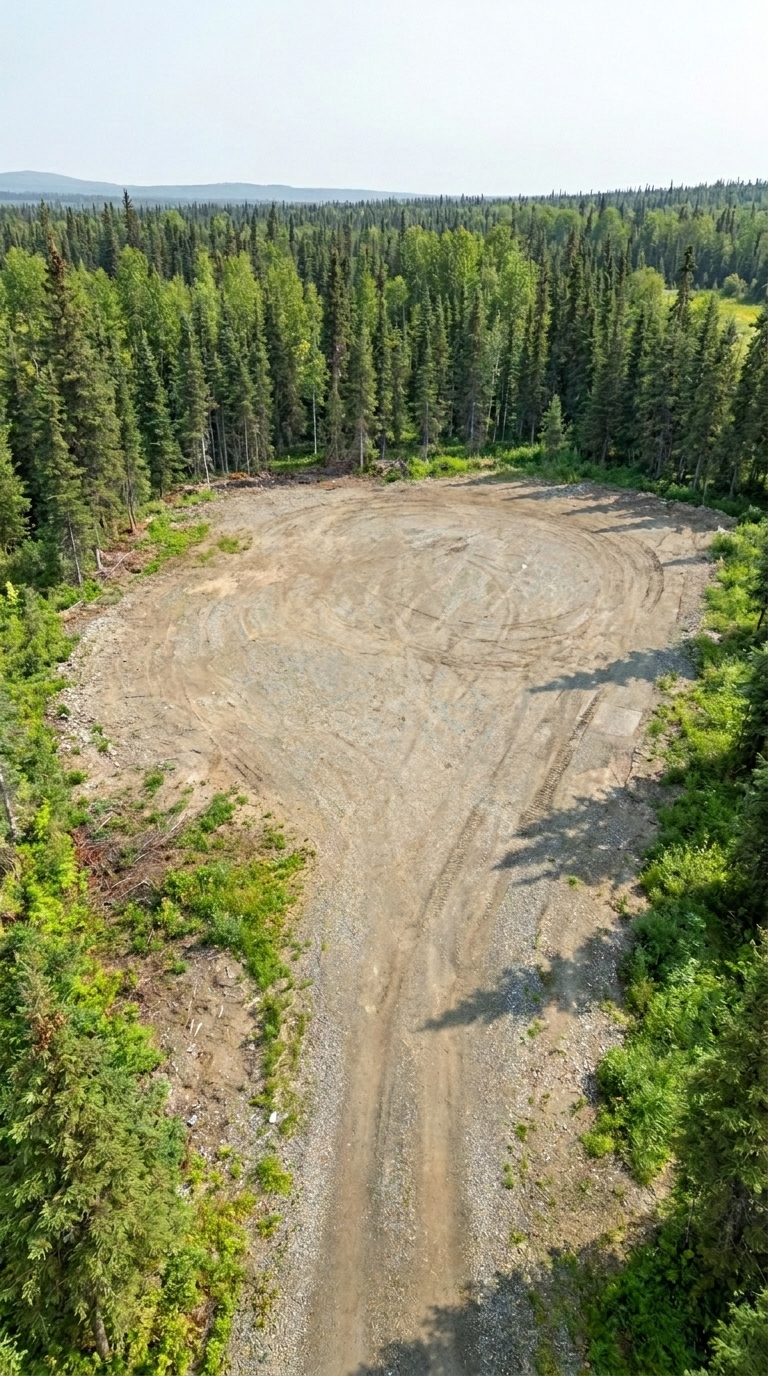
The foundation of the project begins with the land. A remote but accessible plot with natural protection and enough space for expansion was selected. Costs include land purchase, terrain leveling, drainage systems, road access, and basic infrastructure preparation.
Container House Construction — $450,000
The main living structure, built from reinforced shipping containers, includes insulation, structural upgrades, panoramic windows, and high-quality interior finishing. This budget also covers the kitchen, living area, bedroom, and bathroom, all designed for full-time living with comfort comparable to a modern home.
Underground Bunker System — $500,000
One of the most expensive and critical parts of the project. This includes deep excavation, reinforced concrete construction, waterproofing, hidden access hatch, emergency exit, ventilation systems, air filtration units, and interior zoning (sleeping, storage, technical areas). Built for long-term ???????ous operation under extreme conditions.
Energy and Water Systems — $200,000
Solar panels, battery storage, inverters, backup generators, and full electrical wiring ensure stable power. Water systems include filtration units, storage tanks, pumps, and purification systems, allowing safe long-term use without external supply.
Security Perimeter and Infrastructure — $250,000
A fortified perimeter made from shipping containers, reinforced entry gates, surveillance cameras, motion sensors, and watchtowers. This creates a controlled and protected environment around the property.
Support Structures and Storage — $150,000
Additional container-based buildings for supplies, fuel storage, equipment, and tools. Includes shelving systems, organization, and weather protection for long-term Living.
Greenhouse and Food Production — $100,000
A fully functional greenhouse with heating (wood stove), irrigation, and raised garden beds. Designed for year-round food production to support Autonomous living.
Logistics, Labor, and Engineering — $50,000
Project management, design planning, transportation of containers, installation, and skilled labor.
Final Result
For $2,000,000, this project delivers far more than just a house. It creates a fully self-sufficient ecosystem — a secure, comfortable, and resilient base capable of supporting long-term independent living in a remote environment.
This is not just real estate. It is complete control over your environment, resources, and future.
This is an architectural concept visualization and not a real construction project.
Leave a Reply