
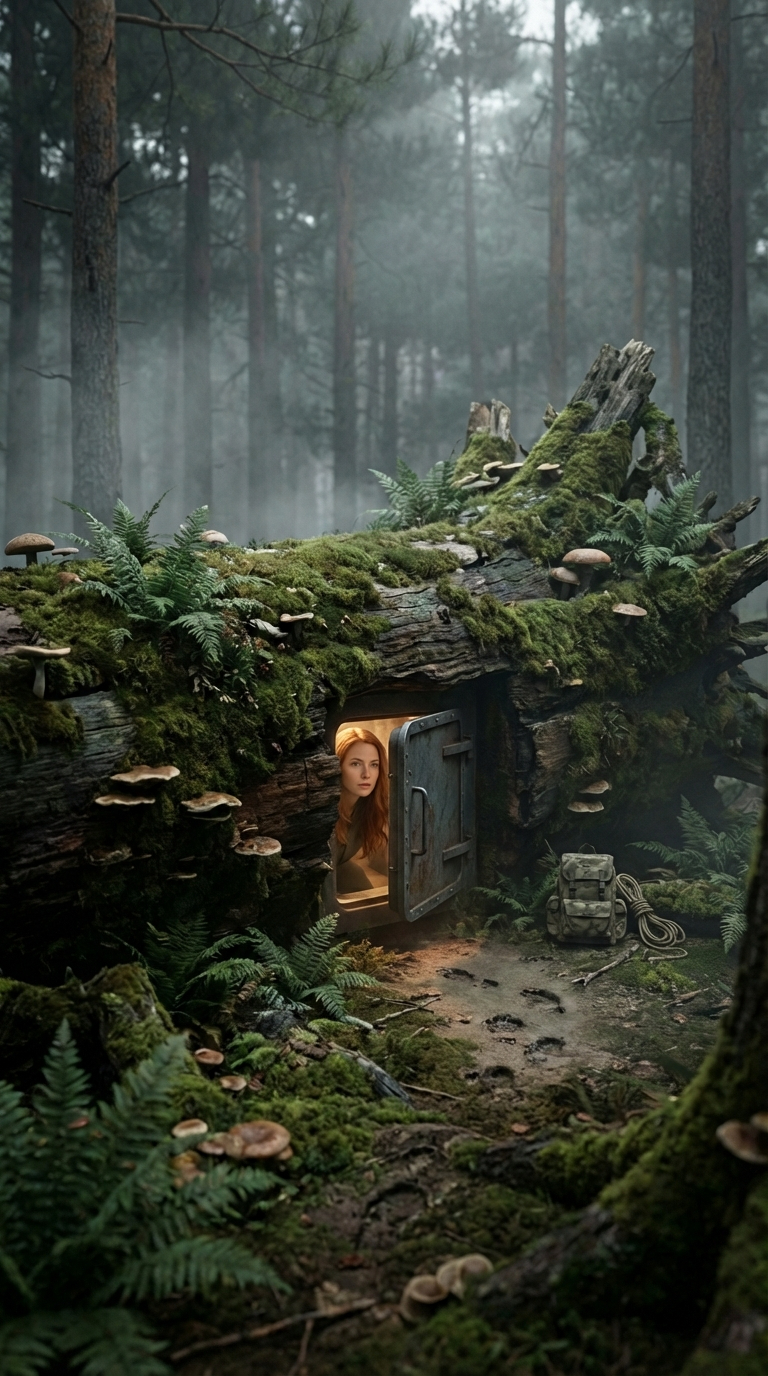
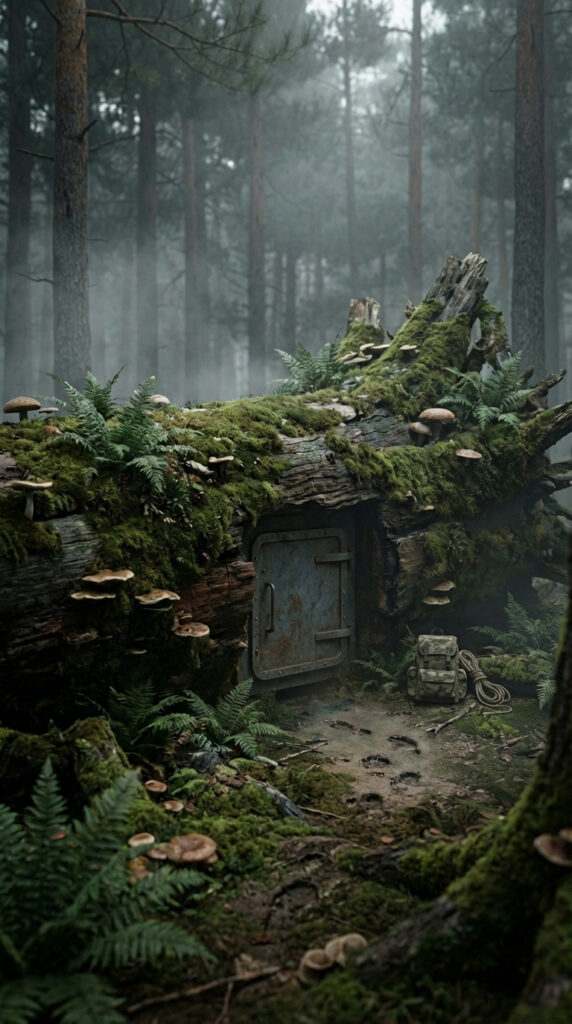
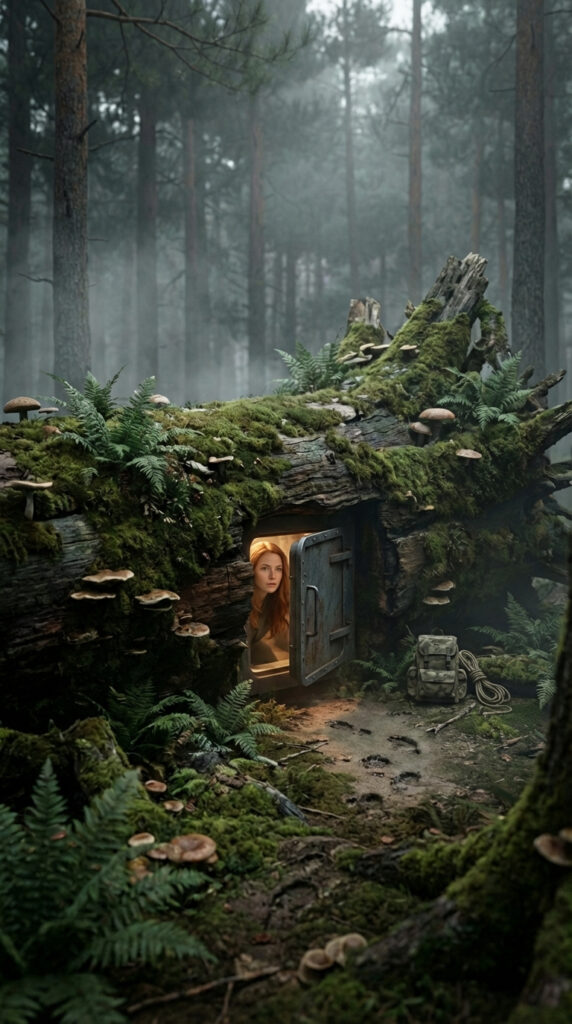
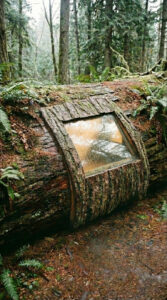
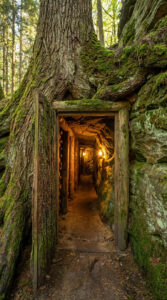
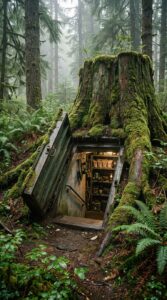
Hidden deep within a quiet evergreen forest, this concealed bunker is built inside a massive fallen tree trunk, transforming natural camouflage into a fully functional underground living space. From the outside, the structure appears to be nothing more than an aged moss-covered log resting naturally on the forest floor. A reinforced steel hatch integrated into the hollow trunk serves as the only entrance, allowing the shelter to remain visually undetectable while providing secure access to the interior below.
The construction begins by stabilizing the tree structure and excavating a reinforced underground chamber beneath it. Structural concrete walls and internal timber framing create a durable shell designed to resist soil pressure, moisture, and seasonal temperature changes. The tree itself acts as a natural disguise, protecting the entrance from weather exposure and helping the bunker blend seamlessly into its surroundings.
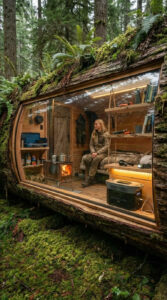
Inside, the layout is divided into two functional rooms designed for long-term ???????????? and comfort. The first room serves as the main living and sleeping area, combining a compact bedroom and lounge space within a warm, minimalist environment. A built-in bed sits along the structural frame, while a small seating area and wooden table create a comfortable place for rest and daily activities. Integrated shelving provides organized storage, and a compact kitchenette allows basic cooking without sacrificing space efficiency. Soft ambient lighting powered by portable energy stations creates a calm and livable atmosphere despite the underground setting.
The second room functions as the utility and survival zone. This space is dedicated to supplies, hygiene, and essential life-support systems. Shelving units store preserved food, water reserves, and emergency equipment, while a compact bathroom module includes a shower, toilet, and sink designed for efficient water usage. A filtration system manages clean water supply, and concealed technical compartments house batteries, ventilation equipment, and airflow systems that maintain fresh air circulation throughout the bunker.
Carefully planned ventilation channels allow air exchange without exposing the shelter’s location, while layered insulation keeps interior temperatures stable year-round. Every element of the design focuses on practicality, concealment, and reliability, turning a hidden forest structure into a fully operational survival habitat.
The result is a realistic off-grid bunker concept that merges natural camouflage with modern engineering — a discreet refuge offering safety, independence, and comfort beneath the forest floor while remaining almost invisible to the outside world.
Compact Underground Living Room & Bedroom — A Cozy Dual-Purpose Survival Interior
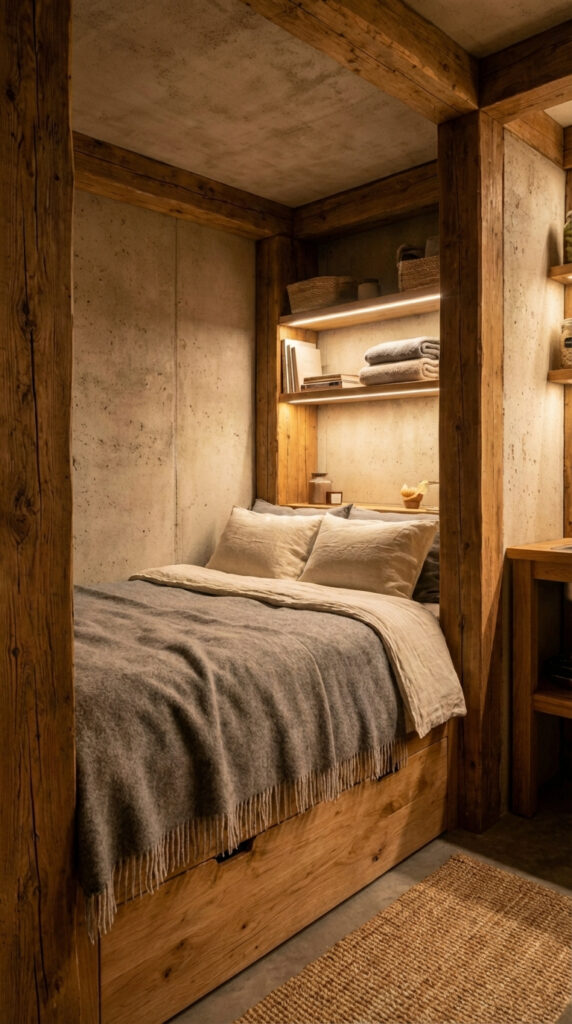
Designed to maximize comfort within a protected underground environment, this compact living room and bedroom combine relaxation, sleep, and daily living into a single warm and efficient space. Built with reinforced structural walls and exposed timber framing, the interior balances durability with a natural cabin-like atmosphere, transforming a survival shelter into a welcoming off-grid home.
The sleeping area is positioned slightly recessed within the structure, creating a private and calm zone while maintaining an open layout. A comfortable bed sits against the reinforced wall, surrounded by soft textiles and integrated shelving that provide storage without overcrowding the room. Warm indirect lighting installed along wooden beams enhances depth and creates a peaceful environment suitable for long stays underground.
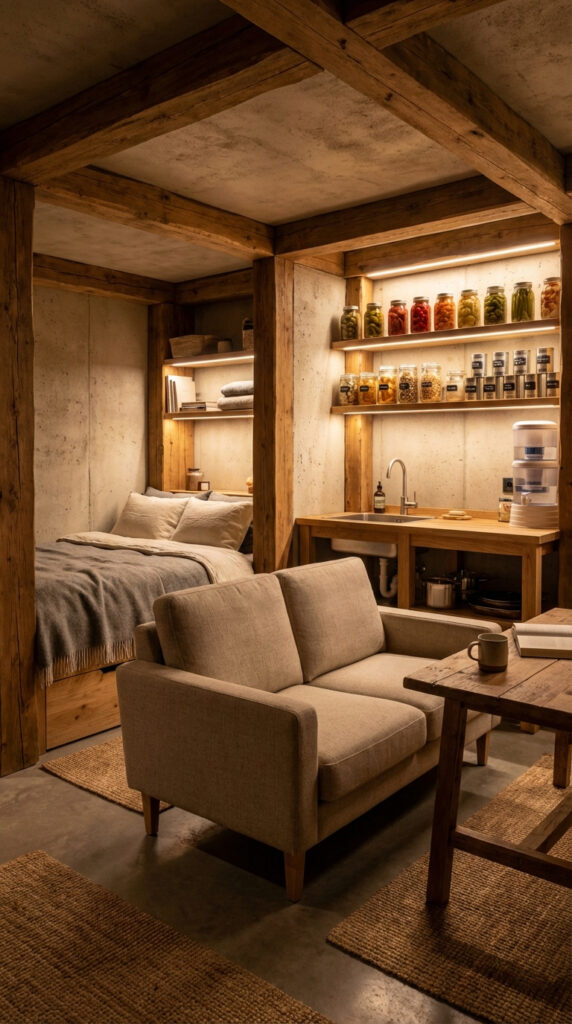
The living space functions as a relaxation and social area, featuring a compact sofa and a simple wooden table designed for reading, planning, or quiet rest. Natural materials and neutral tones reduce visual clutter and help the interior feel larger despite its limited footprint. Every piece of furniture is selected for practicality, allowing free movement while maintaining a sense of comfort normally found in above-ground cabins.
Adjacent to the seating area, a minimalist kitchenette provides essential functionality. A small sink, preparation surface, and organized shelving allow basic meal preparation while keeping supplies easily accessible. Preserved foods and dry goods are stored in labeled containers along illuminated shelves, emphasizing efficiency and long-term readiness without sacrificing aesthetics.
Soft ambient lighting, integrated storage solutions, and carefully planned proportions allow the room to serve multiple purposes simultaneously. The result is a highly efficient underground living environment where sleeping, cooking, and relaxation coexist seamlessly, proving that even a compact bunker interior can feel warm, livable, and intentionally designed rather than purely utilitarian.
Supply Storage & Bathroom Module — The Functional Core of the Underground Bunker
Designed as the operational heart of the shelter, this supply and sanitation area combines long-term storage, hygiene facilities, and technical systems into one highly organized survival space. Built with reinforced structural walls and durable finishes, the room prioritizes efficiency, accessibility, and reliability while maintaining the warm aesthetic of a livable underground environment.
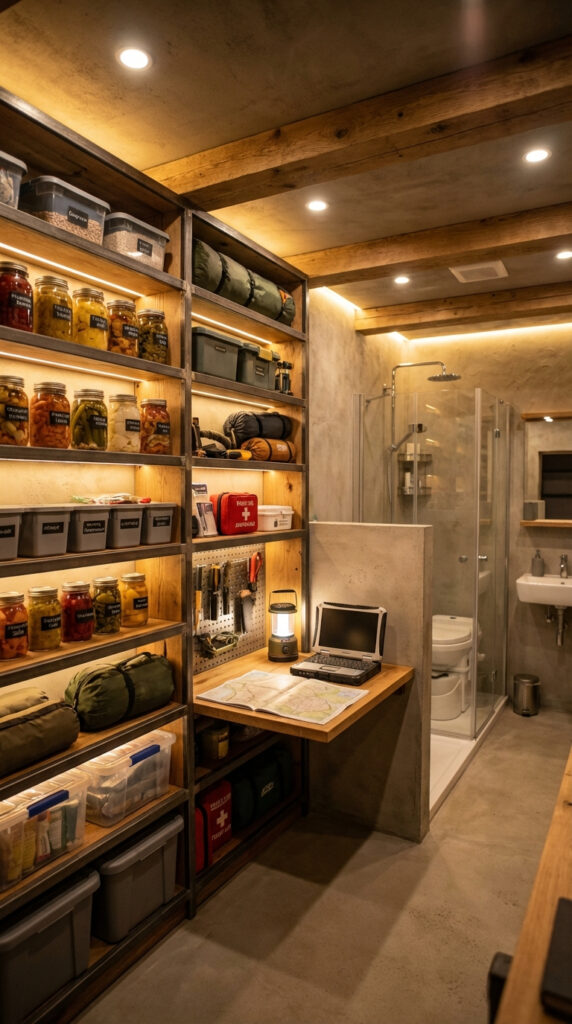
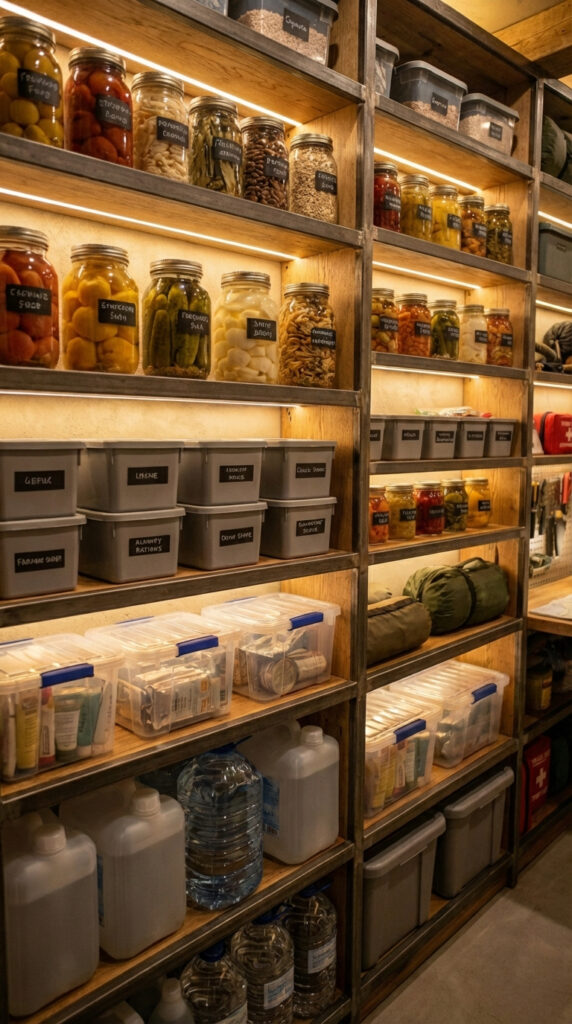
One side of the room is dedicated entirely to organized food and equipment storage. Custom-built shelving units hold preserved foods, dry goods, and emergency supplies arranged in clearly labeled containers for quick identification and inventory control. Glass jars filled with preserved vegetables, grains, and ready-to-use ingredients allow long-term food storage while keeping contents visible and easy to manage. Below the shelves, sealed containers store medical kits, tools, camping gear, and backup essentials, ensuring that every resource has a defined and protected place.
Water reserves are stored in reinforced containers positioned along the lower levels to maintain stability and efficient weight distribution. This placement also allows easy integration with the bunker’s filtration and water management system, providing a reliable clean water supply for both daily use and emergency situations. Integrated lighting beneath each shelf improves visibility and reduces energy consumption while creating a clean, organized workspace atmosphere.
Adjacent to the storage wall, the compact sanitation module includes a fully functional shower, toilet, and small sink designed for efficient water usage in an off-grid environment. Moisture-resistant materials and simple geometric surfaces make the space easy to clean while preventing long-term humidity damage. A dedicated ventilation system removes excess moisture and maintains fresh airflow, helping preserve both comfort and structural integrity.
A small workstation positioned nearby allows monitoring of supplies, navigation planning, or equipment maintenance, turning the room into both a technical control point and a preparation area. Together, the storage systems and bathroom facilities form a practical survival infrastructure, ensuring that the bunker remains self-sufficient, organized, and fully livable during extended stays underground.
Hidden Tree-Trunk Survival Bunker — Technical Blueprint & Structural Layout
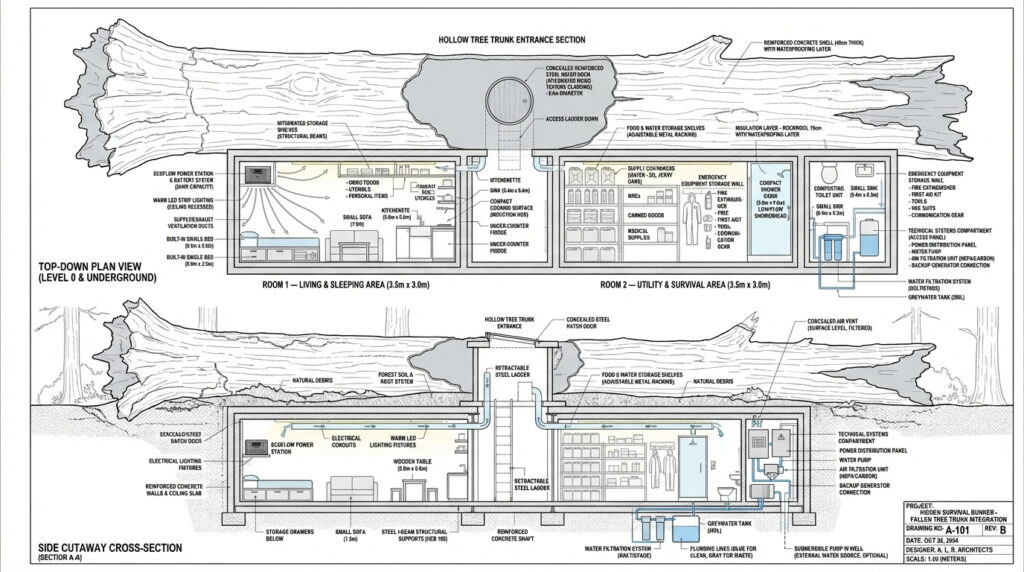
This architectural blueprint illustrates a concealed underground survival bunker integrated directly beneath a hollow fallen tree, combining natural camouflage with practical engineering design. The diagram presents both a top-down plan view and a side cutaway cross-section, clearly showing how the structure remains hidden within the forest environment while maintaining full residential functionality below ground level.
The entrance system is built inside a naturally hollow tree trunk, where a reinforced steel hatch blends into the organic wood structure, making the access point nearly invisible from the outside. A vertical reinforced shaft leads downward via a retractable ladder, providing secure controlled entry while minimizing exposure to weather and external detection. The tree itself acts as a protective shell, shielding the access point from rain, debris, and temperature fluctuations.
The blueprint divides the bunker into two primary functional zones. Room One serves as the living and sleeping area, designed as a compact residential space optimized for comfort and efficiency. The layout includes a built-in bed, small sofa, work surface, and kitchenette positioned along structural walls to maximize usable floor area. Integrated storage compartments and shelving allow everyday supplies to remain accessible without cluttering the interior. Electrical systems powered by portable energy stations distribute lighting and essential power through concealed conduits, while ventilation channels ensure constant airflow throughout the living space.
Room Two functions as the utility and survival module, dedicated to long-term sustainability and essential infrastructure. Clearly labeled storage racks hold preserved food, water containers, emergency equipment, and technical tools organized for rapid access. The sanitation section includes a compact shower, toilet, and sink supported by a water filtration system and greywater management tanks. Mechanical compartments house electrical distribution panels, air filtration equipment, and backup system connections, forming the operational backbone of the shelter.
The cross-section view highlights reinforced concrete walls and ceiling slabs engineered to withstand soil pressure and moisture intrusion. Waterproofing layers, insulation barriers, and controlled ventilation shafts maintain a stable internal climate year-round. Air intake and exhaust routes are carefully positioned to remain hidden at ground level while ensuring safe oxygen circulation.
Overall, the blueprint demonstrates a realistic off-grid bunker concept where concealment, structural safety, and livability are balanced within a compact underground footprint. By integrating modern survival infrastructure beneath a natural forest element, the design achieves both visual stealth and practical long-term habitation capability, making it a discreet yet fully functional hidden refuge.
Leave a Reply