Suspended Woven Forest Pod Cabin with Lifting Mechanism
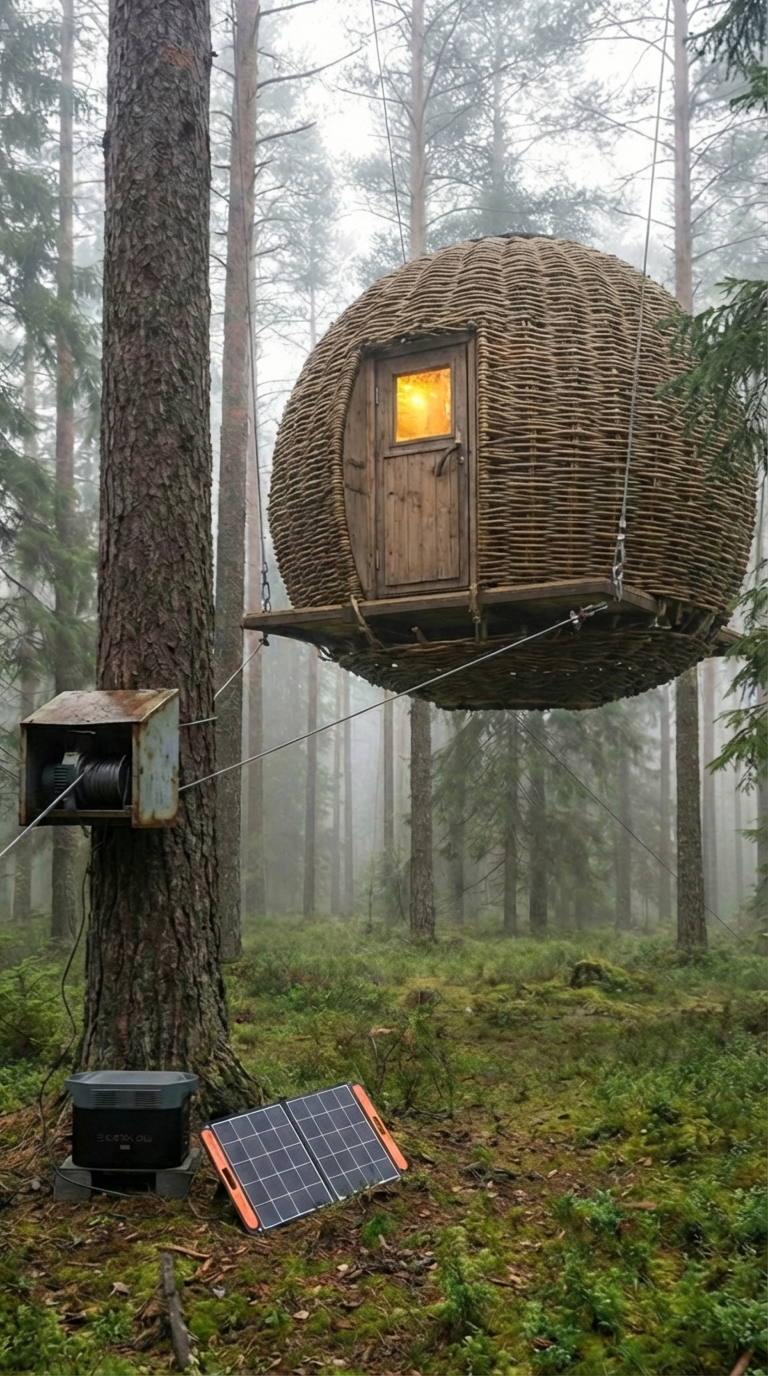
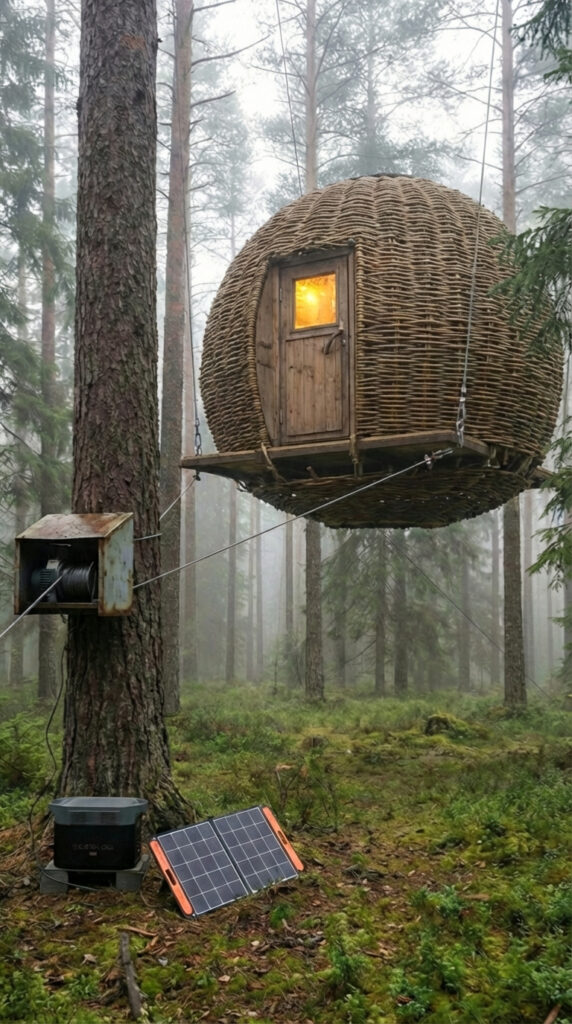
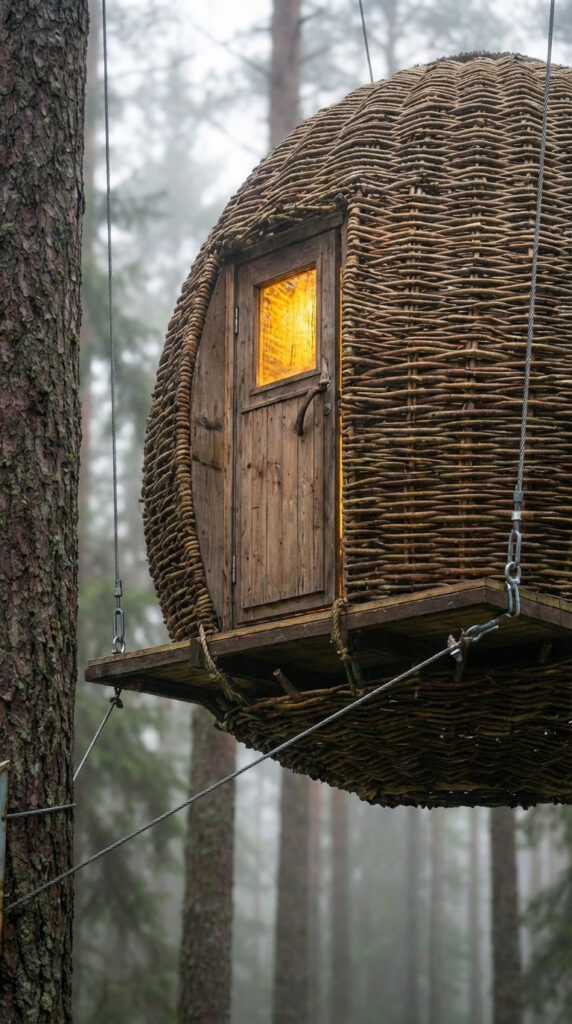
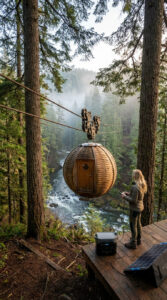
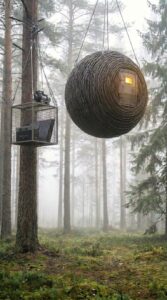
Blending naturally into the surrounding wilderness, this suspended woven pod cabin is constructed using reinforced handwoven natural wood branches and flexible vine-style materials that create a durable yet organic structural shell. The spherical design distributes weight evenly while allowing the cabin to remain lightweight and visually integrated with the forest canopy. The exterior weaving pattern mimics natural forest textures, allowing the structure to remain discreet while providing strong environmental protection.
The cabin is mounted on a reinforced lifting platform system connected to high-tension steel cables and stabilizing anchor lines secured to surrounding trees. This mechanical lifting system allows the shelter to be raised above ground level, protecting it from flooding, wildlife intrusion, and environmental hazards. The elevation also improves ventilation, reduces ground moisture exposure, and enhances security while maintaining a minimal environmental footprint.
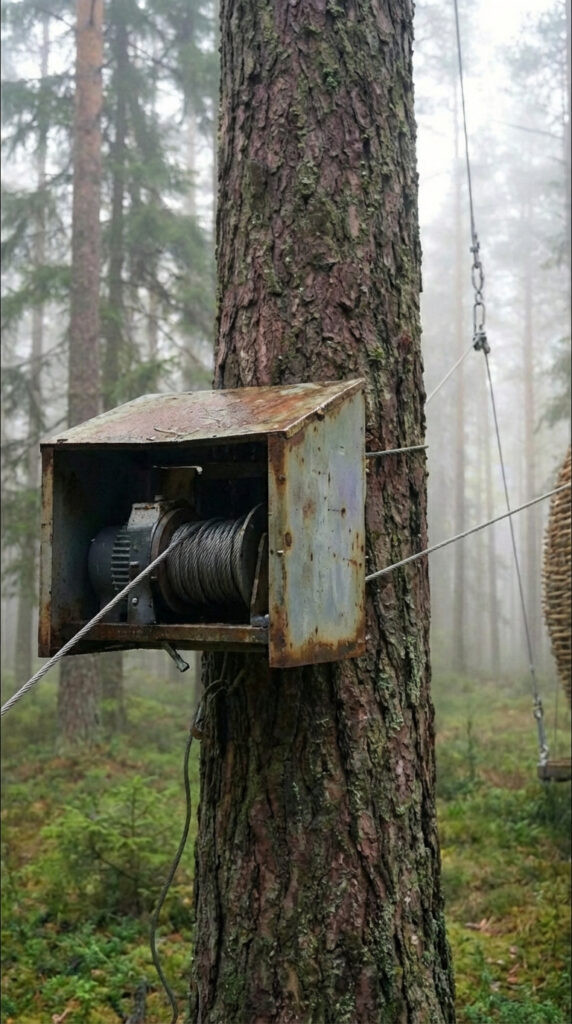
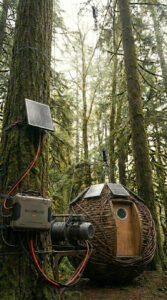
The lifting mechanism operates using a compact manual or electric winch system mounted discreetly on a nearby tree. This system allows controlled vertical movement, enabling residents to raise the cabin during nighttime or severe weather conditions and lower it for easier access when needed. The lifting platform is reinforced with shock-absorbing suspension joints that reduce structural stress during movement and help maintain cabin stability during strong wind conditions.
Inside, the woven pod structure creates a naturally insulated interior living space. The curved spherical shape improves heat retention and airflow circulation while maximizing usable interior volume. The cabin interior typically includes insulated wooden flooring, compact storage shelves, a sleeping platform, and integrated off-grid lighting powered by portable battery stations and solar charging panels positioned nearby.
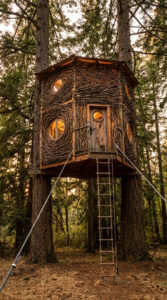
The entrance door is reinforced with weather-sealed wooden panels and locking mechanisms designed to maintain insulation and safety while preserving the organic appearance of the woven structure. Small integrated ventilation gaps within the weaving allow natural airflow without compromising weather protection or structural integrity.
The woven shell is treated with natural waterproof sealants and fire-resistant coatings that extend the durability of the organic materials while maintaining flexibility under environmental stress. These treatments protect the structure from moisture, insects, and seasonal weather fluctuations.
This suspended woven forest pod cabin represents an innovative approach to eco-friendly off-grid housing. By combining traditional handwoven construction techniques with modern lifting and stabilization engineering, the shelter provides a unique elevated wilderness retreat designed for stealth, sustainability, and long-term remote living adaptability.
Electric Lifting Mechanism and Off-Grid Power System
The suspended woven forest pod cabin is equipped with an advanced electric lifting mechanism designed to safely raise and lower the shelter while maintaining structural stability and environmental safety. The lifting system operates using a high-torque electric winch mounted inside a protective weather-resistant steel housing secured to a nearby support tree. This winch controls reinforced steel cable lines connected to the suspension frame of the cabin, allowing smooth and controlled vertical movement.
The electric winch system is engineered to handle dynamic weight loads and environmental stress while maintaining precise lifting control. Heavy-duty braided steel cables distribute the load evenly across multiple anchor points, reducing structural strain on both the cabin and surrounding trees. Stabilizing side cables help prevent unwanted rotation or swinging motion during elevation changes, ensuring safe and balanced movement even during moderate wind conditions.
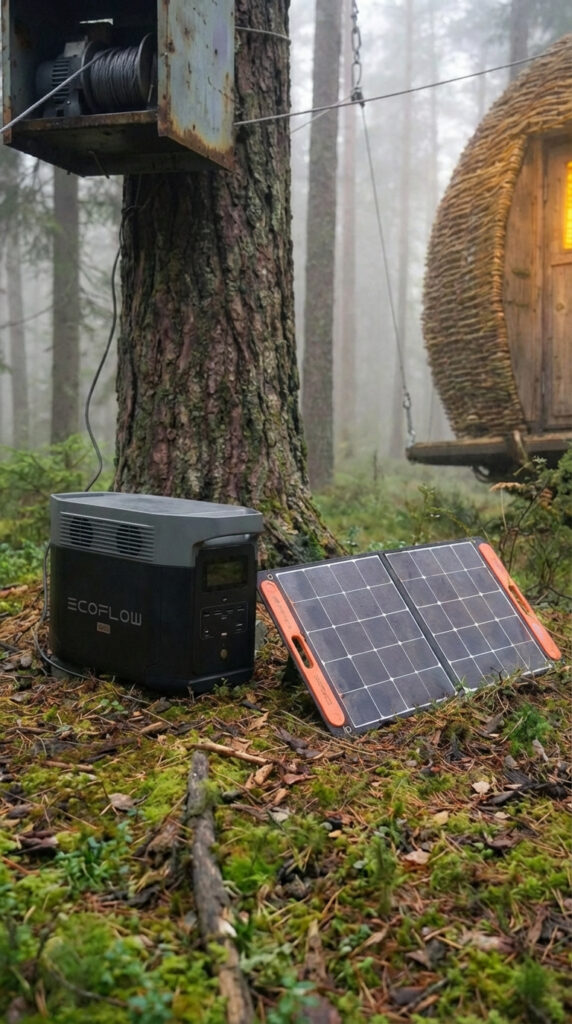
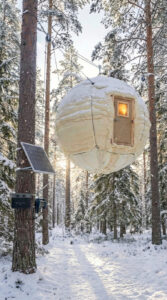
Power for the lifting system is supplied through portable off-grid battery stations, allowing the mechanism to operate independently from traditional electrical infrastructure. These battery units are charged using foldable high-efficiency solar panels positioned in nearby clearings to capture maximum sunlight exposure. The solar charging system provides renewable energy that supports both the lifting mechanism and interior cabin power needs, including lighting, ventilation, and electronic devices.
The lifting mechanism can be operated using a remote control or manual safety switch located near the base anchor tree. Built-in safety sensors monitor cable tension and motor performance to prevent overload, sudden drops, or mechanical failure. Emergency manual override controls allow the cabin to be lowered safely in the event of power loss or mechanical malfunction.
The protective steel housing surrounding the winch motor shields the system from rain, humidity, and forest debris, ensuring long-term durability in harsh wilderness environments. Internal corrosion-resistant components extend the lifespan of the lifting system while minimizing maintenance requirements.
This electric elevation system significantly enhances the security and adaptability of the woven pod cabin. By allowing the shelter to be raised above ground level, it provides protection from wildlife, flooding, and environmental hazards while improving airflow and overall safety. The integration of renewable solar power with the lifting technology supports sustainable off-grid living while maintaining reliable and efficient operation in remote forest locations.
Interior Architecture
The interior architecture of the woven suspended pod cabin is designed around compact efficiency, thermal comfort, and natural structural harmony. The spherical woven walls create a naturally insulated shell that helps retain heat while allowing controlled airflow through the organic weaving pattern. This curved interior design maximizes usable space while maintaining structural strength and environmental balance.
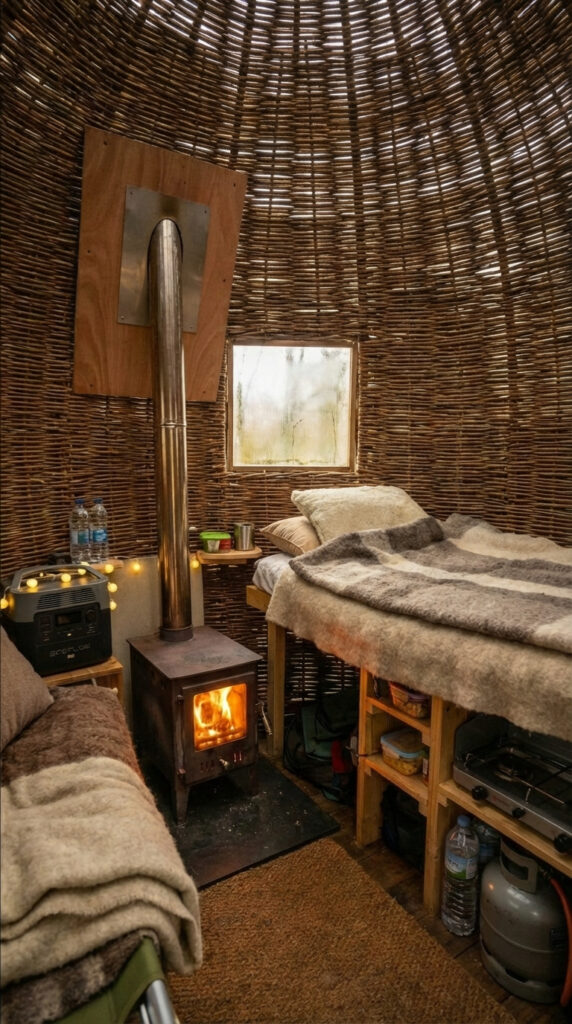
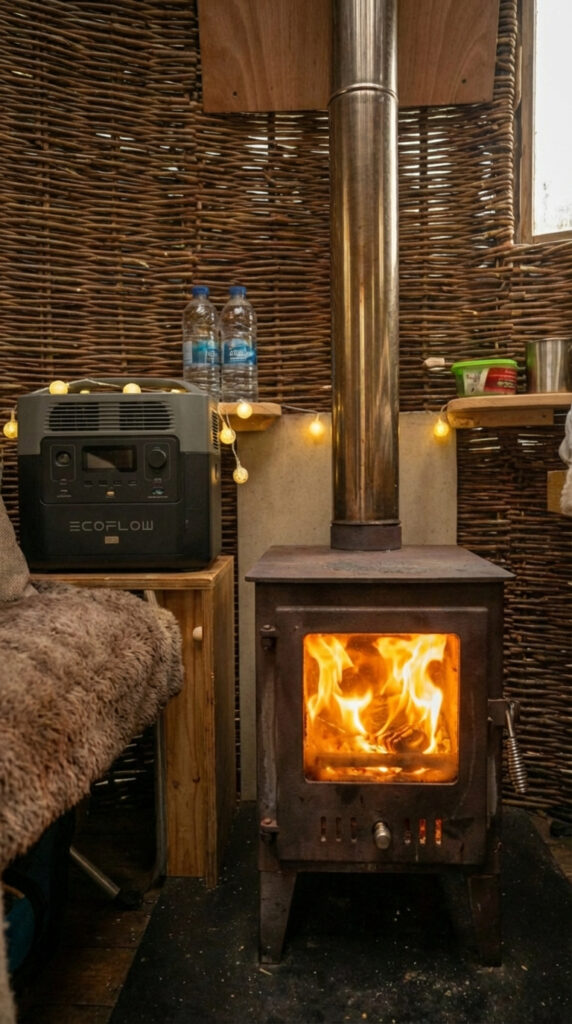
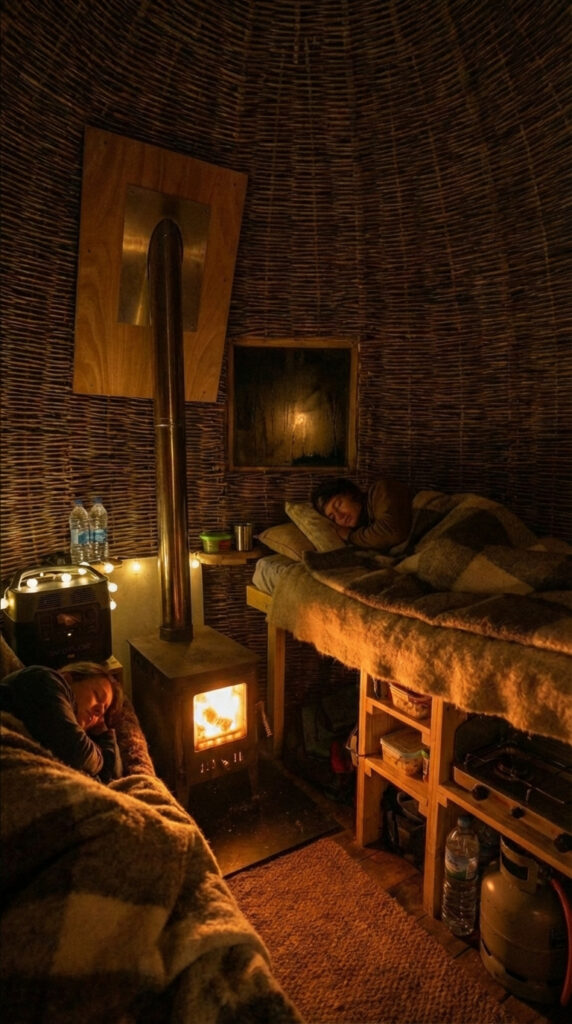
The layout is carefully organized to combine sleeping, heating, and cooking zones within a single multifunctional living area. A central wood-burning stove serves as the main heat source, evenly distributing warmth throughout the rounded interior. Elevated wooden sleeping platforms provide storage space underneath for supplies, water, and equipment, allowing efficient use of limited floor space.
Natural wood framing supports shelving, compact cooking systems, and off-grid energy units, maintaining a warm and functional survival living environment. Small integrated windows provide daylight and ventilation while preserving insulation and privacy. Soft low-energy lighting enhances nighttime comfort and maintains energy efficiency.
Overall, the interior architecture focuses on minimalism, sustainability, and practical wilderness living, allowing the compact pod structure to function as a fully self-sufficient off-grid shelter.
Heating and Energy Supply System
The suspended woven pod cabin uses a hybrid off-grid heating and energy system designed to provide reliable warmth, electricity, and long-term remote wilderness environments.
The primary heat source inside the cabin is a compact wood-burning stove installed in the central living area. The stove efficiently distributes heat throughout the spherical interior thanks to the rounded woven wall structure, which naturally helps circulate warm air. The reinforced chimney pipe safely directs smoke outside while maintaining proper ventilation and air quality. This heating system allows residents to maintain comfortable temperatures during cold seasons while also providing the ability to boil water and cook food when needed.
For electrical power, the cabin relies on portable high-capacity battery stations that support interior lighting, charging devices, ventilation systems, and small appliances. These power units are connected to foldable solar panels placed outside the cabin, allowing renewable energy generation without requiring connection to traditional infrastructure.
The solar panels provide continuous charging during daylight hours, storing energy inside the battery station for nighttime and low-sun conditions. This combination ensures stable off-grid electricity while maintaining environmental sustainability.
Low-energy LED lighting is installed throughout the cabin to maximize efficiency and reduce power consumption. Additional backup power can be supplied through portable generators or alternative renewable charging sources if required during extended cloudy or winter periods.
Together, the wood stove heating system and solar-powered battery energy supply create a self-sufficient and reliable living environment. This integrated approach allows the cabin to function independently while maintaining warmth, comfort, and modern off-grid functionality in remote forest conditions.
Overnight Stay for Two People
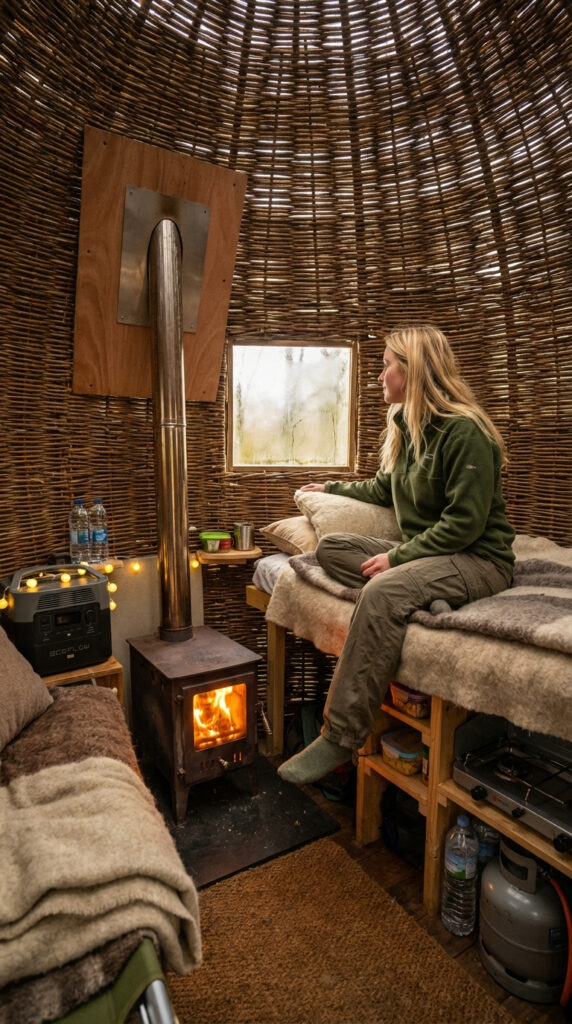
The suspended woven pod cabin is carefully designed to provide a safe and comfortable overnight stay for two people while maintaining efficient use of limited interior space. The rounded woven structure naturally retains heat, creating a warm and protected environment even during cold wilderness nights.
Inside the cabin, two compact elevated sleeping platforms are positioned along opposite sides of the interior to maximize space while allowing easy movement through the central area. The beds are insulated with thermal blankets and natural wool coverings that help maintain body heat and improve sleeping comfort in off-grid conditions.
The central wood-burning stove serves as the primary nighttime heating source, providing steady radiant warmth that spreads evenly throughout the spherical cabin. The woven walls help circulate warm air naturally, allowing the interior to remain comfortable while reducing fuel consumption. The soft glow of the stove fire combined with low-energy LED lighting creates a calm and relaxing atmosphere suitable for rest and recovery.
Portable off-grid battery power stations provide quiet energy for interior lighting, device charging, and small comfort equipment during nighttime hours. The small ventilation window allows fresh air circulation while preventing condensation buildup inside the cabin during sleep.
The compact layout ensures that both occupants have access to essential supplies such as water, emergency equipment, and cooking tools stored beneath the sleeping platforms. Despite its small footprint, the cabin offers a private and secure environment that supports extended wilderness stays for two people while maintaining safety, warmth, and energy independence.
architectural visualization. It is not a real construction project.



Leave a Reply