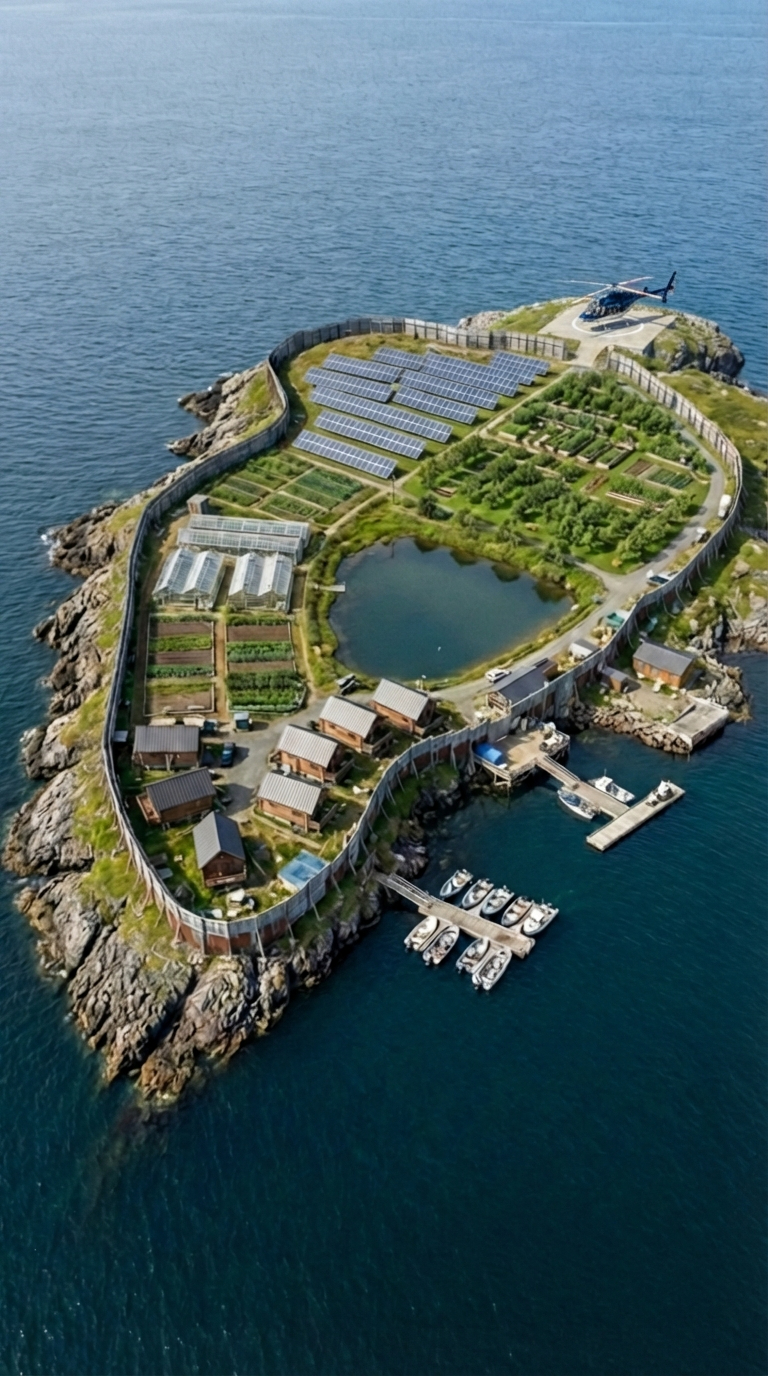
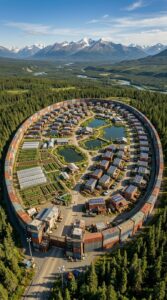
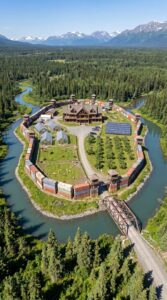
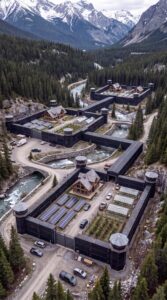
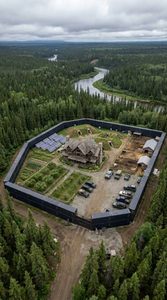
This isolated island represents a next-generation concept of autonomous living and long-term resilience. Surrounded by open water and protected by natural rocky terrain, the island is designed as a fully self-sufficient settlement capable of operating independently from the mainland.
At the core of the concept is energy independence. Large-scale solar panel arrays provide renewable electricity for residential cabins, greenhouses, water systems, and security infrastructure. Energy storage systems ensure stable power supply even during extended periods of low sunlight.
Food security is achieved through a combination of controlled greenhouses, open garden plots, and freshwater resources. The island includes cultivated fields, fruit and vegetable gardens, and a central water reservoir that supports irrigation and daily consumption. A small marina allows access by boat, while a helipad ensures rapid transportation when needed.
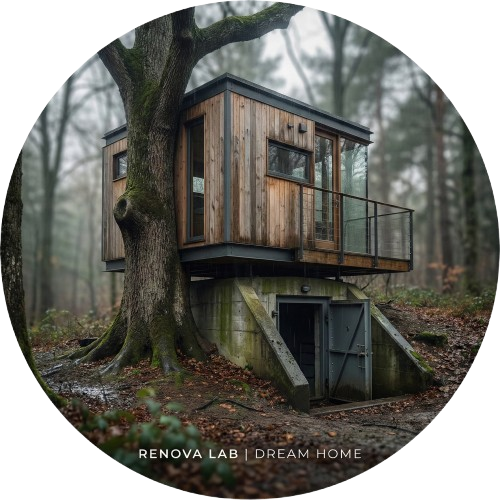
The residential zone consists of compact wooden cabins designed for efficiency, comfort, and durability. These structures are positioned strategically to withstand coastal weather while maintaining privacy and access to shared infrastructure. Beneath the surface, reinforced underground spaces can be integrated for storage, technical systems, or emergency shelter use.
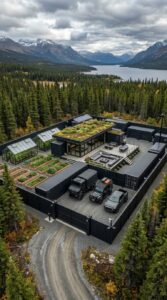
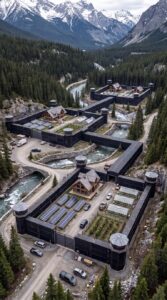
Security and monitoring are built into the island’s layout. Perimeter fencing, controlled access points, and elevated observation areas provide situational awareness without creating an aggressive or militarized appearance. The design emphasizes discretion, balance with nature, and long-term sustainability.
This island is not a prediction, but a concept — a visualization of how autonomous living, renewable energy, and resilient architecture could merge into a single, self-reliant environment. It reflects a growing interest in off-grid lifestyles, energy independence, and future-ready habitats.
Residential Cabins on the Island
The island features 7 autonomous residential cabins, designed for long-term off-grid living. Each cabin is optimized for 2 residents, allowing a total of 14 people to live on the island simultaneously while maintaining comfort, privacy, and energy efficiency.
Exterior Design
Each cabin is constructed with a compact wooden structure, raised slightly above ground for natural ventilation and moisture protection. The exterior design blends into the island’s landscape while withstanding harsh coastal conditions such as wind, salt air, and seasonal storms.
Key exterior features include:
Durable insulated walls and roofing
Large panoramic windows with ocean views
Individual outdoor seating areas
Energy-efficient doors and sealed window frames
The layout of the cabins ensures clear spacing between units, preserving privacy while maintaining easy access to shared island infrastructure.
Interior Layout
Inside, each cabin is carefully planned to maximize space without feeling cramped. Natural wood finishes create a warm, cozy atmosphere suitable for extended stays.
Each cabin includes:
A sleeping area with a full-size bed
A compact living space with seating and storage
A small dining table for two
A kitchenette with induction cooktop, sink, and refrigerator
Built-in storage cabinets and shelving
Large windows provide natural daylight throughout the day, reducing the need for artificial lighting.
Bathroom & Utilities
Every cabin is equipped with a private bathroom, featuring:
A toilet system connected to the island’s waste management solution
A compact shower
Hot water supplied by the island’s centralized energy system
Water usage is optimized through low-flow fixtures to support long-term autonomy.
Energy & Climate Control
Cabins are powered by the island’s solar energy system, with stable electricity available at all times. Each unit includes:
Energy-efficient lighting
Climate control for heating and cooling
Ventilation systems to maintain fresh air circulation
All systems are designed to operate quietly and reliably, ensuring comfort without excessive energy consumption.
Living Experience
The cabins are not intended as luxury villas, but as practical, resilient homes for people who value independence, sustainability, and safety. They offer everything needed for daily life while encouraging a minimalist, self-sufficient lifestyle.
Together, these 7 cabins form the core of the island’s residential zone — a small, well-balanced community capable of living fully off-grid for extended periods.
Garden and Food Production Area
A key part of this island concept is its self-sustaining garden and food production system, designed to support long-term living without external supplies.
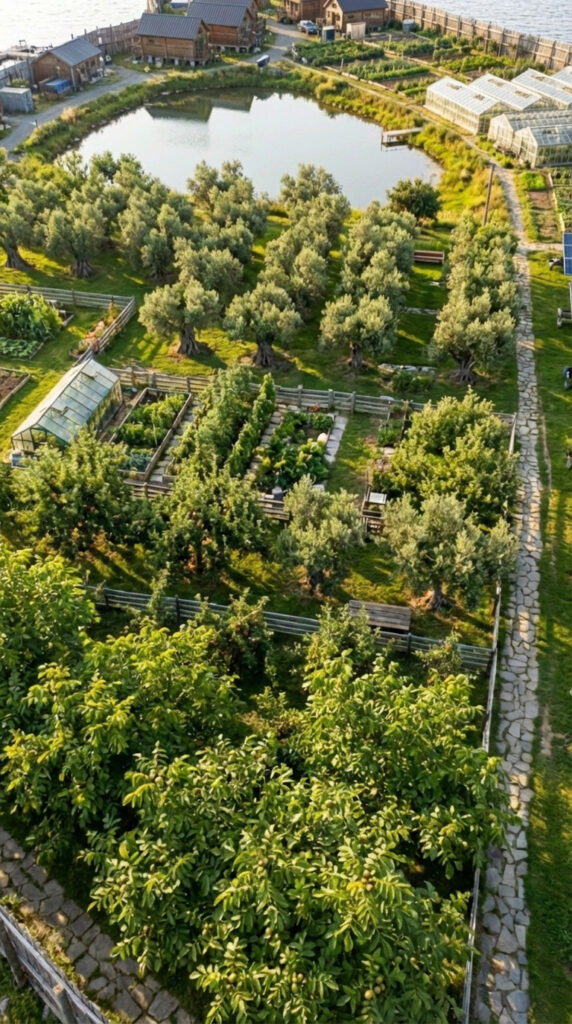
The island features a diverse orchard with fruit trees, nut trees, and olive trees, carefully arranged to maximize sun exposure and natural wind protection. These perennial crops provide a stable source of fruits, oils, and nuts year after year, reducing dependence on imported food.
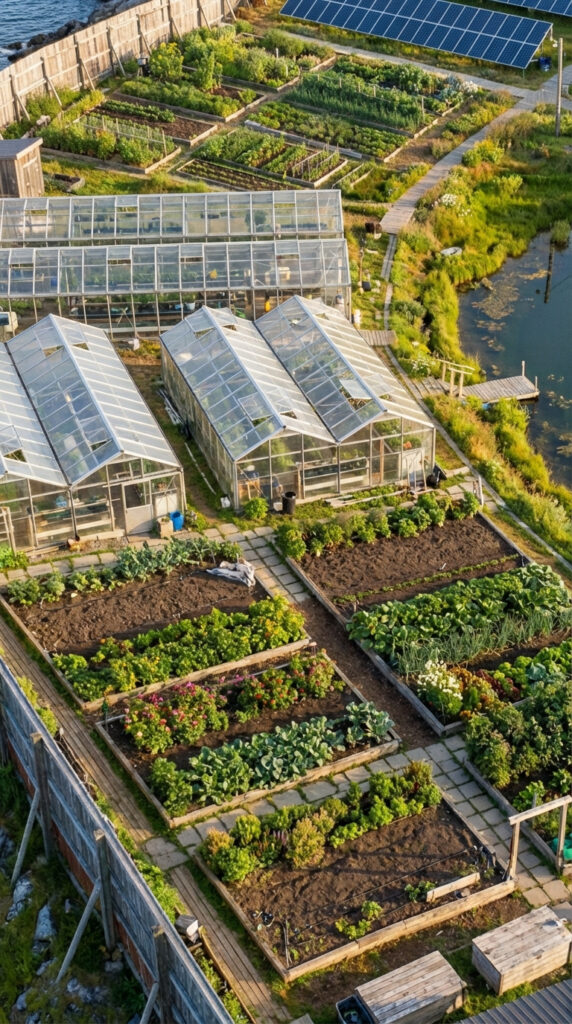
Between the orchard zones, there are organized vegetable beds growing seasonal produce such as leafy greens, root vegetables, legumes, and herbs. The layout allows for crop rotation and efficient irrigation, ensuring soil health and consistent yields throughout the year.
Several greenhouses are integrated into the garden area. They extend the growing season and protect sensitive crops from wind and salt air coming from the ocean. Inside the greenhouses, vegetables and seedlings can be grown year-round, even during colder or stormy periods.
A small freshwater pond nearby supports irrigation and helps regulate the local microclimate. Solar panels positioned close to the gardens power irrigation pumps, lighting, and greenhouse ventilation, making the entire system energy-independent.
This garden is designed not as a decorative element, but as a functional food ecosystem capable of supporting the island’s residents with fresh produce, oils, and plant-based nutrition over long periods.
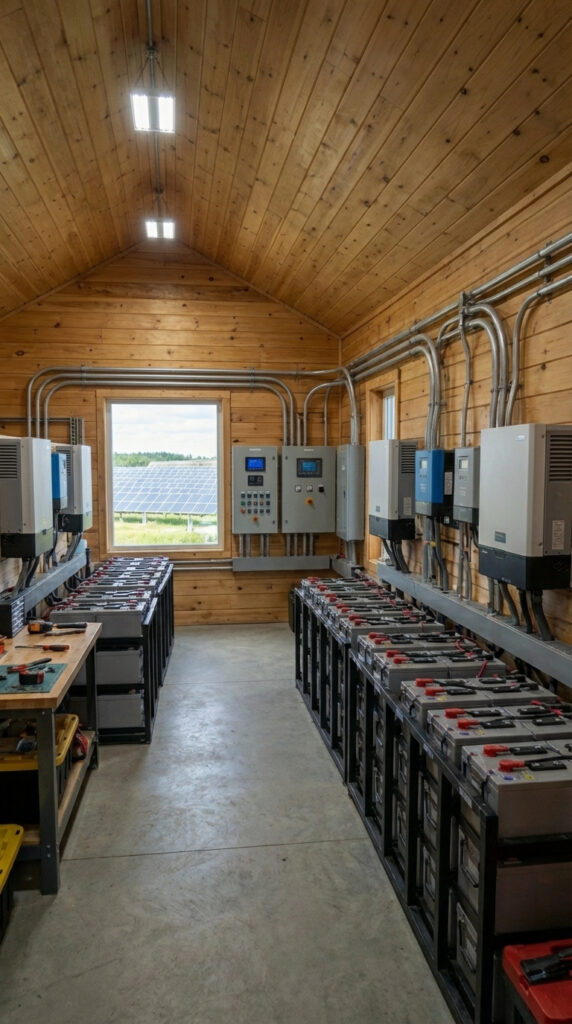
Power Supply Room
This image shows the island’s main power supply room built inside a compact wooden utility structure. The room contains large-capacity battery banks, inverters, charge controllers, and electrical distribution panels connected directly to the island’s solar array. All wiring is neatly organized and protected, ensuring stable, off-grid electricity for the cabins, greenhouses, security systems, and common areas around the clock.
Water Desalination and Storage Room
This image shows the island’s water treatment room equipped with a seawater desalination system and multi-stage filtration units. Fresh water is stored in large tanks and containers, with additional reserves for long-term use. The system provides clean drinking water for daily living, showers, cooking, and irrigation, making the island fully independent from external water sources.
Helicopter Landing Pad
This underground shelter includes a dedicated recreation and entertainment room designed to support psychological comfort, relaxation, and normal daily routines during extended underground stays. The space functions as a private home theater and leisure zone, providing a sense of normalcy even in emergency conditions.
This project is a conceptual design created for inspiration and architectural visualization. It is not a real construction project or a technical blueprint





Leave a Reply