A fully autonomous floating home designed for sustainable living, energy independence, and complete privacy in nature.
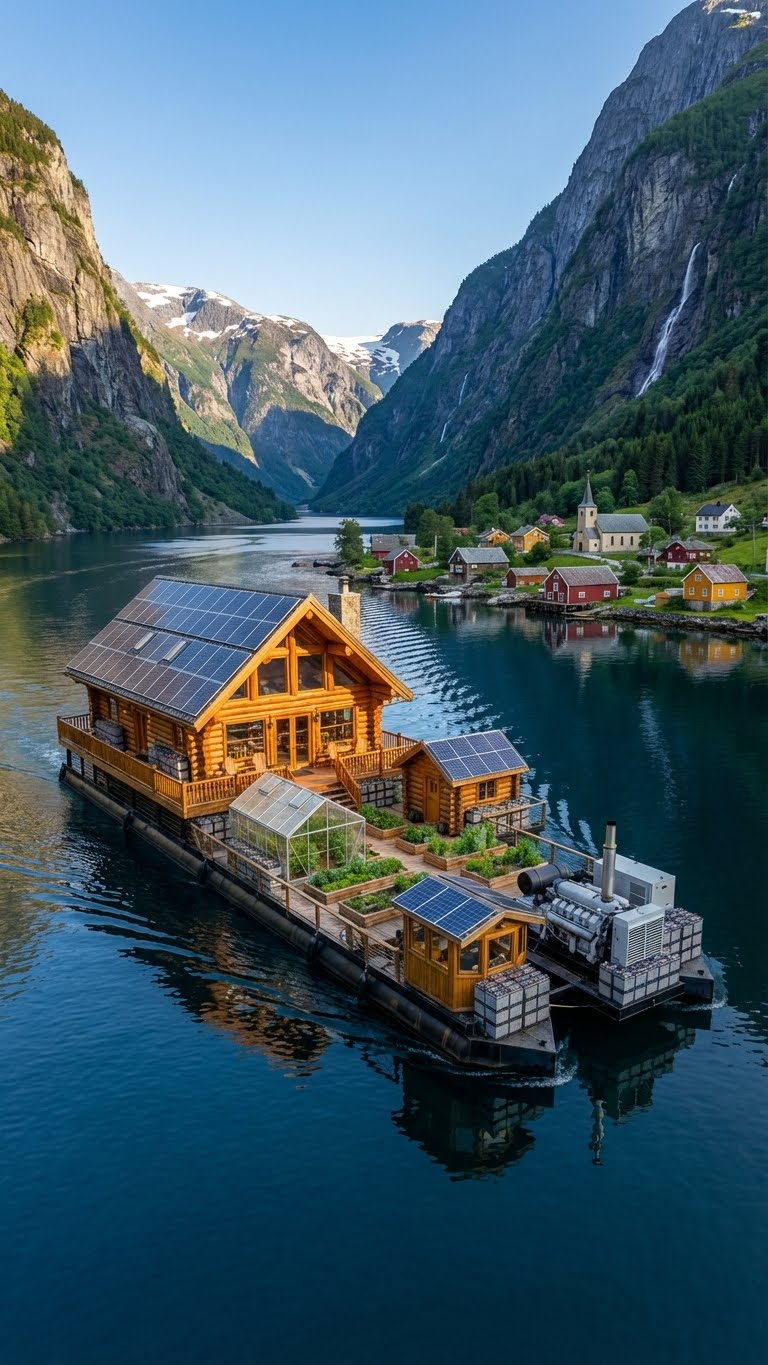
This floating off-grid house is a conceptual architectural design created to explore sustainable living on water. Positioned on a calm forest lake and surrounded by mountains, the structure combines natural materials, modern energy systems, and functional outdoor space into a single self-sufficient platform. The design focuses on independence, resilience, and harmony with the surrounding environment rather than permanent urban infrastructure.
Navigation & Control System
Integrated navigation and control system designed for precise maneuvering of a floating off-grid house. The helm combines traditional marine controls with modern digital navigation, allowing safe movement across remote lakes while maintaining full autonomy and situational awareness.
The navigation system includes real-time GPS mapping, route planning, and waterway monitoring displayed on a dedicated digital interface. Manual steering controls provide reliability, while electronic systems assist with positioning, docking, and low-speed maneuvering. This setup allows the floating house to be relocated or repositioned without external assistance.
Energy Storage & Autonomy
Autonomous energy storage system with high-capacity battery banks and charge controllers, designed to support continuous off-grid living without connection to external power grids. Roof-mounted solar panels optimized for maximum energy production, providing clean and renewable power for daily living on a remote floating house.
The off-grid power system combines solar generation with battery storage to ensure stable energy supply throughout the day and night. Excess energy produced during peak sunlight hours is stored for later use, allowing the house to operate independently even during cloudy weather or reduced daylight conditions.
The floating house is equipped with a heavy-duty marine diesel engine designed for continuous operation in off-grid environments. This engine serves as a backup power source and propulsion support, ensuring full autonomy even during extended periods without solar input. The system can automatically start when battery levels drop below a critical threshold, providing stable electricity for essential systems such as navigation, heating, charging, and onboard equipment. Its placement on a reinforced platform ensures vibration isolation, safety, and easy maintenance access.
Emissions Control & Catalytic System
To reduce environmental impact, the engine is equipped with a modern exhaust treatment system that includes catalytic converters and filtration elements. This system significantly lowers harmful emissions, reduces particulate output, and improves overall combustion efficiency. As a result, exhaust gases are cleaner, odors are minimized, and the engine complies with strict environmental standards commonly used in marine and off-grid applications.
Cozy bedroom crafted from natural wood, featuring a solid timber bed, warm textures, and panoramic lake views. The space is designed for rest, thermal comfort, and a strong connection to the surrounding landscape.
Fully equipped rustic kitchen with natural wood cabinetry, stone accents, and a central island. Designed for everyday cooking in an off-grid environment while maintaining comfort and functionality.
Open living and entry space with large panoramic windows, natural light, and direct access to the outdoor deck. The layout connects interior comfort with the surrounding lake and forest environment.
Greenhouse Garden Beds
Productive greenhouse garden beds designed for growing vegetables and herbs in a controlled environment. This setup supports year-round cultivation and increases food self-sufficiency in an off-grid lifestyle.
Raised outdoor garden beds integrated into the deck area, allowing fresh produce to be grown directly next to the living space. The layout maximizes sunlight exposure and simplifies daily maintenance.
Automatic Mooring System
Automatic mooring system with an electric anchor designed for secure docking in marinas and urban waterfronts. The system allows precise positioning and stable attachment without manual handling, ensuring safety, convenience, and minimal effort during arrival and departure.
The electric anchoring and mooring system is integrated into the floating platform and controlled from the main navigation panel. It enables controlled docking even in confined spaces, compensates for water level changes, and reduces reliance on external assistance when mooring in public or private harbors.
Estimated Total Cost of a Floating Off-Grid Cabin Project
This floating off-grid log cabin represents a realistic approach to autonomous living on water. With a reinforced barge foundation, solar power generation, battery storage, automated mooring, and fully equipped interior spaces, the project is designed for long-term use rather than short-term experimentation.
Based on real market prices for materials, labor, and off-grid systems, the total cost of a complete floating house with a barge typically ranges from $92,000 to $179,000. A well-balanced configuration with reliable solar power, lithium battery storage, and automated navigation systems usually falls in the $110,000–$150,000 range.
This type of floating off-grid cabin offers a unique combination of mobility, independence, and sustainability, making it suitable for remote lakes, protected marinas, and waterfront locations where traditional construction is limited or impractical.
This project is a conceptual design created for inspiration and architectural visualization. It is not a real construction project or a technical blueprint.





Leave a Reply