Backyard Bus Bunker – Hidden Underground Shelter from Buses and Container
The Backyard Bus Bunker is a creative and cost-efficient underground shelter built using two decommissioned school buses and a reinforced shipping container. Installed beneath a private backyard in a remote area of the United States, this system combines durability, space efficiency, and concealment into one unique survival solution.
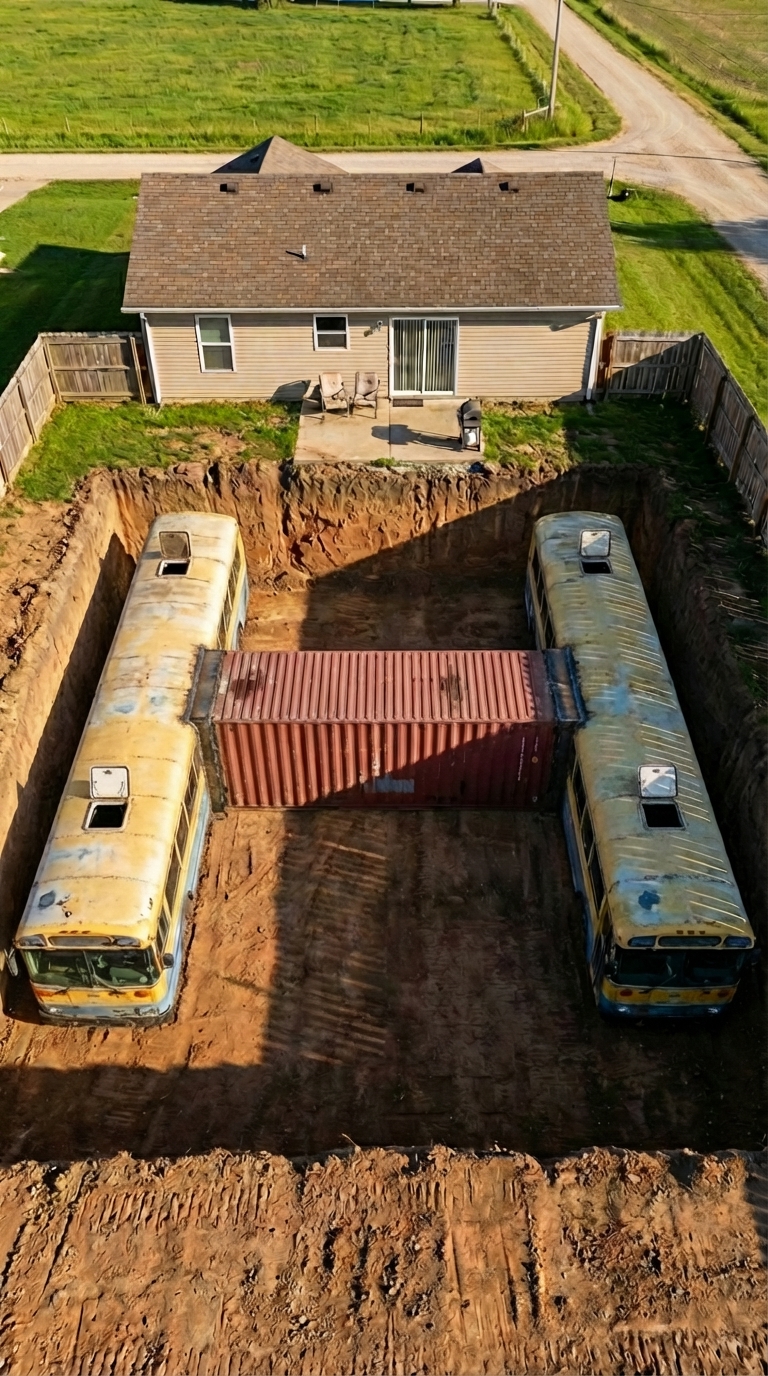
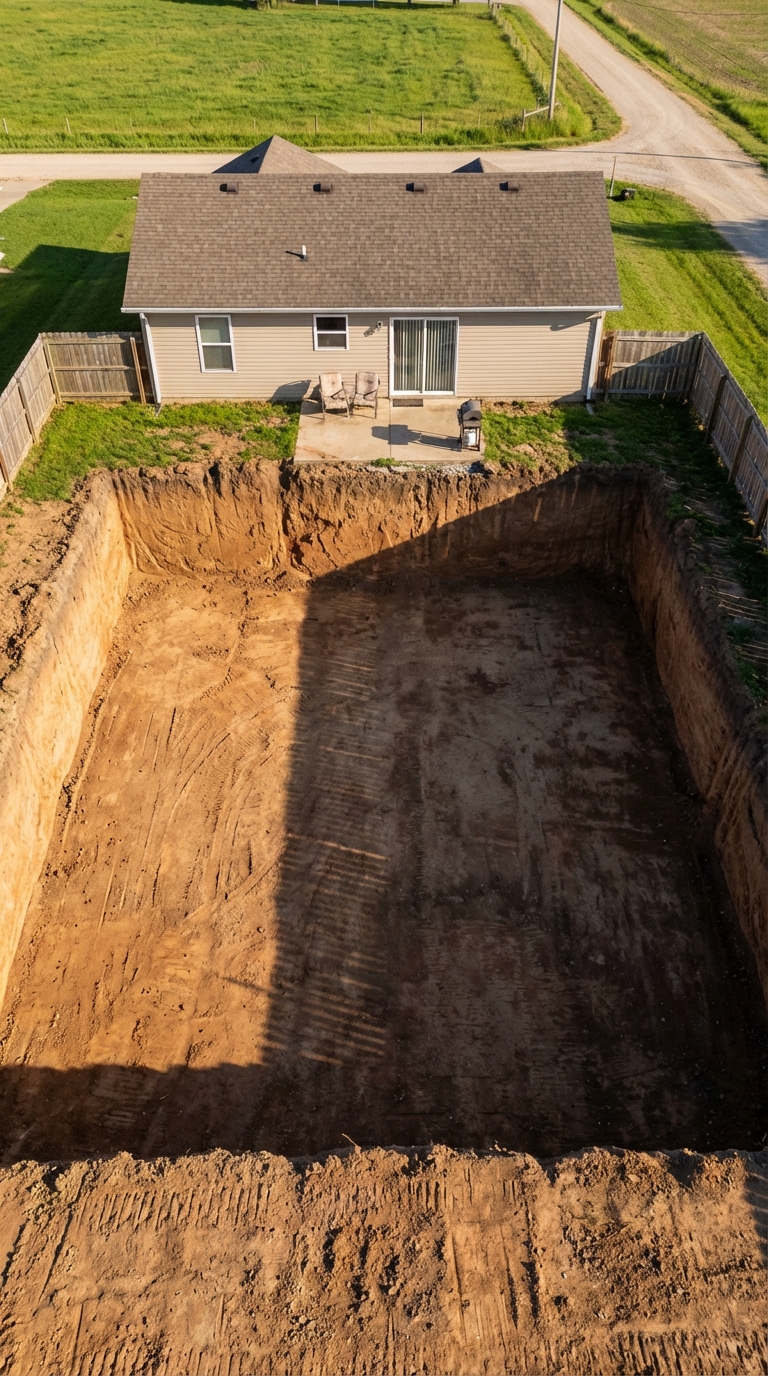
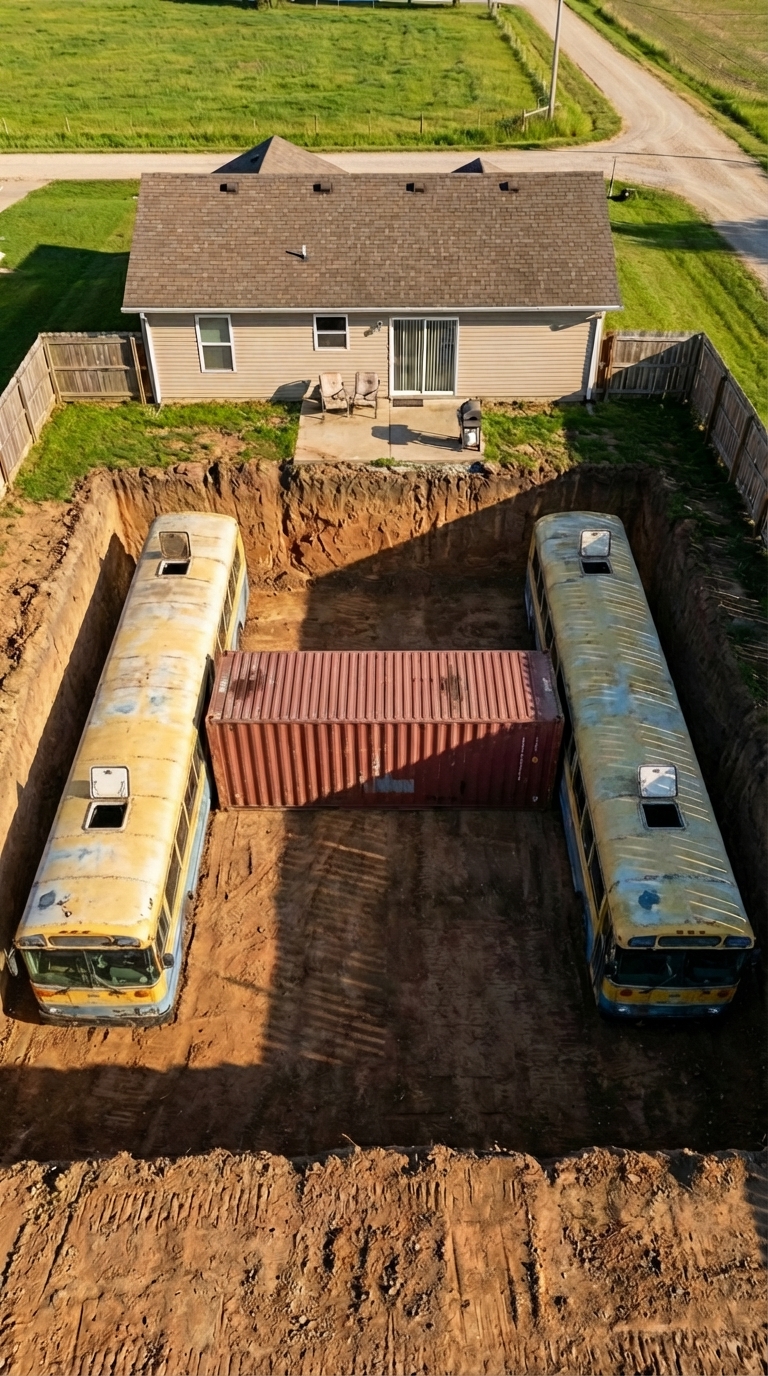
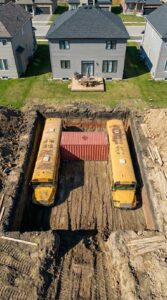
The structure begins with a deep excavation, where the buses are positioned parallel to each other, forming the main living sections. A steel shipping container is welded between them, creating a central corridor that connects both sides into one unified bunker layout. Once assembled, the entire structure is reinforced, sealed, and covered with soil, making it completely hidden from surface view.
Inside, each bus serves a specific function, such as sleeping quarters, storage, or living space, while the container acts as a secure passage and utility zone. The steel construction provides strength and protection, while the underground placement helps regulate temperature naturally.
This type of bunker offers a practical approach to off-grid security using recycled materials. It is ideal for those looking to build a hidden, functional shelter on a budget while maintaining enough space for long-term use and self-sufficiency.
Backyard Bunker Landscape – Hidden Design with Access Hatches
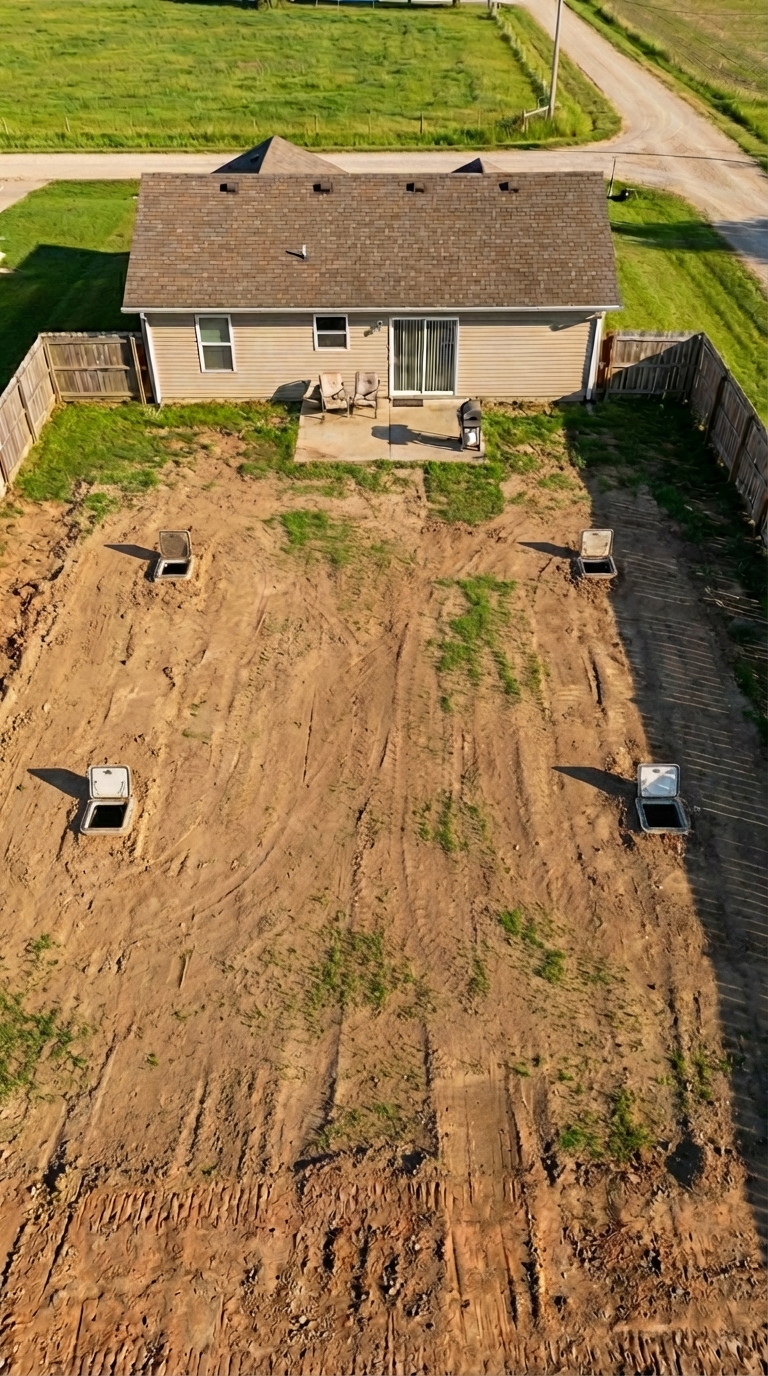
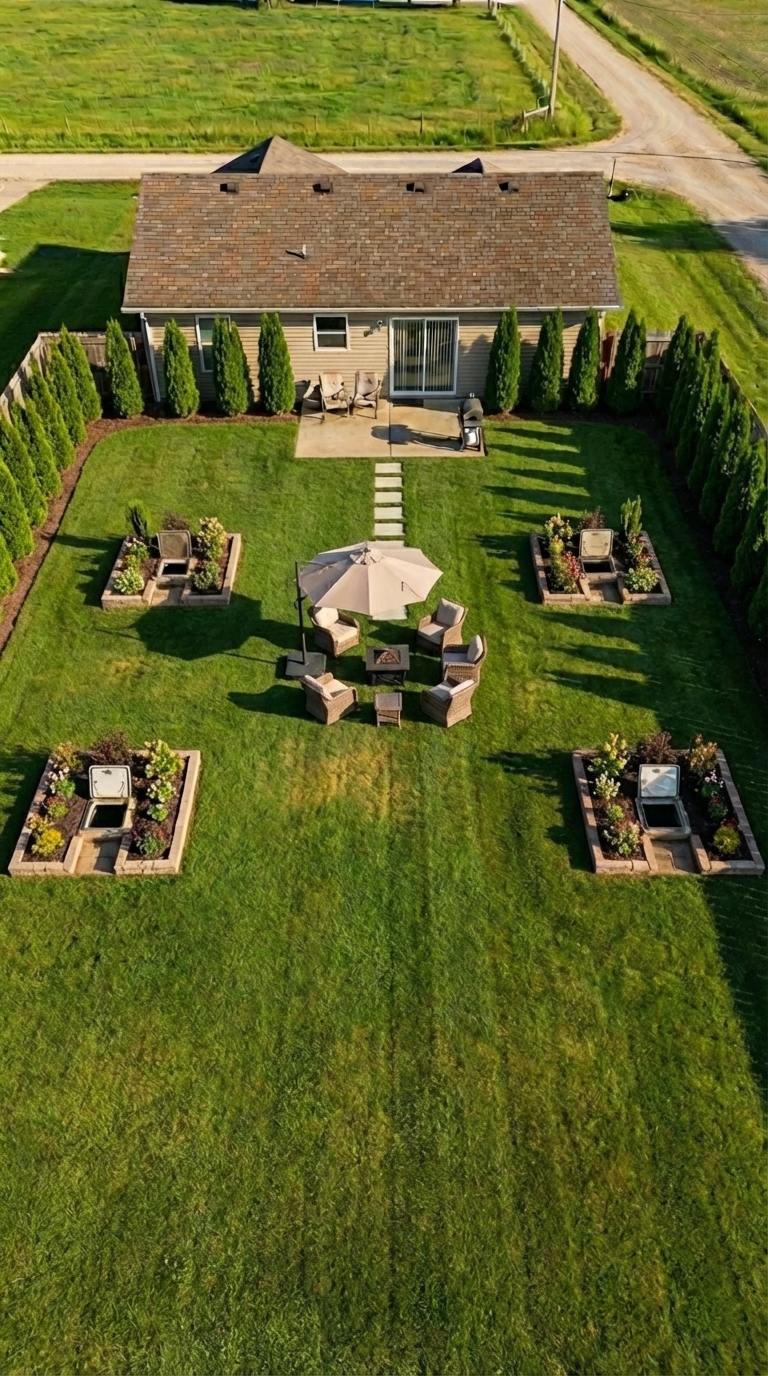
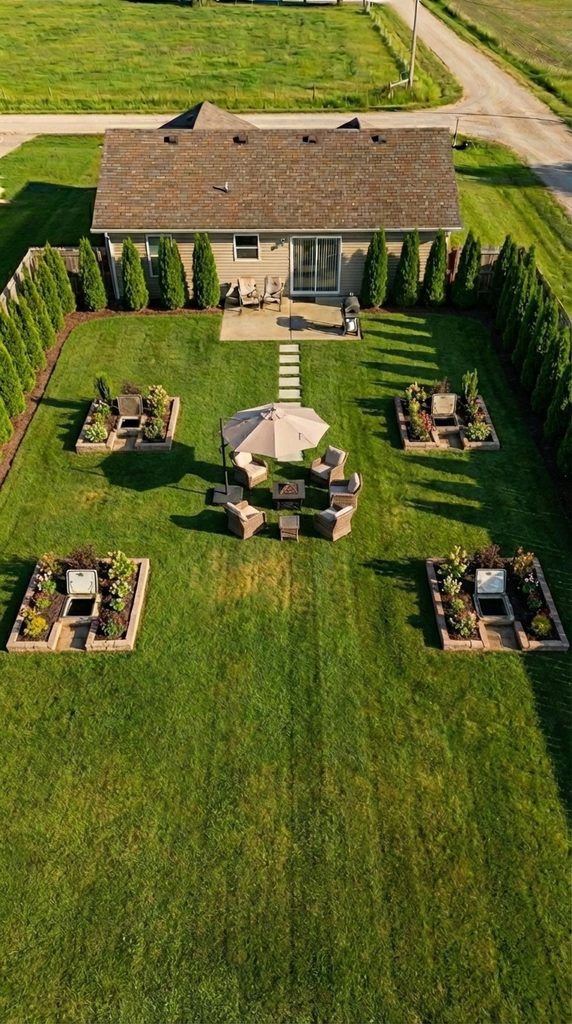
After completing the underground bunker construction, the backyard is fully restored and transformed into a clean, natural-looking outdoor space while maintaining full access to the shelter below. The area is leveled, landscaped, and redesigned to blend seamlessly with a typical residential yard in the United States, making the bunker completely invisible from above.
The only visible elements are four strategically placed access hatches, integrated into the ground with minimal visual impact. These hatches provide entry points for ventilation, maintenance, and emergency access, while remaining discreet and low-profile. Their placement is carefully planned to align with the internal layout of the bunker system below.
The surface design includes grass, seating areas, and decorative elements, creating a functional and aesthetically pleasing backyard environment. This approach ensures that the property maintains its normal appearance while hiding a fully operational underground structure beneath.
This combination of concealment and accessibility allows the bunker to remain hidden in plain sight, offering security and practicality without drawing attention.
Living Area
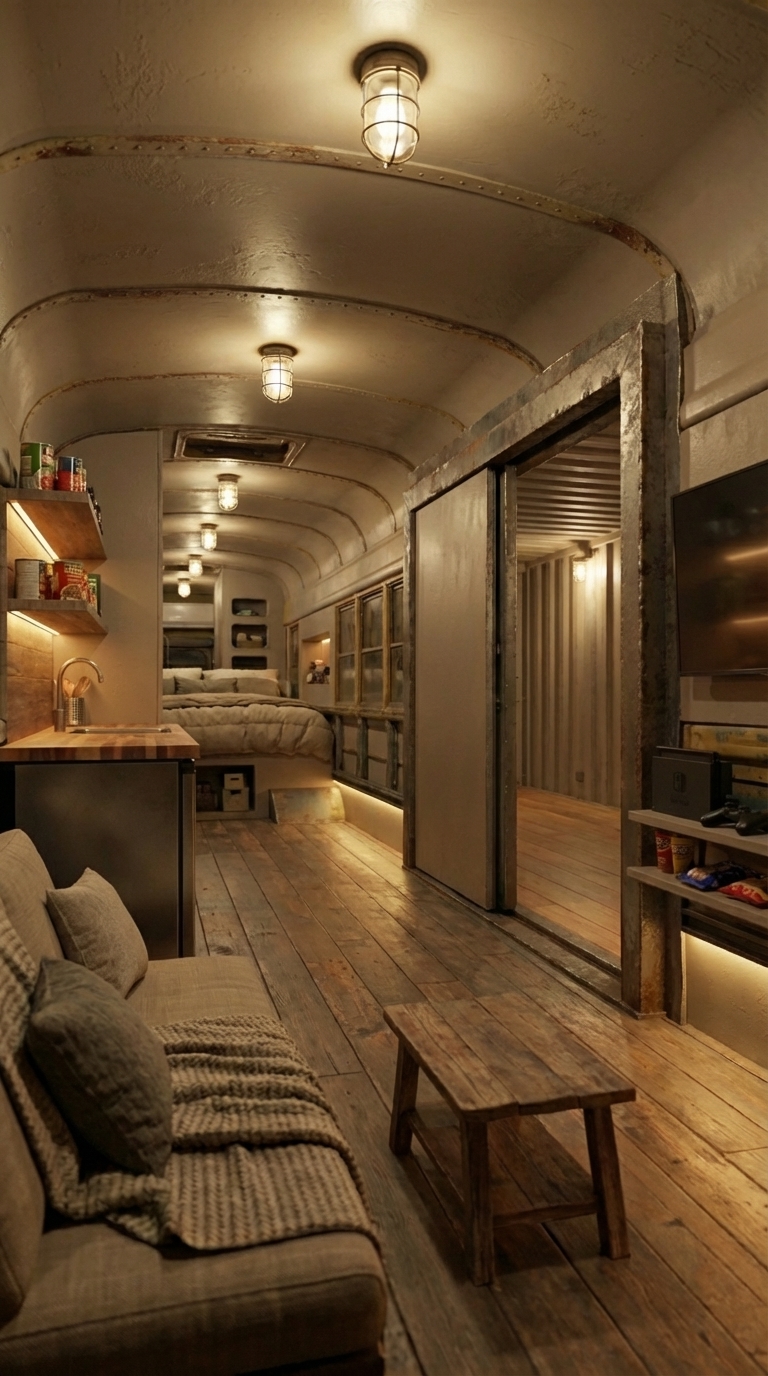
The living section inside the converted bus is designed to provide comfort, efficiency, and a sense of normal everyday life even in a fully underground environment. The space is carefully organized to maximize usability, combining a sleeping area, seating zone, and compact kitchen into one continuous layout. A raised bed platform allows for additional storage underneath, keeping essential items accessible while maintaining a clean and uncluttered interior.
Natural wood-style finishes and warm lighting create a cozy atmosphere, reducing the psychological pressure of being underground for extended periods. The seating area provides a place to rest, work, or relax, while integrated shelving and compartments ensure that personal items and tools are always within reach.
The structure of the bus offers durability and a slightly curved ceiling that helps distribute pressure evenly when buried underground. Insulation layers improve temperature stability, making the space comfortable in both hot and cold conditions.
This living zone transforms a simple bus into a functional underground home, allowing occupants to maintain comfort, organization, and routine while staying fully hidden and protected.
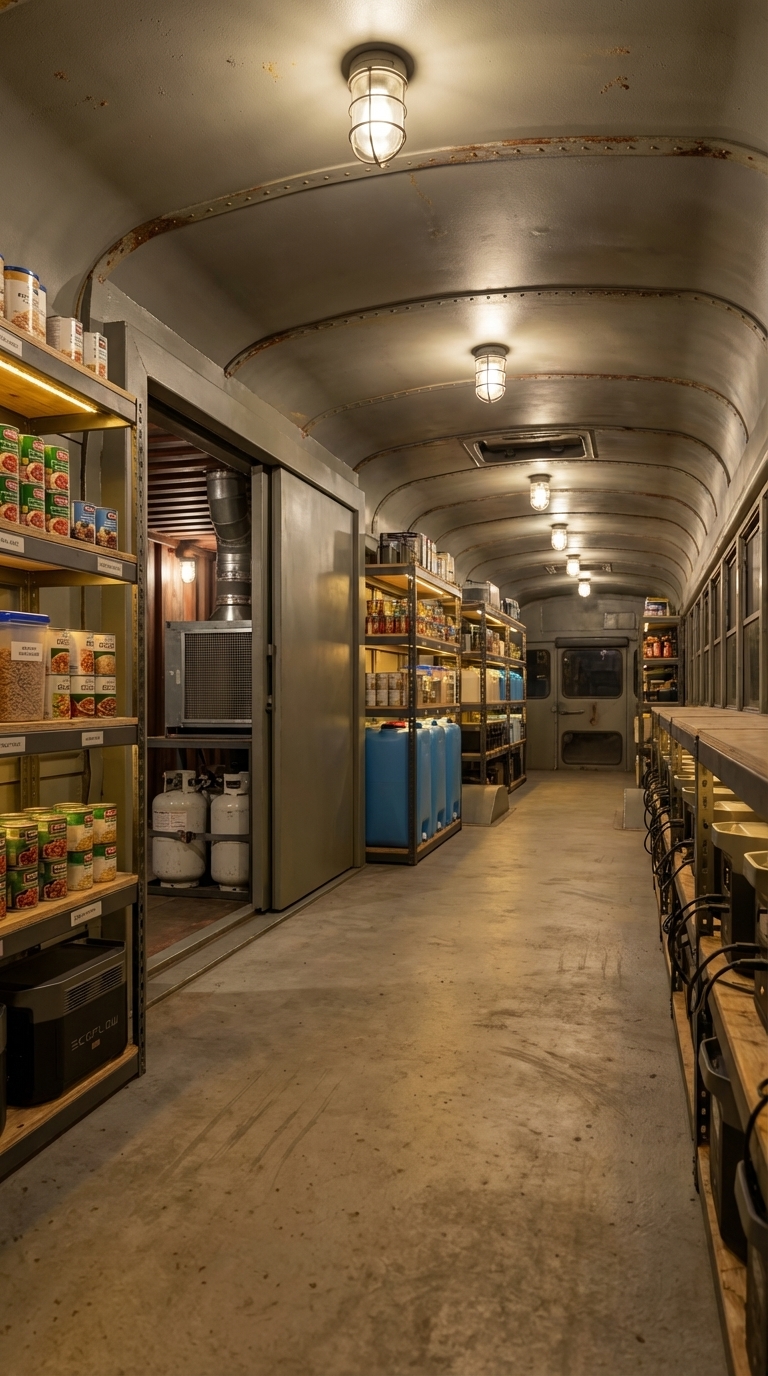
The second bus is dedicated entirely to supplies and technical systems, forming the backbone of long-term survival and Autonomous?. Heavy-duty shelving units are installed along both sides, storing a wide range of canned food, dry goods, and preserved supplies with long shelf life. Water storage is prioritized, with large containers positioned for easy access and balanced weight distribution.
This section also houses critical systems such as portable power stations, including EcoFlow units, providing reliable energy for lighting, devices, and essential equipment. Additional generators and air filtration systems ensure continuous operation and clean airflow inside the bunker, even in sealed conditions.
The layout is designed for efficiency and quick access, with supplies categorized and organized for easy rotation and monitoring. Fuel reserves, emergency kits, and backup equipment are stored in designated areas to maintain order and readiness.
This dedicated utility space ensures that the entire bunker system can operate independently for extended periods, supporting both daily living needs and emergency scenarios without reliance on external resources.
Backyard Underground Bus Bunker – Full Project Cost Estimate
Building a hidden underground bunker from two old buses and a shipping container in the United States is a relatively affordable but still serious investment. The final cost depends on condition of materials, depth of excavation, and level of interior comfort, but we can break it down realistically.
Base structure costs:
Used school buses (2 units): $3,000 – $10,000 each depending on condition ? Total: $6,000 – $20,000
Used shipping container: $1,500 – $4,000
Ground work & installation:
Excavation (large backyard pit): $5,000 – $20,000
Reinforcement, welding, sealing: $5,000 – $15,000
Waterproofing + ventilation: $5,000 – $15,000
(Full bunker builds using containers alone often reach $35,000 – $100,000+ depending on complexity )
Interior setup (as in your example):
Living area build (bed, wood finish, lighting): $3,000 – $8,000
Storage system (shelves, food, water): $2,000 – $6,000
Power systems (EcoFlow + backup): $1,000 – $4,000
Air filtration & ventilation system: $1,000 – $3,000
Total realistic price:
Budget version: $20,000 – $40,000 Normal full setup: $40,000 – $80,000 Premium (like in your visuals): $80,000 – $120,000+
This is an architectural concept visualization and not a real construction project.

Leave a Reply