
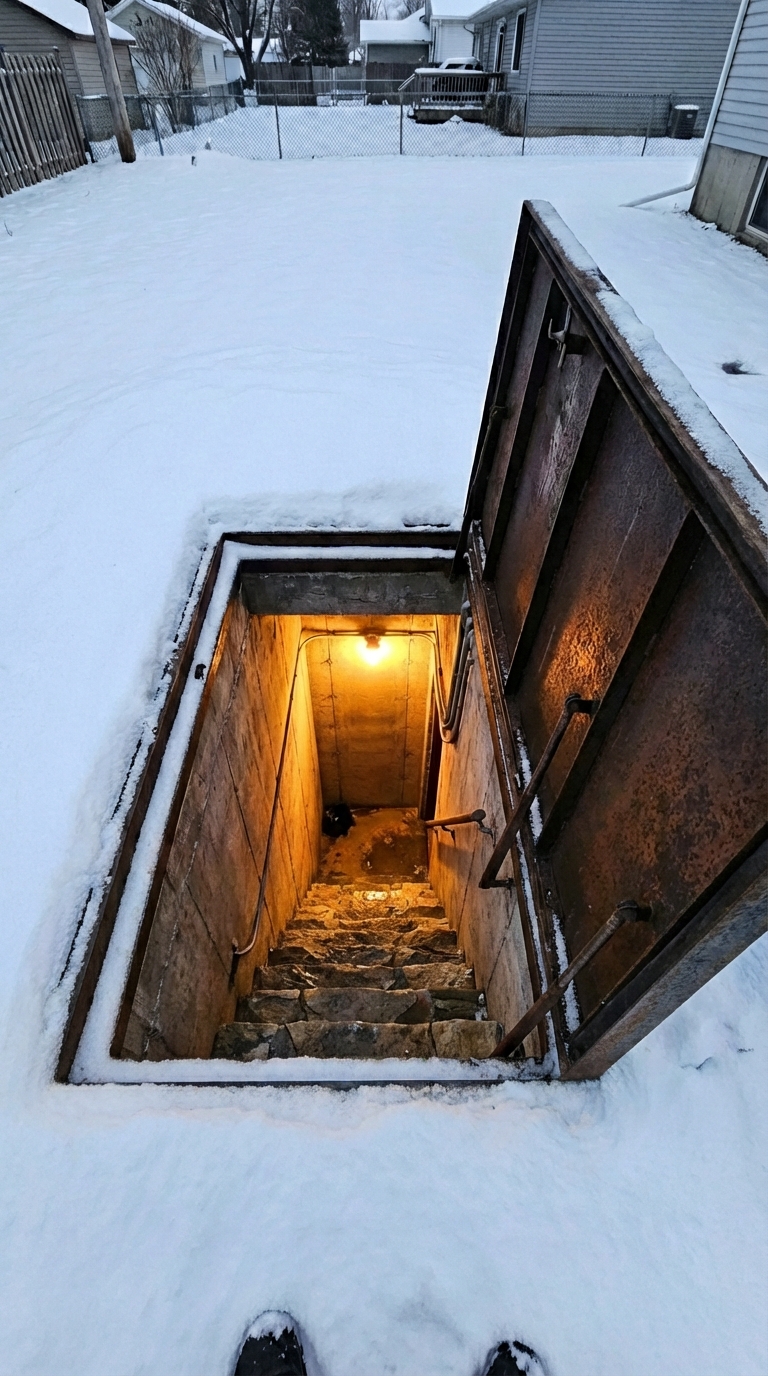
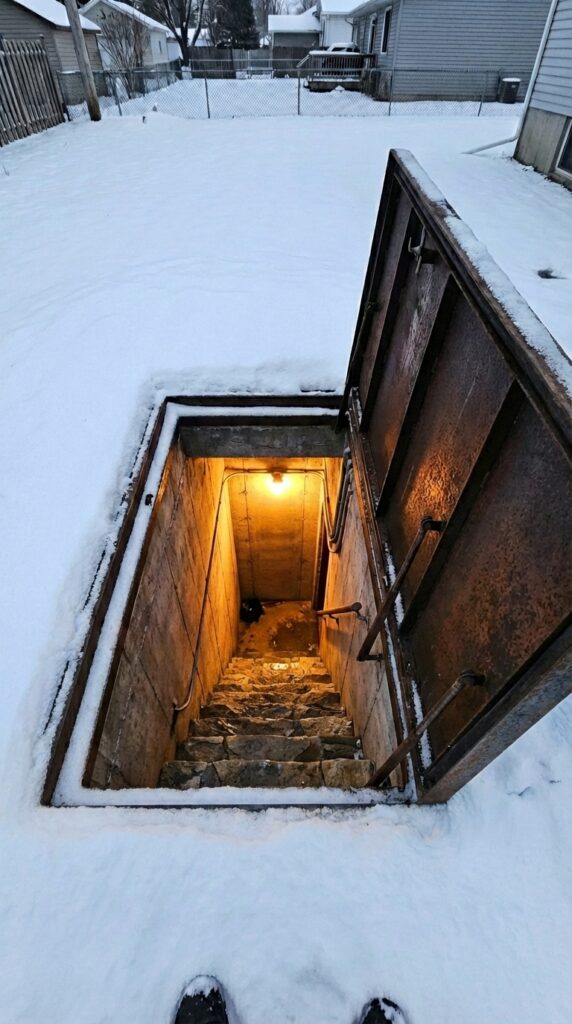
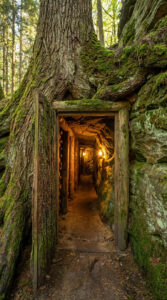
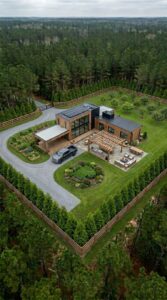
Hidden beneath an ordinary backyard, this concealed underground entrance leads to a fully reinforced survival shelter designed for long-term safety and autonomy. From the surface, it appears as nothing more than a quiet, snow-covered section of the yard — discreet, unremarkable, and intentionally invisible to outsiders.
The heavy steel hatch opens downward into a concrete stairwell, guiding occupants safely below ground. Thick concrete walls surround the entry shaft, providing structural strength, thermal insulation, and protection from external threats. Integrated handrails and durable steps ensure secure access even in harsh weather conditions, while interior lighting creates a clear and controlled transition from the surface to the shelter below.
This type of entrance is engineered for both security and discretion. When closed, it blends seamlessly into the surrounding environment, minimizing visual detection and preserving privacy. When opened, it provides direct, reliable access to the shelter without relying on the main house structure.
Designed for cold climates, the entry system is resistant to snow, moisture, and ground pressure. Drainage and sealing systems help prevent water infiltration, while reinforced framing ensures long-term durability.
A concealed underground entrance like this is a critical element of any serious survival shelter, offering a secure escape route, controlled access, and peace of mind in uncertain conditions. It represents the balance between invisibility above ground and strength below it — where real protection begins.
Underground Shelter Bedroom
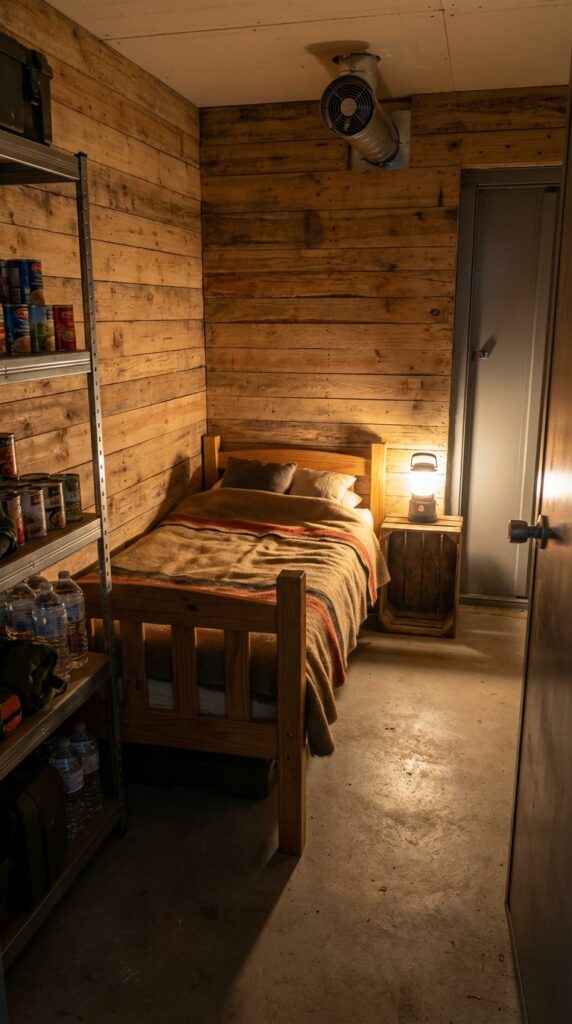
This underground shelter bedroom is designed to provide rest, warmth, and psychological comfort during long periods below ground. Unlike typical emergency spaces, this room feels intentional and livable — a place where sleep is restorative, not forced.
Natural wood paneling lines the walls, creating a warm, cabin-like atmosphere that contrasts with the surrounding reinforced concrete structure. The solid wooden bed frame is built for durability and stability, while thick blankets and layered bedding help maintain warmth in cold underground conditions. Soft, focused lighting provides a calm environment for night hours without harsh glare.
Integrated ventilation ensures continuous airflow, maintaining fresh oxygen levels while keeping noise to a minimum. The air intake system is discreetly placed above, supporting long-term habitation without disrupting sleep quality. Temperature remains stable year-round thanks to the earth’s natural insulation and the shelter’s thermal design.
Open shelving along the walls stores essential supplies such as water, canned food, and personal items, keeping everything within reach without cluttering the space. This layout allows the bedroom to function both as a sleeping area and a secure retreat during extended shelter use.
A reinforced interior door adds an extra layer of privacy and safety, separating the sleeping quarters from technical or communal areas of the bunker. The room is designed for silence, low stress, and routine — essential factors for mental resilience in emergency or off-grid scenarios.
This bedroom represents more than just a place to sleep. It is a controlled, protected environment where the body can recover and the mind can rest, even when the world above is uncertain.
Underground Shelter Kitchen
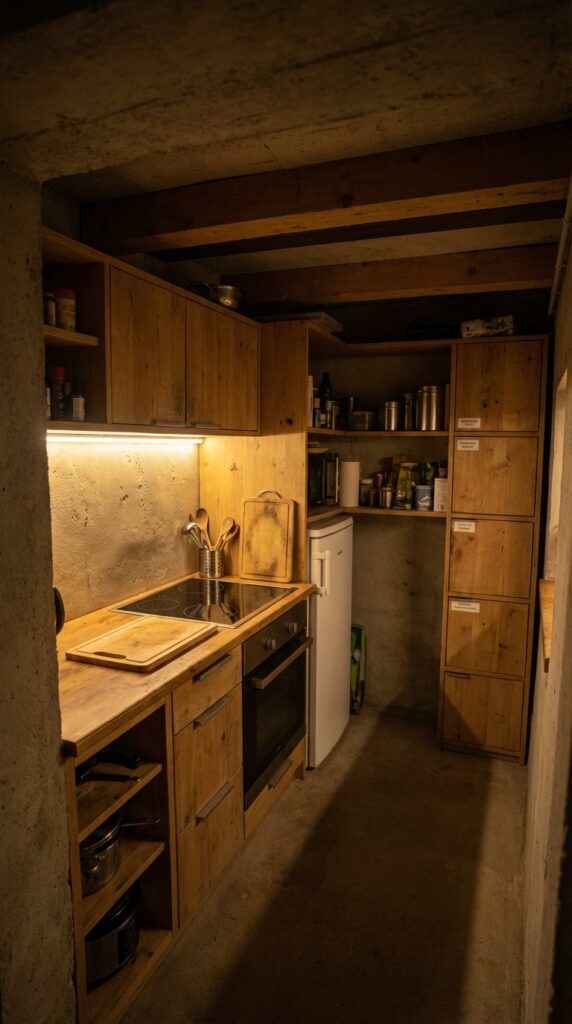
This underground shelter kitchen is designed for long-term, practical living where reliability and efficiency matter more than appearance — yet comfort is never sacrificed. Built into a reinforced concrete structure, the kitchen combines durable materials, compact layout, and thoughtful storage to support daily cooking below ground.
Natural wood cabinetry lines the walls, bringing warmth and a sense of normalcy into the underground space. Solid wooden countertops provide ample work surfaces for food preparation, while integrated electric cooking appliances allow safe, controlled meal preparation without open flames. The layout is intentionally narrow and efficient, minimizing wasted space while keeping everything within easy reach.
Upper and lower cabinets offer organized storage for dry goods, cookware, and essential kitchen tools. Labeled storage sections help maintain order during extended stays, reducing stress and saving time. Shelving units accommodate preserved foods, spices, and supplies, ensuring the kitchen can function independently for long periods.
A compact refrigerator allows for safe storage of perishables, while the ventilation system above ensures proper air circulation, removing heat and cooking odors. Soft, warm lighting creates a calm atmosphere, making the kitchen a functional yet comfortable place to prepare meals even during long shelter periods.
Designed for off-grid and emergency scenarios, this kitchen supports routine, structure, and self-sufficiency. It is not just a place to cook — it is a critical part of maintaining health, morale, and daily rhythm when living underground.
This underground shelter kitchen reflects the philosophy of preparedness: simple, reliable, and built to work when it matters most.
Underground Storage Room for Food, Water, and Fuel
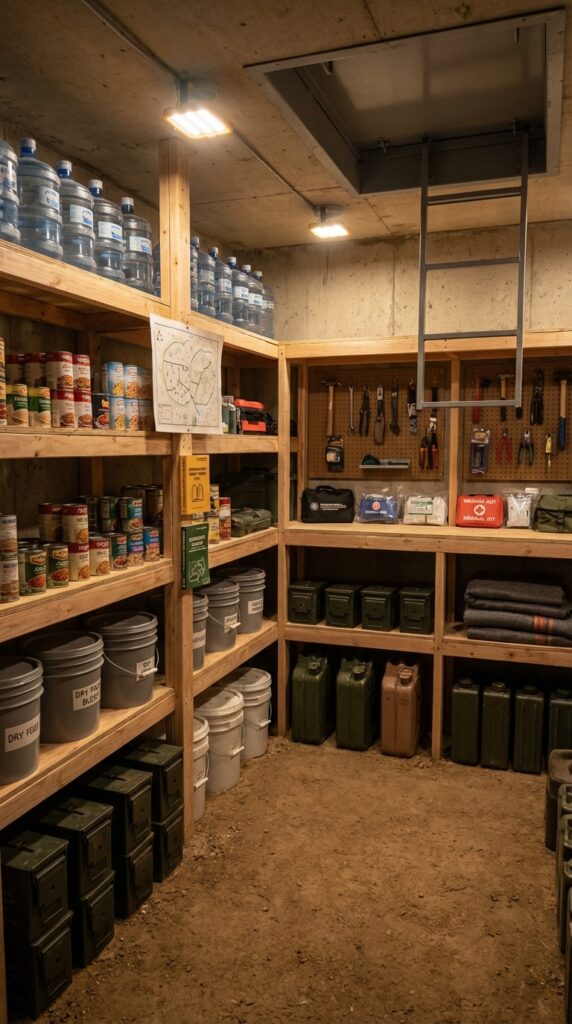
This underground storage room is the backbone of the shelter’s long-term self-sufficiency. Designed for extended autonomus living, it provides organized, secure storage for food supplies, potable water, fuel, and essential equipment — all protected within a reinforced concrete environment.
Heavy-duty wooden shelving lines the walls, offering high load capacity and clear organization. Canned foods, dry goods, and long-term rations are stored at eye level for quick access, while sealed buckets and containers protect bulk supplies from moisture and contamination. Every shelf is arranged to support rotation, inventory control, and efficient daily use.
Large water containers and bottled reserves ensure a reliable drinking supply even during prolonged isolation. Fuel canisters are stored separately in designated sections, allowing safe containment for generators, emergency heaters, or cooking systems. The layout minimizes fire risk while maintaining accessibility when power systems are required.
Wall-mounted tool boards hold repair tools, spare parts, and maintenance equipment, enabling on-site fixes without leaving the shelter. Soft overhead lighting ensures visibility without excessive heat or energy consumption, while the natural underground temperature helps preserve food and fuel stability year-round.
This storage room is more than a pantry — it is a strategic reserve. It allows the shelter to operate independently for weeks or months, maintaining routine, security, and resilience during emergencies or off-grid living.
In any serious survival bunker, this space defines preparedness. Quiet, organized, and dependable, it ensures that everything needed to endure is always within reach.
Underground Shelter Living Room
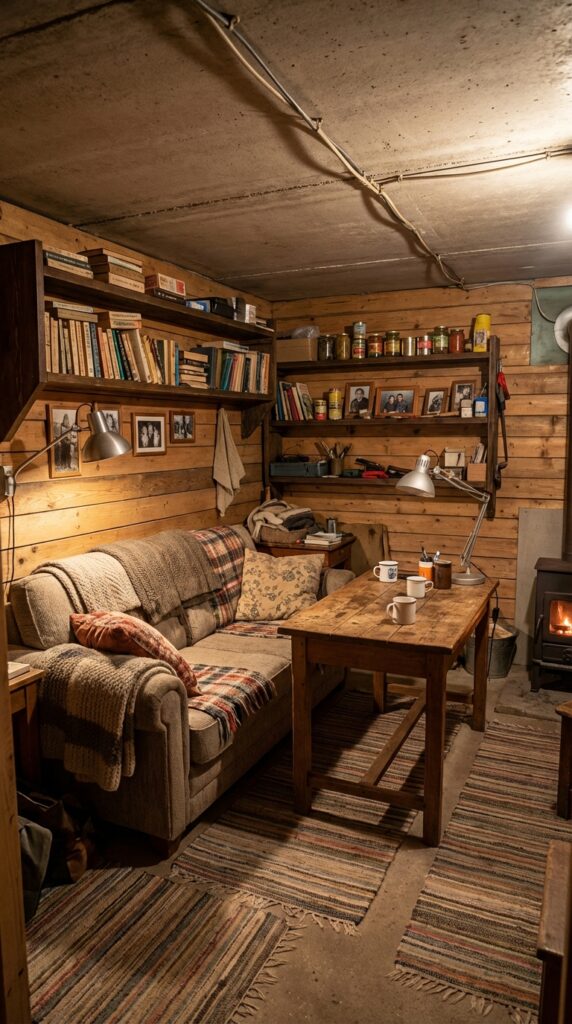
This underground shelter living room is designed to restore a sense of normal life below ground. It is the emotional center of the bunker — a place to rest, talk, read, and regain calm during extended stays underground.
Warm wooden walls soften the concrete structure, creating a cabin-like atmosphere that feels familiar and grounding. A comfortable sofa with thick blankets invites rest after long days, while a solid wooden table serves as a shared space for meals, planning, or quiet conversation. Soft floor rugs reduce noise and add warmth, making the room feel lived-in rather than temporary.
Shelving along the walls holds books, personal items, and small supplies, reinforcing routine and mental stability. Personal photographs and familiar objects help maintain a connection to life above ground, an important psychological element during long-term shelter use.
A compact wood-burning stove or heating unit provides both warmth and a sense of independence, allowing the room to remain comfortable even during power-saving modes. Adjustable task lighting creates gentle illumination without harsh brightness, supporting relaxation and evening activities.
This living room is not built for luxury, but for endurance. It supports daily rhythm, human connection, and emotional resilience — all critical for surviving long periods underground. In any serious shelter, this space becomes where time slows down, decisions are made, and normal life continues despite the conditions outside.
The underground living room transforms the bunker from a survival structure into a livable refuge.
Underground Shelter Bathroom
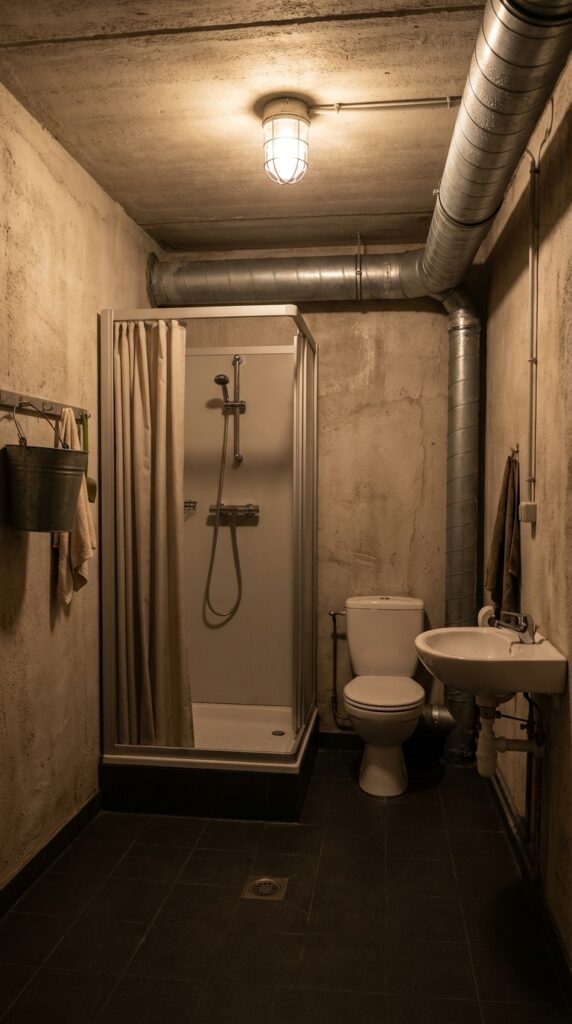
This underground shelter bathroom is built for reliability, hygiene, and long-term use in a fully enclosed environment. Every element is designed to function efficiently with minimal maintenance, even during extended periods of isolation below ground.
The compact shower enclosure allows for controlled water use while maintaining personal hygiene. Durable fixtures and sealed connections reduce the risk of leaks and moisture damage, an essential factor in underground construction. A simple curtain system keeps the space flexible and easy to maintain.
The toilet system is connected to a reinforced plumbing network designed for low water consumption and dependable operation. In off-grid or emergency modes, the system can operate with reduced water flow or auxiliary waste management solutions.
A wall-mounted sink provides basic washing functionality while conserving space. All surfaces are easy to clean and resistant to humidity, helping prevent mold and bacterial growth. Integrated ventilation removes excess moisture and odors, maintaining air quality throughout the shelter.
Industrial-grade lighting ensures visibility without excessive power use, while the concrete structure naturally regulates temperature. Exposed piping and access points allow for quick inspection and repairs, reducing downtime in critical situations.
This bathroom is not designed for luxury, but for endurance. It supports daily routine, cleanliness, and physical health — all essential for maintaining stability and morale during long-term underground living.
In a serious survival shelter, a reliable sanitary area is as important as food or power. This space ensures dignity, hygiene, and sustainability when it matters most.
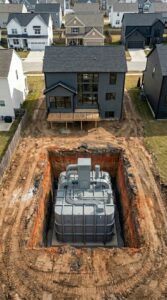
Underground Backyard Bunker – Estimated Cost (USA ??)
Building a full-scale underground shelter (150+ m²) in a residential backyard in the United States is a serious construction project. Below are realistic 2025 cost ranges based on U.S. contractors, materials, and permits.
Excavation & Groundwork
$25,000 – $70,000
- Deep excavation (3–6 m / 10–20 ft)
- Soil removal & hauling
- Rock or clay soil increases cost
- Shoring & safety reinforcement
? Rocky soil or high water table can push this even higher.
? Reinforced Concrete Structure
$80,000 – $180,000
- Thick reinforced concrete walls & ceiling
- Concrete slab foundation
- Blast-resistant structural design
- Load-bearing roof for soil cover
? This is the core of bunker safety — never the place to cut costs.
? Waterproofing & Drainage
$20,000 – $45,000
- Multi-layer waterproof membranes
- French drains / perimeter drainage
- Sump pumps with backup power
- Moisture protection for long-term use
? Armored Doors & Emergency Exits
$15,000 – $40,000
- Main blast/steel security door
- Hidden secondary exit to forest or backyard
- Gas-sealed doors & hatches
- Concealed surface camouflage
Air Filtration & Oxygen System
$25,000 – $65,000
- Fresh air intake shafts
- NBC / HEPA filtration
- Overpressure system
- Silent ventilation fans
?? Designed for long-term underground living.
Electrical System & Backup Power
$30,000 – $80,000
- Full electrical wiring
- Battery banks (EcoFlow / similar)
- Generator integration
- LED lighting throughout
- Emergency power redundancy
Plumbing, Water & Sanitation
$25,000 – $60,000
- Clean water tanks
- Filtration & purification system
- Shower, toilet, sink
- Greywater management
- Optional recycling system
Interior Build-Out (Living Spaces)
$40,000 – $120,000
Includes:
- Kitchen
- Bedroom(s)
- Living room
- Storage & pantry
- Bathroom
- Wood & concrete finishes
? Designed to feel livable, not claustrophobic.
Security, Surveillance & Control Room
$10,000 – $30,000
- External perimeter cameras
- Internal monitoring
- Radio communication systems
- Secure control desk
Permits, Engineering & Labor
$20,000 – $50,000
- Structural engineering
- City/county permits
- Inspections
- Licensed contractor labor
TOTAL ESTIMATED COST (USA)
$300,000 – $700,000+
? Luxury finishes, extreme depth, rock excavation, or military-grade systems can exceed $1M.
Construction Timeline
6–12 months
Depending on soil, permits, weather, and customization level.
Leave a Reply