Pallet-Built Forest Homestead: A Sustainable Cabin Crafted from Reclaimed Materials
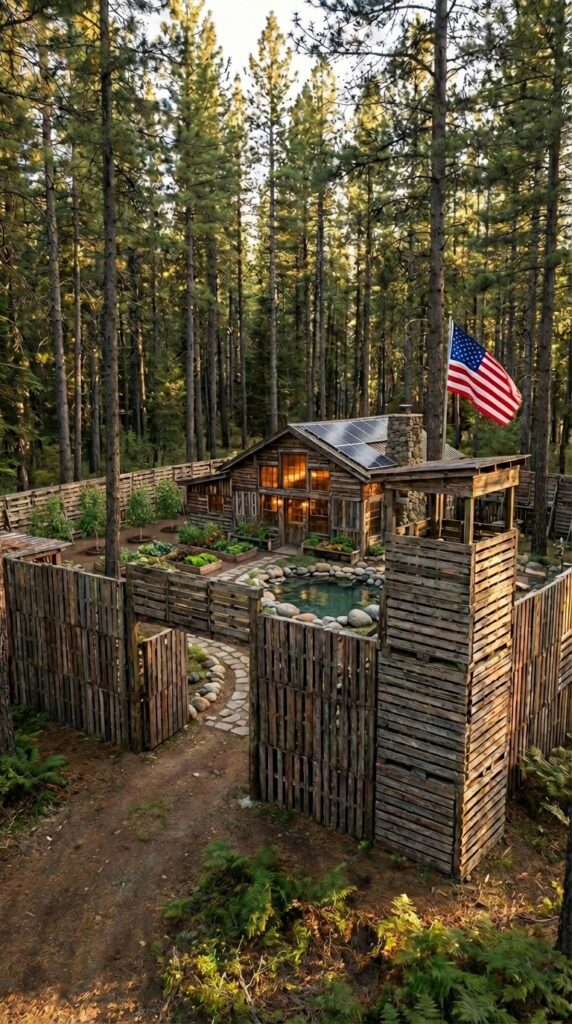
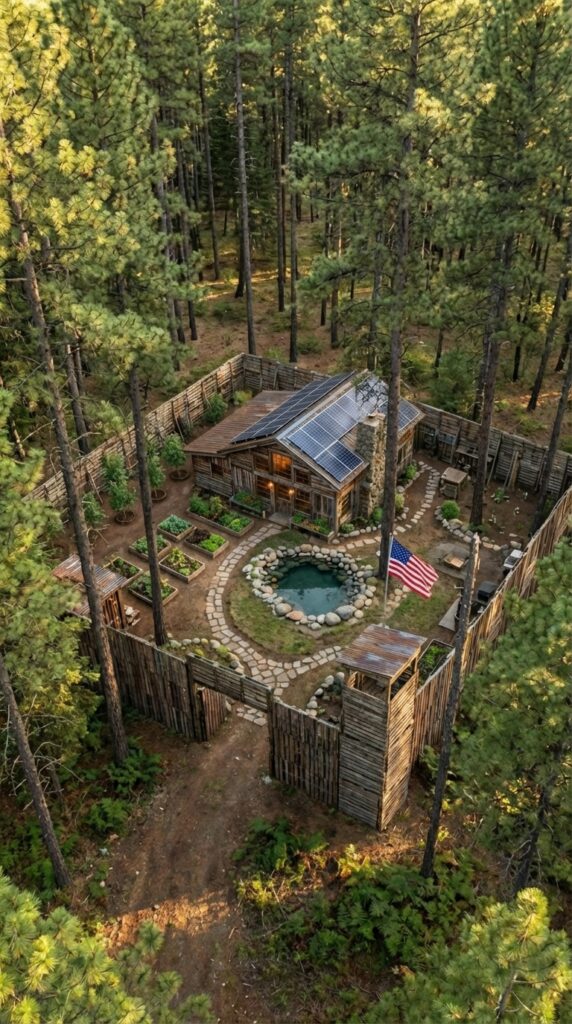
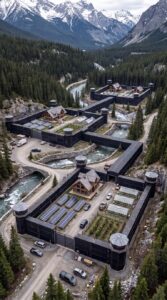
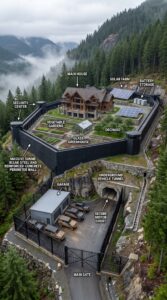
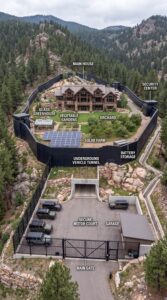
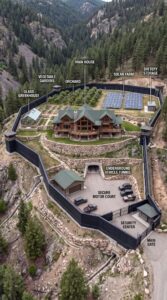
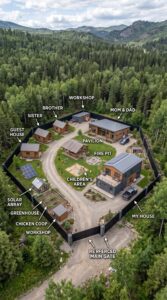
Built almost entirely from reclaimed wooden pallets, this forest homestead demonstrates how simple materials can be transformed into a functional and visually striking living space. The cabin and surrounding structures use repurposed wood to create walls, fencing, and observation towers, forming a cohesive design that blends naturally with the woodland environment. Carefully arranged pallet boards provide both structural support and a rustic aesthetic while reducing material waste and construction costs. A protective perimeter fence surrounds the property, creating privacy and defining a secure outdoor living area that includes a small garden and a central water feature.
Solar panels installed on the roof supply electrical power for lighting and essential devices, supporting everyday comfort within the natural setting. Large windows allow warm interior light to flow outward, creating a welcoming atmosphere during evening hours. The layout emphasizes practicality, with outdoor pathways, planting zones, and defensive-style watch points integrated into the overall design. This pallet-built cabin highlights how creativity and resourcefulness can turn recycled materials into a comfortable forest retreat, combining sustainability, craftsmanship, and simple living principles into a unique off-grid inspired homestead experience.
Building the Pallet Forest Cabin: From Reclaimed Wood to a Complete Homestead
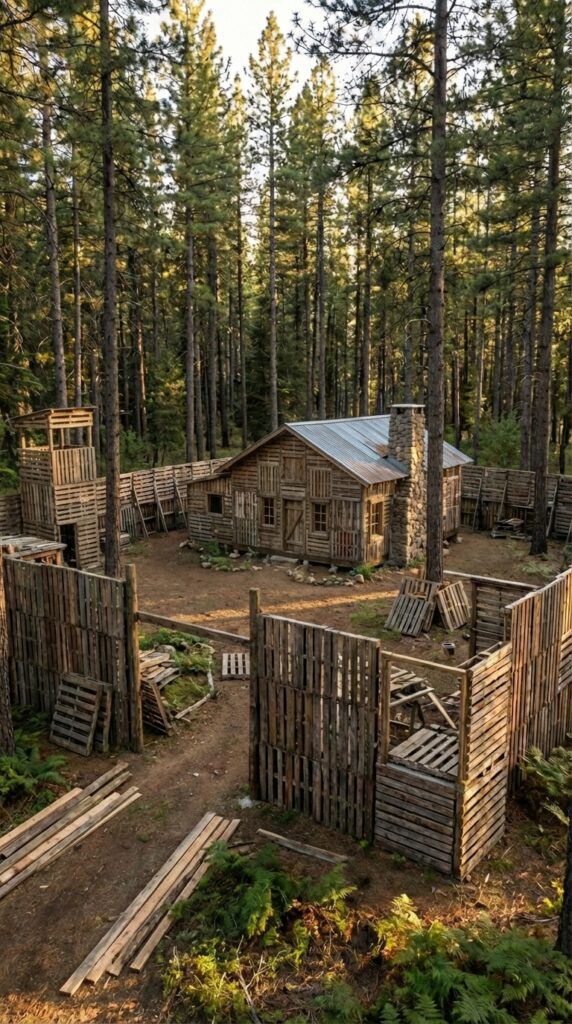
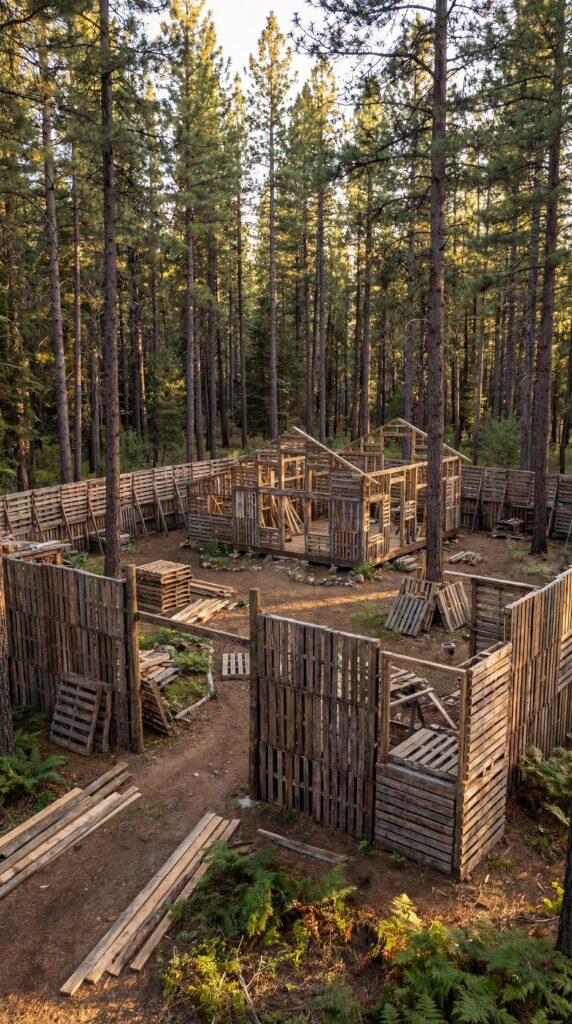
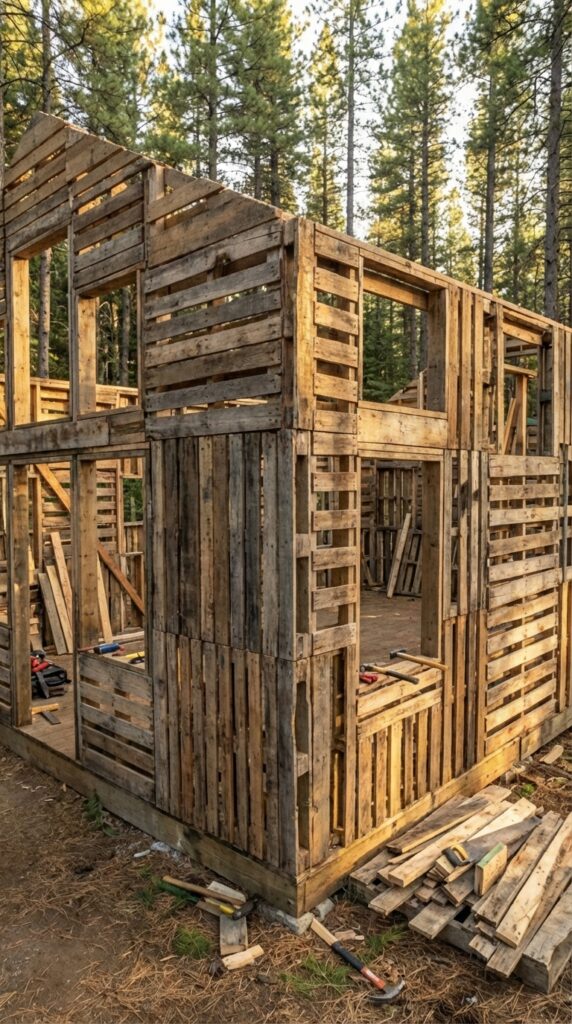
The construction of this forest cabin began with the collection and preparation of reclaimed wooden pallets, carefully selected for strength and durability. Each pallet was disassembled, cleaned, and reinforced before being reused as structural panels for walls, fencing, and exterior elements. The foundation area was first leveled and stabilized to create a solid base capable of supporting the wooden structure while preserving the natural terrain. Builders assembled a strong frame using layered pallet boards, securing them together to form insulated walls and a stable roof system.
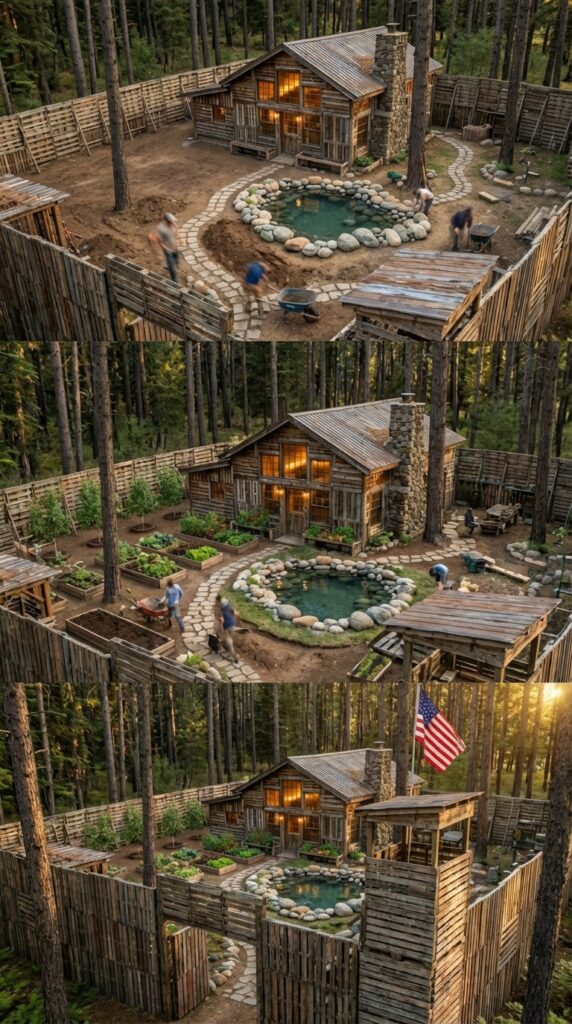
As the main cabin took shape, additional pallet sections were transformed into perimeter fencing and elevated watch towers, creating both privacy and a defined outdoor space. Openings for windows and doors were carefully cut to maximize natural light and ventilation while maintaining structural balance. The roof was finished with protective layers and fitted with solar panels to provide electricity for daily needs. Landscaping followed construction, adding pathways, garden beds, and a central water feature that enhanced the overall atmosphere of the homestead. Step by step, reclaimed materials were turned into a fully functional woodland retreat, proving that resourceful design and practical craftsmanship can create a comfortable living environment using simple recycled components.
Landscape Design of the Pallet Homestead: A Natural Garden with Pond and Fruit Trees
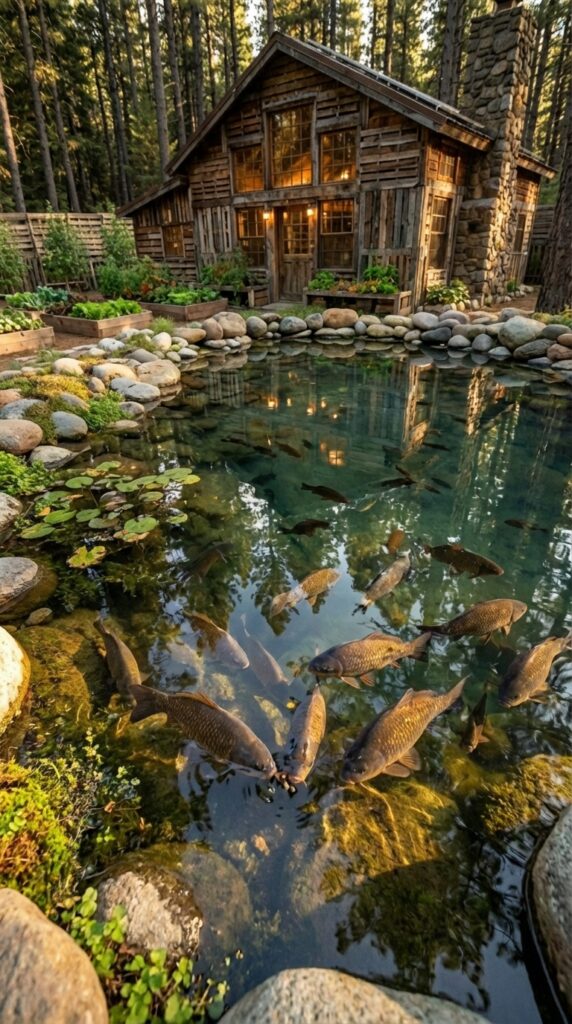
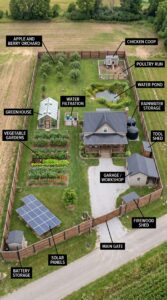
The surrounding landscape of the pallet-built homestead was carefully designed to create a balanced and self-sustaining outdoor environment that complements the rustic cabin. One of the central features is a hand-dug pond, shaped with natural stone edges and filled to support small fish such as crucian carp, adding movement and life to the courtyard while helping maintain a peaceful atmosphere. The pond also improves humidity balance around the garden and attracts beneficial wildlife, enhancing the natural ecosystem of the property.
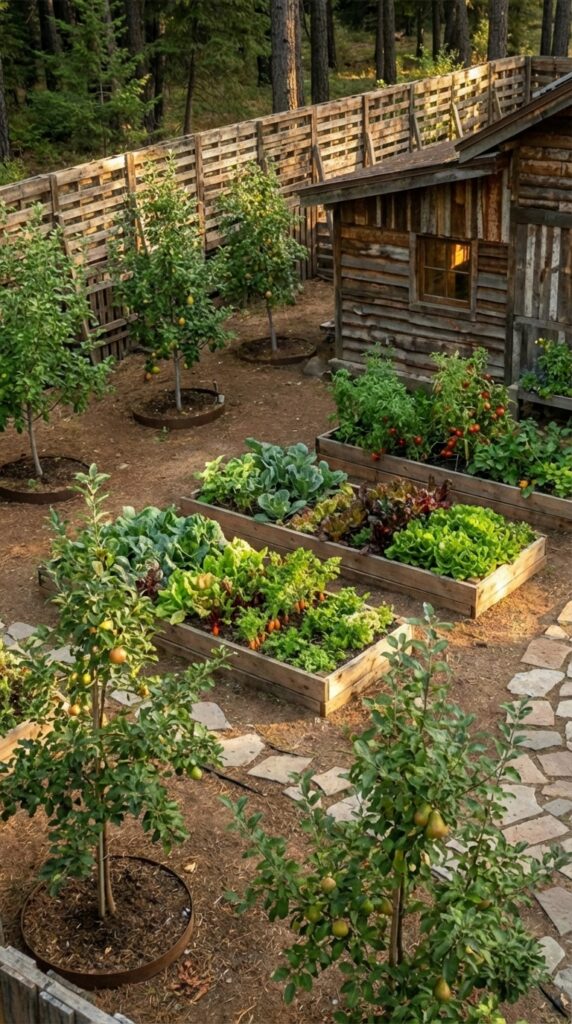
Around the water feature, pathways made from stone and compacted soil guide movement through the space while preserving the forest floor. Fruit trees were planted strategically along the perimeter, providing seasonal harvests while creating natural shade and privacy. Over time, these trees will form a living barrier that blends seamlessly with the surrounding woodland. Raised garden beds built from reclaimed wood allow the cultivation of vegetables and herbs close to the cabin, supporting practical outdoor living. The entire landscape design focuses on harmony with nature, combining functionality, beauty, and long-term sustainability while transforming the homestead into a calm and productive forest retreat.
Solar Panels on the Roof: Reliable Energy for the Forest Homestead
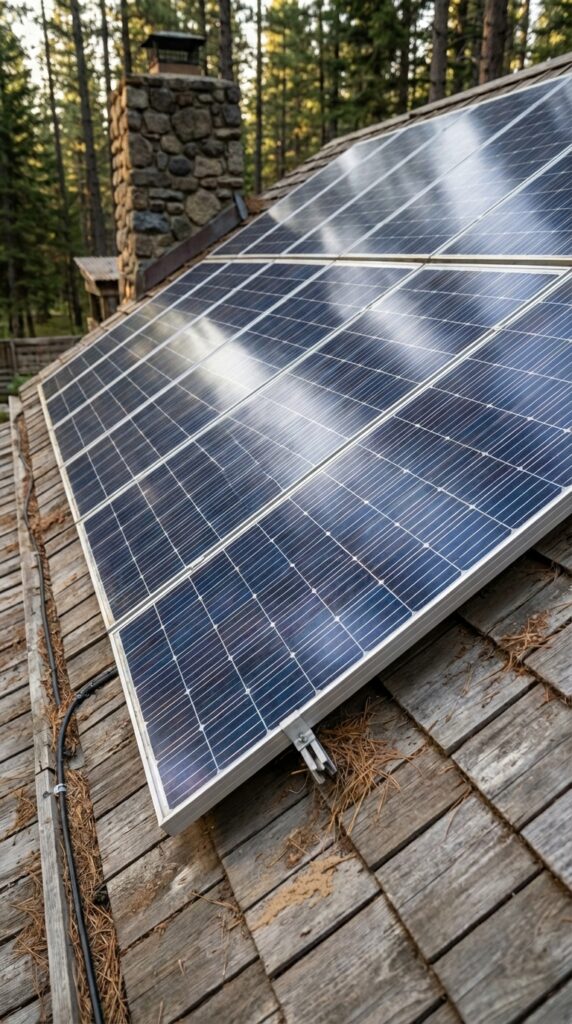
The roof of the pallet-built cabin is equipped with a carefully installed solar panel system designed to provide consistent electrical power while blending naturally with the surrounding environment. Positioned at an optimal angle to capture maximum sunlight throughout the day, the panels convert solar energy into usable electricity for lighting, charging devices, and operating essential household equipment. The installation was integrated directly into the roof structure, ensuring stability and protection from wind and seasonal weather conditions.
Wiring from the panels runs safely into the interior energy system, where stored power can be used during evening hours or cloudy periods. This renewable energy solution reduces dependence on external resources while maintaining everyday comfort inside the cabin. The solar setup supports efficient living without disrupting the natural landscape, allowing the homestead to function quietly within the forest setting. Combined with the rustic construction of reclaimed wood, the solar panels represent a practical balance between traditional craftsmanship and modern technology, helping transform the cabin into a sustainable and energy-efficient woodland retreat designed for long-term use.
Cozy Interior Design: Warmth and Comfort Inside the Forest Pallet Cabin
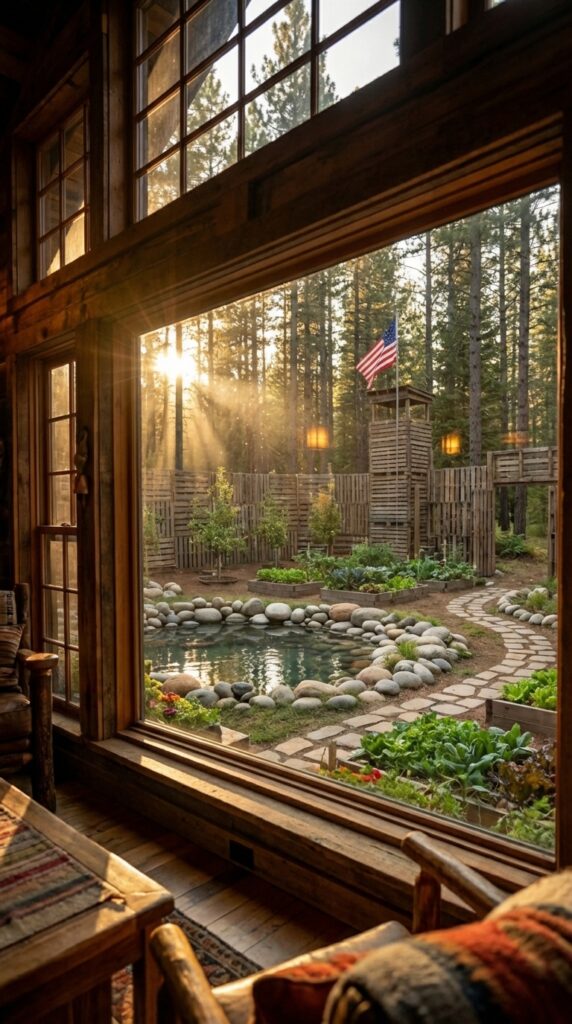
The interior of the pallet-built forest cabin was designed to create a warm and welcoming atmosphere that contrasts beautifully with the rugged outdoor environment. Natural wood finishes cover the walls and ceiling, preserving a rustic character while adding a sense of comfort and calm. Large windows allow sunlight to fill the space during the day, offering peaceful views of the garden, pond, and surrounding pine forest, making nature feel like an extension of the living area.
A stone fireplace becomes the heart of the home, providing both heat and a soft ambient glow that enhances the cozy evening atmosphere. Carefully chosen furniture, soft textiles, and warm lighting create a relaxed living space ideal for rest after time spent outdoors. The open layout connects the seating area with a compact kitchen, allowing functionality without sacrificing comfort. Decorative elements such as woven blankets, wooden shelves, and simple handcrafted details reinforce the cabin’s natural aesthetic. The result is an interior that feels peaceful, inviting, and timeless — a space designed not only for living, but for slowing down, enjoying quiet moments, and staying connected to the surrounding forest landscape.
Project Cost and Materials: Building the Pallet Forest Homestead from Start to Finish
The construction of the pallet forest homestead was completed using reclaimed materials combined with careful planning and gradual landscape development. In total, approximately 1,250–1,400 wooden pallets were used to build the main cabin structure, perimeter fencing, watch towers, garden beds, and outdoor architectural elements. Each pallet was dismantled, reinforced, and repurposed, allowing the project to maintain a rustic aesthetic while significantly reducing material expenses compared to traditional construction methods.
The cabin itself required around 450 pallets, including walls, roof framing support, interior paneling, and flooring layers. The surrounding defensive-style fence and entrance gates used nearly 500 pallets, while observation towers and outdoor structures accounted for another 200–250 pallets. Additional pallets were transformed into raised garden beds, walkways, and landscaping details.
Estimated project costs were distributed across several stages. Preparing the land, leveling the terrain, and creating pathways and drainage systems cost approximately $6,000–$8,000. Excavation and construction of the decorative fish pond with natural stone edging required about $3,500–$5,000. Planting fruit trees, garden vegetation, and improving soil conditions added another $2,000–$3,000 depending on tree maturity and irrigation setup.
The cabin construction itself, including fasteners, insulation materials, roofing protection, windows, fireplace installation, and interior finishing, totaled roughly $28,000–$35,000. Solar panels and electrical equipment added approximately $7,000–$9,000.
Overall, the complete homestead — including the house, fenced courtyard, landscaping, pond, fruit trees, and energy system — was completed for an estimated $48,000–$60,000. The result is a fully developed forest retreat that demonstrates how reclaimed materials, thoughtful design, and gradual investment can transform a simple woodland plot into a comfortable and visually striking homestead.
Architectural visualization. It is not a real construction project.

Leave a Reply