Remote Island Compound – Fully Autonomous Off-Grid Living
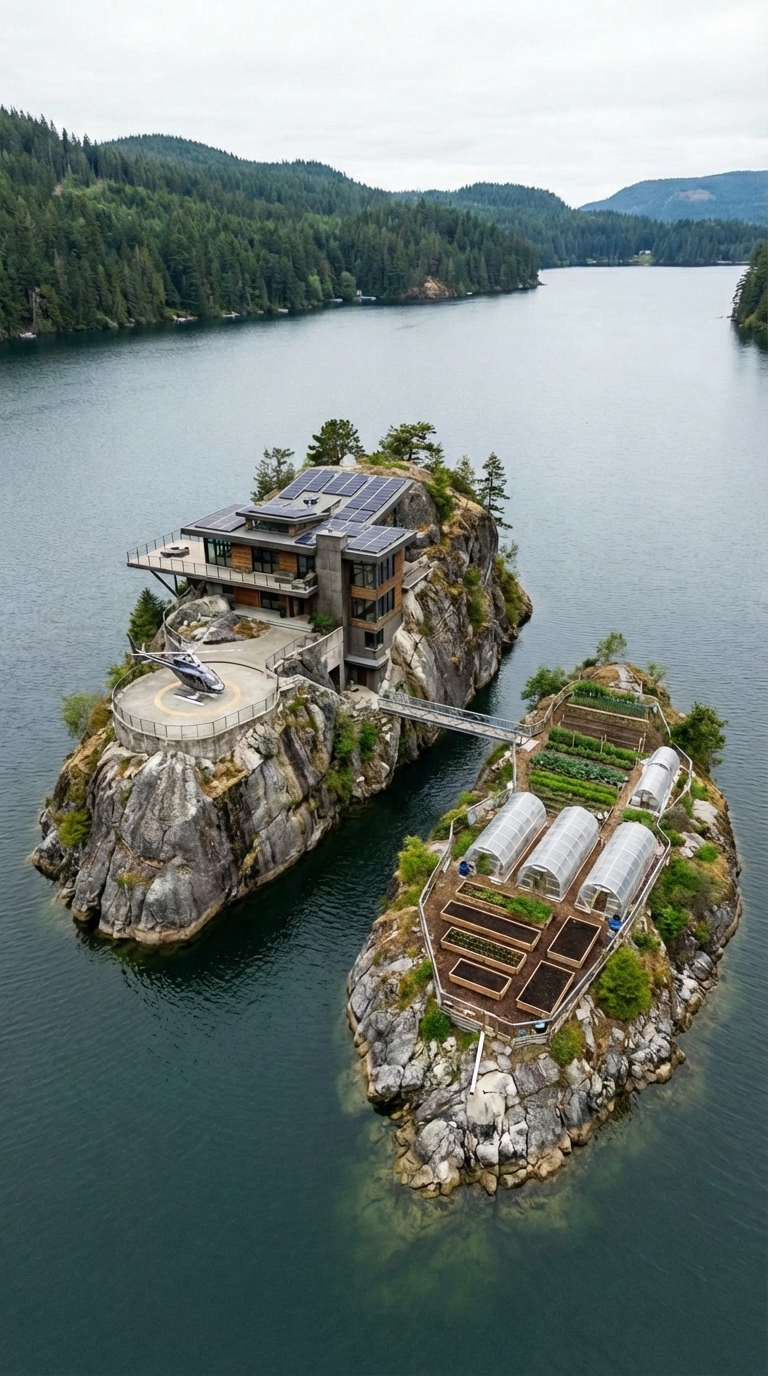
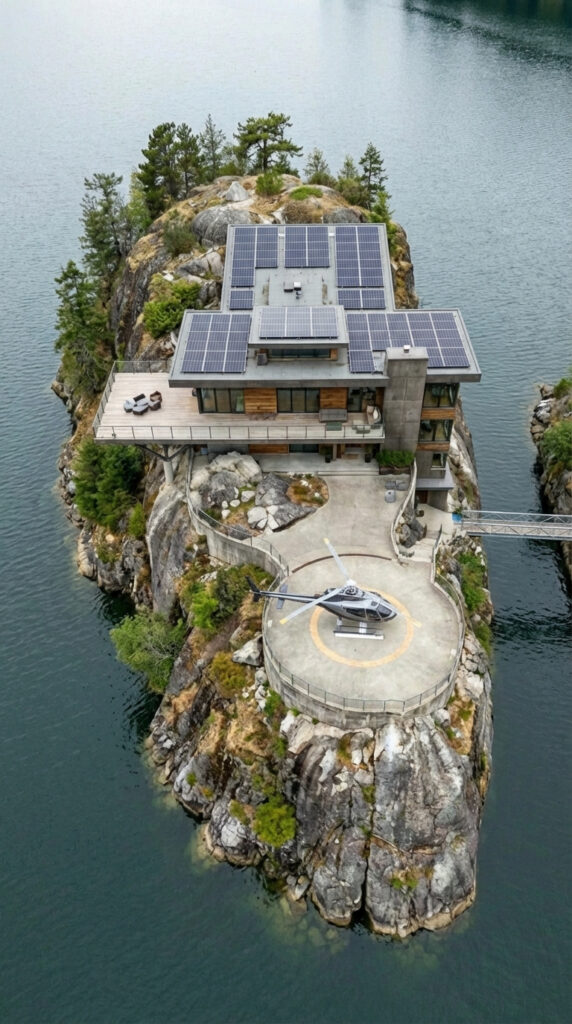
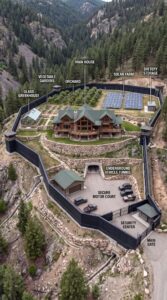
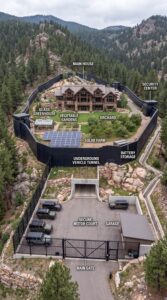
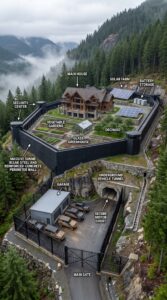
This remote island compound is designed as a self-sufficient living environment isolated from the mainland and external infrastructure. Built directly into solid rock formations, the structure maximizes natural protection while maintaining full residential comfort and long-term autonomy.
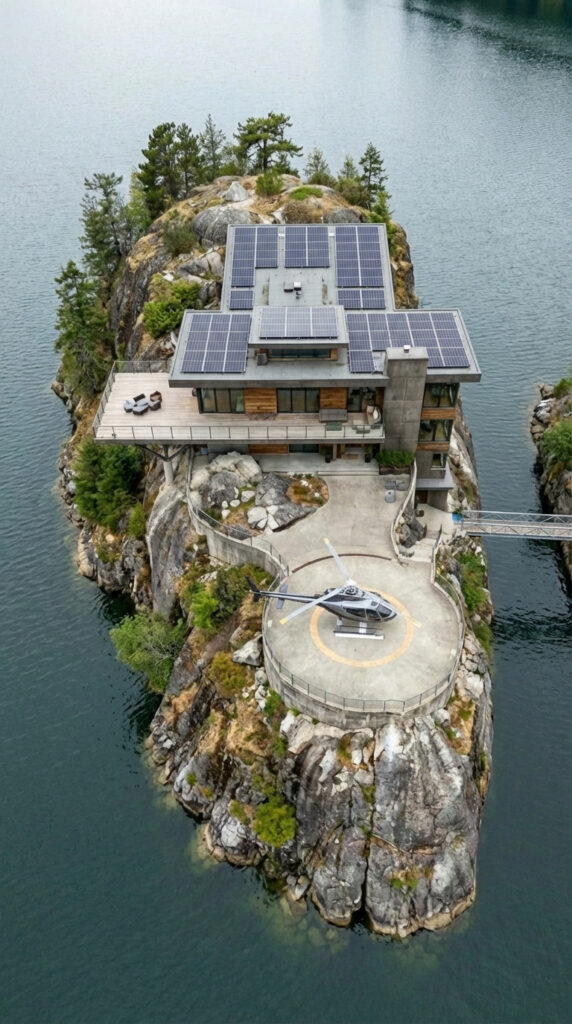
The main residential building is integrated into the rocky terrain, reducing visual impact and increasing structural stability. Elevated terraces and reinforced platforms provide panoramic views while preserving secure access points and controlled movement around the site.
A dedicated helipad allows controlled aerial access, ensuring logistical support and emergency evacuation without reliance on conventional transport routes. The positioning minimizes noise exposure to the living areas while maintaining rapid response capability when required.
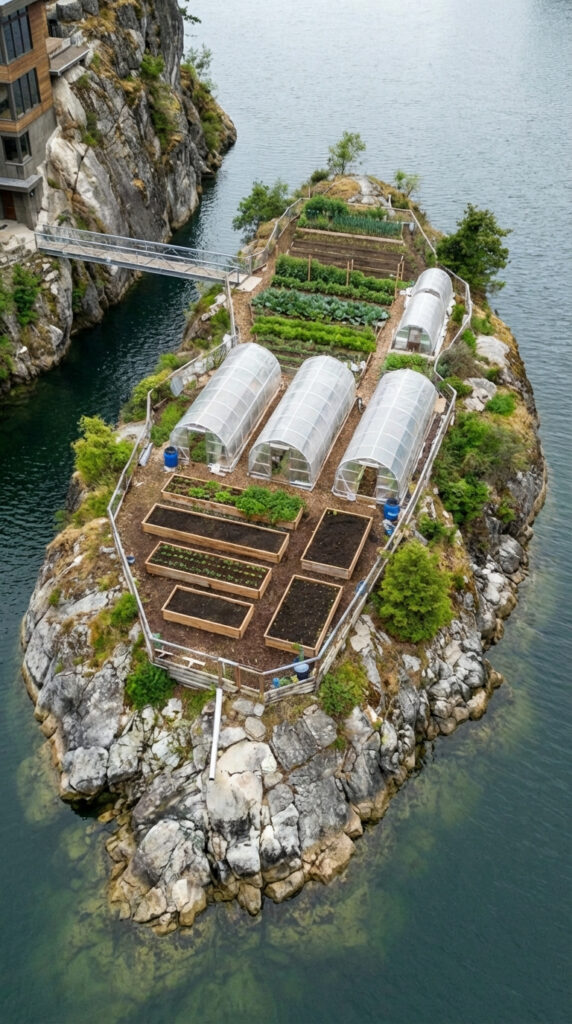
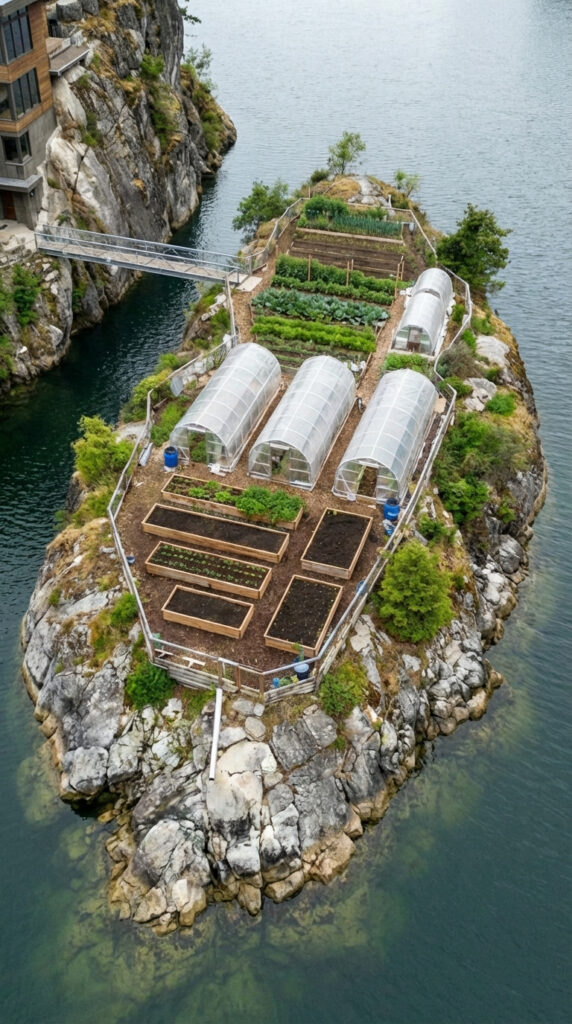
A separate agricultural zone is connected via a secure elevated walkway. This area includes greenhouse structures and organized growing beds designed for year-round food production. The layout supports controlled cultivation, crop rotation, and protection from harsh weather conditions, enabling reliable fresh food supply in an isolated environment.
The compound’s separation into residential and agricultural zones enhances operational safety and efficiency. Food production, storage, and daily living functions remain clearly defined while maintaining short internal access routes.
Surrounded by water on all sides, the island provides natural security, limited access points, and a stable microclimate. This isolation supports privacy, resilience, and long-term sustainability, making the compound ideal for off-grid living, preparedness-focused households, or autonomous retreat scenarios.
Designed as a complete off-grid ecosystem, the island compound combines natural defenses, renewable food production, and secure living infrastructure—offering independence, durability, and control in a remote environment.
Residential Living Area – Integrated Cliffside Living Space
The residential living area is seamlessly integrated into the rock formation of the island, combining structural security with modern residential comfort. Built directly into solid stone, the living spaces benefit from natural protection, thermal stability, and minimal visual exposure from the surrounding environment.
Interior zones are arranged across multiple levels, allowing efficient separation of functions while maintaining open visual connections and natural light penetration through large reinforced windows. Living areas are oriented toward panoramic water views, enhancing psychological comfort and reducing the sense of isolation often associated with remote locations.
The main living space includes a lounge area designed for daily relaxation, social interaction, and observation of the surrounding landscape. Natural materials such as wood and exposed concrete create a balanced interior atmosphere—warm, minimal, and durable—suitable for long-term off-grid habitation.
Sleeping quarters are positioned deeper within the structure to provide increased privacy, acoustic isolation, and stable temperatures. This placement supports restful conditions regardless of external weather or seasonal changes, contributing to long-term comfort and resilience.
All residential spaces are directly connected to the compound’s core infrastructure, including energy storage, water systems, and emergency access routes. Circulation paths are clear and efficient, ensuring safe movement throughout the structure without unnecessary exposure to external elements.
Designed as part of a fully autonomous island system, the residential living area prioritizes security, comfort, and longevity—offering a functional home environment capable of supporting extended stays in complete isolation while maintaining a high quality of life.
Agricultural Zone – Controlled Food Production Area
The agricultural zone is designed as a self-sustaining food production system, physically separated from the main residential structure while remaining securely connected via an elevated walkway. Positioned directly on exposed rock, the layout maximizes usable growing space without compromising structural safety or environmental stability.
Multiple greenhouse tunnels provide protected growing conditions for year-round cultivation. These structures shield crops from wind, excessive moisture, and temperature fluctuations while allowing controlled light penetration and airflow. The greenhouse layout supports staggered planting cycles, enabling continuous harvest rather than seasonal dependence.
Open raised garden beds are arranged between greenhouse structures, allowing cultivation of root vegetables, leafy greens, and resilient crops adapted to outdoor conditions. Elevated planters improve drainage, reduce soil erosion, and simplify maintenance in a confined island environment.
The zone is enclosed by a perimeter safety barrier, ensuring protection from wildlife and minimizing accidental access to steep rock edges. Clear circulation paths allow efficient movement for planting, harvesting, and inspection without disrupting crop zones.
Water distribution is managed through a centralized irrigation system, drawing from the compound’s water storage and filtration infrastructure. This ensures reliable hydration for crops while optimizing water usage—critical for long-term autonomy in a remote setting.
Designed as part of a closed-loop living system, the agricultural zone supports food independence, resilience, and long-term sustainability. Combined with storage and preservation facilities within the main structure, it enables continuous access to fresh produce while reducing reliance on external supply chains.
Panoramic Views – Natural Landscape Integration
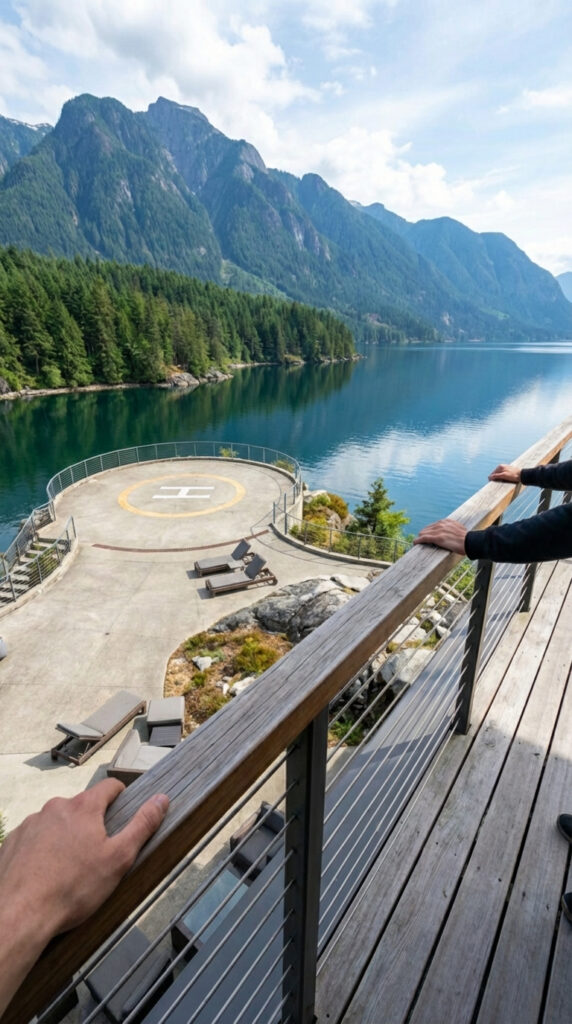
The panoramic viewing areas are designed to fully integrate the living environment with the surrounding natural landscape. Elevated terraces and open observation points provide uninterrupted views of the water, forested slopes, and distant mountain ridgelines, creating a strong visual connection between the structure and its environment.
These viewpoints serve not only as visual highlights but also as essential elements of psychological comfort. Access to open space, natural light, and expansive scenery helps reduce the sense of confinement often associated with remote or fortified living environments.
Railings and deck structures are engineered for safety while maintaining minimal visual obstruction, allowing occupants to experience the landscape without barriers. Materials are selected to withstand constant exposure to wind, moisture, and seasonal temperature changes without compromising durability or appearance.
The placement of outdoor seating areas supports quiet observation, relaxation, and routine daily use. These spaces allow occupants to maintain a connection with natural cycles—weather changes, daylight movement, and seasonal transitions—supporting long-term well-being in an isolated setting.
Views toward the water provide natural calming effects, while the surrounding mountains and forests contribute to a sense of enclosure and protection. This balance between openness and security reinforces the compound’s overall design philosophy.
As part of the broader off-grid system, the panoramic zones transform the compound from a purely functional structure into a livable environment—where resilience, comfort, and natural beauty coexist without compromise.
Living Area — Comfort, Light, and Long-Term Livability
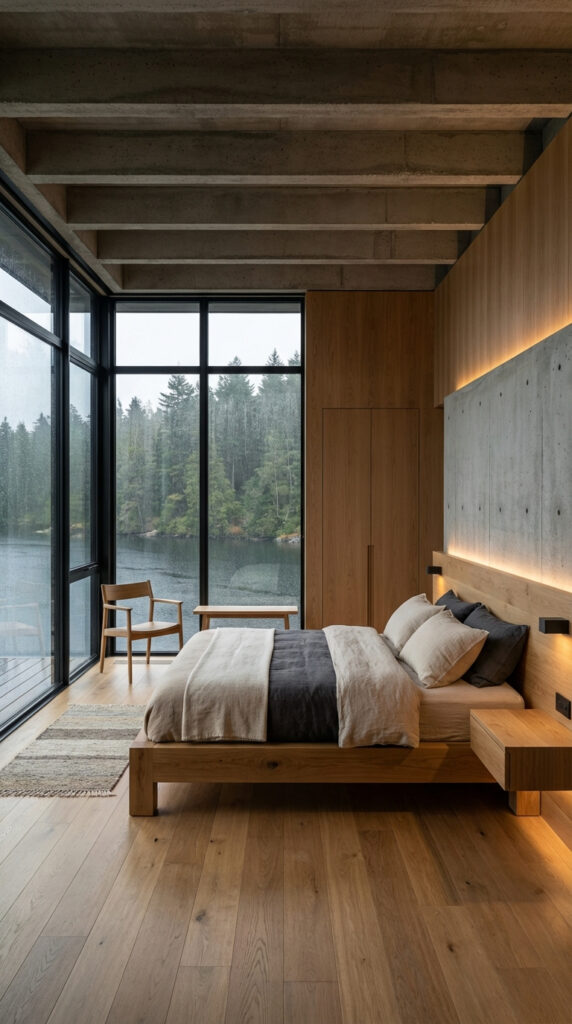
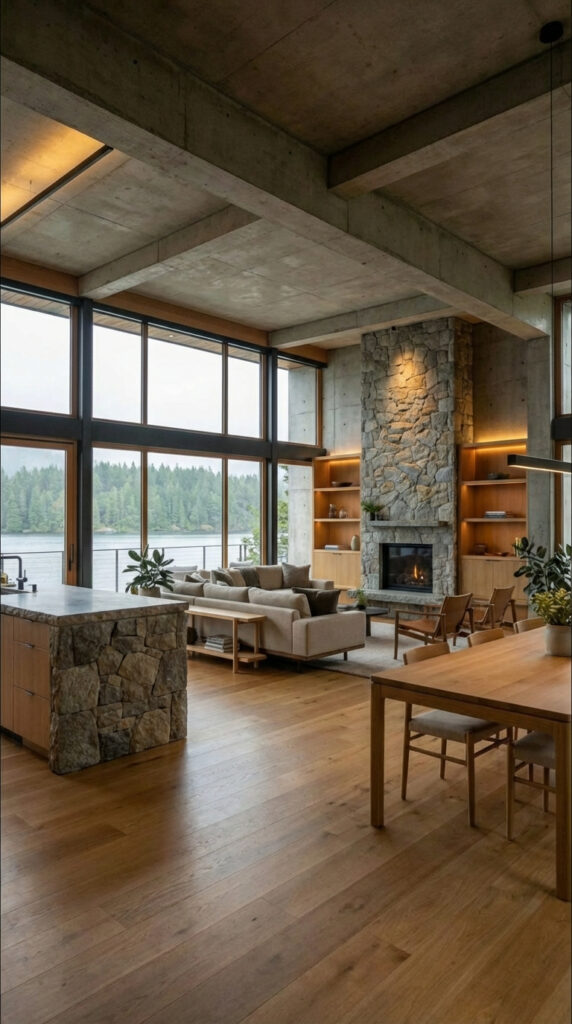
The living area is designed as the heart of the residence, combining modern architectural minimalism with a strong connection to the surrounding natural landscape. Exposed concrete ceilings, natural wood finishes, and stone elements create a balanced atmosphere that feels both secure and warm, even in a remote off-grid environment.
Large floor-to-ceiling panoramic windows provide uninterrupted views of the water and forest, allowing natural light to flood the interior throughout the day. This not only enhances psychological comfort but also reduces the need for artificial lighting, improving overall energy efficiency.
The open-plan layout integrates the living room, dining area, and kitchen into a single cohesive space, optimized for daily life, relaxation, and social interaction. A central stone fireplace serves as both a visual focal point and a secondary heat source, ensuring warmth during colder seasons.
The bedroom zone maintains privacy while preserving visual openness, offering direct views of the surrounding landscape. Natural materials, neutral tones, and soft indirect lighting create a calm sleeping environment suitable for long-term living.
This living area is engineered not just for aesthetics, but for durability, energy efficiency, and psychological well-being—making it ideal for year-round habitation in isolated or off-grid locations.
Descent to the Underground Level: Storage, Water Systems, and Technical Area
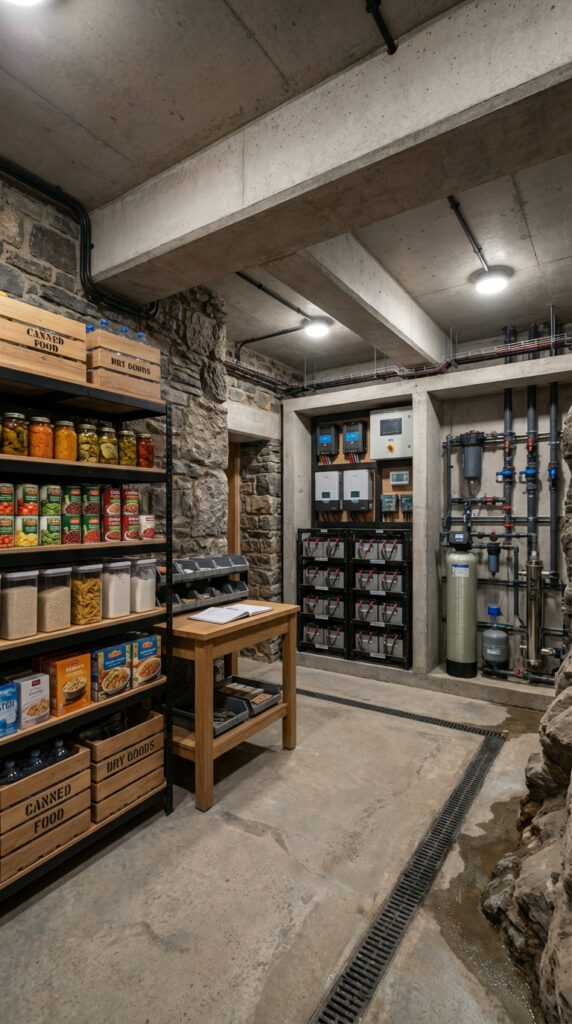
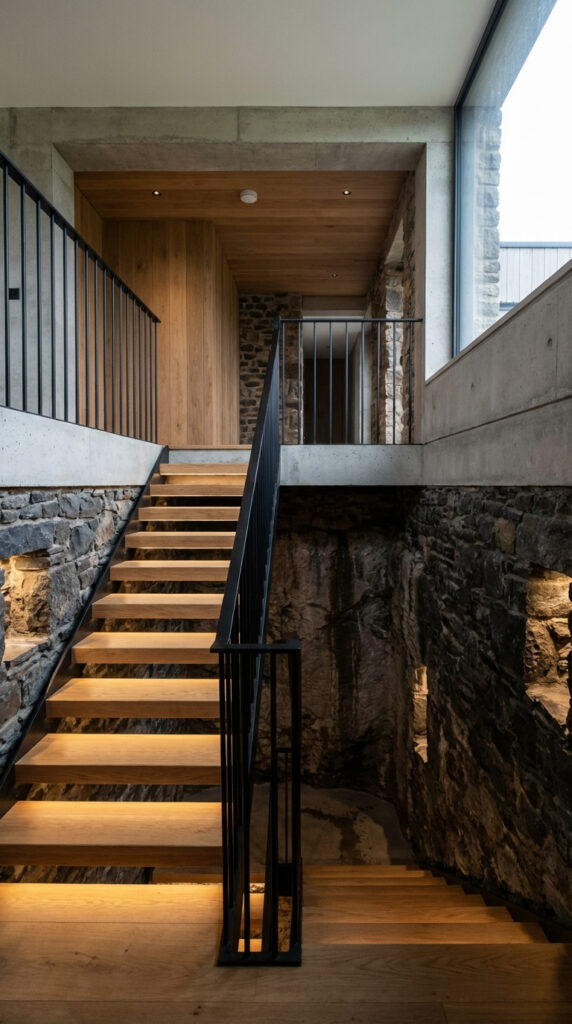
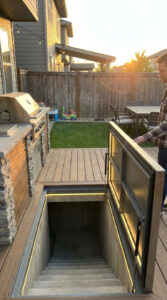
The descent to the basement level is designed as a secure and logical transition from the living space to the home’s autonomy core, where long-term supplies, water filtration systems, and key engineering infrastructure are located. The staircase is built from reinforced concrete with wooden treads and metal railings, providing durability, comfort, and controlled access. Integrated lighting guides the way down, while ventilation channels maintain a stable microclimate and prevent excess moisture.
At the lower level, a well-organized technical space opens up with clear zoning: shelving for long-term food storage, a dedicated area for water tanks and filtration equipment, and a technical room housing batteries, inverters, and backup systems. This descent is not just a passage between floors—it reinforces the concept of self-sufficiency, bringing all essential life-support systems together in a protected underground environment designed for long-term, off-grid living.
Underwater Tunnel to the Mainland
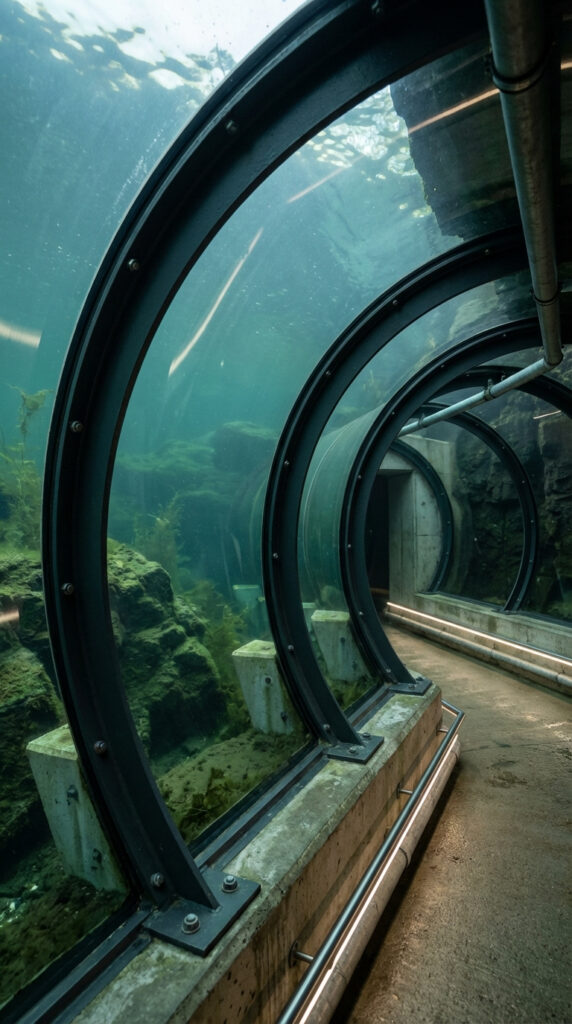
The underwater tunnel serves as a concealed and secure connection between the island bunker and the mainland, providing an emergency route and discreet access without exposing the main location. Built from reinforced concrete and steel, the tunnel is fully sealed and pressure-resistant, designed to withstand constant contact with water and changing conditions. Panoramic reinforced glass sections allow controlled visibility of the surrounding underwater environment while maintaining structural integrity and safety.
Inside, the tunnel is equipped with integrated lighting, handrails, and non-slip flooring to ensure safe movement at all times. Ventilation and drainage systems are hidden within the structure, preventing condensation and maintaining a stable atmosphere. This underwater passage is not just a transit route—it is a strategic lifeline, combining engineering precision, security, and stealth, allowing movement to and from the mainland even in situations where surface access is compromised.
Underwater Tunnel to the Mainland
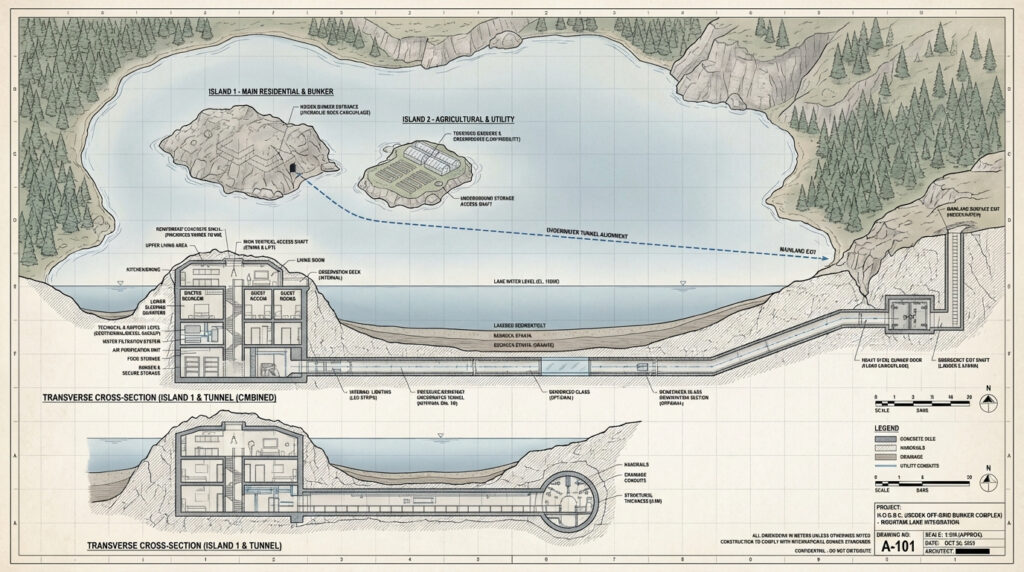
This hidden island bunker complex is a fully integrated off-grid survival structure designed for maximum isolation, security, and long-term resilience. Built across two rocky islands in a remote mountain lake, the system combines concealed underground spaces, surface living areas, agricultural zones, and a secure underwater tunnel connection to the mainland.
The primary island contains the main residential and bunker infrastructure, embedded directly into solid rock. Reinforced concrete structures are hidden beneath natural stone formations, allowing the facility to remain visually undetectable from the water or surrounding shoreline. Internal vertical shafts connect surface living areas with underground bunker levels, ensuring safe and efficient movement between zones.
The secondary island is dedicated to food production and utility functions. Terraced garden beds, compact greenhouses, and minimal surface structures provide sustainable food sources while maintaining a low visual profile. Underground storage spaces support long-term supply management without exposing critical infrastructure.
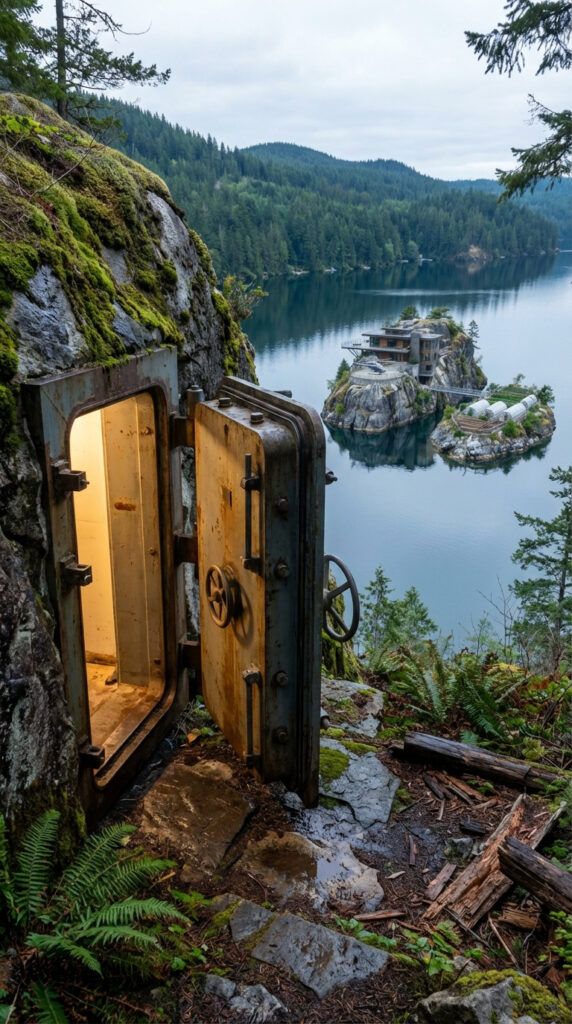
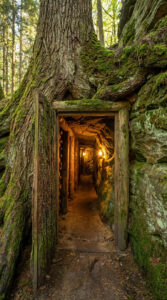
A reinforced underwater tunnel runs beneath the lakebed, connecting the main island directly to the mainland. Designed with pressure-resistant construction and waterproof sealing, the tunnel serves as a discreet access and emergency evacuation route. The mainland exit is concealed within a rocky cliff face, secured by a heavy steel bunker door camouflaged to blend seamlessly with the surrounding stone.
This two-island bunker concept represents a realistic approach to modern off-grid survival architecture, combining stealth, redundancy, and practical engineering. It is designed for those who value privacy, autonomy, and preparedness in a fully concealed natural environment.
architectural visualization. It is not a real construction project.

Leave a Reply